From Technical Challenges to Successful Implementation: A Chronicle of a City Network Project
Case Study | Water Supply Network Monitoring & Leakage Control
Recently, a city in central China completed the Phase I construction of its online monitoring and leakage control project for the water supply network. Covering the main water supply areas in the central urban area and the old town, the project was coordinated by the local Water Group, with Yicai Technology serving as the technical support unit. This initiative involved the deployment of monitoring terminals, construction of a data platform, and development of leakage analysis models.
After one year of operation, the project has significantly improved the network leakage rate, pressure stability, and water quality early warning capabilities, providing an engineering reference for the renovation of similar aging water supply networks.
Project Background: The Challenge of Aging Infrastructure
The built-up area of the city serves a population of approximately 860,000, with a total water supply network length of about 412 kilometers. Key statistics highlight the urgency of the upgrade:
- Pipe Age: Average pipe age is about 21 years, with gray cast iron and prestressed concrete pipes showing significant aging at joints.
- Leakage Rate: Statistical data from 2022 showed a network leakage rate of approximately 13.6%.
- Non-Revenue Water: The non-revenue water rate stood at about 14.3%.
- Pressure Issues: During peak consumption, pressure in distal areas fell below 0.14 MPa, resulting in an average of 27 monthly complaints regarding low pressure and sensory water quality issues.
With increasing urban water demand and elevated service standards, the previous management approach—relying mainly on manual inspection and passive emergency repair—could no longer meet the needs of refined operations.
Technical Challenges Overcome
The project faced four primary technical hurdles:
- Incomplete Pipeline Data: In the old town, deviations existed between actual branch pipe locations and as-built drawings, making monitoring zoning difficult.
- Data Silos: Operation data was scattered across SCADA, GIS, customer service hotlines, and emergency repair records, lacking a unified foundation for analysis.
- Monitoring Point Optimization: Determining the right balance of pressure monitoring points (main pipes vs. extremities) was critical to avoid insufficient data coverage or excessive costs.
- Water Quality Complexity: Indicators like residual chlorine decay and retention time made single-point testing insufficient for reflecting internal network changes.
"To address these issues, the project adopted a construction approach of 'zoned metering, online monitoring, model analysis, and coordinated response.'"
Implementation Strategy & Deployment
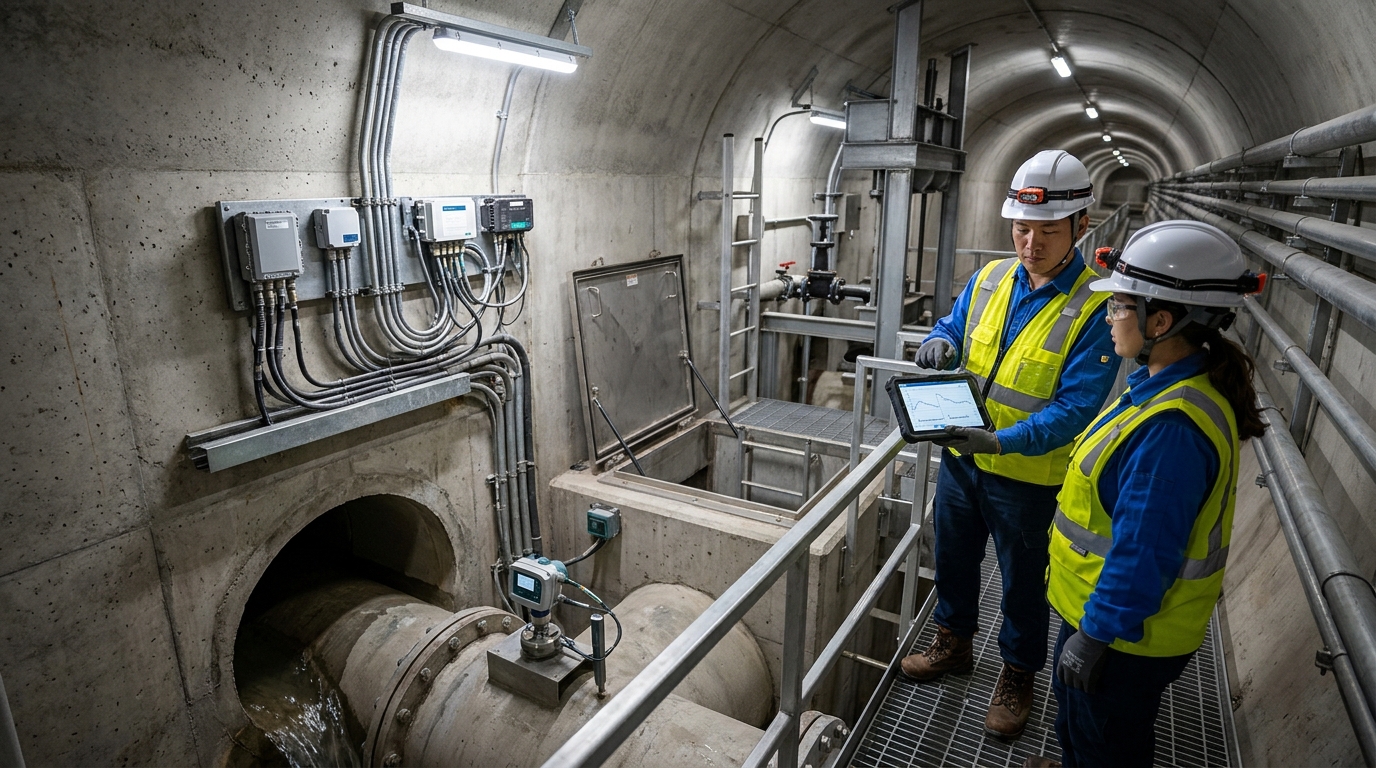
The city was divided into 21 DMA (District Metered Area) zones. Yicai Technology deployed a comprehensive sensor network:
Hardware Deployment
- • 92 Smart Pressure Monitoring Terminals
- • 46 Electromagnetic Flowmeters
- • 360 Pipeline Noise Loggers
- • 20 Multiparameter Water Quality Monitors
Data Acquisition Cycle
- • Pressure: Every 10 minutes
- • Flow: Every 5 minutes
- • Water Quality: Hourly updates (Turbidity, pH, Residual Chlorine, etc.)
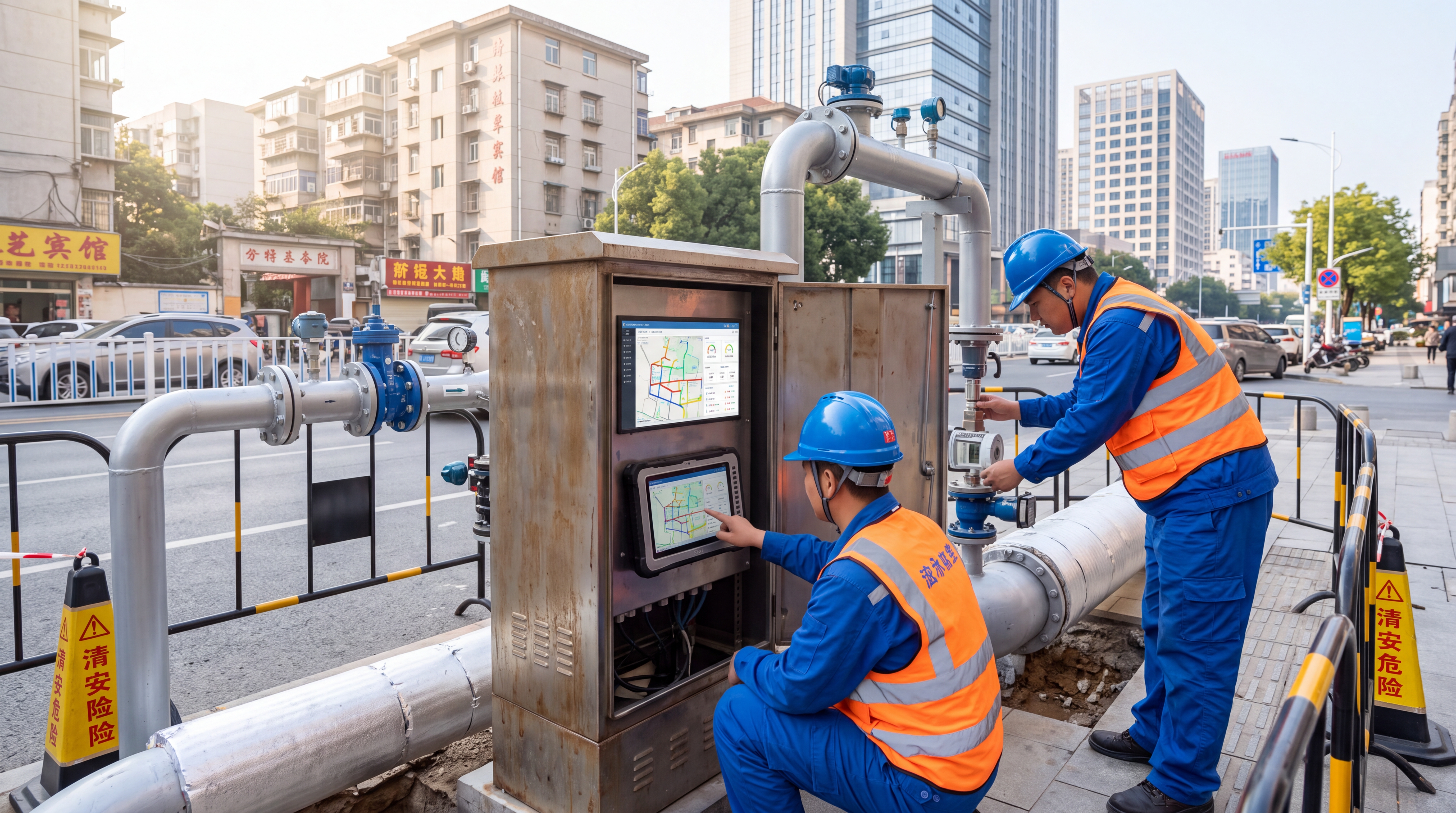
Data was transmitted via NB-IoT and 4G networks, integrating seamlessly with existing GIS, SCADA, and work order systems. The implementation spanned four phases over six months, from site surveys and equipment installation to data governance and closed-loop trial operations.
Intelligent Leakage Analysis
The platform utilized the Minimum Night Flow (MNF) method combined with a pressure-leakage relationship model. By analyzing flow data between 2:00 AM and 4:00 AM daily, the system calculated background leakage levels and identified potential hidden leak zones.
Automatic Early Warning Triggers:
- MN Flow exceeds baseline by 15% for three consecutive days.
- Pressure shows an abnormal drop of more than 0.05 MPa per hour.
Upon triggering, the system automatically generated work orders for field personnel to use correlators and acoustic detectors for verification. Additionally, pressure monitoring data guided the adjustment of operational strategies for district PRVs and booster pumping stations, preventing joint leakage and burst risks caused by local overpressure.
Operational Results & Impact
As of June 2024, the project demonstrated significant improvements in efficiency and service quality:
| Metric | Before Construction | Current Status | Improvement |
|---|---|---|---|
| Network Leakage Rate | 13.6% | 9.8% | Significant Reduction |
| Annual Water Loss | - | ~3.87 Million m³ | Recovered Revenue |
| Pressure Compliance Rate | 96.4% | 99.3% | +2.9% |
| Low Pressure Complaints | Baseline | -64% YoY | Improved Satisfaction |
| Anomaly Detection Time | ~36 Hours | < 4 Hours | 9x Faster Response |
Furthermore, the system cumulatively identified 41 hidden leakage points and provided early warnings for pipe burst risks 18 times. Water quality compliance improved from 99.6% to 99.9%, with events like low residual chlorine detected 2–4 hours in advance, preventing expanded impacts.
Conclusion: A Shift to Proactive Management
From an engineering management perspective, this project expanded water supply network monitoring from single-point data collection to the coordinated operation of leakage analysis, pressure monitoring, and water quality management.
Its value lies not only in reducing leakage rates and complaints but also in shifting risk identification from passive response to proactive prevention. For urban water supply systems with long pipe ages and complex materials, reasonably dividing monitoring zones, ensuring data quality, and establishing stable early warning thresholds are key to long-term effectiveness.
The city's Water Group plans to continue expanding monitoring scope to secondary water supply and branch pipes in old residential communities, exploring further integration with renewal and emergency dispatch plans.