City Water Network Market Trends: 2026 Price Analysis & Selection Guide
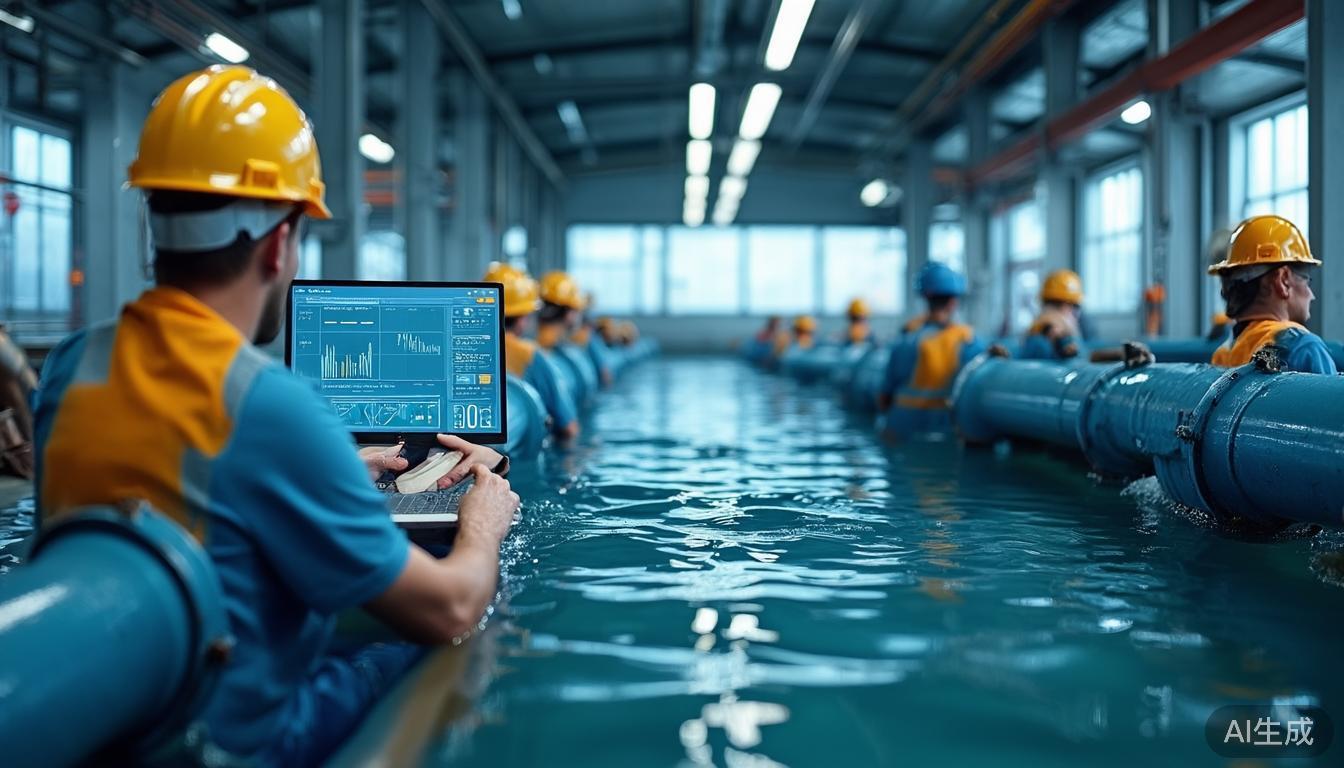
Having worked in the field of water management for 15 years, the most common sight I've encountered is midnight emergency repairs. An excavator digs in, and muddy water spurts several meters high. At the bottom of the pit, you'll often find old cast iron pipes laid in the 1970s and 1980s. Workers wear waist-deep waders, groping through the mud to close the valves.
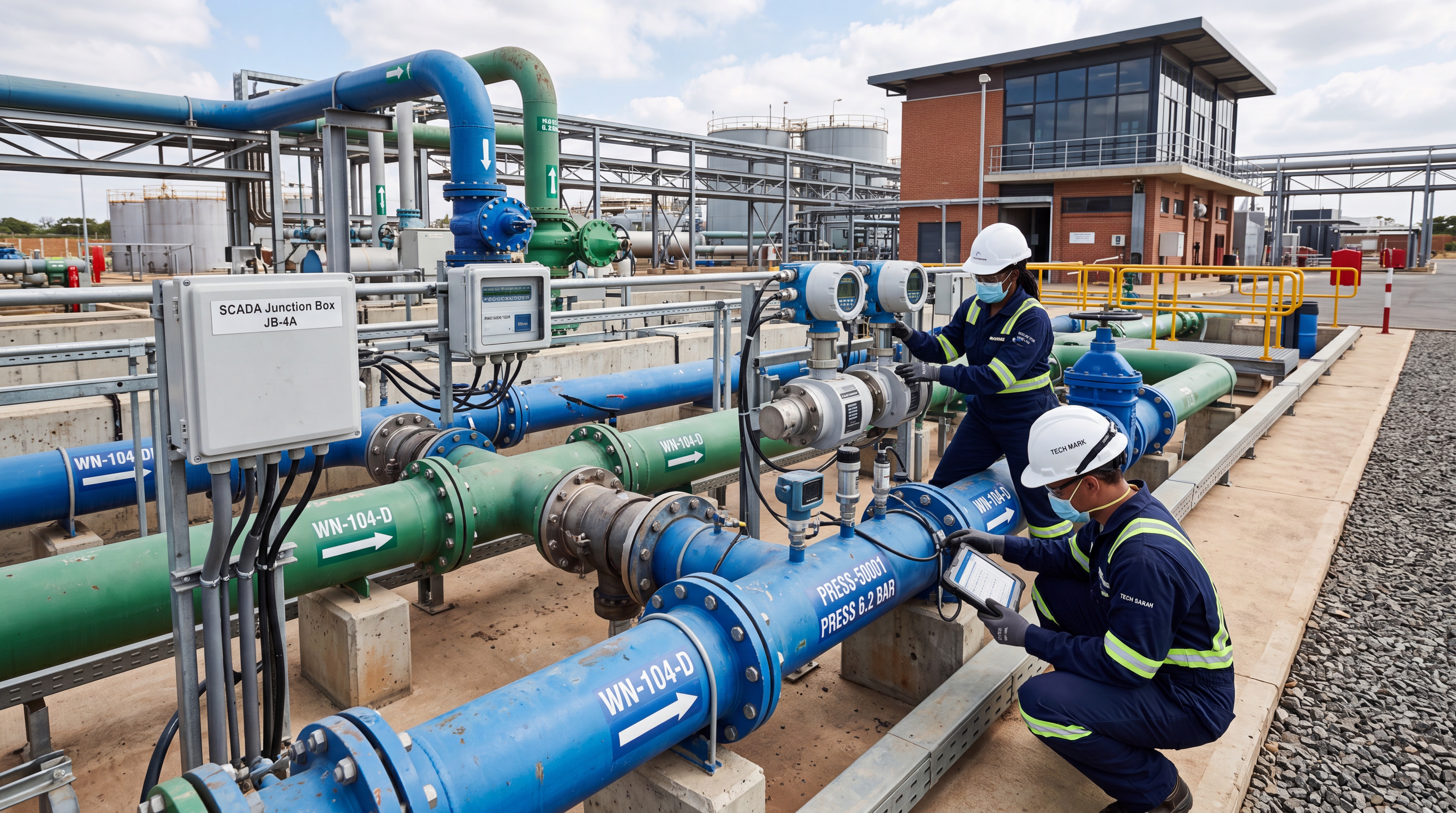
In recent years, urban water network renovation has been in full swing. Water utilities are no longer satisfied with simply buying a few random meters. What they demand is a comprehensive system capable of leak detection, pressure measurement, and water quality monitoring. Previously, such projects were mostly limited to a few pilot sites. Now, they are frequently rolled out on a large scale across entire districts or cities.
Simply put, this is a hard demand driven by Non-Revenue Water (NRW). The water treated at the treatment plant loses 20% to 30% before it reaches the user's tap. Every drop leaking into the ground represents real money. The government has issued a strict mandate requiring public network leakage rates to be reduced to below 10%.
The Shift: Hardware Baseline, Data Core, O&M Center Stage
The demands from local water bureaus are extremely clear. Wherever the network pressure drops below 0.15MPa, or wherever a main trunk pipe is on the verge of bursting, an alarm must be triggered immediately. Issues like localized leakage and yellowish water quality at the network extremities cannot wait until residents call the mayor's hotline to be investigated.
The entire network monitoring market has undergone a complete transformation. Hardware has become the foundational baseline, the data platform is the core, and long-term operation and maintenance services have taken center stage.
Hardware Assessment: The Price Gap Between Hundreds and Tens of Thousands
The pricing of network monitoring equipment on the market is highly complex. The most basic pressure monitoring terminal is just a plastic casing hung on a fire hydrant. Such single-point devices can cost as little as three to five hundred RMB. If a water utility is on a tight budget, buying these can suffice for getting a rough idea of the data.
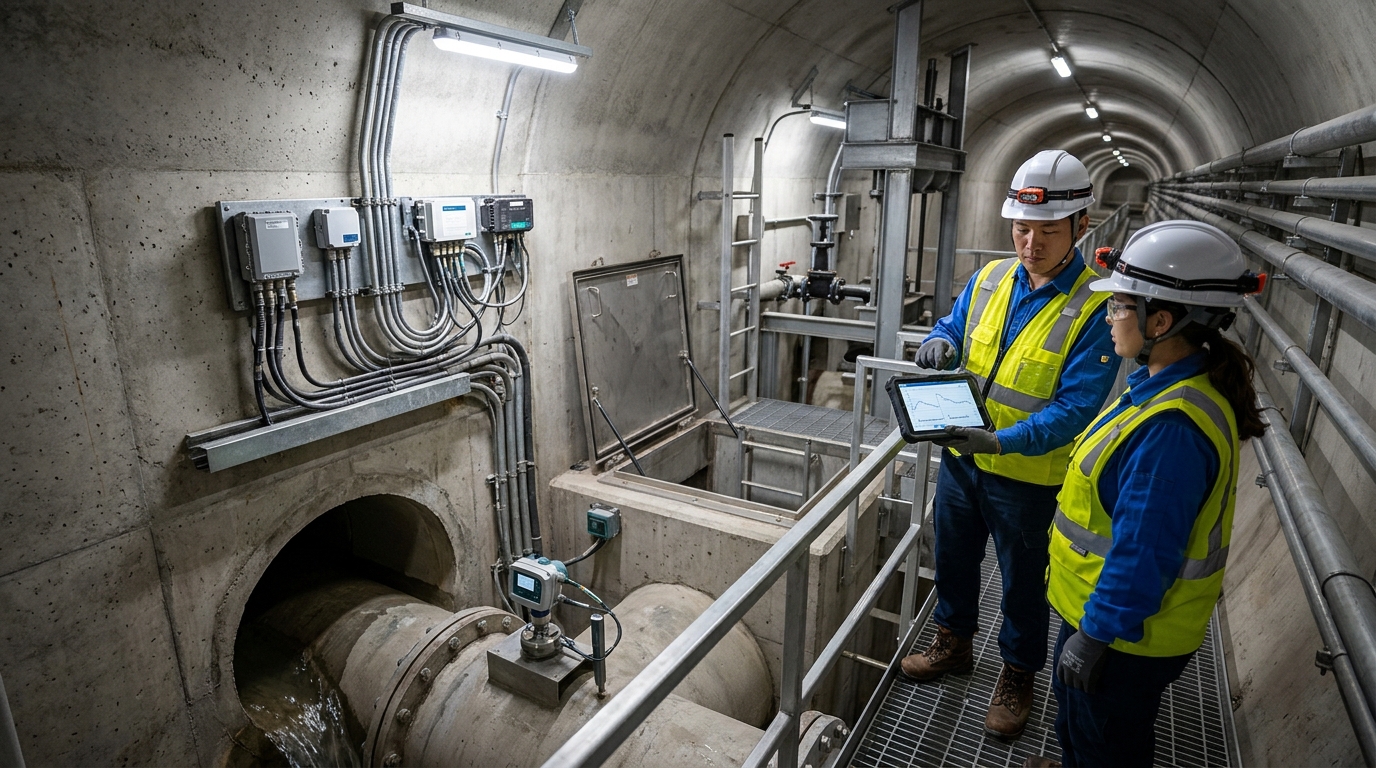
Once the requirements are raised, the pricing is a completely different story. Pressure gauges used in underground utility tunnels require an accuracy of Class 0.1 and must carry Exd IIB explosion-proof certification. If equipped with a large-capacity lithium battery lasting 5 years and a low-power remote transmission module, the unit price of these high-end models easily exceeds 8,000 RMB or even 10,000 RMB.
The cost accounting for flow monitoring equipment is even more complicated. A larger diameter and bigger flanges directly double the price. Different installation methods and measurement principles can drive single-point investments from a few thousand to tens of thousands. Ultrasonic, electromagnetic, and mechanical water meters each have their own pricing logic.
Case Study: LGF Electromagnetic Flowmeter
Take the most commonly used equipment in old residential area renovations, for example; selection requires careful consideration.
- Cost Efficiency: A DN50 caliber costs only around 850 RMB, yet still achieves an accuracy of ±0.5%.
- Easy Installation: Workers descend into damp meter pits two meters deep and directly connect the flanges, tightening the bolts in just half an hour.
- Robustness: With no moving parts, this meter is immune to blockages from rust and sediment in the pipes, making it exceptionally robust for use in water supply networks.
Leakage Analysis: A Meticulous and Costly Endeavor
Leakage analysis is undoubtedly the highlight of market procurement. Acoustic monitors and noise loggers have become the new favorites of water utilities. The probes are attached to valves, working by capturing the high-frequency sound of minor water leaks. These small devices range in price from several thousand to 20,000 or 30,000 RMB per unit.
Many water utilities favor DMA (District Metered Area) management. In a residential community of 3,000 households, high-precision area metering meters are installed outside. During the low-water-usage period at 2 or 3 AM, the system automatically captures the minimum night flow. If this value is abnormally high, it basically identifies a suspected leak point.
Merely buying hardware for leak detection is far from sufficient. You need to build a district leakage analysis system covering hundreds of monitoring points. Once the data is transmitted back, algorithmic models are required to filter out environmental noise interference. Then, the suspected leak points are highlighted on a GIS map.
Comprehensive platforms featuring data aggregation, algorithmic analysis, and visual large screens require extremely high investment. Projects start at several hundred thousand RMB, with those exceeding a million being common. Without one or two years of data training, the results calculated by the models often deviate from reality.
Water Quality Monitoring: Don't Blindly Pursue Full-Parameter Measurement
The pitfalls in selecting water quality monitoring equipment are no less than those in leakage detection. At the extremities of the network or in secondary water supply pump rooms, typically only residual chlorine, turbidity, and pH are measured. These three traditional indicators can be handled by conventional multi-parameter equipment. A complete set usually costs between 8,000 and 20,000 RMB.
Some projects insist on going high-end, forcefully introducing complex indicators. Online heavy metal, organic matter, and biological toxicity analyzers are all crammed into the pump rooms. The procurement costs for such precision instruments skyrocket, often reaching over 100,000 RMB per unit. The subsequent costs for purchasing reagents and conducting comparative testing are a bottomless pit.
Selection must strictly focus on water source characteristics and pipe material conditions. In old urban areas with many galvanized pipes, the focus should be on preventing excessive turbidity from rust. If the goal is merely to meet the Health Commission's regulatory requirements for extremity monitoring, conventional parameters are absolutely sufficient.
Data to the Cloud: The Signal Battle in Underground Manholes
No matter how well the field instruments are installed, if the data cannot be transmitted back to the cloud, they are just scrap metal. This is where the RTU (Remote Telemetry Unit) comes in as the relay. The thick cast iron covers over underground meter pits completely block mobile phone signals. Ordinary commercial communication modules placed inside will crash and disconnect within a few days.
Industrial-grade RTUs must be equipped with external high-gain antennas. The antenna is placed at the gap of the manhole cover to squeeze the data out via NB-IoT or 4G Cat.1. The manholes are perpetually damp, and sometimes the water accumulates up to the knees. The RTU's mainboard must be potted with glue, and the enclosure must achieve an IP68 protection rating.
Network disconnections are a common occurrence, so the equipment must have local storage capabilities. When the network drops, the data is first stored in the RTU's memory card. Once the signal is restored, the missing flow and pressure curves are automatically backfilled and transmitted. This life-saving baseline function is particularly useful for remote network points.
Platform Accounting: The New Paradigm of Construction Plus Operation
The price of the software platform purely depends on how large the water utility's appetite is. The number of access points and the number of functional modules directly determine the coding workload. A basic SCADA monitoring platform, set up with a large screen to view real-time curves, can be done for tens of thousands to over a hundred thousand RMB.
Once business logic is integrated, the price becomes uncontrollable. It becomes a massive system encompassing leakage analysis, pressure regulation, water quality warning, work order linkage, and data governance. For a comprehensive platform of this level, project amounts easily surpass the million-RMB mark. Water utilities have also become smarter now, avoiding one-off deals.
The procurement model is shifting towards "construction + operation." Software companies can no longer just hand over a disc and leave. They need to leave personnel to monitor the system's operation and produce monthly leakage analysis reports. Platform compatibility and protocol openness have become rigid indicators during bidding.
Protocol Openness
Today you buy meters from Factory A, tomorrow sensors from Factory B. If the platform cannot be compatible with MQTT or Modbus protocols, everything becomes an information silo.
Scalability
Expansion capabilities must keep up; if you want to add 50 water pressure points next year, the system must be able to configure them directly. The closed-ecosystem approach has long been unworkable in the water industry.
Selection Logic: Spending Money Where It Counts
Before buying equipment, ask yourself honestly what the ultimate goal is. Without clear objectives, the purchased equipment will inevitably gather dust. If you are overwhelmed by NRW, focus relentlessly on district metering. Pour the entire budget into area water meters and night flow analysis.
If residents complain daily about yellow water and low pressure, the strategy must change. Focus on evaluating the coverage density of pressure monitoring, striving not to miss a single pressure node. Elevate the priority of pipe burst warnings and water quality anomaly identification. The budget is limited; wanting everything usually results in achieving nothing.
Harsh on-site installation conditions must be taken into account. In the north, winter temperatures drop to minus 20 or 30 degrees, causing battery activity to plummet. In the south during the plum rain season, the manholes are completely flooded with muddy water. Selecting equipment without considering the protection rating and operating temperature is simply asking for trouble.
Hidden Bombs: The Underestimated O&M Bill
In procurement decision meetings, O&M costs are the most easily overlooked hidden bombs. Monitoring equipment is submerged long-term in complex networks; it is absolutely not a case of "install and forget." Sensors will experience zero drift over time and require regular downhole calibration. Probes get dirty and need cleaning, and batteries die and need replacement.
When communication modules crash or cables are dug up by construction crews, two or three workers must be dispatched in a pickup truck to the site for troubleshooting. These labor, vehicle, and spare parts consumables are all flowing expenses. Many projects look pristine during acceptance, but halt due to a lack of maintenance funds after leadership inspections.
There is a figure in the industry summarized from bitter lessons. Annual O&M costs typically account for 8% to 20% of the initial construction cost. The exact amount depends on the equipment deployment density and sensor types. The more water quality probes there are, the closer the maintenance cost gets to 20%.
If a water utility lacks a stable O&M budget, the consequences are immediate. After a few months, the system will start showing data loss, and false alarms will be rampant. Further down the line, the online rate drops sharply, and the large screen is filled with gray, dead data. Buying meters without maintaining them is equivalent to throwing money into the water.
Industry Trends: Putting Data to Work in Business Operations
Having been in this line of work for a long time, one can clearly feel the shift in procurement trends. In the past, everyone competed on who installed the most meters and whose large screen looked the coolest. Now, the focus of competition has entirely shifted to data quality and algorithm applicability. Bridging the gap from merely "seeing" data to being able to predict pipe bursts and dispatch valves requires hundreds of thousands of lines of code.
Procurement parties should indeed calmly assess their own foundations. First, thoroughly understand the aging degree, risk distribution, and management shortcomings of their own networks. Don't just impulsively increase the number of devices. No matter how much hardware is deployed, it's useless if no one looks at the data.
Only by truly integrating leakage analysis, pressure monitoring, and water quality management into the daily inspection processes of water utilities can real progress be made. Letting work orders follow alarms and letting emergency repairs follow data is the only way these substantial monitoring investments can be transformed into stable management benefits. Water digitalization, after all, is still hard, gritty work.