Water Supply Network Monitoring Market Analysis: Synergistic Advancement of Leakage Control, Pressure Monitoring, and Water Quality Management
As urban water supply infrastructure enters the stage of refined operations, water supply network monitoring is shifting from single-point instrument data collection to a comprehensive management system covering network operation, leakage analysis, pressure monitoring, and water quality safety. In recent years, water administration departments and supply enterprises across various regions have continuously increased their investment in network digitalization, promoting the construction of district metering, online monitoring, and early warning platforms.
Market demand is no longer limited to traditional flow meters and pressure gauges, but places greater emphasis on data fusion, anomaly identification, and operational dispatch capabilities. Overall, the water supply network monitoring industry has gradually transitioned from the equipment procurement stage to a development phase that equally prioritizes "sensing terminals + data analysis + operation and maintenance services."
Key Market Drivers: Aging Infrastructure & Safety Demands
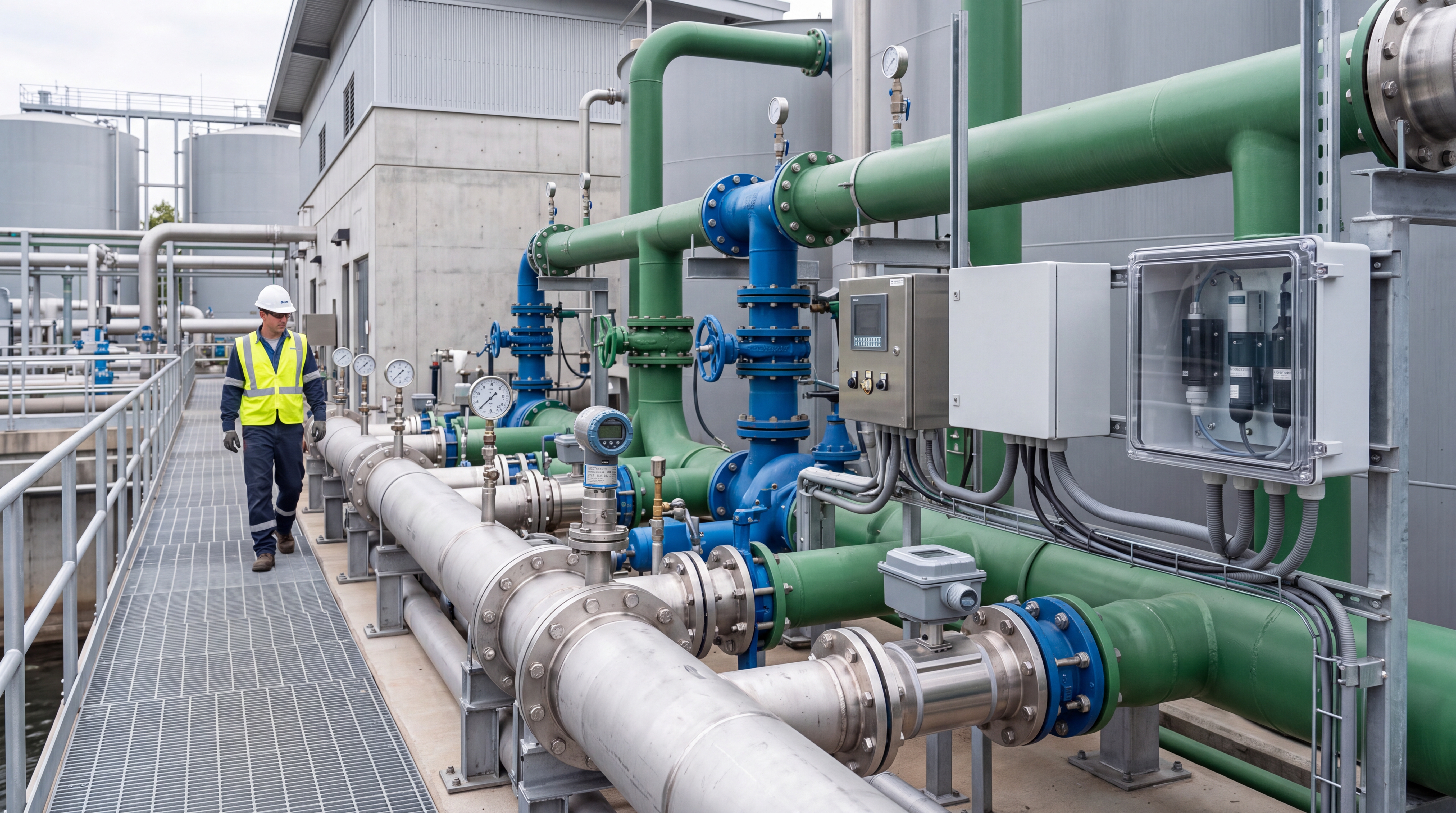
From the perspective of market drivers, network aging, pressure for leakage control, and water quality safety assurance are the primary sources of demand.
- Network Aging & Leakage: In some regions, water supply networks have been in operation for a long time, resulting in high leakage risks due to aging joints, pipe material corrosion, and localized damage. Traditional manual inspections struggle to meet the requirements for timely detection and precise localization.
- Pressure Fluctuations: Fluctuations in water supply pressure not only affect user experience but may also exacerbate the risk of pipe bursts, making pressure monitoring a crucial foundation for network operation assessment.
- Water Quality Assurance: Indicators such as residual chlorine, turbidity, and pH value at the network extremities are directly related to water supply safety. The demand for online monitoring is gradually extending from water treatment plant outlets to key nodes in the network.
Cost Structure & Price Ranges
Investments in water supply network monitoring systems vary significantly, primarily depending on the monitoring type, equipment accuracy, communication methods, protection ratings, and software functions.
Equipment Cost Breakdown
- Standard Pressure Terminals: Hundreds to thousands of RMB.
- High-Accuracy Terminals: Higher price points for wide measurement ranges, remote transmission, and battery power capabilities.
- Noise Loggers/Acoustic Equipment: Several thousand to tens of thousands of RMB per unit (often requiring additional data analysis services).
- Water Quality Analyzers: Single-parameter instruments are cost-controllable; multi-parameter online analyzers often reach the tens of thousands of RMB level due to complex sensors and calibration needs.
- Flow Meters (Ultrasonic/Electromagnetic): Thousands to tens of thousands of RMB, varying by caliber and installation method.
For large-scale projects, costs extend beyond hardware. Expenses for civil construction, communication networking, data integration, and platform deployment must be considered. A comprehensive project covering multiple districts with integrated pressure, flow, water quality, and leakage analysis modules may require a total investment of hundreds of thousands of RMB or more.
Strategic Purchasing Recommendations
Water utilities should first clarify their business objectives to avoid merely pursuing equipment quantity or feature stacking. Procurement strategies should align with specific core goals:
Leakage Control Focus
Prioritize independent metering districts. Combine flow, pressure, and noise monitoring to form a closed-loop leakage analysis system.
Pipe Burst Risk Reduction
Strengthen pressure monitoring layouts in key pipe sections and pressure-sensitive areas to prevent catastrophic failures.
Water Quality Safety
Deploy monitoring points reasonably at water plant outlets, network extremities, and secondary supply nodes.
Technical Compatibility: Attention should be paid to the openness of equipment communication protocols, data interface compatibility, protection ratings, power supply methods, and future scalability to prevent data silos between different systems.
Critical Success Factors: Data Quality & Installation
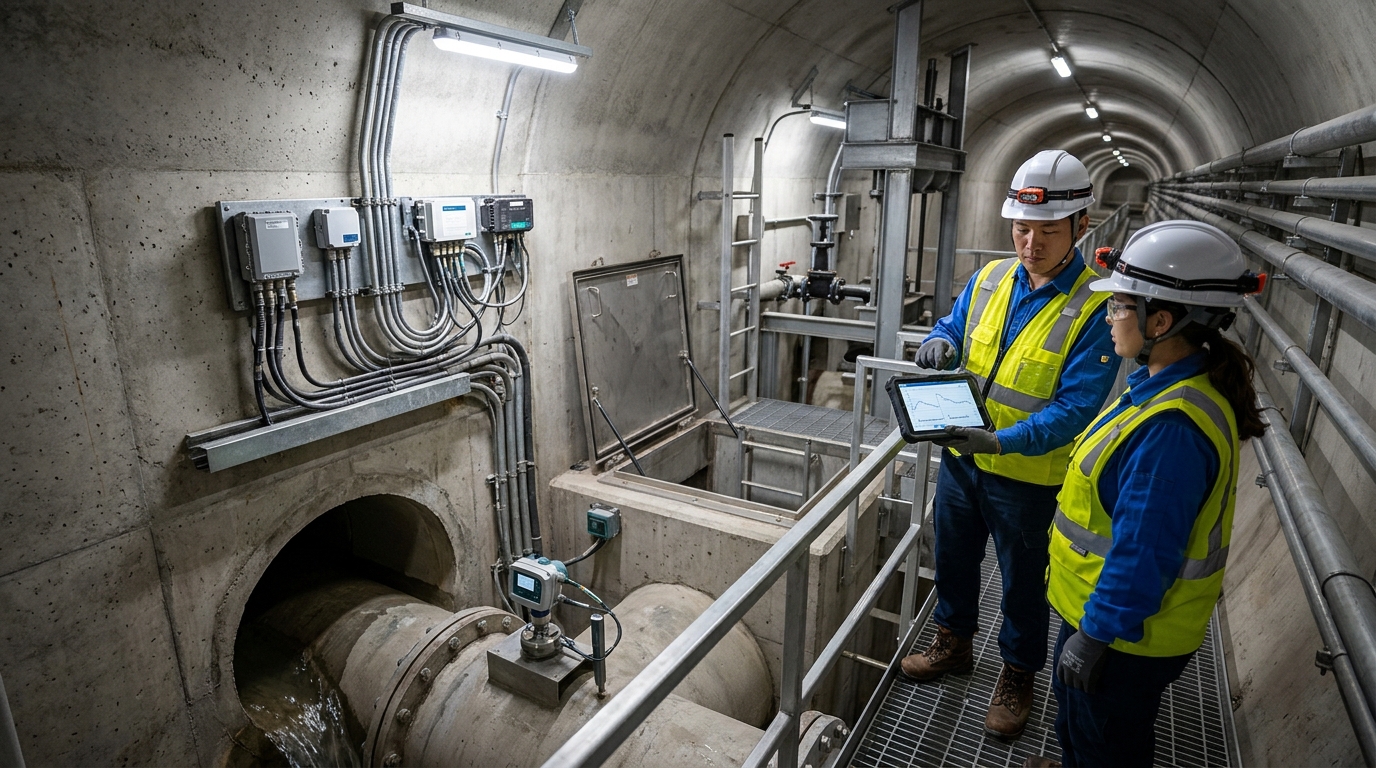
Data quality and installation conditions are equally critical factors in the procurement process. The on-site environment of water supply networks is complex, with issues such as damp valve chambers, signal obstruction, and inconvenient power supply being quite common. If equipment lacks sufficient protection or communication stability is poor, it can easily lead to data loss and false alarms.
Therefore, it is recommended to conduct on-site surveys and small-scale pilot tests before procurement to evaluate equipment performance under different pipe materials, burial depths, and pressure conditions. For leakage analysis projects, emphasis should also be placed on combining algorithmic models with manual verification, avoiding reliance solely on a single indicator.
Lifecycle Maintenance Costs
Maintenance cost analysis is a crucial aspect of the full lifecycle management of water supply network monitoring projects. Hardware equipment is not a one-time investment; subsequent expenses include battery replacement, sensor maintenance, regular calibration, communication fees, platform upgrades, and on-site inspections.
- Pressure Terminals: Relatively low maintenance costs, though cumulative O&M expenses add up with large deployments.
- Water Quality Equipment: Higher maintenance frequencies and consumable costs due to sensor contamination and limited lifespan of reagents/membranes.
- Leakage Analysis Systems: Higher labor inputs required for continuous data verification, model optimization, and on-site reviews.
Annual O&M costs typically account for a certain proportion of the initial construction investment. Whether adopting an in-house O&M approach or utilizing third-party services, emphasis should be placed on metrics such as data completeness rate, equipment online rate, alarm accuracy rate, and fault response time. Only by synchronously planning the O&M system during the initial construction phase can the industry avoid systems being "built but not used."
Future Trends: Intelligence & Fusion
Water supply network monitoring is evolving towards multi-source data fusion and intelligent analysis. Single-point pressure or water quality monitoring can no longer support the needs of complex network management. Future projects will place greater emphasis on the linked analysis of flow, pressure, water quality, noise, and work order data.
By establishing network operation profiles, water supply enterprises can more accurately identify high-leakage-risk areas, evaluate pressure regulation effects, and enhance early warning capabilities for water quality anomalies. Meanwhile, the development of low-power communication, edge computing, and cloud platforms has lowered the deployment threshold for small- and medium-scale network monitoring projects. However, the industry must remain vigilant against the tendency to prioritize construction over operation.
Conclusion
The water supply network monitoring market has room for sustained growth, but project success depends not only on equipment prices but more on demand matching, data quality, and long-term O&M capabilities. For purchasers, it is essential to align with their own network conditions, integrate leakage analysis, pressure monitoring, and water quality management into unified planning, and select solutions with mature technology, good scalability, and controllable O&M costs. For industry suppliers, future competition will shift from single hardware sales to the enhancement of comprehensive service capabilities.