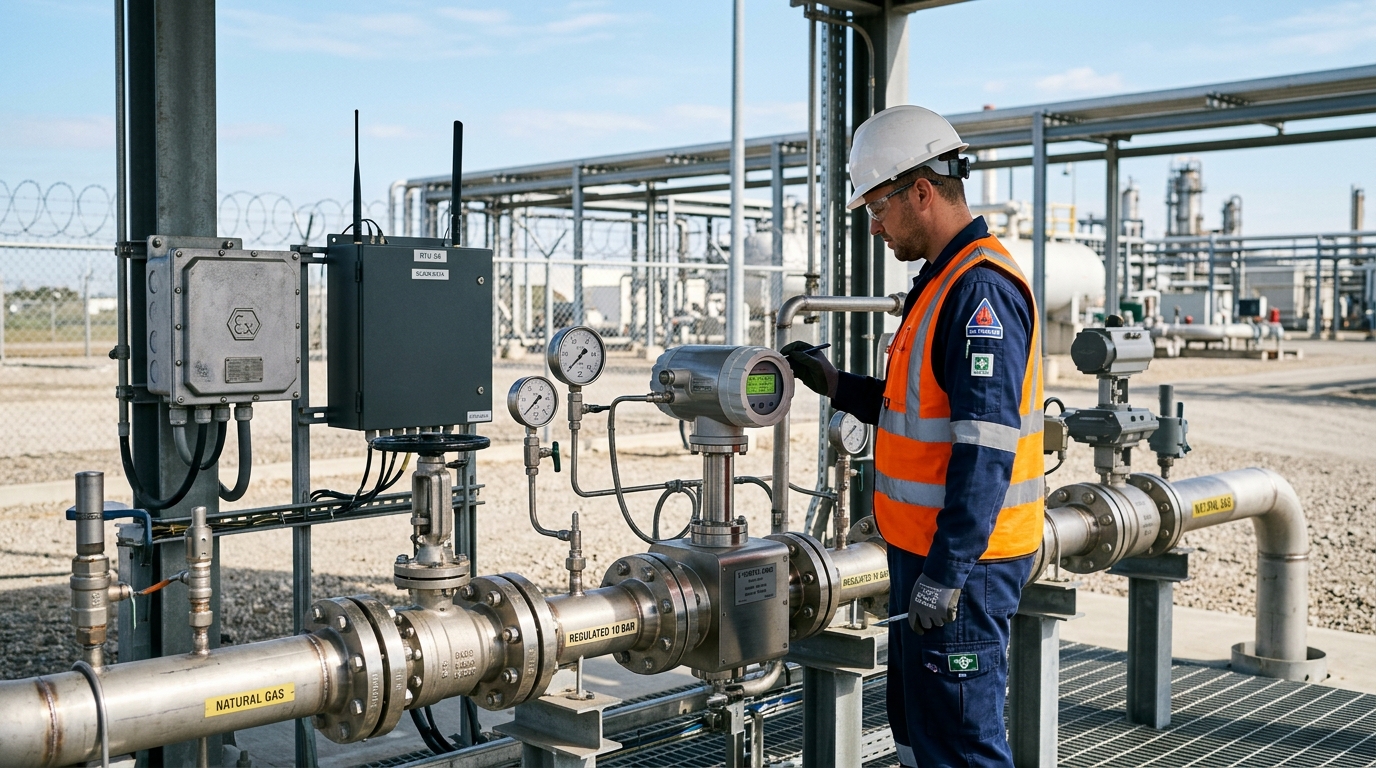
Precession Vortex Flow Meter Solution for Natural Gas Station Metering and Custody Transfer
Addressing inconsistent temperature-pressure compensation bases, lagging manual meter reading, weak evidence in billing disputes and poor wide-range adaptability in natural gas custody transfer metering, this solution deploys intelligent precession vortex flow meters as the core metering units. Integrating flow, temperature and pressure measurement with automatic compressibility-factor compensation, and working with RTU telemetry terminals and a metering management platform, it delivers online gas volume acquisition, remote reconciliation and full metering audit traceability for city gate stations, pressure regulating and metering stations, and gas distribution trade settlement - providing accurate, traceable metering data.
Overview
Summary
Addressing inconsistent temperature-pressure compensation bases, lagging manual meter reading, weak evidence in billing disputes and poor wide-range adaptability in natural gas custody transfer metering, this solution deploys intelligent precession vortex flow meters as the core metering units. Integrating flow, temperature and pressure measurement with automatic compressibility-factor compensation, and working with RTU telemetry terminals and a metering management platform, it delivers online gas volume acquisition, remote reconciliation and full metering audit traceability for city gate stations, pressure regulating and metering stations, and gas distribution trade settlement - providing accurate, traceable metering data.
Key Advantages
Challenges
- Supplier and buyer use inconsistent metering bases - different temperature-pressure compensation references and compressibility algorithms - causing frequent billing disputes with no original data as evidence
- Manual meter reading is infrequent and lagging; deviations surface only at monthly reconciliation, after the window for tracing gas losses has passed
- Station loads fluctuate strongly with daily peaks and seasons; single-range meters show marked low-flow errors and wide-range metering is difficult
- Natural gas stations are explosion-proof zones where cabling and power retrofits of conventional instruments are restricted, making online upgrades slow and costly
- Metering data from multiple stations are scattered in silos, lacking a unified platform for gas balance analysis, differential assessment and metering audit
Results
- Integrated automatic temperature-pressure and compressibility-factor compensation unifies both parties' algorithms, significantly reducing custody transfer measurement uncertainty and billing disputes
- Hourly remote automatic volume acquisition and reconciliation advances deviation detection from months to days, with quantifiable differential assessment
- Wide-range measurement covers station peak and off-peak loads, keeping low-flow accuracy stable and clearly improving recovered trade gas volume
- Internal battery supply plus standard RS485/4-20 mA outputs avoid large-scale cabling retrofits in explosion-proof zones, cutting station online-upgrade lead time by more than 50%
- Instantaneous and cumulative volumes with original temperature and pressure records are fully retained and exportable, providing evidence in settlement disputes and significantly lowering commercial risk
Solution Details
Precession Vortex Flow Meter Solution for Natural Gas Station Metering and Custody Transfer
Natural gas stations are the metering chokepoints of urban gas transmission, distribution and industrial supply, and the accuracy of custody transfer metering directly affects the economic interests of both trading parties. For a long time, station metering has suffered from inconsistent temperature-pressure compensation bases: suppliers and buyers each apply different compensation references and compressibility-factor algorithms, settlement data cannot be aligned, billing disputes are frequent, and original measurement evidence is hard to produce. Manual meter reading is infrequent and lagging - deviations are often discovered only during monthly reconciliation, long after the best window for tracing gas losses has passed. Station loads fluctuate strongly with daily peaks and seasonal variations, so single-range meters show marked errors in the low-flow region and wide-range metering is difficult. In addition, natural gas stations are explosion-proof zones where cabling and power retrofits of conventional instruments are restricted, and metering data from multiple stations are scattered in silos, lacking a unified platform for gas balance analysis and differential assessment.
This solution deploys intelligent precession vortex flow meters as the core metering units at every custody transfer point. The meter measures flow by the vortex precession phenomenon formed as gas passes through the sensor: the precession frequency is proportional to flow rate and unaffected by changes in the physical properties and density of the gas. With no moving mechanical parts inside, it runs stably and reliably and needs no special maintenance over the long term. The intelligent meter integrates a flow probe, microprocessor, pressure sensor and temperature sensor in one body, with automatic real-time tracking compensation and compressibility-factor correction; nominal diameters DN15-200 and nominal pressures of 1.6/2.5/4.0/6.3 MPa cover city gate stations, regulating and metering stations and industrial offtake points. Metering data are output via pulse, 4-20 mA or RS485 to RTU telemetry terminals and reported over 4G/Ethernet to the metering management platform, which unifies compensation and compressibility algorithms, achieves hourly volume acquisition, remote reconciliation and differential analysis, and keeps original temperature-pressure-flow records fully traceable as the data foundation for trade settlement and metering audits. Low overall power consumption allows internal battery or external power supply, meeting the deployment needs of stations without mains power in explosion-proof zones.
Precession Vortex Measurement Principle for Natural Gas Custody Transfer
- Precession vortex measurement principle: precession frequency is proportional to flow rate, unaffected by gas physical properties or density changes; no moving mechanical parts ensures stable, reliable, maintenance-free long-term operation
Integrated Intelligent Metering with Real-Time Compensation
- Integrated intelligent metering: flow probe, microprocessor, pressure sensor and temperature sensor in one body with automatic real-time tracking compensation and compressibility-factor correction for high accuracy under varying conditions
Wide Operating Coverage for Gas Station Applications
- Wide operating coverage: DN15-200 nominal diameters, 1.6/2.5/4.0/6.3 MPa nominal pressures, -20 to +80 degrees C medium temperature, stainless steel 1Cr18Ni9Ti and aluminium alloy ZL101A bodies for gate stations, regulating stations and industrial offtakes
DN15-200
Nominal Diameters
1.6/2.5/4.0/6.3 MPa
Nominal Pressures
-20 to +80°C
Medium Temperature
Flexible Outputs and Networking Integration
- Flexible outputs and networking: pulse, 4-20 mA and RS485 outputs with flange connection for easy installation, seamless integration with RTU telemetry terminals, SCADA and metering management platforms
Low-Power Flexible Supply for Explosion-Proof Stations
- Low-power flexible supply: low overall consumption with internal battery or external power; pressure and temperature signals use standardized sensor inputs with strong interchangeability, suited to explosion-proof stations without mains power
Metering Audit Traceability and Settlement Evidence
- Metering audit traceability: LCD displays instantaneous and cumulative flow with temperature and pressure; original records are uploaded and retained on the platform for remote reconciliation, differential analysis and settlement audit evidence
References
- Natural gas station custody transfer metering requirements
- Precession vortex flow meter measurement principle and technical specifications
- Intelligent metering platform and RTU telemetry integration standards
Approach
How we implement intelligence into your infrastructure step by step.
Station metering point survey and basis design
Survey metering points at city gate stations, regulating and metering stations and industrial offtakes; sort out the flow range, pressure class and load fluctuation of each custody transfer point, unify the temperature-pressure compensation basis and compressibility algorithm, and produce the metering point design and reconciliation rules.
Instrument selection and explosion-proof installation
Select DN15-200 precession vortex flow meters according to the flow range and pressure class of each point; complete flange connection and grounding in line with explosion-proof zone installation codes, verify battery life at internal-battery points, and finish on-site parameter configuration and initial calibration checks.
Data networking and platform configuration
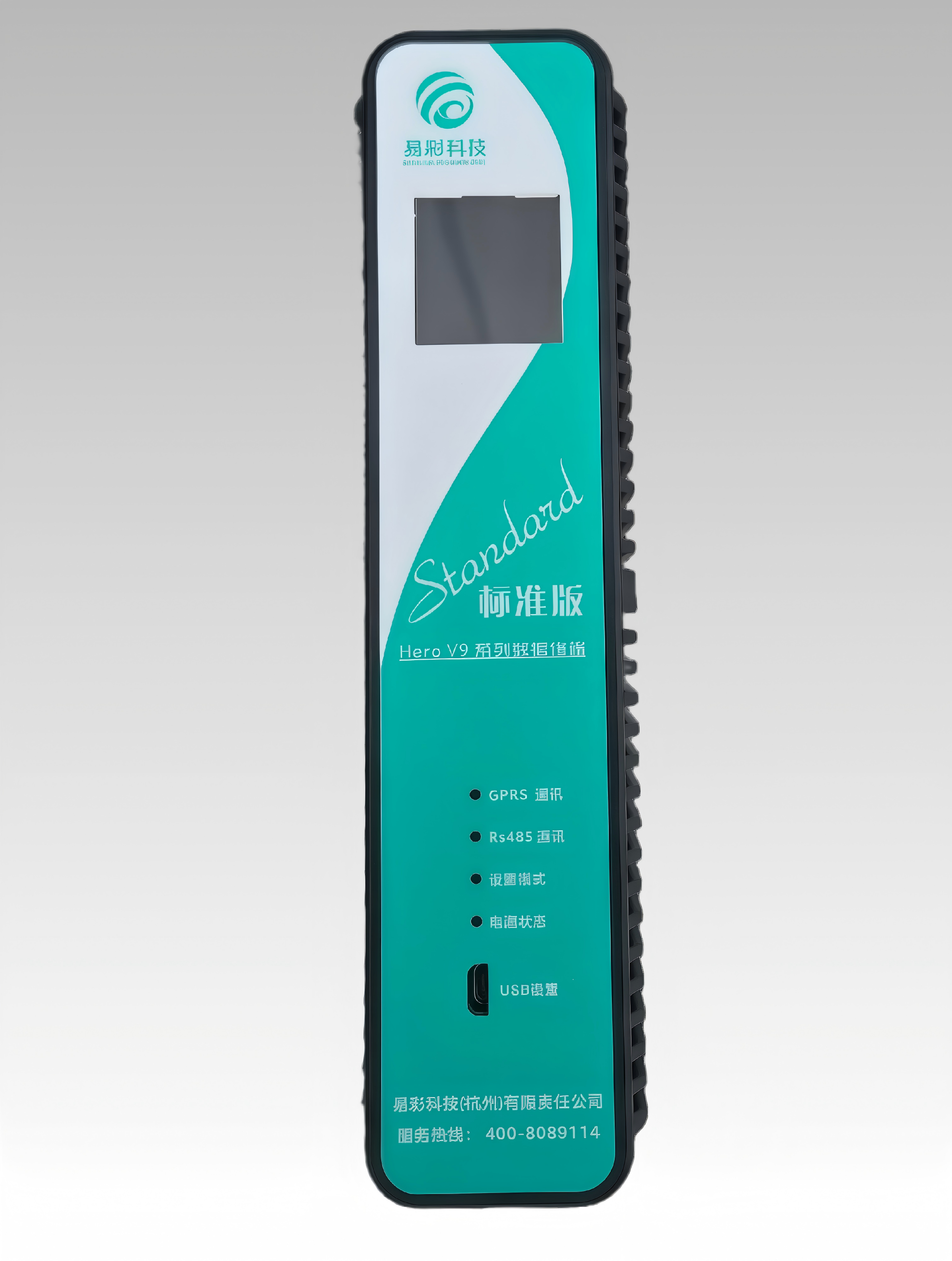
Feed metering signals via pulse/4-20 mA/RS485 into RTU telemetry terminals and report over 4G or Ethernet to the metering management platform; configure acquisition frequency (hourly volumes with temperature and pressure), reconciliation rules, differential alarm thresholds and per-station gas balance models.
Custody transfer comparison and verification
In the early operation phase run parallel comparisons against supplier metering data and portable proving devices to verify the accuracy of online metering and the consistency of compensation algorithms; check low-flow accuracy and stability across peak-load switching to remove systematic deviations caused by installation and operating conditions.
Long-term operation and differential assessment
Establish instrument inspection and battery replacement registers; periodically export original temperature-pressure-flow data for monthly settlement reconciliation and differential assessment; retrieve retained records as evidence in disputes, and continuously refine reconciliation rules and alarm thresholds to keep custody transfer metering fair and reliable over the long term.
Recommended Hardware
Essential components for this solution.
❓ Related FAQs
Related Solutions
Split-Type Electromagnetic Flow Meter Solution for Pump Stations with High Humidity and Heavy Vibration
Inline Ultrasonic Flow Meter Solution for Pump Station Discharge Metering and Pump Efficiency Testing
Doppler Ultrasonic Flow Meter Solution for Flow Monitoring in Partially Filled Municipal Drainage Conduits

Ready to Optimize Your Business?
Contact us, and our professional team will provide customized solutions to help your business achieve digital transformation.
Get In Touch