Background: The High-NRW Reality of Smaller Utilities
The utility serves a built-up area with roughly 420 km of distribution mains, predominantly grey cast iron (CI) and prestressed concrete pipe (PCP) with an average age above 22 years. Non-revenue water had plateaued near 34%. Unlike metropolitan utilities, this operator faced three hard constraints: a limited annual leak-detection budget, no SCADA history to mine, and a field team of fewer than ten people. The project goal was therefore not a showcase "smart water" platform, but an affordable, sustainable loss-control loop.
Technical Design: Three-Tier District Metered Areas
The network was structured into three levels: 4 bulk metering points (treatment works outlets and inter-zone transfer mains), 18 second-tier DMA districts, and 62 third-tier sub-districts. District boundaries followed natural barriers — rivers, railways and arterial roads — wherever possible; remaining interconnections were isolated by valve closures verified with blind plates. Boundary integrity is the single most decisive factor in any DMA programme.
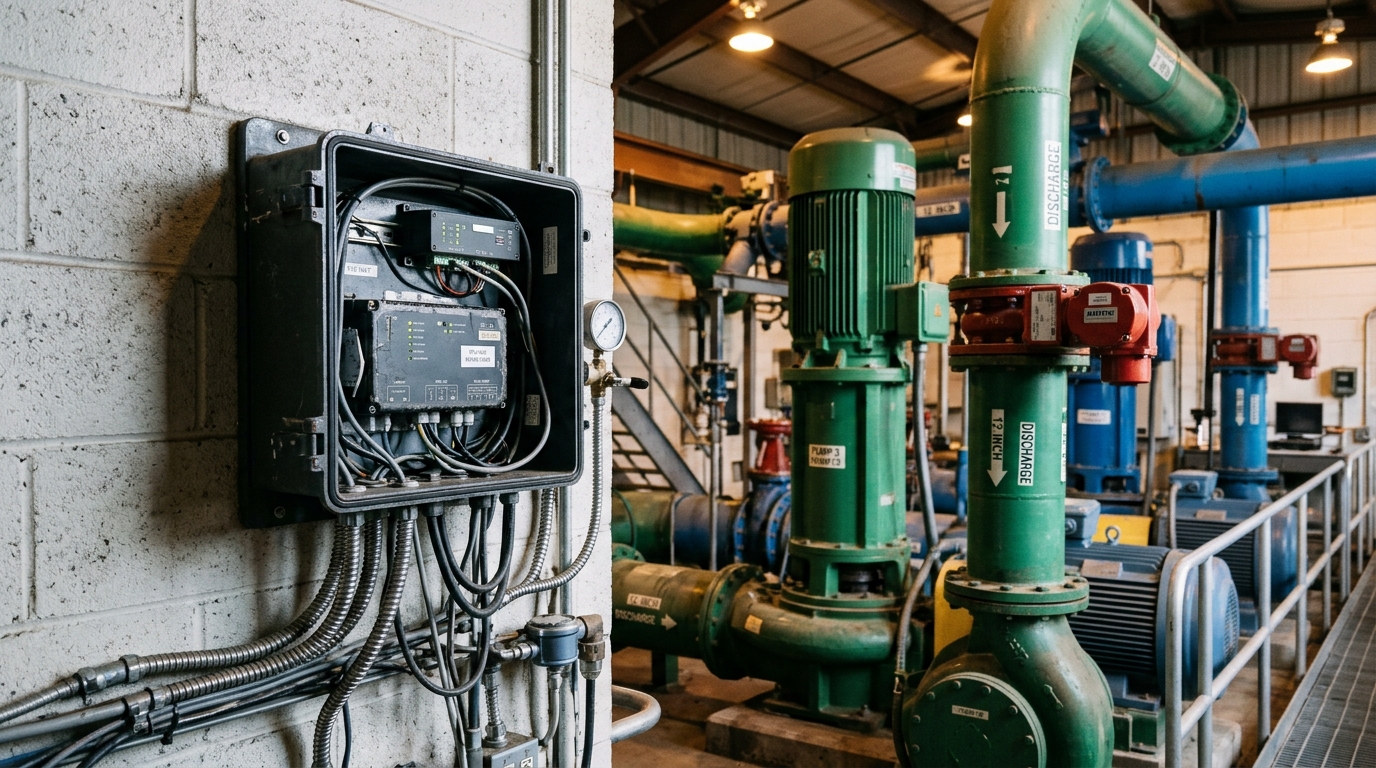
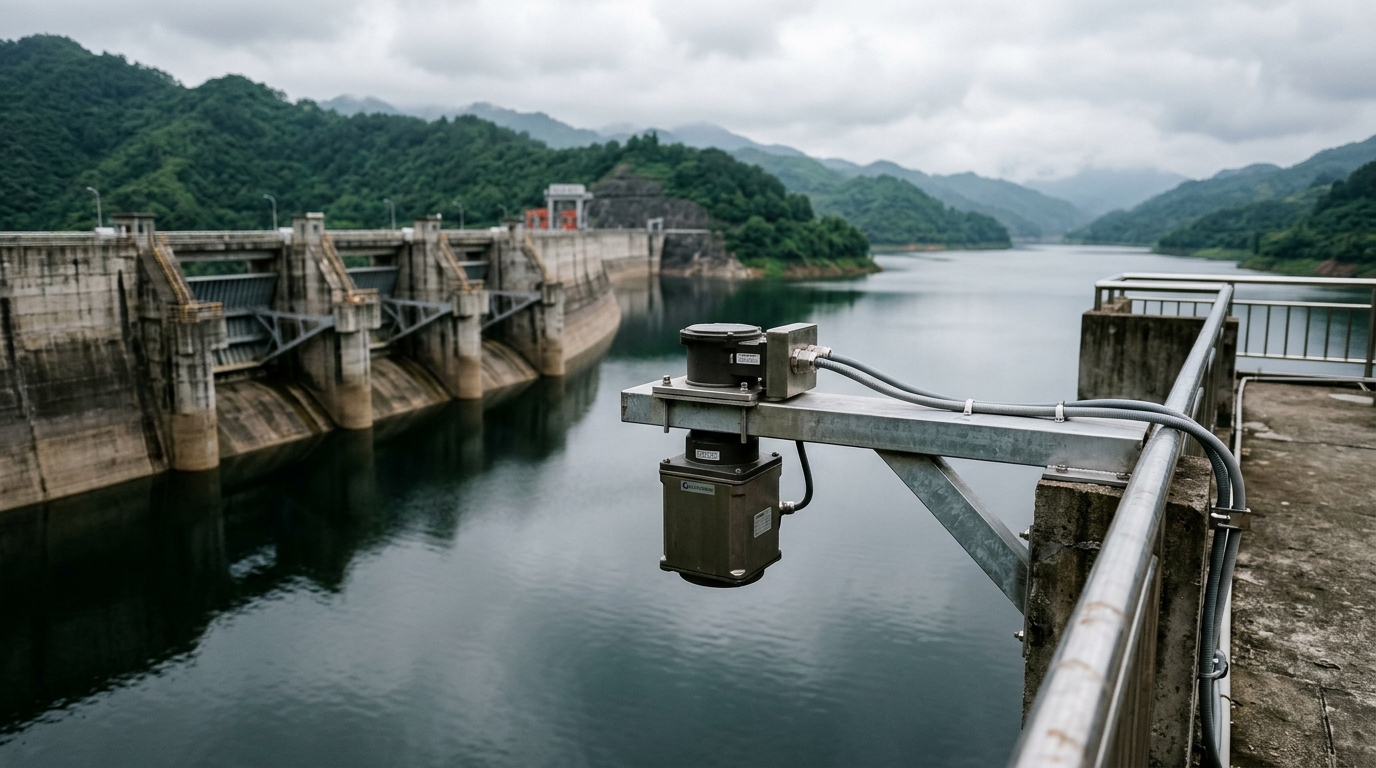
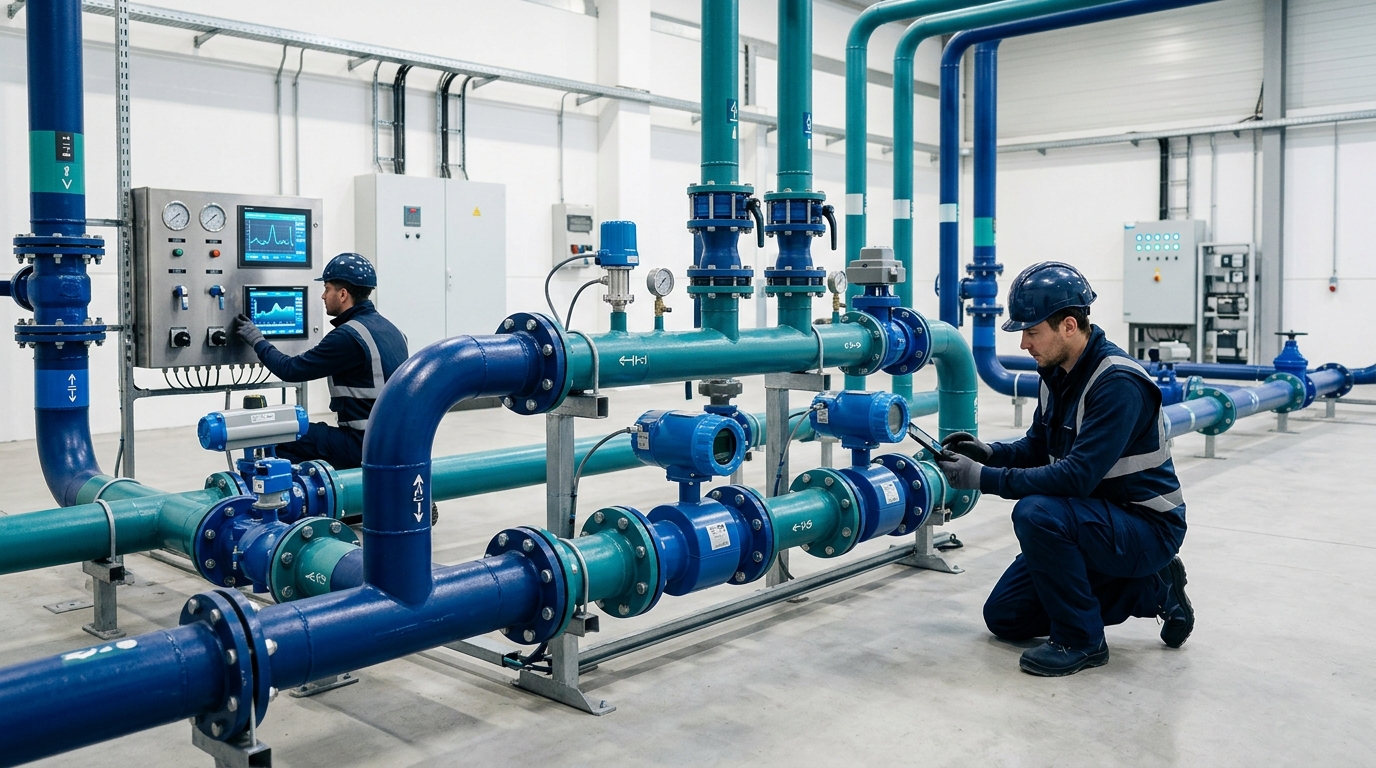
Metering followed a hybrid strategy: insertion electromagnetic flowmeters (accuracy class 0.5, referenced against ISO 4064 / OIML R49 metrological principles) on DN300+ trunk mains, and clamp-on ultrasonic water meters (±1%) on DN100–DN250 district inlets. Clamp-on devices avoided pipe-cutting works and kept per-point cost manageable. Every meter feeds an IoT RTU telemetry node reporting at 15-minute intervals, tightened to 5 minutes during the night-flow window.
Method: MNF-Driven Leak Detection Sequencing
The analytical core is minimum night flow (MNF): the 02:00–04:00 sustained baseline, minus legitimate overnight consumption, yields the night-time residual flow. The 18 districts were ranked by residual flow per kilometre of main, and the five worst were surveyed using a stepped approach — first a grid of acoustic noise loggers (a Low-cost Sensing option at roughly one-fifth the unit cost of correlators), then acoustic correlators for pinpointing, and finally excavation for verification.
Three lessons stood out:
- Fix big bursts before background leakage: 37 visible leaks repaired in the first six months delivered a fast ~9-percentage-point drop, proving the payback;
- Pair with pressure management: PRVs installed in six high-pressure zones cut night pressures from 0.42 to 0.28 MPa, preventing background leakage rebound;
- Cross-check meter data monthly: district inflow versus customer-meter summation triggers a meter-integrity investigation whenever the deviation exceeds 5%, avoiding false leak alerts from bad data.
Conclusion
After 24 months, losses fell from 34% to 11%, saving around 3.8 million m³ per year with a payback period of about 3.1 years. For budget-constrained utilities, DMA does not require a fully fledged smart-water stack from day one: close district boundaries properly, get the MNF data chain working, then layer on pressure management and intelligent alarms — a pragmatic, proven path for urban lifeline infrastructure.