Procurement and Maintenance of DMA Metering: What is the Cost of Water Distribution Network Leakage?
In an era where water resource conservation is paramount, District Metered Areas (DMA) have evolved from pilot tools into essential industry infrastructure. This comprehensive analysis explores the market drivers, technical pathways, cost structures, and investment returns associated with DMA deployment in urban water supply networks.
I. Introduction: Under Leakage Rate Constraints, DMA Evolves to Industry Infrastructure
Recent public industry data indicates that the total length of urban water supply pipelines nationwide has exceeded 1 million kilometers, with an annual supply scale reaching tens of billions of cubic meters. However, factors such as pipe aging, joint leakage, pressure fluctuations, and construction disturbances keep leakage rates high in some regions.
Leakage not only wastes resources but also increases costs for production, transmission, emergency repairs, and energy consumption. As leakage control targets become stricter industry assessments, the leakage rate is shifting from a simple result indicator to a process indicator requiring continuous monitoring. Consequently, DMA district metering has become a widely adopted management tool, allowing utilities to independently account for water volume, pressure, and flow changes through boundary valve control and flowmeter deployment.
II. Market Drivers: Policy, Aging Networks, and Pricing Mechanisms
Policy targets are the primary factor driving the expansion of the DMA market. Regulatory authorities have repeatedly proposed requirements to reduce leakage rates, aiming to control the national urban public water supply network leakage rate within 9% by 2025, with some key regions targeting around 8%. For areas with leakage rates exceeding 15-20%, this necessitates concentrated investment in network surveys, zone construction, and leak detection.
Market Structure & Scale
- Systematic Engineering: DMA involves flowmeters, pressure gauges, noise loggers, data acquisition terminals, communication networks, GIS, and software platforms.
- Market Size: The domestic annual market scale related to pipe network leakage control has reached the tens of billions of RMB level.
- Growth Trend: Over the next three years, growth will shift from purchasing equipment to purchasing data quality, O&M capabilities, and leakage reduction outcomes.
III. Technical Pathways: Zoning, Metering, and Leakage Quantification
The core logic of DMA is dividing a complex pipe network into accountable small units. A typical system establishes a multi-level metering structure:
- Primary Metering: Corresponds to water leaving the plant or large-diameter transmission mains.
- Secondary Metering: Corresponds to administrative districts or large zones.
- Tertiary Metering: Corresponds to independent DMA zones.
- Quaternary Metering: Extends to communities, large users, or key nodes.
Finer zoning allows for more precise leakage localization but increases investment and O&M complexity. Therefore, zoning must match network topology, valve controllability, and management capabilities rather than simply being "more is better."
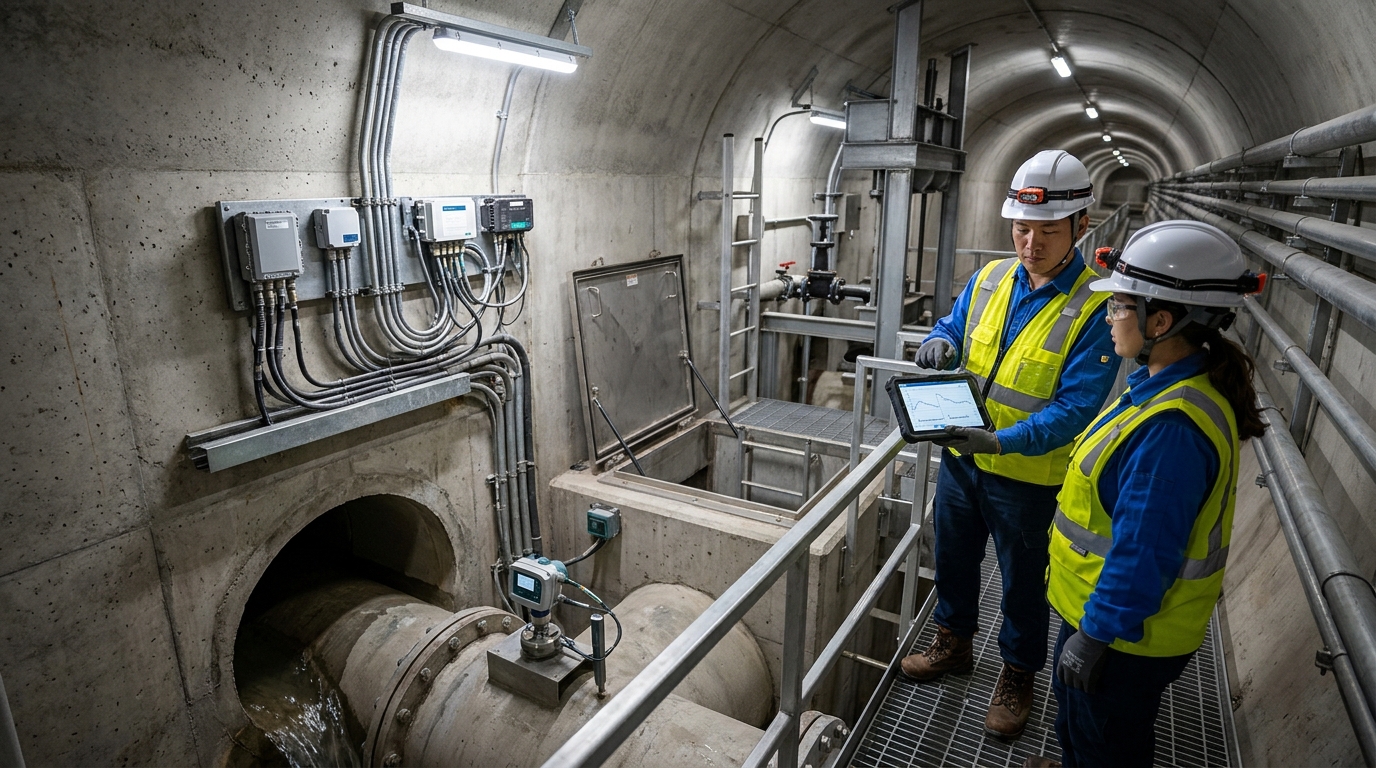
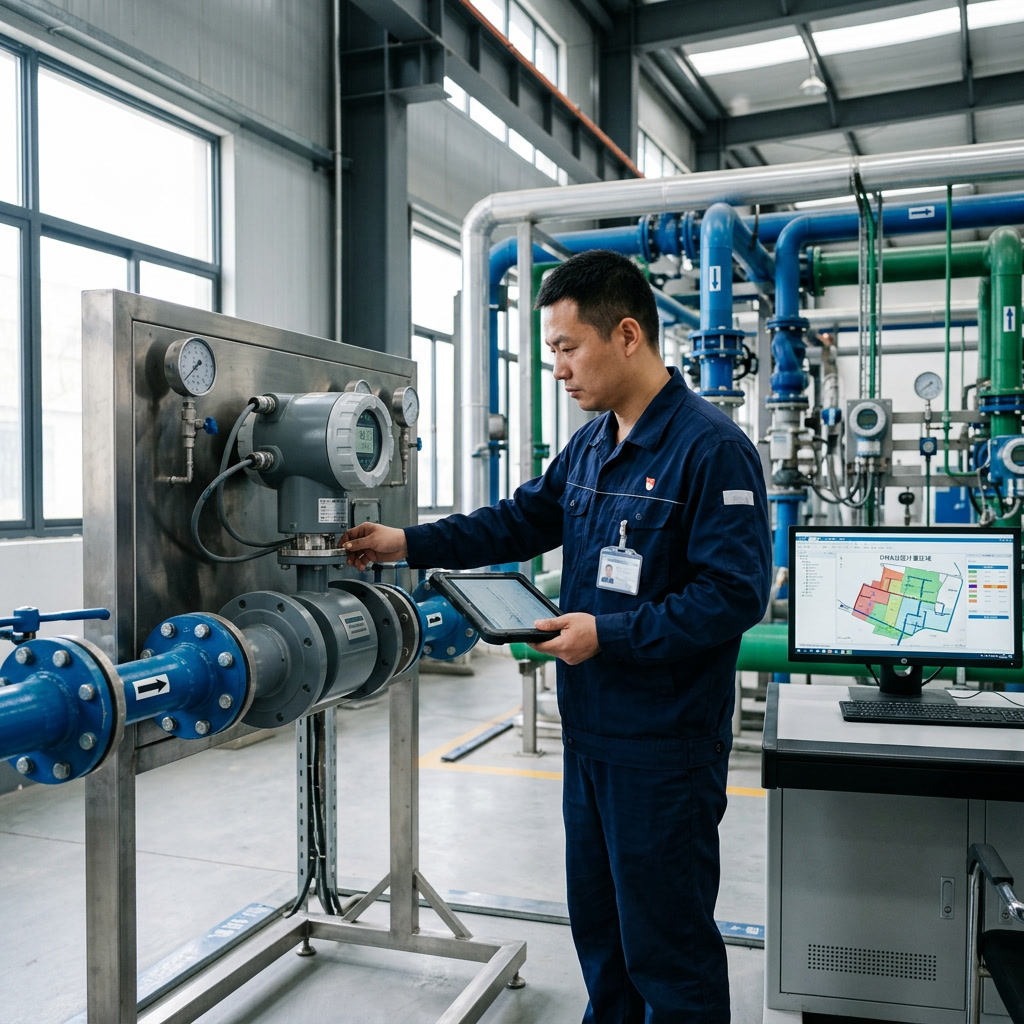
At the metering level, DMA addresses both "input water volume" (via electromagnetic, ultrasonic, or Doppler flowmeters at inlets) and "authorized consumption" (via remote-read user meters). By monitoring the Minimum Nightly Flow (MNF), utilities can establish a zonal leakage baseline and identify physical leaks when nighttime flow remains high despite zero authorized consumption.
IV. Product Price Ranges: From Single Instruments to System Integration
Procurement prices vary significantly based on caliber, accuracy, communication mode, and installation conditions. Below is a breakdown of typical cost structures in the Chinese market (RMB):
Flowmeters
- DN15-DN50 (Household/Retrofit): ¥300 – ¥1,500 / unit
- DN80-DN300 (Community/Branch): ¥12,000 – ¥60,000 / unit
- DN400-DN800 (Large Caliber): ¥50,000 – ¥180,000 / unit
- DN1000+ (Transmission Mains): ¥120,000 – ¥350,000 / set
- Insertion Ultrasonic: ¥8,000 – ¥40,000 / unit
Monitoring & Software
- Smart Pressure Transmitters: ¥1,500 – ¥20,000 / unit
- Noise Loggers (Single Point): ¥2,500 – ¥15,000 / unit
- Data Acquisition Terminals/RTUs: ¥2,000 – ¥12,000 / unit
- Basic DMA Platform: ¥300,000 – ¥1.5 Million
- Integrated Platform (SCADA/GIS): ¥2 Million – ¥5 Million+
Engineering Implementation Costs: Construction for a single small DMA ranges from ¥100,000 to ¥500,000, while medium DMAs range from ¥500,000 to ¥1.5 Million. Large cross-main projects can exceed ¥2 Million. A city building 100 DMAs with full instrumentation typically requires an investment of ¥20 Million to ¥100 Million.
V. Purchasing Recommendations: Diagnose Before You Buy
The first step in purchasing a DMA system is not comparing quotes, but completing a diagnosis of the current network status. Utilities should analyze network length, material, laying year, pressure distribution, and burst records.
Strategy by Leakage Rate:
- >15% Leakage: Prioritize resolving missing main pipe metering, valve failures, and large user errors.
- 8%-15% Leakage: Focus on building tertiary/quaternary DMAs and strengthening MNF analysis.
- <8% Leakage: Focus on refined pressure control, model prediction, and smart meter data fusion to reduce background leakage.
Equipment Selection: Distinguish between commercial settlement metering (requiring Class 0.5+ accuracy) and operational monitoring (Class 1.0 may suffice). Ensure flowmeters have appropriate straight pipe sections (e.g., 5D upstream, 3D downstream) to avoid data distortion.
Platform Standards: The platform must automatically calculate zonal water balance, unaccounted-for water, and pressure anomaly indices, linking them with GIS and work order systems. Communication strategies should balance NB-IoT/4G coverage with battery life and data collection frequency (typically 15-minute intervals, adjustable for critical zones).
VI. Maintenance Cost Analysis: Long-Term Operation Determines Credibility
The true cost of a DMA project includes 5–10 years of maintenance. Industry experience suggests annual O&M costs account for 6% to 12% of the initial construction investment. For a ¥50 Million project, annual O&M could be ¥3–6 Million. Insufficient maintenance leads to equipment offline status, data loss, and expanded metering deviations, undermining the entire system's credibility.
Key O&M Cost Factors
- Flowmeter Verification: Periodic calibration every 2–3 years; costs ¥3,000–¥20,000 per unit depending on caliber and disassembly difficulty.
- Battery Replacement: Pressure gauges and noise loggers typically require battery replacement every 3–6 years (¥200–¥1,000 per point).
- Communication Fees: Annual SIM card fees for NB-IoT/4G range from ¥30–¥300 per point.
- Software Maintenance: Typically 8%–15% of software construction costs annually for upgrades, security patches, and server resources.
VII. Case Calculations: Investment Returns in Different Urban Conditions
Case 1: New District in Southern China (Prefecture-Level)
Context: 85 sq km area, 1,200 km pipeline, Pre-retrofit leakage 16.8%.
- Investment: ~¥78 Million (135 DMAs, 362 large flowmeters, 528 pressure gauges, 2,200 noise loggers).
- Result: Leakage dropped to 10.5%; reduced leakage volume ~14.5 million m³/year.
- Savings: ~¥33.35 Million/year (based on ¥2.3/m³ production cost).
- Payback Period: ~2.8 Years (after deducting ~¥5.2M annual O&M).
Case 2: County-Level City in Northern China
Context: 420 km pipeline, Pre-retrofit leakage 21.5% (Aging cast iron pipes, high meter errors).
- Investment: ~¥26 Million (68 DMAs, 186 flowmeters, 210 pressure gauges, 32,000 smart meters).
- Result: Leakage dropped to 13.9%; reduced leakage volume ~5.2 million m³/year.
- Savings: ~¥9.36 Million/year (based on ¥1.8/m³ savings).
- Payback Period: ~3.4 Years (after deducting ~¥1.8M annual O&M).
Case 3: Mega-City Central Urban Area
Context: Dense underground pipelines, restricted excavation. Strategy: Pressure management + Noise monitoring.
- Investment: ~¥9.5 Million (12 high-leakage zones).
- Result: Average zonal pressure dropped 0.06 MPa; burst frequency decreased 28%; leakage dropped from 12.3% to 10.1%.
- Impact: Short construction cycle, minimal traffic impact. Suitable for continuous improvement in high-density areas.
These cases illustrate that ROI depends not just on equipment prices, but on baseline leakage rates, water production costs, network repairability, and the continuity of O&M systems. Small and medium-sized cities with high leakage and weak metering foundations often see more obvious marginal benefits from DMA construction.
VIII. Concluding Outlook: From District Metering to Digitalization
Looking ahead, the DMA market will exhibit three key trends:
- Outcome-Oriented Procurement: Shift from buying hardware to buying results (leakage reduction, MNF controllability, closed-loop work orders). Contracts will increasingly include performance assessment clauses.
- Model-Assisted Decision-Making: Leveraging accumulated data from smart meters, pressure, and acoustic monitoring to use water balance models and anomaly identification algorithms, filtering out zones requiring on-site intervention.
- Digital Twin Integration: DMA will integrate deeply with GIS, hydraulic models, dispatch systems, and customer service systems, evolving from a "monitoring tool" to a comprehensive "operational system."
DMA district metering is a crucial tool for controlling network leakage and improving refined management, but it is not a panacea. Water utilities must reasonably determine zoning levels, equipment configuration, and O&M budgets based on their specific network conditions, avoiding the pitfall of emphasizing construction over operation. As digital technologies mature, DMA will transition from a phased construction project to a long-term operational capability.