DMA District Metering Procurement and Maintenance: How Much Does Pipeline Network Leakage Cost?
Shift from Experience-Based Repairs to Data-Driven Zoning
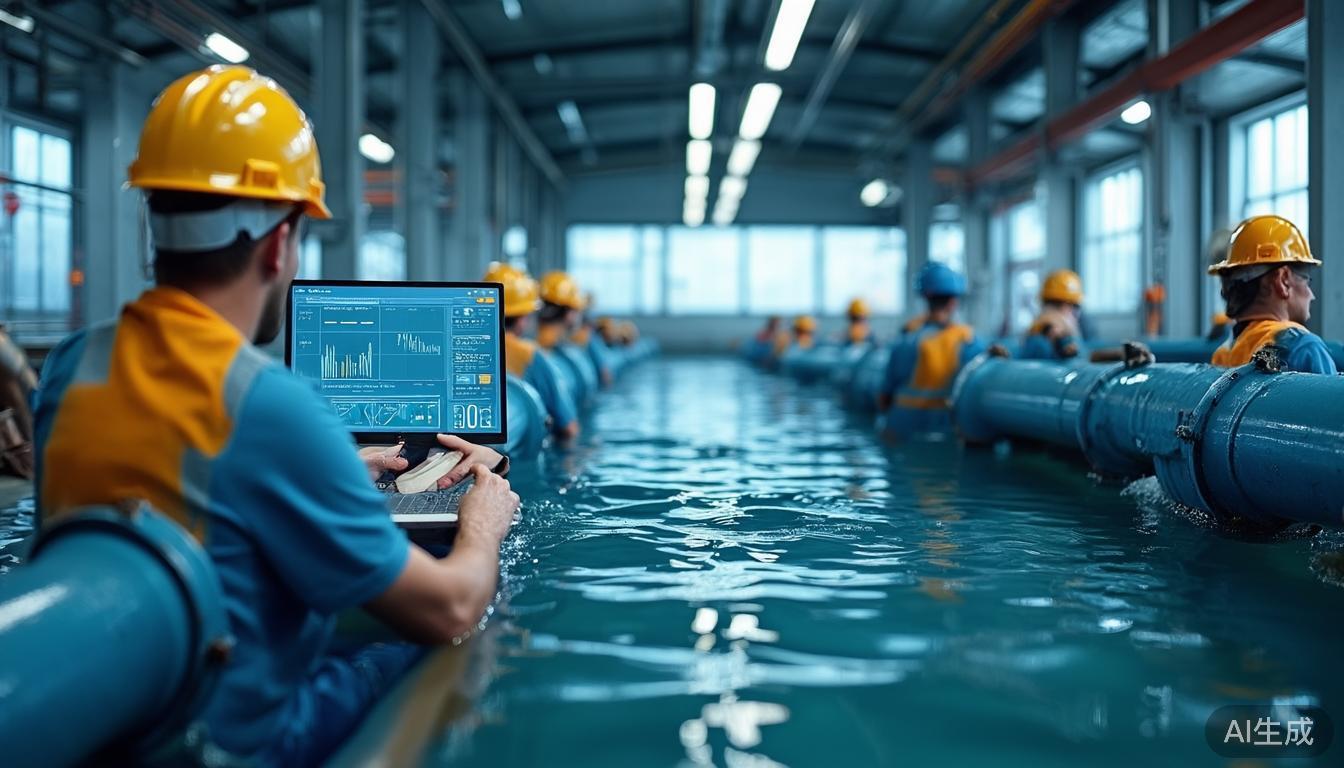
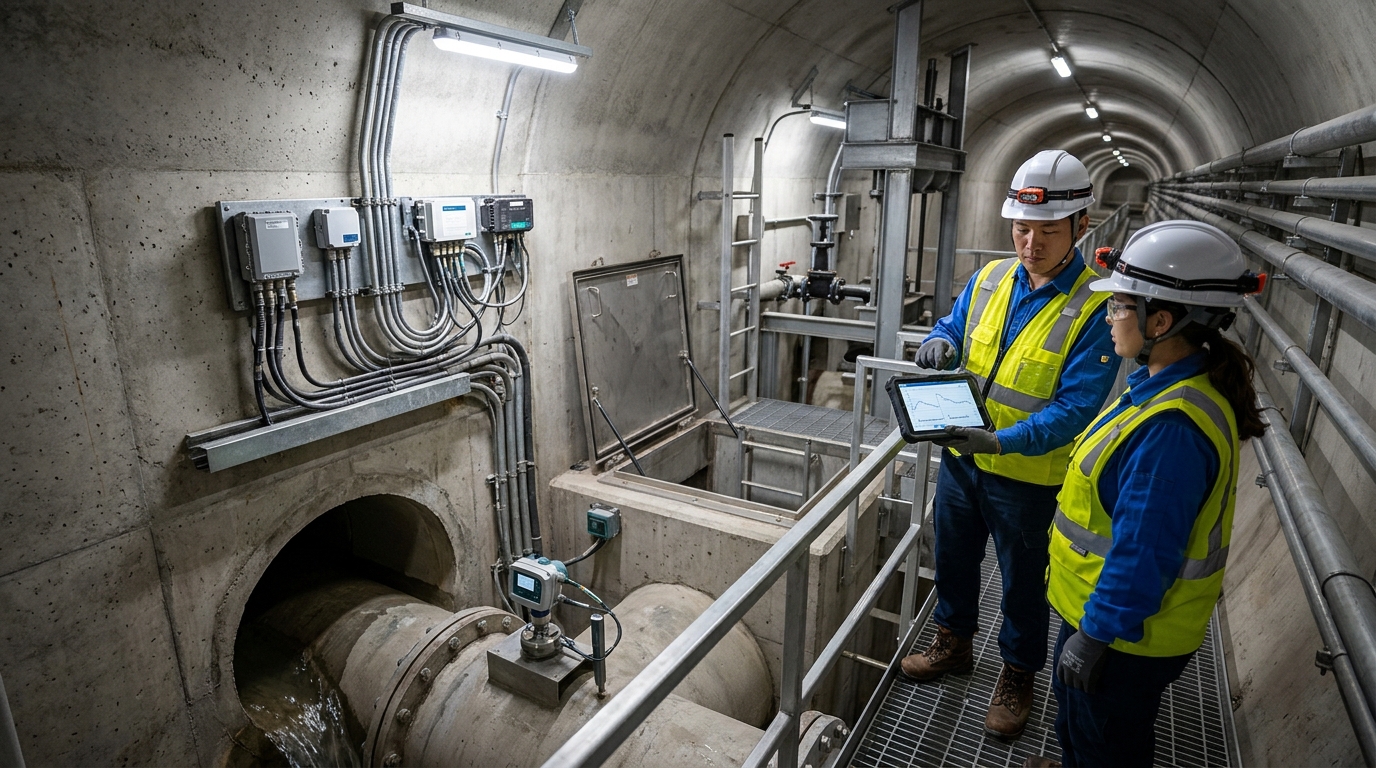
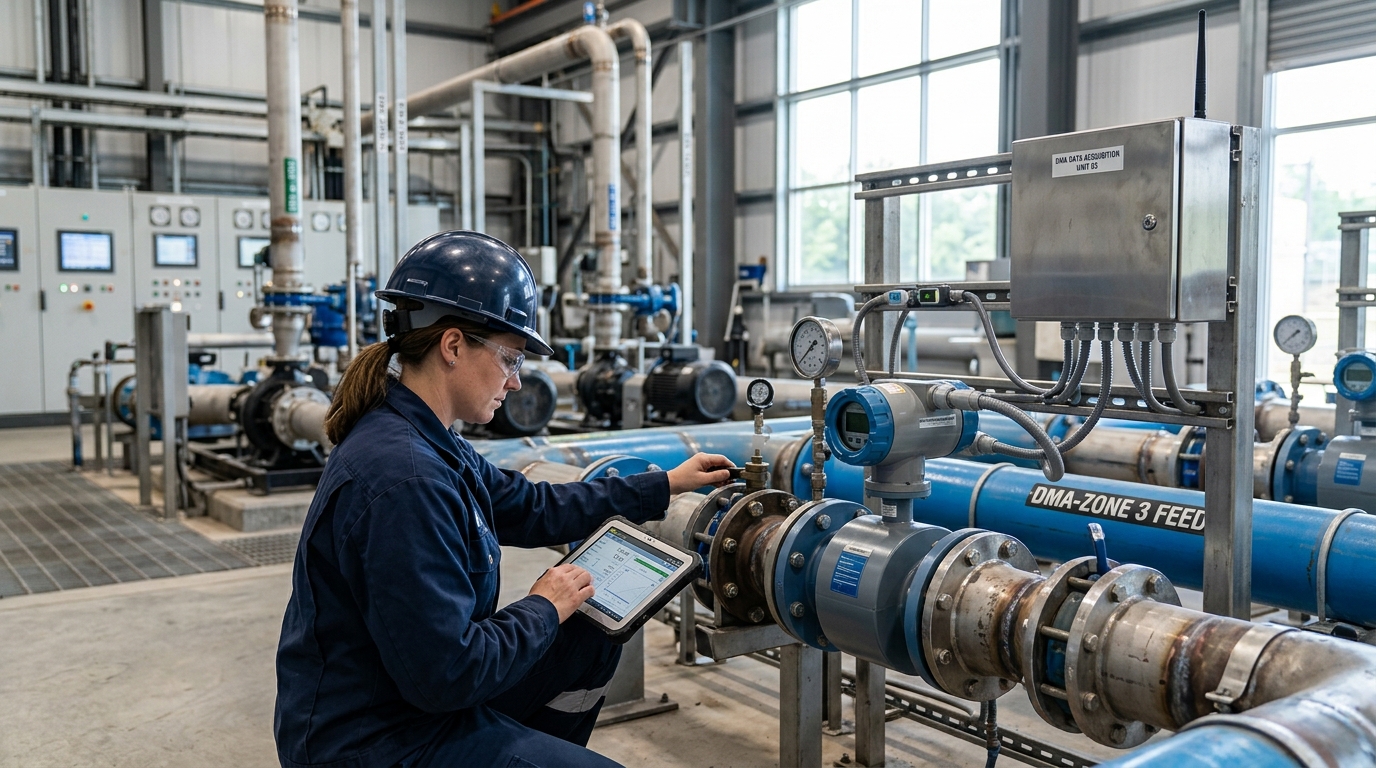
Against the backdrop of the water supply industry shifting from "ensuring water supply" to "lean operations," DMA (District Metered Area) metering is becoming a crucial tool for controlling network leakage and reducing non-revenue water. In the past, leakage management relied heavily on manual inspections, acoustic leak detection, and reactive repairs, resulting in delayed leak discovery and difficulty in quantifying treatment effectiveness. DMA uses zones as units, installing flowmeters, pressure gauges, and data acquisition terminals at the entrances and exits of each area, making indicators such as leakage rate, minimum night flow, and pressure fluctuations monitorable, comparable, and traceable.
From a market perspective, DMA is no longer just about procuring individual devices; it is a systematic engineering project encompassing network census, zone design, metering equipment, communication networks, data platforms, leakage analysis, and O&M services. For cities with daily water supply capacities ranging from 50,000 to 500,000 cubic meters, investment intensity, equipment configuration, and maintenance costs vary significantly. This article reviews the DMA metering market across dimensions such as price ranges, procurement logic, maintenance costs, typical cases, and return on investment.
I. Market Background: Network Leakage Management Enters the Era of District Metering
Network leakage is a core issue long faced by the water supply industry. Aging pipes, deteriorating joints, pressure fluctuations, construction damage, and metering errors all contribute to water loss. The industry generally uses the leakage rate as a key indicator to measure water supply management levels. When the leakage rate exceeds 12%, it often indicates significant physical or commercial leakage in the network; when it drops below 9%, the focus of management shifts from large-scale leak detection to refined pressure management, boundary metering, and anomaly alerting.
The basic concept of DMA is to divide the water supply network into several independently metered zones, installing metering devices at the main inlets, outlets, or interconnections of each zone. A typical DMA covers 500 to 5,000 households or corresponds to a network length of 5 to 30 kilometers. Taking a city with a daily supply capacity of 300,000 cubic meters as an example, if the annual water supply is about 110 million cubic meters, a 1 percentage point decrease in the leakage rate would theoretically reduce water loss by about 1.1 million cubic meters. This quantifiable water-saving effect is the foundation for the continuous expansion of the DMA market.
II. Product Price Ranges: Cost Structure from Single Devices to System Integration
The cost of DMA metering should be broken down into metering equipment, pressure monitoring, data acquisition, communication, construction and installation, software platforms, and O&M services. Differences in caliber, accuracy, power supply, and construction conditions can lead to price variations of several times.
Flowmeters (Common Configurations)
- DN100-DN300 Electromagnetic: 8,000 – 35,000 RMB/unit
- DN400-DN800 Inline: 30,000 – 120,000 RMB/unit
- Ultrasonic (Insertion/Transit): 20,000 – 100,000 RMB/unit
- Note: Low-flow accuracy (Class 0.5+) is critical.
Supporting Equipment & Construction
- Pressure Transmitters: 2,000 – 10,000 RMB/unit
- Data Acquisition Terminals: 3,000 – 15,000 RMB/unit
- Construction per Point: 20,000 – 150,000 RMB (incl. well, road restoration)
Total Project Investment Estimates
- Small Pilot (10-30 DMAs): 1M – 5M RMB
- Medium City (100-200 DMAs): 8M – 30M RMB
- Large City (300+ DMAs): 30M – 120M RMB
III. Procurement Advice: Zone Design First, Then Determine Metering and Data Capabilities
A common misconception in DMA projects is to procure equipment first and supplement the zoning plan later. In reality, zone design should precede equipment selection. Water utilities need to first map the network topology, plant boundaries, booster pump stations, valve statuses, user structures, and historical leakage data before determining the primary, secondary, tertiary, and even quaternary metering systems.
"Primary metering corresponds to water plant outlets; Secondary to pressurized zones; Tertiary to DMAs; Quaternary to community entrances."
In equipment selection, focus should be placed on measurement range, low-flow accuracy, and long-term stability. DMA flowmeters are not the bigger, the better. If the caliber is too large, it may fail to meter accurately during low nighttime flows; if too small, it may cause head loss or insufficient supply during peak periods. The common practice is to select the caliber based on historical flow curves, ensuring the minimum flow is within the meter's measurable range and the peak flow does not exceed 80% of the full scale.
Platform capabilities determine whether data can be translated into management actions. When procuring, evaluate whether it features water balance calculation, leakage rate decomposition, pressure-flow coupled analysis, anomaly alerting, work order closed-loop management, and performance comparison. Purchasers should focus on the total lifecycle cost to avoid data distortion caused by long-term drift, frequent maintenance, or unstable communication of low-cost equipment.
IV. Maintenance Cost Analysis: Equipment Calibration, Data Quality, and Personnel Closed-Loop Are All Indispensable
After a DMA project is completed, maintenance costs are often underestimated. A sustainably operating DMA system requires not only online equipment but also accurate data, effective analysis, and timely disposal. Maintenance costs mainly include five parts: equipment maintenance, communication fees, platform O&M, personnel investment, and metering calibration.
| Cost Item | Details | Estimated Cost |
|---|---|---|
| Electromagnetic Flowmeter Calibration | Every 2-3 years | 1,000 - 8,000 RMB/unit |
| Pressure Transmitter Calibration | Every 1-2 years | 500 - 3,000 RMB/unit |
| Battery Replacement | Every 3-5 years | 500 - 2,000 RMB/unit |
| Communication Fees | Annual per point | 100 - 500 RMB |
| Platform O&M | Annual | 8% - 15% of initial software cost |
| Outsourced O&M Service | Annual per DMA | 3,000 - 15,000 RMB |
Overall, the annual maintenance cost of a DMA system accounts for about 5% to 10% of the initial construction investment. Taking a project with a total investment of 25 million RMB covering 200 DMAs as an example, the annual O&M cost is about 1.5 million to 2.5 million RMB.
V. Typical Scenarios: Input-Output Differences Across Cities of Varying Scales
Case 1: Prefecture-level City (East China)
Context: 500k m³/day capacity, 16.8% initial leakage.
Investment: ~32M RMB for 180 DMAs. Result: Leakage dropped to 10.2% (saving 11.88M m³/year). Response time reduced from 72h to 24h.
Case 2: County Town (North China)
Context: 80k m³/day capacity, 21% initial leakage.
Strategy: Phased approach. Started with 30 pilots (4.2M RMB), expanded to 80 DMAs (9.5M RMB cumulative). Result: Leakage dropped to 12.5%. Annual O&M: ~700k RMB.
Case 3: New District (South China)
Context: New build, complex terrain.
Advantage: Favorable conditions lowered cost to ~180k RMB/DMA. Result: Leakage controlled within 5%, pressure qualification >99%.
VI. Return on Investment: What is the Value of a 1 Percentage Point Decrease in Leakage Rate?
When evaluating DMA projects, one should not only look at equipment procurement costs but also establish a water value model. The direct benefits of leakage rate reduction depend on annual water supply, baseline leakage rate, water production cost, comprehensive water tariff, and water conservation priorities.
Taking a city with a daily supply of 100,000 cubic meters and an annual supply of 36.5 million cubic meters as an example, a 1 percentage point decrease in the leakage rate theoretically reduces leaked water by about 365,000 cubic meters. Calculated at a water production cost of 1.5 RMB per cubic meter, the annual cost savings are about 547,500 RMB; calculated at a comprehensive water tariff of 3.5 RMB per cubic meter, the annual water value is about 1.2775 million RMB.
Payback Period Example: If total investment is 10M RMB and leakage decreases by 3 points, the static payback period is ~6.1 years (based on production cost) or ~2.6 years (based on comprehensive tariff).
Besides direct water-saving benefits, DMA also brings indirect benefits: pressure optimization can reduce the probability of pipe bursts, anomaly alerting can shorten repair times, zonal assessment can improve grassroots management efficiency, and accurate metering data can provide a basis for prioritizing network rehabilitation.
VII. Risks and Misconceptions: Avoid Oversimplifying DMA as a Mere Metering Project
The value of DMA metering comes from the data closed-loop, but in actual implementation, several typical risks are prone to occur:
- Emphasizing equipment over zoning: Installing flowmeters without clear DMA boundaries leads to poorly sealed valves or cross-zone water flow, distorting leakage calculations.
- Emphasizing construction over O&M: Lack of calibration and maintenance leads to data missing rates. If the platform only displays curves without generating work orders, the DMA becomes a mere "data dashboard."
- Neglecting pressure management: Monitoring only flow without analyzing pressure may cause missed changes in background leakage, as higher pressure results in greater water loss.
- Misjudging minimum night flow: Not all zones are suitable for the same threshold. Water usage curves vary significantly among residential, commercial, and industrial areas.
- Ignoring metering errors: A decrease in leakage rate does not entirely equate to a reduction in physical leaks; it may also result from water meter replacements or revenue data corrections.
VIII. Outlook: From Metering Tools to the Hub of Network Operations
In the future, DMA metering will exhibit three trends. First, equipment will become more low-power, high-precision, and easy to deploy. Insertion ultrasonic meters, edge computing terminals, and long-life battery technologies will lower the thresholds for construction and communication. Second, analytical capabilities will shift from threshold alerting to predictive diagnostics. AI algorithms will not replace on-site leak detection but can reduce blind inspections and improve labor efficiency per capita.
Third, business models will shift from one-time construction to long-term operational services. Water utilities may focus more on outcomes such as leakage rate reduction, pressure qualification rate, response time, and water savings, rather than simply procuring equipment. Performance-based payment, data subscriptions, and O&M hosting are expected to be implemented in more cities.
Overall, the DMA metering market is moving from "equipment competition" to "operational capability competition." With the continuous advancement of network renewal, smart water management, and water-conserving city construction, DMA will become the infrastructure for refined management of water supply networks.