Selection and Maintenance of DMA Metering: What Is the Cost of Water Network Leakage?
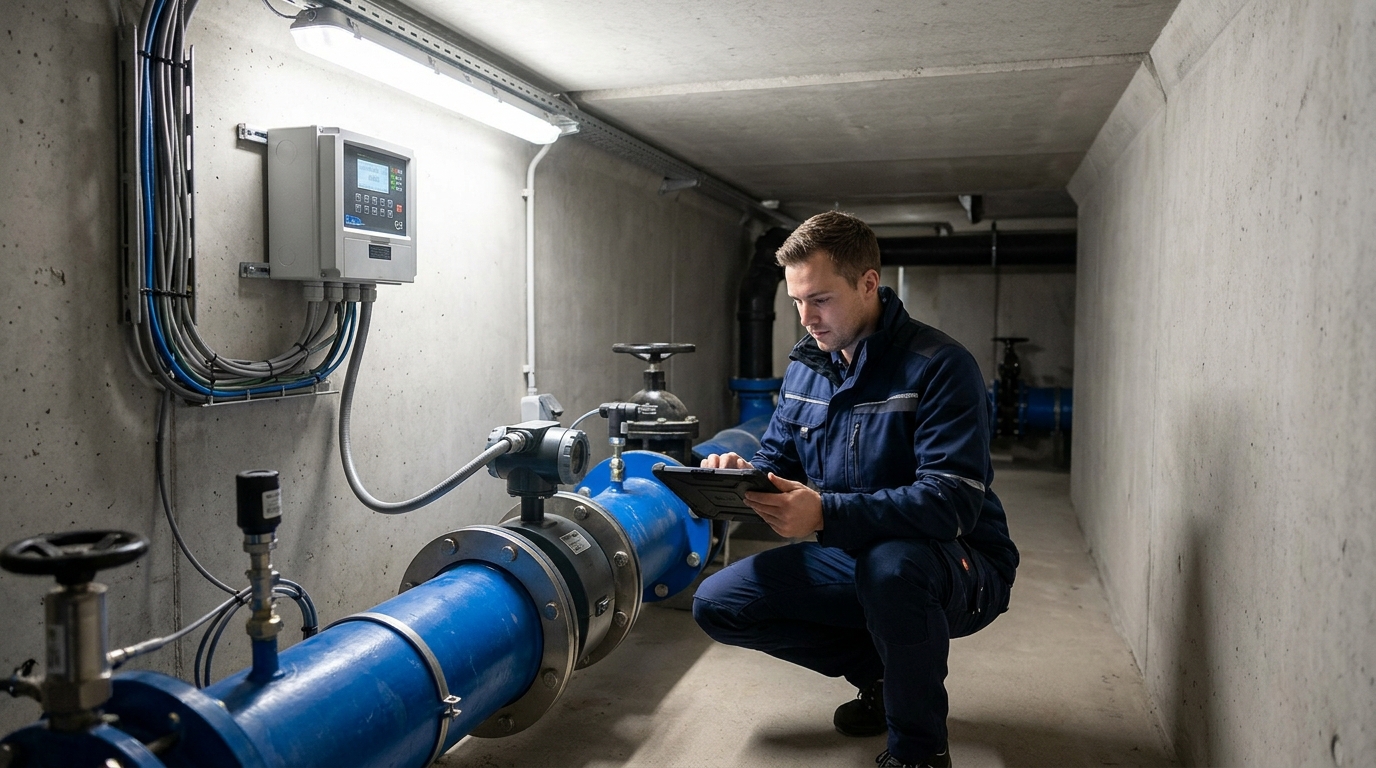
Under the backdrop of aging urban water supply networks, changing water-use structures, and rising requirements for refined operations, DMA district metering is no longer merely an optional module in smart water projects; it is gradually becoming a foundational tool for water network leakage control, non-revenue water management, and water supply dispatch optimization. DMA, or District Metered Area, is based on the core idea of dividing a continuous, complex water supply network into smaller units that can be isolated, metered, and analyzed. By continuously collecting data such as inlet flow, pressure, water consumption, and minimum night flow for each district, leakage is transformed from an overall phenomenon into district-level indicators, and problem localization shifts from experience-based judgment to data-driven analysis.
From industry practice, the value of DMA district metering lies not merely in installing several large-bore water meters, but in establishing a closed-loop system covering district boundaries, metering points, data acquisition, leakage rate calculation, alarm assessment, maintenance work orders, and performance evaluation.
For cities with large network scale and persistently high leakage rates, DMA is typically used in coordination with pressure management, network renewal, burst warning, and hydraulic models. Public project cases show that a well-designed DMA deployment can gradually reduce leakage rates from high levels of 15% to 25% to the 8% to 12% range, with some areas having better network conditions achieving further reductions. At the same time, the market also exhibits issues such as wide price differences, insufficient solution fit, and emphasis on construction over operation and maintenance; therefore, a systematic analysis is needed from the perspectives of product price ranges, procurement recommendations, and maintenance costs.
Market Landscape: From Equipment Procurement to Competition in Data Governance and O&M Capabilities
The current demand entities in the DMA district metering market mainly include urban water supply enterprises, development-zone water platforms, industrial parks, independent water supply units such as universities and hospitals, and project entities responsible for renewing and retrofitting aging pipe networks. The objectives of different entities vary: urban water supply enterprises focus more on leakage rate, non-revenue water rate, minimum night flow, and burst frequency; industrial parks focus more on metering accuracy, district-based billing, and abnormal water use identification; aging pipe network renewal projects focus more on construction difficulty, boundary isolation, and payback period. As water supply enterprises move from extensive management to refined operations, the market focus has gradually shifted from single-point equipment procurement to comprehensive solutions encompassing metering terminals, communications, platform software, data governance, and O&M services.
From the supply side, the DMA industry chain involves large-bore flow meters, smart water meters, pressure sensors, data acquisition terminals, communication modules, GIS maps, hydraulic models, alarm software, installation and construction, and O&M services. Early markets placed greater emphasis on hardware, such as electromagnetic water meters, ultrasonic flow meters, and mechanical large-bore water meters; in recent years, competition has gradually shifted to data quality and closed-loop business processes. Although some projects have installed metering points, leakage rate calculations may have large errors due to poorly closed boundary valves, pressure fluctuations, temporary construction, firefighting water use, and uncleaned data outliers, resulting in frequent alarms and maintenance personnel struggling to respond. The market is moving from competition on “meter installation rate” to competition on “effective districting rate,” “data availability rate,” “leakage localization accuracy,” and “maintenance closure rate.”
At the price level, DMA projects are not standardized commodities; investment scale is significantly affected by urban pipe network complexity, number of districts, meter bore size, communication conditions, platform functions, and construction difficulty. A small park or single-district project may be launched for several hundred thousand yuan, while a city-level DMA system may reach several million to tens of millions of yuan. In the future, the market will show a tiered trend: basic solutions meet leakage rate calculation, standard solutions achieve alarm and work-order closure, and advanced solutions integrate hydraulic models, pressure management, and AI-assisted localization. For purchasers, the key is not to choose the most expensive solution, but to choose one that matches their own network leakage level, data foundation, and O&M capabilities.
Product Price Ranges: Hardware, Software, Construction, and Communications Together Form the Cost Curve
The product price of DMA district metering typically consists of metering terminals, pressure monitoring, communication acquisition, software platform, installation and commissioning, and subsequent O&M. If estimated per single DMA metering point, price ranges vary significantly. For a retrofit using ordinary mechanical large-bore water meters, the per-point hardware price is roughly CNY 1,500 to CNY 4,000, suitable for scenarios with limited budget, smaller bore size, good water quality, and stable flow, but with relatively limited turndown ratio and long-term stability. For electromagnetic or ultrasonic smart water meter solutions, the per-point hardware price is roughly CNY 6,000 to CNY 25,000, with bore sizes usually between DN50 and DN300, typical accuracy of ±1% to ±3%, and turndown ratios reaching 1:40 to 1:100, making them more suitable for nighttime small-flow identification and leakage rate calculation.
Key Cost Components & Estimates
- Total Per-Point Construction: Including vault renovations, valves, pressure sensors, lightning protection, communication terminals, and installation, the per-point DMA metering construction cost may reach CNY 15,000 to CNY 60,000.
- Large-Bore Trunk Points: High-accuracy electromagnetic or ultrasonic flow meters (DN200–DN300) may cost CNY 20,000 to CNY 80,000 per point.
- Project Scale Investment:
- Small (10–50 points): CNY 300,000 – 1,500,000
- Medium (50–200 points): CNY 800,000 – 3,500,000
- Large (Deep integration): CNY 3,000,000 – 15,000,000+
Software pricing presents two models. One is on-premises deployment or one-time licensing, where platform software costs commonly range from CNY 200,000 to CNY 1,200,000, depending on functional modules, number of users, number of interfaces, and depth of custom development. The other is SaaS or per-point subscription, where fees may be charged at CNY 50 to CNY 200 per metering point per year, or calculated as an annual project fee of CNY 200,000 to CNY 800,000. Communication costs must also be included in the budget; for NB-IoT, 4G, and other wireless communication solutions, annual communication cost per point is roughly CNY 10 to CNY 50, but may rise to CNY 50 to CNY 300 if data frequency is high or video/edge computing is added. For purchasers, the focus should not be only on unit equipment price, but on total lifecycle cost, especially data quality, platform scalability, and O&M response capability.
Procurement Recommendations: Match Solutions to Leakage Rate, Network Complexity, and O&M Capabilities
The primary principle in selecting a DMA solution is to derive district boundaries and metering accuracy from leakage control targets, rather than first finalizing an equipment list. For areas with leakage rates above 20%, it is recommended to prioritize large districts with clear boundaries and good isolability, first addressing bulk volume anomalies and leakage in the trunk network. For areas where leakage has been reduced to around 10%, districts should be refined, with more pressure monitoring and night-flow analysis to identify concealed leaks within neighborhoods, abnormal household meters, and uncontrolled firefighting water use. In general urban water supply networks, DMAs may be delineated by 500 to 2,000 households or boundary bore sizes of DN75 to DN300, but the specific scale should be determined based on network topology, pressure zones, road boundaries, and maintenance crew capabilities.
Metering Equipment Selection Criteria
In metering equipment selection, key attention should be paid to bore size, accuracy, turndown ratio, pressure rating, ingress protection rating, battery life, and communication method. Minimum night flow typically occurs between 2:00 a.m. and 4:00 a.m., when flow is low, placing higher demands on the equipment’s low-flow metering capability. Mechanical water meters commonly have turndown ratios of 1:20 to 1:50, while electromagnetic or ultrasonic meters can reach 1:40 to 1:100, making them more suitable for leakage analysis. Pressure monitoring points should have an accuracy of class 0.5 or better, and the pressure range should be selected according to the network design pressure, commonly 0 to 1.0 MPa. Data acquisition should support at least hourly sampling, and can be increased to 15-minute sampling in critical areas. For battery-powered terminals, the common industry design life is 3 to 8 years, while actual life is significantly affected by communication frequency, ambient temperature, and vault humidity.
Platform Software & O&M Capability
Platform software procurement should emphasize data governance and closed-loop business processes rather than merely visual dashboards. A qualified system should be able to complete DMA ledger management, boundary topology maintenance, leakage rate calculation, minimum night flow analysis, abnormal alarm generation, work order dispatch, maintenance feedback, and performance statistics. If the system only displays flow curves but cannot identify false alarm causes, maintenance teams will quickly lose trust in it. It is recommended to prioritize evaluation of whether the software supports multi-source data ingestion, compatibility with GIS, billing, SCADA, and burst alarm systems, and whether it has capabilities for missing data interpolation and outlier filtering. For projects with information security requirements, attention should also be paid to on-premises deployment, role-based access control, log auditing, and interface security.
O&M capability is a factor easily overlooked during procurement but decisive for long-term performance. Project acceptance should not be judged solely by equipment online rate; it should consider data completeness rate over continuous operating periods, alarm response time, and leakage repair rate. Purchasers are advised to specify commissioning period, warranty period, training, spare parts, remote diagnosis, on-site response, and annual inspection requirements in contracts. For water supply enterprises lacking professional data personnel, solutions with high standardization, configurable alarm rules, simple work-order processes, and user-friendly O&M interfaces should be preferred. For cities with complex networks and large leakage rate fluctuations, interfaces for hydraulic models, pressure management, and AI-assisted analysis should be retained to reserve room for future upgrades.
Maintenance Cost Analysis: Equipment Lifecycle, Communications, and Data O&M Determine the Real Cost
The maintenance cost of DMA district metering is usually higher than purchasers initially expect. Hardware equipment operates in underground vaults, humid environments, temperature fluctuations, electromagnetic interference, and risks of human damage, and is prone to issues such as battery degradation, seal failure, communication module faults, meter blockage, and pressure sensor drift. It is generally recommended to estimate annual maintenance costs; hardware annual maintenance cost can be controlled at 5% to 12% of procurement amount, software annual maintenance or subscription cost may account for 10% to 18% of software investment, and communication costs depend on sampling frequency and data plans. For a project with 100 DMA metering points, if construction cost is CNY 3,000,000 to CNY 6,000,000, annual maintenance cost may range from CNY 250,000 to CNY 700,000.
Equipment & Communication Maintenance
Includes battery replacement, seal ring replacement, meter calibration, vault dredging, lightning protection grounding inspection, and valve maintenance.
- Battery Replacement: Every 3–8 years (CNY 300–2,000/point)
- Meter Calibration: Every 3–6 years (CNY 500–3,000/point)
- Communication: SIM renewal, signal enhancement (CNY 10–100/point/year)
Data & Labor Maintenance
Involves outlier cleaning, labeling interruptions, identifying firefighting use, excluding construction water, removing faults, and updating night-flow baselines.
- Data Quality: Determines credibility of leakage rate calculation
- Labor Costs: Basic inspection/response CNY 200–800/point/year
- Focus: Improve data quality, reduce false alarms, standardize processes
Labor maintenance is critical to the long-term operation of DMA. If a city has 80 to 200 DMA districts, it needs to establish district ledgers, boundary valve inspections, alarm assessment, and maintenance work-order closure. If it relies only on remote support from equipment vendors and lacks its own O&M capability, problems such as unhandled alarms, missing maintenance feedback, and outdated district boundary changes may easily occur. It is recommended to estimate basic inspection and fault response costs at CNY 200 to CNY 800 per DMA point per year; complex areas or high-alarm-rate areas also require additional labor assessment costs. The core of optimizing maintenance costs is not reducing inspections, but improving data quality, reducing false alarm rates, and forming standardized maintenance processes so that limited personnel can prioritize high-impact leakage points.
Typical Case Analysis: Input-Output and Leakage Rate Changes in DMA Retrofit
Case Study 1: Third-Tier Prefecture-Level City (Northern China)
Take the DMA district metering retrofit project of a third-tier prefecture-level city in northern China as an example. The city serves a water supply population of about 800,000, with a total water supply pipeline length of about 1,200 km. Before retrofit, its comprehensive leakage rate was about 17.5%, and the non-revenue water rate had long exceeded 20%. The project was divided into 80 DMA districts, with 96 large-bore metering points and 62 pressure monitoring points deployed, and a DMA management platform was built and connected to billing and GIS base data. Total project investment was approximately CNY 7,000,000 to CNY 9,000,000, with hardware and construction accounting for about 60%, software and data governance for about 25%, and commissioning, training, and first-year O&M for about 15%.
After one year of operation, minimum night flow decreased by about 32% compared with before the retrofit; DMA alarm validity improved from less than 50% initially to about 75%; and the leakage rate fell from 17.5% to about 11.2%. After two years of continuous optimization, with some pipeline renewal combined with pressure control, the leakage rate further decreased to 9.8%. Based on an estimated annual water supply of about 90 million cubic meters, every 1 percentage-point reduction in leakage rate can save about 900,000 cubic meters of lost water. Considering only water-saving benefits, and including reduced burst emergency repairs, lower pumping station electricity consumption, reduced chemical consumption in the network, and improved supply dispatch efficiency, the project’s annual comprehensive benefit is approximately CNY 1,800,000 to CNY 2,600,000. The static payback period is about 4 to 6 years; if water supply safety, water quality improvement, and extended network life are included, the comprehensive benefits are more significant.
Case Study 2: Southern County (Lightweight Solution)
Another case in a southern county shows that the county had an aging water supply network, with a pre-retrofit leakage rate of about 22% and obvious minimum night flow anomalies. The project built only 50 DMA districts, with an investment of about CNY 2,200,000, using medium-accuracy electromagnetic water meters, pressure monitoring, and a lightweight platform. Because the county’s network boundaries were relatively simple, the project focused on district isolation, night-flow alarms, and maintenance work-order closure. After one year of operation, the leakage rate dropped to 13.5%; cumulatively, 18 concealed leaks, 9 abnormal hydrant water uses, and 12 poorly closed boundary valves were found. This case shows that DMA does not necessarily require high investment; for small and medium-sized cities, as long as boundaries are clear, alarm rules are reasonable, and maintenance response is timely, basic solutions can also produce significant leakage rate reductions.
Risks and Pitfalls: Emphasis on Construction over O&M, Unreasonable Districting, and Data Silos
One common risk in DMA district metering projects is “emphasis on construction, neglect of O&M.” Some projects invest heavily in installing meters and software during the construction phase but lack long-term O&M budgets and data governance personnel, leading to declining equipment online rates, depleted batteries, communication interruptions, and failure to replace meters promptly after faults. Eventually, the platform shows missing data, leakage rates cannot be calculated, district alarms become noise, and maintenance teams no longer trust the system. The value of DMA comes from continuous operation, not one-time construction. Purchasers should clearly define annual O&M budgets, responsible departments, inspection frequency, fault response time limits, and spare parts reserves during project initiation, avoiding systems that become idle once built.
Unreasonable district boundaries are also a common pitfall. DMA requires boundaries to be relatively closed, with inflow and outflow controlled by valves. However, in actual urban networks, road construction, temporary connections, fire pipelines, secondary water supply facilities, backflow pollution prevention, and emergency cross-connect pipes can change boundary conditions. If boundary valves are not tightly closed or bypasses exist, inlet flow and internal water use cannot be balanced, and leakage rate calculations become distorted. It is recommended to conduct boundary pressure tests, comprehensive valve status surveys, and temporary water use identification in the early stage of the project; for areas that cannot be fully isolated, virtual districts or temporary correction coefficients can be used. Districts should not be as large as possible or as fine as possible, but should meet four conditions: measurable, analyzable, maintainable, and assessable.
Data silo problems also affect DMA effectiveness. Many water supply enterprises have billing systems, GIS systems, SCADA systems, burst alarm systems, and DMA platforms, but data definitions are inconsistent, updates are not synchronized, and interfaces are not open, causing leakage rate analysis to still rely on manual aggregation. For example, billing data may be delayed and cannot accurately reflect actual district water use; GIS network topology may not be updated in time, causing district boundaries to differ from the field; SCADA pressure data and DMA flow data may have inconsistent timestamps, making it impossible to determine whether changes are due to leakage or dispatch fluctuations. Solving these problems requires establishing unified data standards, including district codes, meter codes, sampling cycles, units, data quality flags, and abnormal event types, so that DMA can truly integrate into water supply production dispatch and maintenance management processes.
Outlook: DMA Will Evolve in Coordination with Pressure Management, Hydraulic Models, and Renewal/Retrofit
Future development of the DMA district metering market will no longer be limited to “measuring flow” and “reducing leakage rate,” but will evolve toward comprehensive performance management of water supply networks. As urban network renewal and retrofit, aging water supply facility renovation, and resilient city construction advance, DMA will deeply integrate with pressure management, burst warning, water quality monitoring, hydraulic models, AI-assisted localization, and maintenance decision systems. Pressure management is especially critical because network leakage is highly correlated with pressure levels. Practice shows that reducing average operating pressure in some areas from 0.35 MPa to about 0.28 MPa within a reasonable range can lower burst frequency and background leakage; combined with DMA minimum night flow analysis, it can more effectively identify high-leakage pipeline segments.
At the technical level, edge computing, low-power communications, meter self-diagnosis, data quality scoring, and model algorithms will become key competitive areas. Future DMA platforms may not only tell users “which district has a high leakage rate,” but also further determine whether it is caused by visible leaks, concealed leaks, metering errors, illegal water use, or pressure fluctuations, and provide maintenance priorities. For large cities, after hydraulic models are linked with DMA data, the impacts of different maintenance plans on leakage rate, pressure, and water supply safety can be simulated, making network renewal investment more precise. For small and medium-sized cities, lightweight, standardized, and easy-to-maintain solutions will be more popular; the key is to form replicable district management and maintenance closed loops.
Industry regulation and performance assessment will also drive DMA from project-based construction to normalized operations. The assessment of water supply enterprises on leakage rate, non-revenue water rate, energy consumption per unit of water supplied, burst frequency, and emergency repair response time will encourage DMA data to enter daily production dispatch, maintenance planning, network renewal prioritization, and performance evaluation systems. Purchasers should focus on whether the system can output auditable indicator data, support district accountability to individuals, maintenance work-order closure, and annual leakage rate calculation. Overall, the long-term value of DMA district metering lies in transforming network leakage management from reactive emergency repair to proactive prevention, shifting experience-based judgment to data governance, and converting equipment investment into sustainable water supply safety, energy saving, and operational efficiency improvement. As standards improve, data quality rises, and O&M systems mature, DMA will become an indispensable infrastructure for refined management of urban water supply networks.