How to Choose the Right DMA District Metering? Precision and Stability are Key
Comparison of Technical Routes for DMA Metering: Selection Insights for Pipe Network Leakage Control
As urban water supply systems enter the stage of refined operation, reducing the pipe network leakage rate has become a crucial task for water utilities. DMA (District Metered Area) metering continuously monitors input water volume, minimum night flow, and zonal water balance by dividing the network into independent metered areas. This provides a solid basis for leakage identification, pressure regulation, and network renewal. However, different technical routes show significant differences in accuracy, cost, installation conditions, and O&M requirements. Selection must be comprehensively judged in combination with the current status of the pipe network and leakage control objectives.
The Core Principle of DMA Metering
In principle, the core of DMA metering is to divide a complex pipe network into accountable units. By isolating boundary valves to form relatively independent districts and installing metering devices at key nodes, the difference between water supply and billed water is compared to determine the district's leakage level.
The "Minimum Night Flow" method is a common analytical approach because water consumption is low at night; if the district flow remains at a high level, it usually indicates the presence of background leakage or hidden leaks. This places high demands on the low-flow stability and data continuity of metering devices.
Comparing Technical Routes
1. Mechanical Water Meters
Mechanical water meters represent a relatively traditional technical route. Their advantages include low procurement costs, mature technology, and clear maintenance pathways, making them suitable for small-to-medium caliber household metering and community-level districts.
- Pros: Low cost, mature technology.
- Cons: Wear of moving parts, limited rangeability, and accuracy drift after long-term operation.
- Impact: If low-flow variations cannot be accurately captured, it may affect the minimum night flow analysis.
2. Electromagnetic Flowmeters
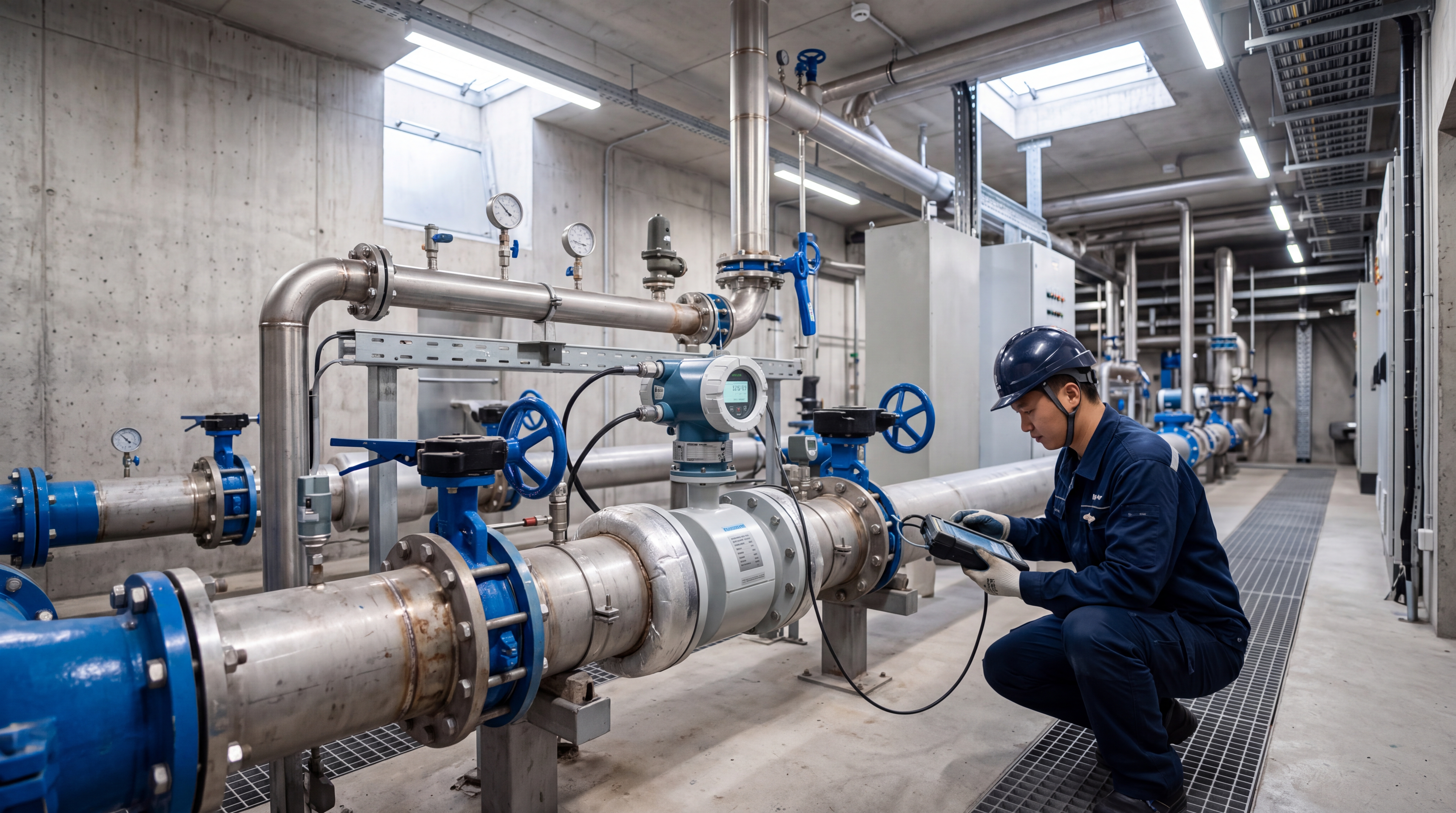
Electromagnetic flowmeters are widely used in DMA metering, especially for medium-to-large caliber trunk mains and district master meters. With no moving parts in the measuring tube, they feature low pressure loss, stable response to flow changes, and adaptability to a wide measurement range and bidirectional flow.
Their limitation lies in the requirement for the medium to have a certain level of electrical conductivity, and their procurement and installation costs are generally higher than those of mechanical water meters. For main supply pipes, district assessment sections, and critical nodes, electromagnetic flowmeters can provide a reliable data foundation.
3. Ultrasonic Flowmeters
Ultrasonic flowmeters are another technical route attracting attention. Transit-time ultrasonic flowmeters are suitable for clean water and can achieve high-precision measurement under full-pipe conditions. Clamp-on devices require no pipe cutting, making them ideal for non-stop-water retrofits and temporary comparisons.
However, ultrasonic measurement is sensitive to pipe material, wall thickness, lining, installation straight pipe length, and bubbles, which may affect stability under complex site conditions. Insertion ultrasonic flowmeters offer certain cost advantages in large-diameter pipes but have higher installation and maintenance requirements.
Essential Supporting Systems
Data Acquisition & Transmission
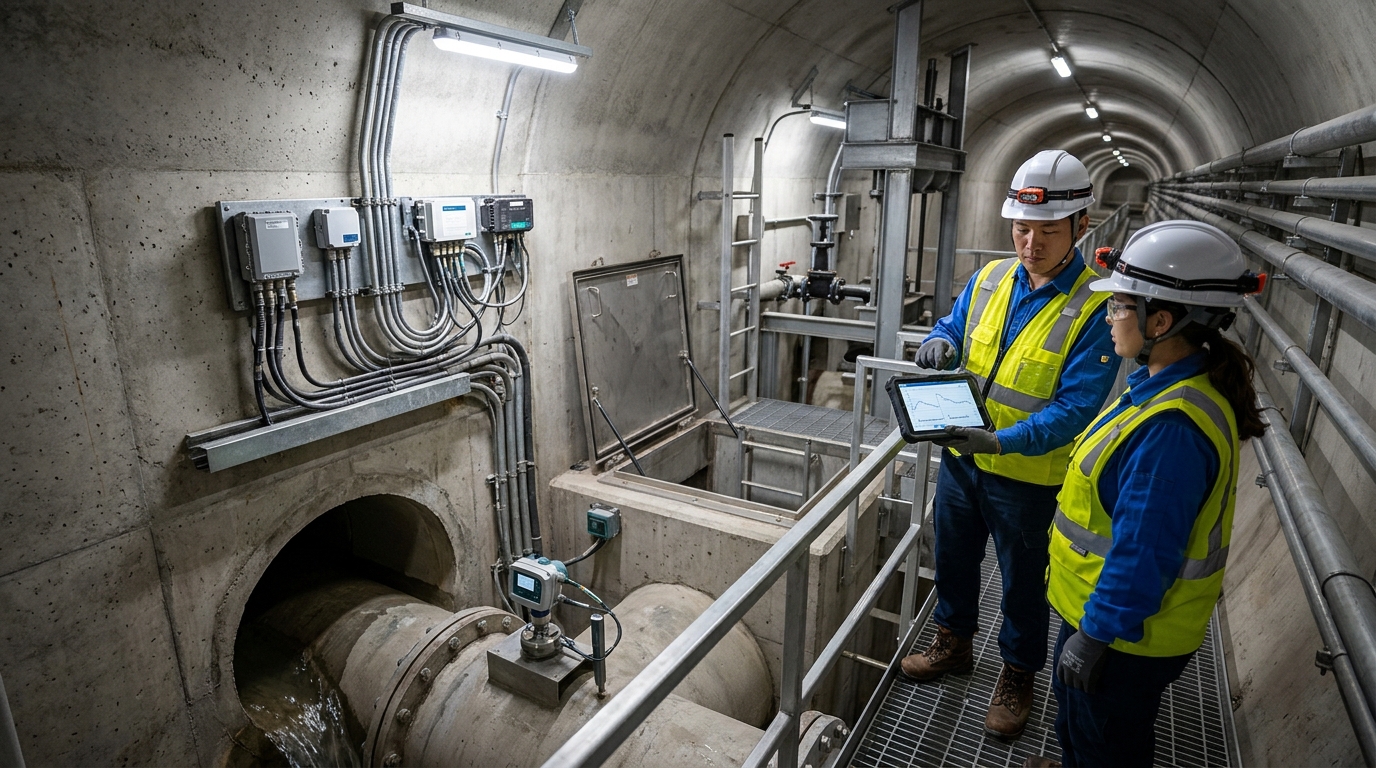
Data acquisition and transmission systems are vital components of DMA metering. Communication methods such as NB-IoT, LoRa, and 4G/5G can upload data on flow, pressure, and liquid level to management platforms, enabling zonal water balance, anomaly alarming, and leakage trend analysis. Smart remote transmission can improve management efficiency, but it also brings O&M challenges such as communication coverage, device power supply, data quality, and cybersecurity.
Pressure Management & Acoustic Monitoring
Pressure management and acoustic monitoring are often used in conjunction with DMA metering. Excessive pressure exacerbates the risk of pipe leakage and bursts; therefore, installing pressure monitoring or pressure-reducing facilities at district inlets helps control leakage at the source. Noise loggers and correlators can be used for leak localization, but their effectiveness depends on pipe network data, inspection capabilities, and repair response speed.
Scenario-Based Selection Strategy
Newly Built Networks vs. Older Urban Areas
- Newly Built / Favorable Conditions: Suitable for unified DMA district planning, using electromagnetic flowmeters or high-precision ultrasonic flowmeters as district assessment meters, while simultaneously building pressure monitoring and remote transmission systems.
- Older Urban Areas / Complex Conditions: Initial priority should be given to solutions with lower installation and maintenance costs and minimal water interruption requirements. Reliability of district metering can be improved by gradually enhancing boundary isolation and data verification.
Conclusion
Overall, there is no single optimal technical route for DMA metering. Selection should revolve around pipe diameter, water quality conditions, installation space, budget level, leakage rate targets, and O&M capabilities. Small-caliber terminal metering focuses on cost and stability, district assessment metering focuses on accuracy and range, and leakage control focuses on data continuity and minimum night flow analysis capabilities.
Reasonable district division, ensuring metering data quality, and establishing a normalized analysis mechanism are more effective in reducing the pipe network leakage rate than simply replacing with high-end equipment. As the industry transitions from extensive management to refined operation, DMA metering is shifting from an engineering construction project to a long-term operational tool. The key to technology selection lies not in whether the equipment is advanced, but in whether it can stably support pipe network leakage identification, pressure optimization, and continuous improvement of the leakage rate.