In-Depth Comparison of Four Technical Approaches for Doppler Flowmeters
From single-point velocity measurement to multi-parameter integration: An objective industry analysis.
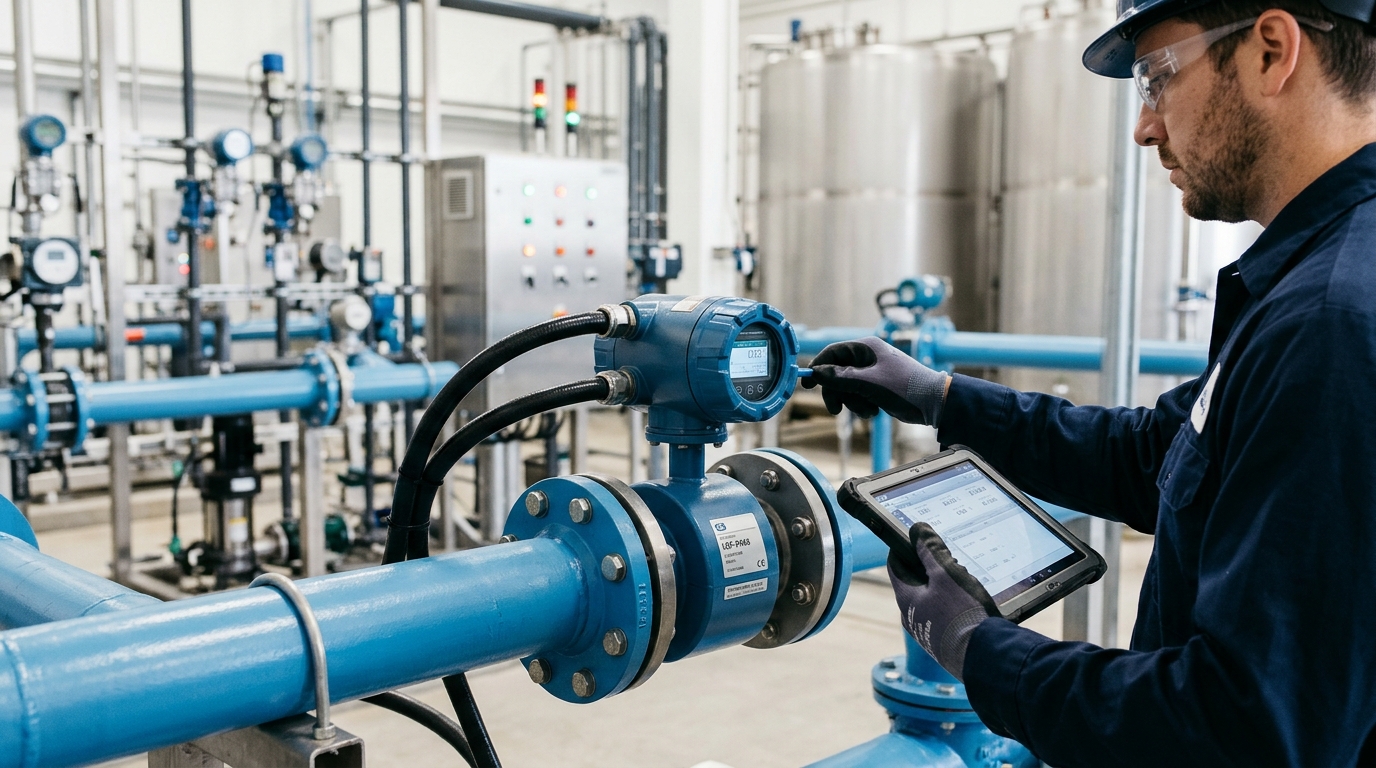
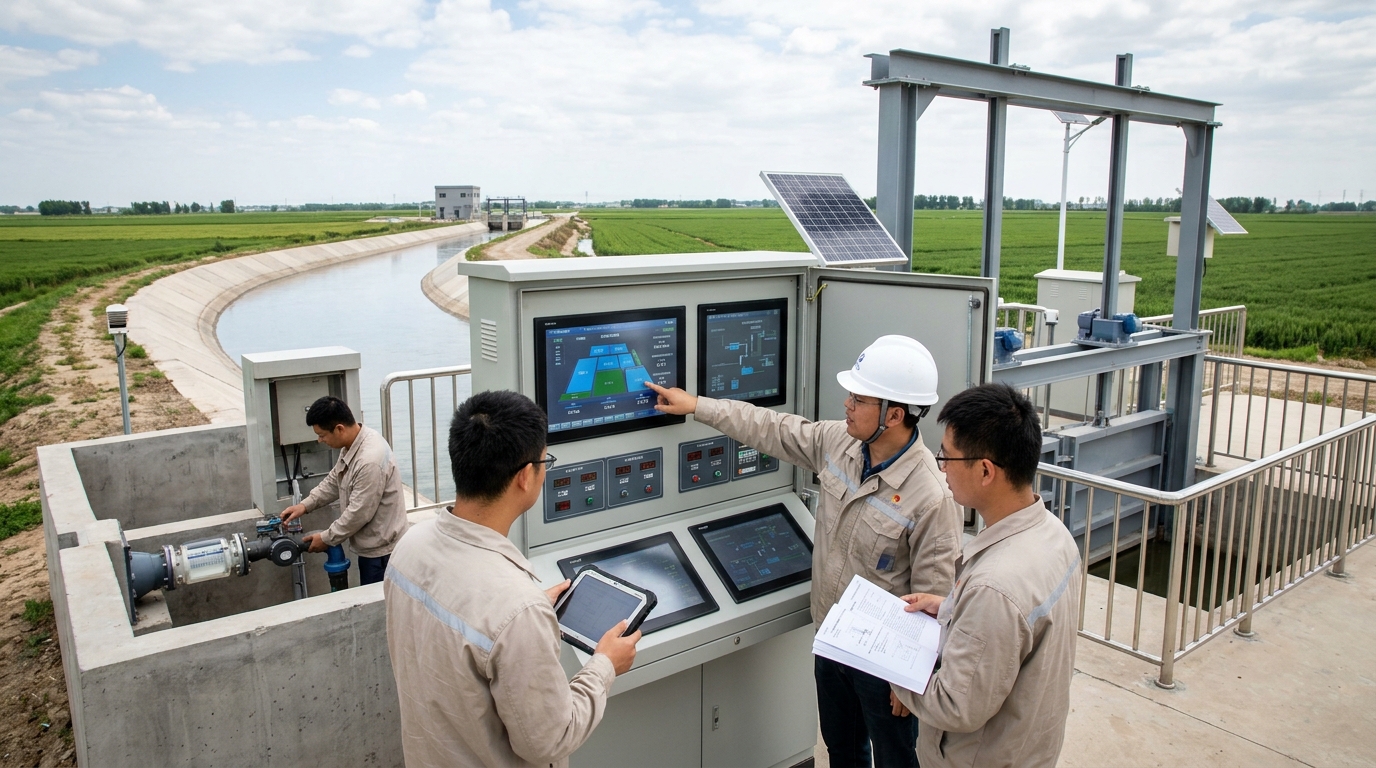
In scenarios such as municipal drainage, irrigation district flow measurement, river flood control, and industrial circulating water, flow measurement is evolving from merely "being able to measure" to "measuring accurately, seeing clearly, and enabling remote O&M." Doppler flow meters, capable of measuring flow velocity and deriving flow rate, have become a focal point in the water industry. Unlike traditional full-pipe electromagnetic flow meters, Doppler solutions offer greater flexibility in open channels, partially filled pipes, low-flow conditions, and complex water quality environments. With the integration of non-contact measurement, velocity, water level, and integrated camera capabilities, flow monitoring devices are transforming from single sensors into on-site perception nodes. This article provides an objective comparison of the pros and cons, applicable scenarios, and selection recommendations for various Doppler technology routes from an industry observation perspective.
Divergence of Technology Routes: Acoustic, Radar, Laser, and Video
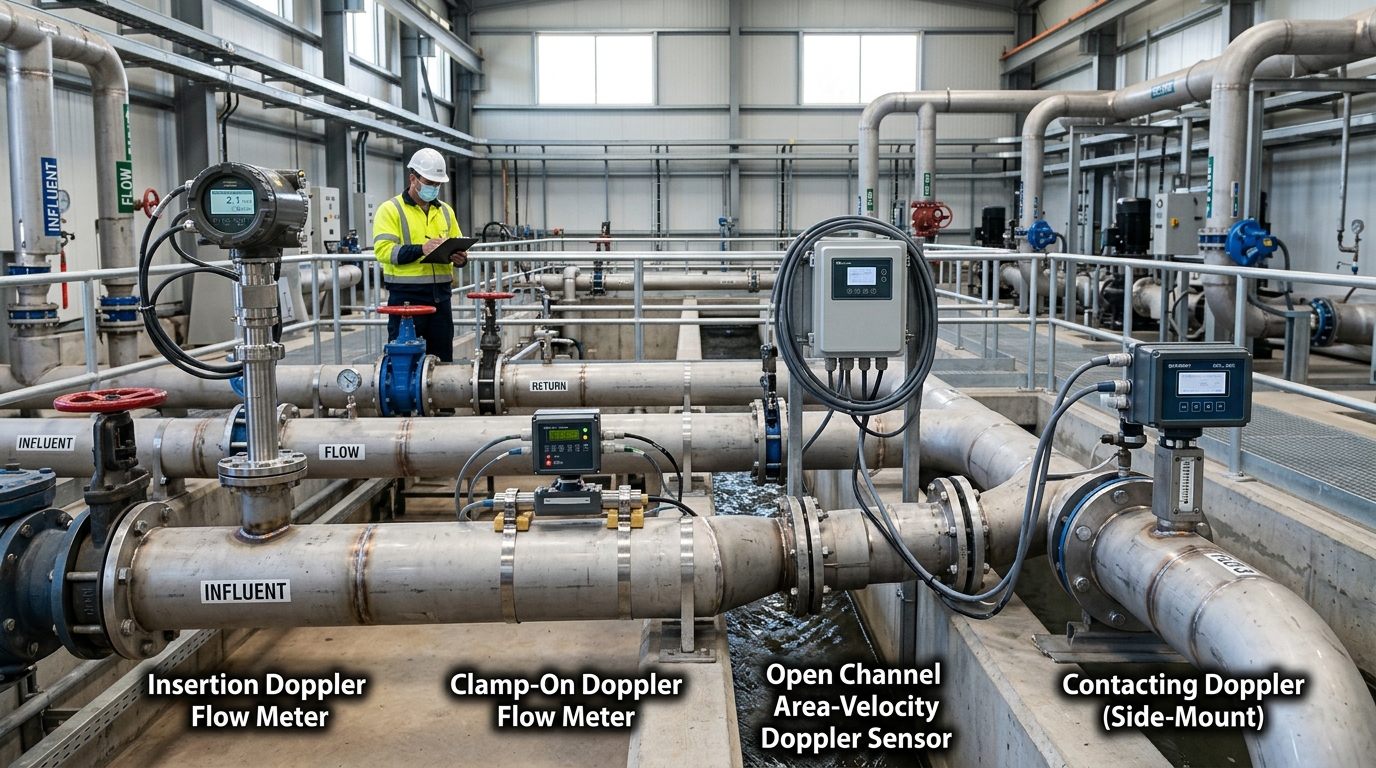
The core principle of Doppler flow meters stems from the Doppler effect: when emitted waves encounter moving particles, bubbles, or the water surface, the echo frequency shifts, and the shift is proportional to the relative velocity. Depending on the transmission medium, they are mainly categorized into acoustic Doppler, microwave radar Doppler, laser Doppler, and image-based video flow measurement. Acoustic Doppler typically operates at frequencies from hundreds of kilohertz to several megahertz, making it suitable for measuring internal water flow velocity. Radar Doppler commonly uses 24 GHz, 60 GHz, or 77 GHz bands, measuring velocity via water surface echoes, ideal for non-contact measurement. Laser Doppler offers high velocity measurement accuracy and is mostly used in experiments and scientific research. Integrated camera systems calculate surface velocity by recognizing water surface textures, floating objects, or artificial tracers through video image processing, and then convert it to flow rate combined with the water level and cross-section.
The differences among these routes go beyond just "contact" versus "non-contact." Acoustic Doppler requires the sensor to be in contact with the water, relying on scatterers in the water for signals. Radar Doppler does not contact the water body but is affected by surface ripples, wind, waves, and floating debris. Laser Doppler has stringent requirements for particles and optical paths. Video-based measurement depends on lighting, calibration, and field of view. When selecting equipment, users should comprehensively consider velocity range, water level accuracy, installation conditions, maintenance cycle, communication and power supply, and data quality objectives, avoiding the pitfall of focusing solely on a single metric.
Contact Acoustic Doppler: Mature and Stable, Yet Influenced by Water Quality and Installation
Contact acoustic Doppler is one of the earlier applied technology routes, with common forms including insertion-type Doppler velocity meters, pipe-section Doppler flow meters, and Doppler flow probes. Its typical velocity range covers 0.03 m/s to 5 m/s, with some products reaching 8 m/s to 10 m/s; velocity error is commonly ±1% of reading ±0.01 m/s. For partially filled drainage pipes, the equipment typically measures both velocity and water level simultaneously, then calculates the flow area using pipe geometric parameters to obtain instantaneous flow rate. Water level measurement can employ pressure, ultrasonic, or radar water level modules. Pressure-type water level accuracy is commonly ±0.2% FS to ±0.5% FS, while radar water level modules can achieve ±2 mm to ±5 mm in open channels.
A municipal sewage network once deployed insertion-type Doppler flow meters in DN800 pipes... The comprehensive flow error was controlled within ±5%, but the probe surface required oil and sludge cleaning every quarter.
The advantages of this route lie in its technological maturity, broad cost range, and ability to measure multi-point underwater velocities, making it suitable for water bodies containing suspended particles or bubbles, such as sewage, stormwater, and rivers. However, its limitations are also evident: the sensor must contact the water; if the water quality contains high levels of oil, fibers, or sludge, the transducer surface may accumulate fouling, requiring regular cleaning; in pure water or conditions with extremely low scatterers, the echo may be insufficient; insertion-type installation also requires considerations for sealing, corrosion protection, and water shutdown for construction.
Non-Contact Radar Doppler: A Viable Solution for Open Channels and Harsh Environments
Non-contact radar Doppler has become a significant direction for open channel flow measurement in recent years. The equipment is installed above channels, rivers, or culverts, emitting microwaves towards the water surface and receiving echoes to calculate surface velocity through frequency changes. The range of common 24 GHz radar velocity meters can reach 0.1 m/s to 15 m/s, with some high-frequency products operating within 0.05 m/s to 20 m/s; velocity resolution can reach 0.01 m/s. Paired with a radar water level meter, the water level range can reach 0.2 m to 30 m, with accuracy commonly ±2 mm to ±10 mm. Since it does not contact the water, the equipment is less affected by sewage corrosion and floating debris entanglement, making it suitable for cross-sections that are difficult for personnel to access or pose high risks during flood seasons.
However, radar measures surface velocity, and converting it to cross-sectional average velocity requires a coefficient. In natural rivers, the ratio of surface to average velocity typically ranges from 0.80 to 0.92, depending on water depth, roughness, cross-section shape, and wind and waves. Without proper rating, flow error can reach ±8% to ±15%; after on-site rating, many projects can control the comprehensive flow uncertainty within ±5% to ±10%.
Key Advantage
Non-contact design reduces maintenance caused by corrosion and debris entanglement.
Critical Consideration
Requires accurate conversion coefficients between surface and average velocity.
Non-contact radar Doppler is also easily integrated with cameras. Cameras can record water surface conditions, floating debris, vessels, water level staffs, and canal gate statuses, providing evidence for abnormal flow velocities. For instance, during flood seasons, if radar velocity suddenly spikes while video shows a large amount of floating debris passing by, O&M personnel can determine it is a change in working conditions rather than a sensor fault. This combination of "radar for velocity, video for verification, and water level for correction" is becoming a common configuration for flood control monitoring nodes.
Laser Doppler and Integrated Cameras: The Boundaries of High Precision and Visualization
Laser Doppler velocimetry and particle image velocimetry offer high-precision advantages in laboratory hydraulic research. Laser Doppler enables non-contact or micro-contact measurement, with velocity ranges from 0.001 m/s to over 20 m/s; some systems achieve accuracy of ±0.1% or even higher, suitable for flume tests, local flow fields of pumps and valves, and scientific calibration. However, its engineering application is significantly constrained by cost, optical path safety, particle concentration, fog droplets, and water vapor. Uneven sediment distribution in field rivers, sunlight interference, and lens contamination all reduce the signal-to-noise ratio. Therefore, laser Doppler is more suited for high-precision local measurements rather than large-scale, long-term unattended flow stations.
Video-based flow measurement is highly correlated with integrated cameras. Image-based surface velocity calculation typically utilizes water surface texture displacement between consecutive frames or identifies the trajectories of floating objects. Typical solutions require 1080P or 4K cameras, 30 fps frame rates, sufficient field of view, and night illumination. In scenarios with canal widths of 2 m to 20 m and surface velocities of 0.1 m/s to 5 m/s, if well-calibrated with natural tracers, surface velocity error can be controlled within ±5% to ±10%.
However, video flow measurement is sensitive to lighting, rain, fog, glare, wind, waves, and camera shake; without infrared or supplemental lighting at night, the recognition rate drops. A flood discharge ditch in a scenic area once deployed video flow measurement equipment, with a ditch width of 3.2 m. During the day, it could recognize foam and leaves; at night, it relied on infrared illumination. After half a year of operation, it identified 17 cross-section blockage and abnormal backwater events. Overall, video flow measurement is better suited as a supplementary verification, emergency monitoring, and visualization management tool, complementing radar or acoustic devices.
Comparison of Key Parameters: Velocity, Water Level, Response, and O&M
In terms of velocity measurement, contact acoustic Doppler can obtain internal or near-bed flow velocity, suitable for low-flow and partially filled pipe scenarios; radar Doppler obtains surface velocity, ideal for open channels and non-contact measurement; laser Doppler offers high precision but limited engineering adaptability; video flow measurement is intuitive but relies on image conditions. If a project focuses on low flows below 0.05 m/s, acoustic Doppler or verified high-sensitivity radar should be prioritized; if high flow velocities during flood seasons are the focus, radar and video have the advantage.
Water Level Sensitivity Analysis
Regarding water level, shallow canals are particularly sensitive to water level errors. Taking a rectangular canal 2 m wide with 0.3 m water depth as an example, a ±2 cm water level error can result in a flow area error of about ±6.7%; if the water depth increases to 1.2 m, the same ±2 cm error corresponds to an area error of about ±1.7%. Therefore, shallow canals should be equipped with higher-precision water level meters; radar water level meters with common accuracy of ±2 mm to ±10 mm are suitable for critical cross-sections.
From the perspective of installation and O&M, contact devices require designs for brackets, sealing, lightning protection, and silt prevention, with maintenance cycles typically ranging from 3 to 12 months depending on water quality. Non-contact radar and cameras can be installed on riverbanks or under bridges, extending maintenance cycles to 6 to 12 months, but requiring regular lens cleaning, bracket inspection, and field-of-view calibration.
- Power & Communication: Municipal wells commonly use batteries or mains power, paired with NB-IoT, 4G, LoRa, or RS485/Modbus; river stations typically use solar panels plus batteries, with continuous cloudy-day endurance often required for 7 to 30 days.
- Environmental Ratings: Common outdoor devices need to meet IP66 to IP68, with operating temperatures from -20°C to 70°C.
Typical Scenario Cases and Selection Recommendations
Municipal Drainage Networks
Municipal drainage networks typically have pipe diameters from DN300 to DN2000, are partially filled, exhibit large velocity variations, and contain grease and fibers. If installation conditions in the manhole permit and water contact is allowed, insertion-type or pipe-section acoustic Doppler is mature, capable of measuring both velocity and water level, suitable for pollution tracing, overflow assessment, and network model calibration. If pipe burial depth is large, the manhole environment is complex, and maintenance is difficult, non-contact radar installed at the manhole cover or culvert top can be considered, though beam angle and wall reflections must be noted.
Irrigation Districts
Flow measurement in irrigation districts focuses more on low flow velocity, shallow water, and long-term stability. Trapezoidal, rectangular, and U-shaped canals have significantly different cross-sections. If canal water depth is stable and scattering conditions are sufficient, contact acoustic Doppler paired with a water level meter can achieve good accuracy; if the canal has abundant weeds, high sediment load, and long management sections, non-contact radar plus integrated cameras are more conducive to reducing maintenance.
River Flood Control
River flood control emphasizes non-contact measurement, rapid response, and visualization. In mountainous rivers, flow velocity can reach 3 m/s to 10 m/s, with abundant floating debris during floods. The combination of radar Doppler, radar water level meter, and integrated cameras holds a distinct advantage.
Four-Step Selection Strategy
- Clarify Data Usage: Trade settlement must prioritize meeting metrological verification requirements; flood warning emphasizes continuity and availability under extreme conditions; network model calibration focuses on low-flow accuracy and water level stability.
- Evaluate Site Conditions: Record cross-section dimensions, maximum/minimum water depth, velocity range, sediment concentration, oil content, floating debris, power and communication, and lightning protection requirements.
- Emphasize Rating: Open channel flow measurement should set up no fewer than 3 to 5 comparison points at different water levels and velocity stages to establish a relationship curve between surface and average velocity, with regular reviews.
- Calculate Lifecycle Costs: The procurement cost of contact acoustic devices may be lower, but maintenance costs are highly correlated with water quality; non-contact radar and video equipment require higher initial investment but can reduce inspection frequency in harsh environments and hard-to-reach cross-sections. For critical flood season stations, the risk of data loss often outweighs the price difference of the equipment.
Concluding Outlook: Multi-Sensor Fusion and Intelligent Quality Control Will Become Mainstream
From an industry trend perspective, Doppler flow meters are evolving from single velocity sensors into integrated stations encompassing "velocity, water level, video, and environmental parameters." Non-contact measurement lowers the deployment threshold, integrated cameras enhance interpretability, and edge computing makes data quality control, anomaly detection, and automatic rating possible. In the future, equipment manufacturers and integrators need to focus not only on hardware specifications but also on algorithm transparency, data traceability, and on-site adaptability.
It is foreseeable that acoustic Doppler will maintain its stable advantage in pipe and partially filled scenarios, radar Doppler will continue to expand in open channels, rivers, and flood control scenarios, and video flow measurement will take on more roles in visualization, verification, and warning assistance. For users, rational selection should avoid "accuracy absolutism" or "non-contact absolutism," and instead proceed from measurement objectives, site conditions, O&M capabilities, and data application closed loops. Only by comprehensively integrating velocity, water level, cross-section, video, and communication platforms can Doppler flow meters deliver more reliable value in smart water management, flood and drought disaster prevention, and water resource management.