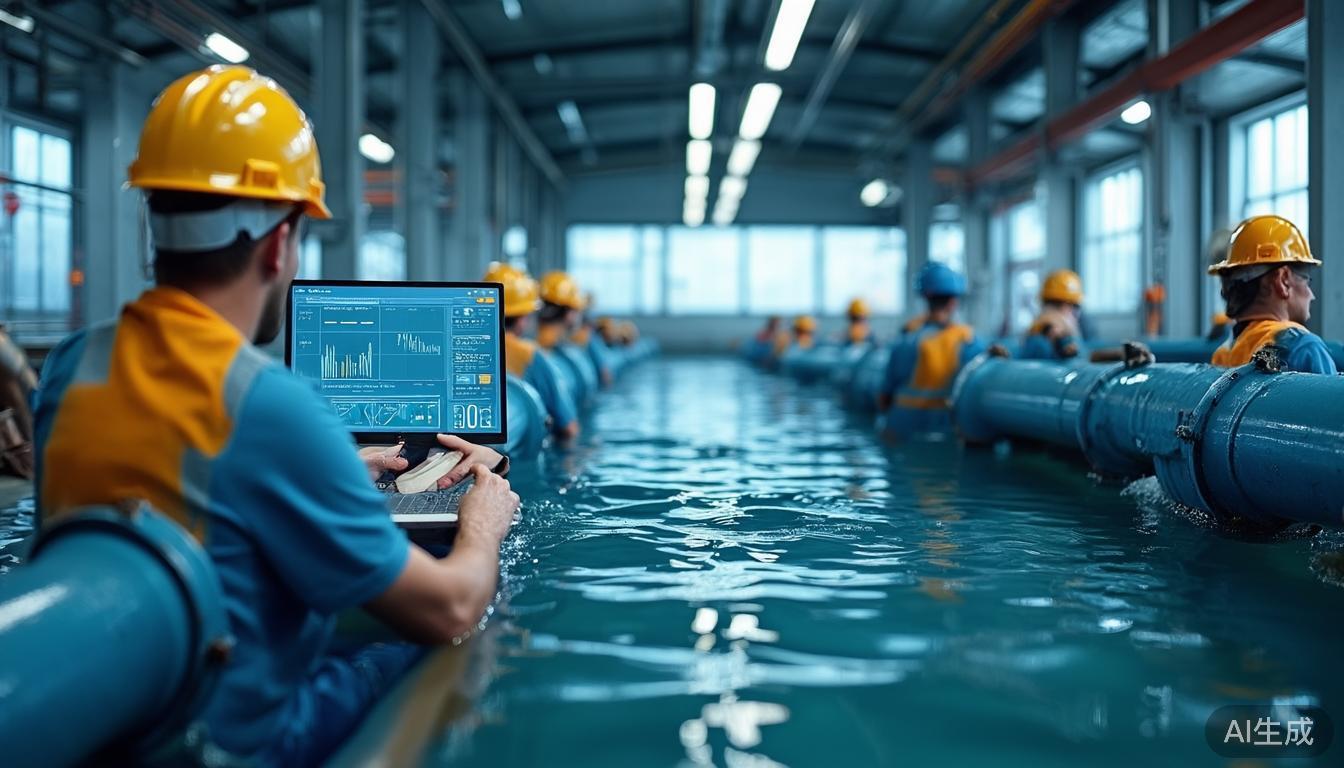
Urban Pipeline Network Digital Transformation: Data Silos and IoT Platforms
YiCai Technology Industry Insights: Digital and Intelligent Transformation Reshapes Urban Underground Lifelines, Pipeline Network Construction Enters the "Deep Waters"
Buried beneath asphalt and concrete, urban pipeline networks are the "capillaries" and "main arteries" that sustain the daily operation of modern cities. The health status of these crisscrossing underground pipelines—supplying water, draining sewage, transporting gas, and distributing heat—directly anchors the city's safety baseline, ecological and environmental protection standards, and the public's quality of life. Over the past few decades, China has undergone the largest and fastest urbanization process in world history. However, constrained by early planning concepts and construction standards, the urban development model of "prioritizing above-ground over underground" has left a considerable historical backlog.
In recent years, global climate change has led to frequent extreme rainstorms, making the phenomenon of "cities turning into seas" a common headline; meanwhile, some early laid pipelines have entered their aging phase, with road collapses and sewage overflows occurring from time to time. The traditional pipeline management model, based on manual inspections and empirical judgment, is completely inadequate to meet the governance needs of the complex giant systems in mega-cities. Standing at a new historical juncture, the urban pipeline network industry is undergoing a profound transformation driven by strong top-level policy guidance, massive market demand, and hardcore technological innovation. The entire industry has officially entered the "deep waters" of reconstruction and upgrading.
Policy Orientation: Systematic Flood Prevention and Resilient City Construction Become Core Issues
The macro-policy compass is undergoing a fundamental shift. At the national level, the assessment dimensions for urban infrastructure construction have comprehensively shifted from mere "scale expansion" and "mileage increase" to refined, lifecycle-oriented operations focused on quality improvement, efficiency enhancement, safety, and resilience. In recent years, the Ministry of Housing and Urban-Rural Development and other departments have intensively issued key documents such as the "Urban Renewal Action" and the "Implementation Opinions on Strengthening the Construction and Renovation of Urban Underground Pipeline Networks," explicitly requiring all localities to conduct underground pipeline network censuses, establish hidden danger ledgers, and set rigid timelines for eliminating safety hazards in urban pipeline networks.
In the pain-point area of urban flood prevention, policy granularity has become unprecedentedly fine. The previous localized model of simply expanding pipe capacity—"treating the head when the head aches and the foot when the foot hurts"—has been completely abandoned, replaced by the construction of a systematic and modern urban waterlogging governance system. This requires local governments to possess holistic thinking, integrating the "source reduction" of sponge cities, the "process conveyance" of main trunk pipelines, and the "combined storage and discharge" of pump stations and reservoirs into a single cohesive strategy. The strong policy tilt has not only leveraged trillions in special bonds and social capital investment but also drawn a clear roadmap for the digital and systematic upgrading of the pipeline network industry. What local water affairs and municipal departments face is no longer simple engineering contracting, but the need to procure comprehensive governance solutions capable of supporting long-term operations.
Market Trends: Accelerated Renovation of Aging Pipelines and the Rise of Integrated Drainage System Operations
The explosion in the stock market is the most prominent feature of the current pipeline network industry. A large number of underground pipelines laid in the 1980s and 1990s or even earlier in China generally use concrete pipes and have now fully entered a high-incidence period of aging and damage. Structural defects (such as fractures, deformation, and misalignment) and functional defects (such as siltation, scaling, and root intrusion) are intertwined, which not only leads to poor drainage and causes waterlogging but also results in severe cross-connections of stormwater and sewage and groundwater infiltration. Groundwater seeping into the sewage network dilutes the influent concentration, significantly reducing the efficiency of wastewater treatment plants; while sewage leaking out directly pollutes groundwater bodies and urban rivers.
Facing this massive "underlying disease," the renovation and rehabilitation of aging pipeline networks have released huge incremental market space. In this niche segment, pipeline internal inspection services such as CCTV (Closed-Circuit Television), QV (Quick View), and sonar inspection robots are the first to experience an explosion. Closely following are trenchless rehabilitation technologies such as CIPP (Cured-In-Place Pipe) and UV (Ultraviolet Curing). These technologies can "remold" a new pipe inside the old one without opening up the streets and disrupting traffic, and are becoming the standard configuration for municipal renovations across various regions.
Another major change on the demand side is the comprehensive popularization of the integrated governance model for "plants, networks, rivers, and lakes." In the past, wastewater treatment plants, municipal drainage networks, and urban rivers were often managed by different departments or enterprises. Information silos made it difficult to eradicate the chronic problem of "direct sewage discharge in dry weather and black, odorous water returning in the rain." Today, the market strongly calls for comprehensive service providers that can break administrative and physical boundaries to provide full-lifecycle coordinated scheduling. Integrated operations require industry players to not only understand underlying hardware such as pumps, valves, and sensors but also possess cross-domain data integration capabilities, robust software platform architecture capabilities, and profound water affairs operational expertise. This is prompting environmental protection enterprises, automation equipment manufacturers, and IT internet giants to begin cross-border integration and reshape the industry ecosystem.
Technological Development: Precise Perception and Digital Twins Build the Foundation for Smart Pipeline Networks
If policy and market are the driving forces, then breakthroughs in underlying technologies are the core engine driving the transformation of urban pipeline networks. The underground pipeline environment is extremely harsh—high humidity, strong corrosion, no municipal power, and severe signal shielding. In the past, making underground pipelines "speak" was a world-class challenge. Today, the deep integration of cutting-edge technologies such as the Internet of Things (IoT), edge computing, artificial intelligence (AI), and digital twins is making the originally pitch-black underground spaces "visible, measurable, and controllable."
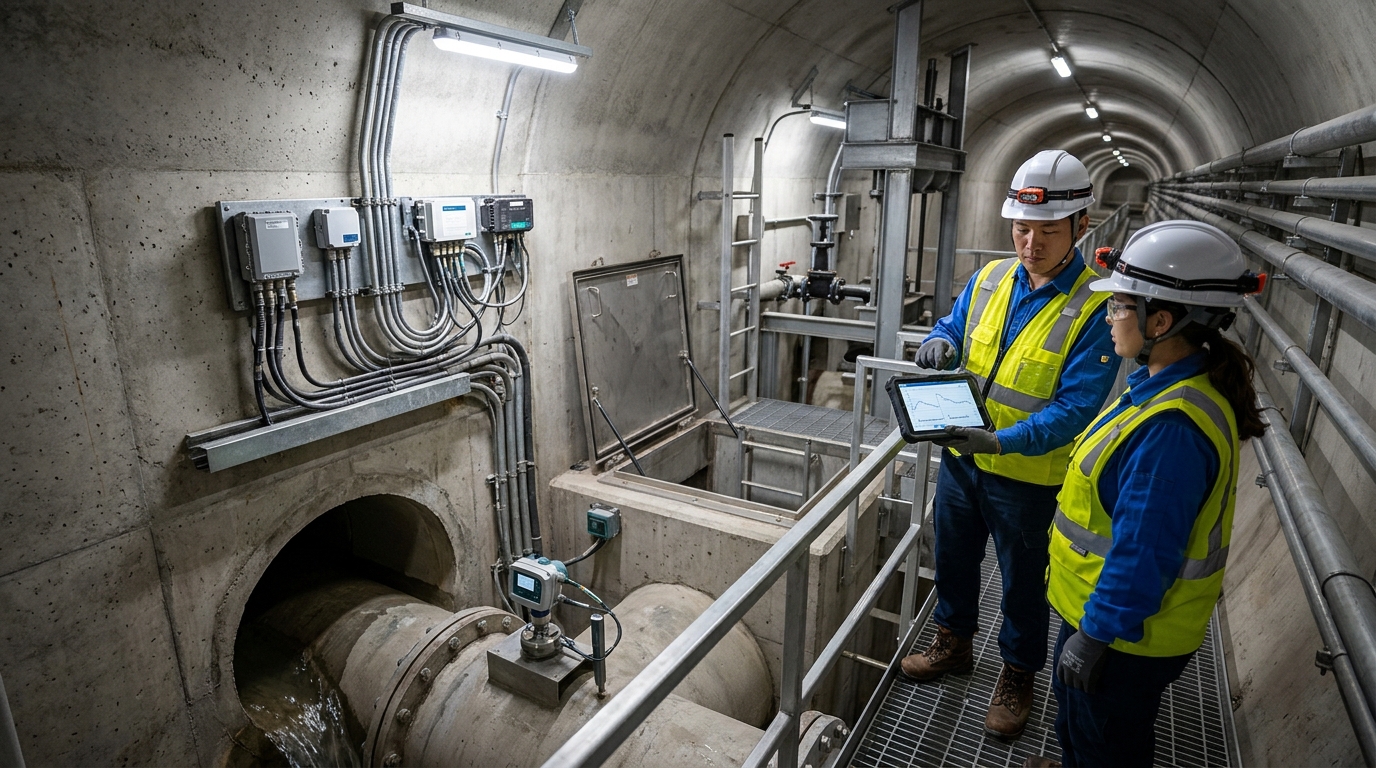
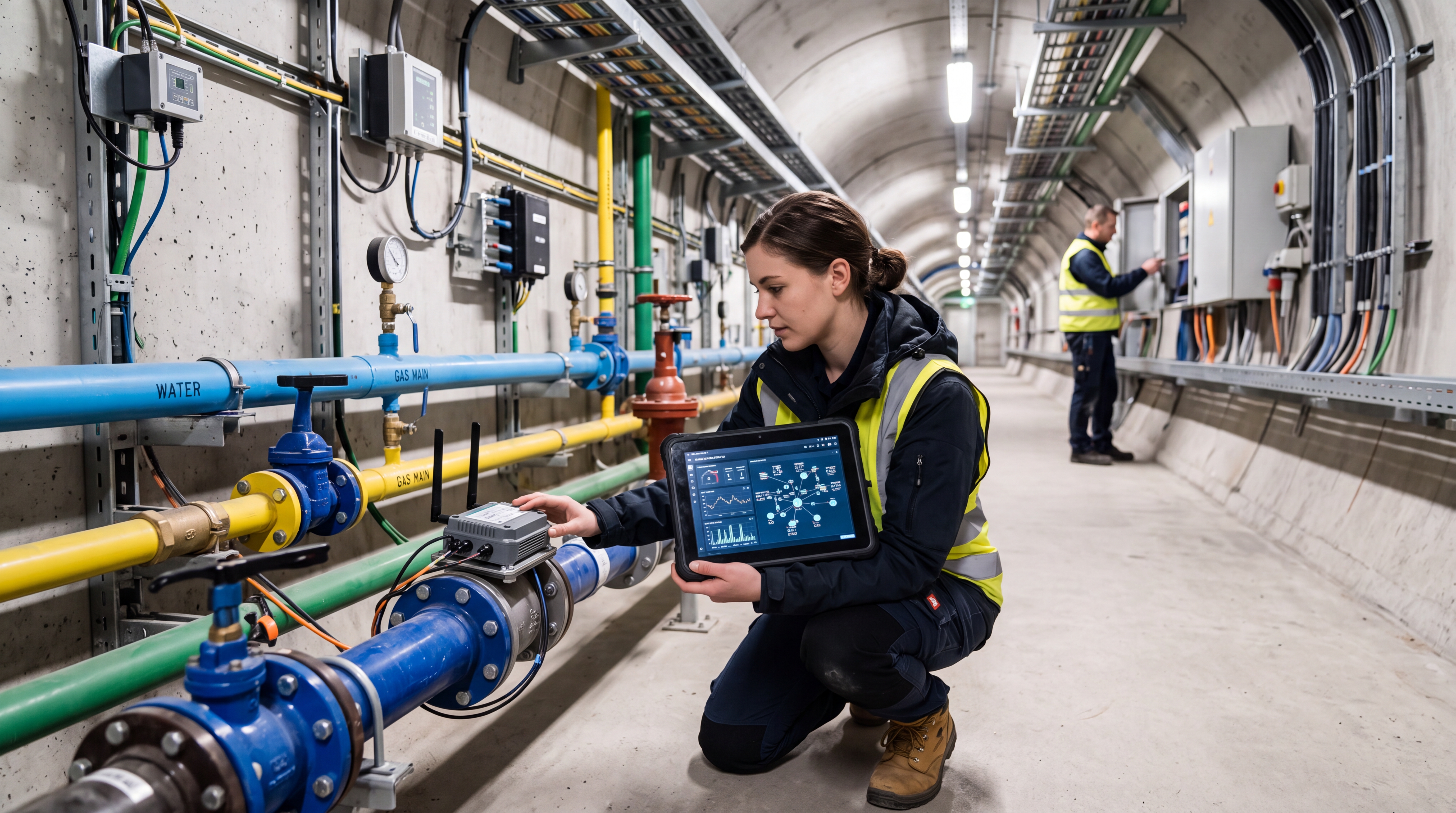
At the perception layer, revolutionary changes are taking place. Smart sensors featuring IP68 waterproof rating, micro-power design, and support for NB-IoT/5G transmission are being densely deployed at key nodes such as manholes, discharge outlets, and pump stations. The coordinated operation of radar level gauges and Doppler ultrasonic flowmeters enables management departments to monitor the network's operational load rate, flow velocity changes, and bottleneck nodes 24/7. When rainstorms strike, the high-frequency data collected by these front-end sensors can provide the most direct decision-making basis for the advance pumping of downstream pump stations and the automatic opening and closing of interception well gates. The multi-dimensional coupling analysis of water level, flow rate, and water quality (such as COD and ammonia nitrogen) data has become the technical cornerstone for accurately locating pipeline siltation, pipeline leakage, and illegal clandestine discharges.
At the platform layer, digital twin technology has completely reconstructed the operation and maintenance logic of pipeline networks. With the help of high-precision GIS (Geographic Information System) data, technicians have replicated the complex physical pipeline networks 1:1 in the virtual digital space. More importantly, the digital twin is not a static 3D model; it is deeply integrated with professional hydraulic and water quality models such as SWMM (Storm Water Management Model). When the meteorological department issues an orange rainstorm warning, the smart pipeline network platform can combine real-time rainfall, terrain elevation, and pipeline network status to deduce the potential waterlogging points and inundation depths within the next 2 hours in just a few minutes. This leap from "post-disaster rescue and passive firefighting" to "pre-event sandbox simulation and in-event dynamic scheduling" has given urban disaster prevention and mitigation immense initiative.
Outlook and Prospects: Moving Towards Autonomous Operating Systems with Self-Evolution Capabilities
The wave of digital and intelligent transformation in pipeline networks has just begun. Looking ahead five to ten years, the development of urban pipeline networks will completely bid farewell to mere data collection and display, as well as simple automation control based on fixed thresholds. With the accelerated implementation of large AI models in the vertical water affairs sector, future smart pipeline networks will evolve into a brain-like system with powerful "autonomous learning" and "self-evolution" capabilities.
In this vision, the AI system can autonomously ingest long-term meteorological forecast data, watershed hydrological environmental data, and massive historical records of pipeline network operations. It can automatically identify abnormal fluctuation patterns in pipeline network flow, predict structural degradation trends, and even automatically generate and issue optimal global water resource scheduling strategies without human intervention. This means that the urban drainage system will upgrade from "solo operations" at local nodes to "corps-level coordinated operations" across the entire domain.
The road to this ultimate form is not smooth. The unification of underlying data standards and the complete breaking down of data barriers across departments (housing and urban-rural development, water affairs, environmental protection, and emergency response) remain long-term issues testing the governance wisdom of local governments. At the same time, as national critical information infrastructure, smart pipeline network systems face exponentially rising cybersecurity risks, making it imperative to build an endogenous security protection system without delay.
The YiCai Technology Industry Research Center believes that the future urban underground pipeline network is by no means just a bunch of pipes buried underground, but a complex giant system that highly integrates advanced polymer materials, cutting-edge sensor networks, and surging computing power. Only by adhering to the dual-wheel drive of core technology breakthroughs and institutional mechanism innovation, and truly sinking digital and intelligent capabilities into every pore of pipeline network construction and operation, can we build a solid safety baseline for cities. Facing more extreme climate challenges and complex urban environments in the future, a robust and intelligent "underground lifeline" will be the greatest confidence for the city's endless vitality and long-term development.
Learn More
Visit https://www.cssoc.com or call our expert hotline at 400-808-9114 to get customized smart pipeline network solutions for your city.