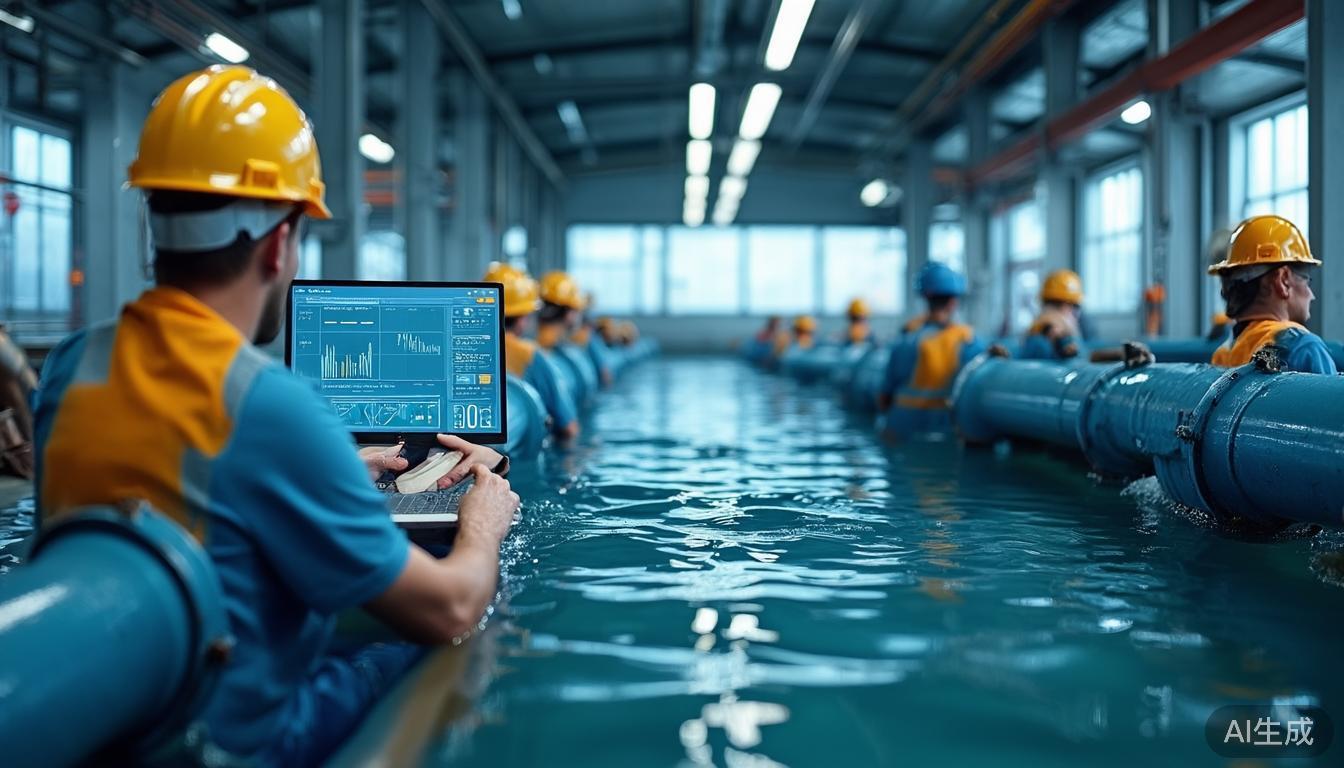
Market Analysis of Drainage Network Monitoring: Price Ranges, Procurement Logic, and Observations on Long-Term O&M Costs
As urban renewal and sponge city construction advance, drainage network monitoring is shifting from single-point equipment procurement to systematic operations and management.
Driven by demands for drainage safety, liquid level changes, flow measurement, and waterlogging early warning, municipal management departments, park operators, and engineering units across various regions have significantly increased their attention to network sensing equipment, data transmission systems, and analytical platforms. The market is no longer solely focused on "whether equipment is installed," but places greater emphasis on data stability, timely early warnings, and controllable O&M.
Application Scenarios & Core Requirements
From a market demand perspective, drainage network monitoring is primarily applied in municipal networks, underpasses, pump stations, detention tanks, river outfalls, flood-prone areas, and the surrounding areas of key dischargers. Traditional manual inspections and periodic testing methods can hardly meet the management requirements for high-frequency changes during the flood season and sudden rainfall scenarios.
Therefore, equipment for liquid level monitoring, flow monitoring, rainfall monitoring, manhole cover status monitoring, and video-assisted identification are gradually becoming standard configurations. Among these:
- Liquid Level Data: Used to assess the risks of pipe backwater, overflow, and water accumulation.
- Flow Data: Used to evaluate conveyance capacity, illicit discharges, and dispatching effectiveness.
- Waterlogging Early Warning: Emphasizes multi-source data linkage and threshold management.
Product Pricing & Cost Structure
Regarding product pricing, drainage network monitoring equipment varies significantly in price ranges due to differences in technical routes, installation environments, and integration levels.
Basic Liquid Level Monitoring
Typically relies on ultrasonic, radar, or pressure-based technologies.
Price Range: Several thousand to 10,000–20,000 RMB.
*Prices increase for low-power design, anti-corrosion materials, explosion-proof requirements, or high-precision measurement.
Advanced Flow Monitoring
Solutions such as Doppler, radar, or electromagnetic flow meters suitable for different pipe diameters (full/non-full pipe).
Price Range: Tens of thousands to over 100,000 RMB.
*Higher technical threshold compared to level sensors.
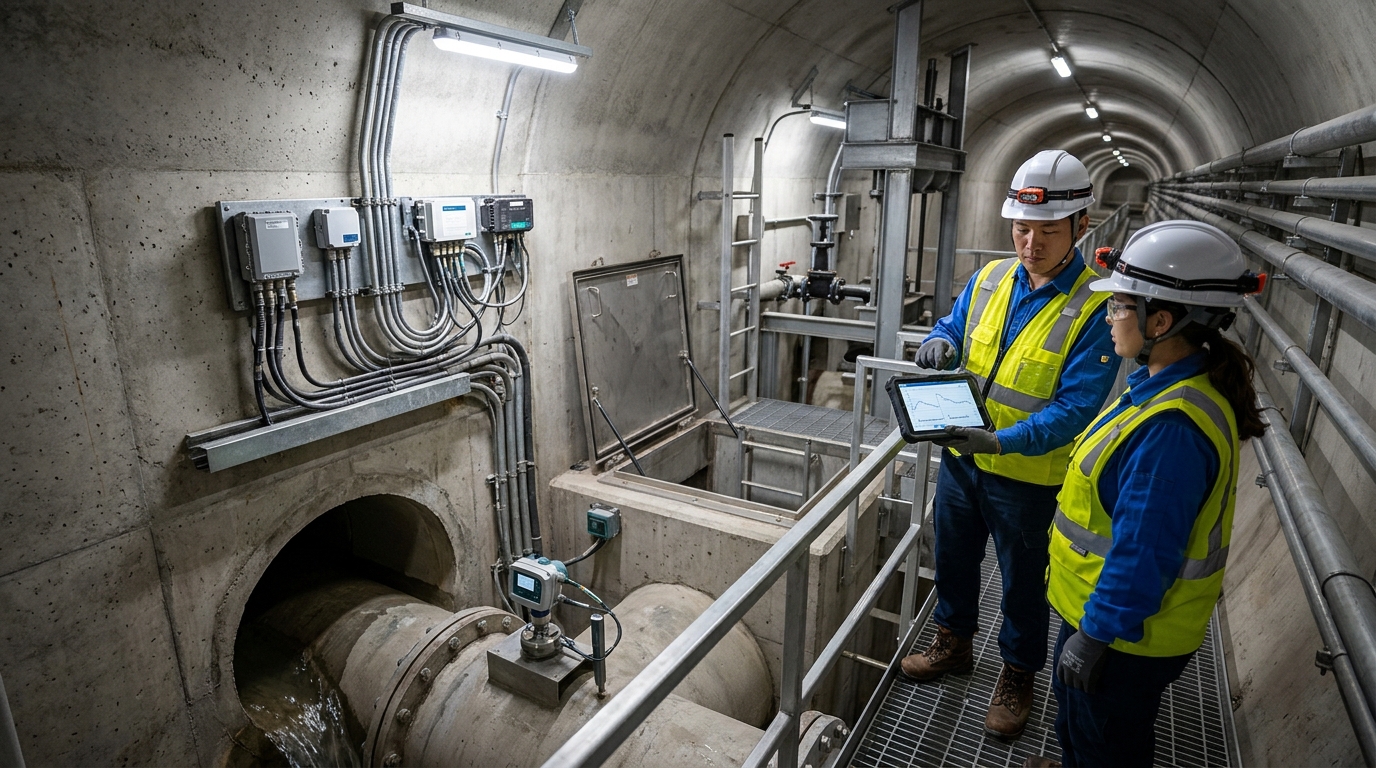
Comprehensive Monitoring Stations: Targeting key waterlogging prevention points, which include liquid level, flow, rainfall, power supply, communication, mounting poles, protective enclosures, and platform integration, often require project investments ranging from tens of thousands to hundreds of thousands of RMB.
Software Platforms: Mostly priced based on the number of monitoring points, functional modules, storage duration, and O&M services, with costs ranging from tens of thousands to over one million RMB, requiring individual assessment based on project scale.
Strategic Procurement Recommendations
In terms of procurement recommendations, the application scenario should first be clearly defined rather than simply pursuing high-end configurations.
1. Scenario-Based Selection:
- Ordinary Manholes: Prioritize liquid level monitoring to track operating water levels and overflow risks.
- Trunk Mains & Outfalls: Focus on flow monitoring to support water volume accounting and dispatch analysis.
- Underpasses & Low-lying Areas: Establish multi-parameter linked early warnings integrating liquid level, rainfall, and video around the goal of waterlogging prevention.
2. Environmental Adaptability: Attention should be paid to the equipment's adaptability in complex drainage environments, including protection ratings (IP), anti-corrosion capabilities, anti-clogging performance, low-power performance, battery life, communication stability, and in-manhole installation conditions.
3. Data Integration: Data interfaces and platform compatibility are equally critical; whether the equipment can be integrated into existing drainage management systems, urban operation management platforms, or emergency command systems directly impacts its subsequent utility value.
The Hidden Challenge: Long-Term O&M Costs
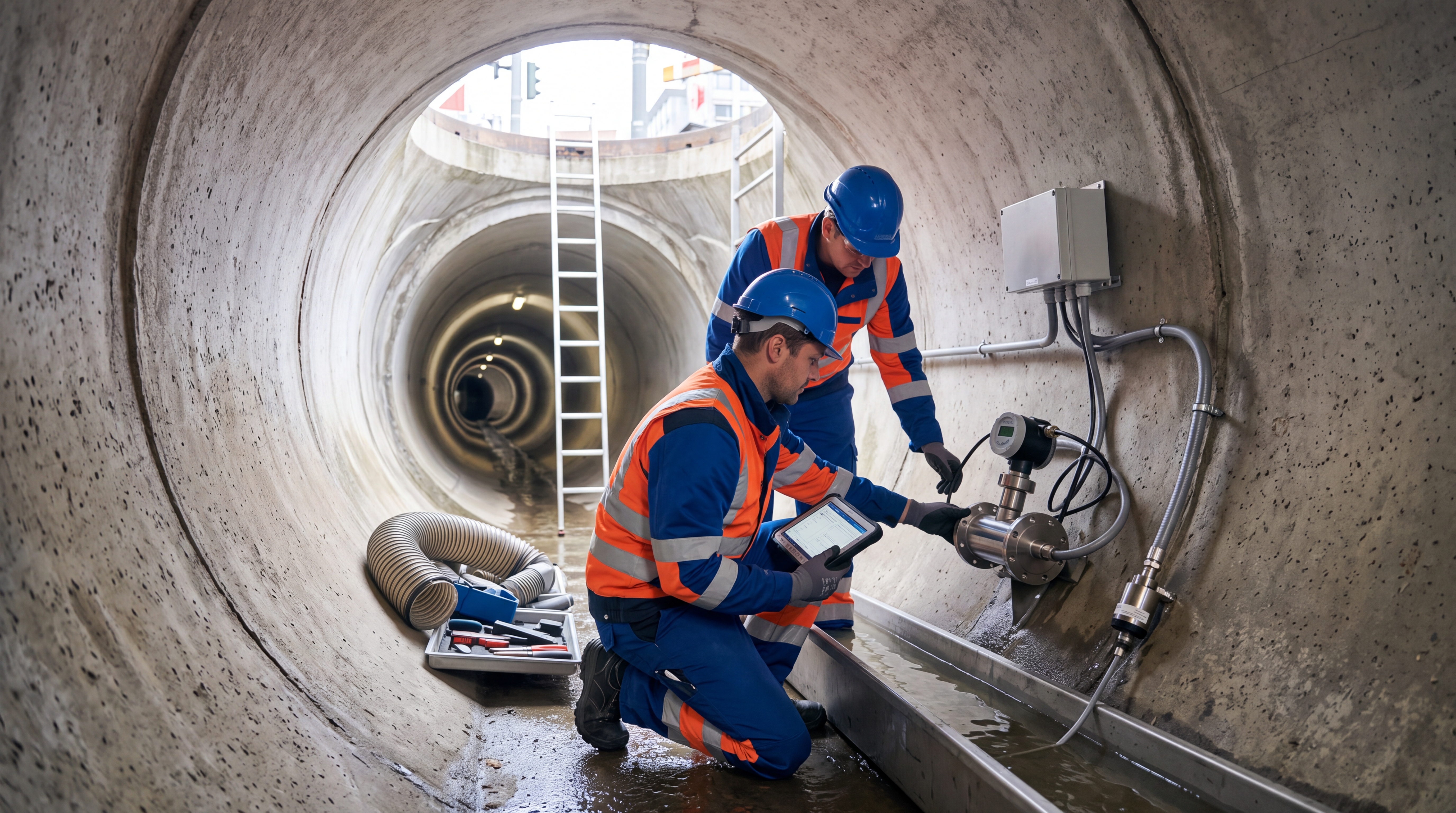
Maintenance costs are often the most underestimated aspect of drainage network monitoring projects. The drainage environment is humid and highly corrosive, and the pipes also suffer from issues such as sand, grease, garbage, and gas corrosion. After long-term operation, equipment is prone to probe contamination, signal drift, battery degradation, communication interruptions, and loose installations.
Typical Annual O&M Expenditures
Generally, annual maintenance costs account for approximately 5% to 15% of the initial construction investment. If the project is located in areas with high humidity, high corrosion, high siltation risk, or heavy traffic, maintenance frequency and costs may increase further.
- • On-site inspections
- • Desilting and cleaning
- • Calibration
- • Battery replacement
- • Communication fees
- • Spare parts replacement
Without a stable O&M mechanism, monitoring systems are highly susceptible to issues such as "built but unused, inaccurate data, and failed early warnings."
Industry Trends: From Hardware to Full-Cycle Value
From the perspective of industry development trends, drainage network monitoring is transitioning from single hardware sales to a comprehensive model of "sensing equipment + data transmission + analytical platform + O&M services." The future market will place greater emphasis on the long-term stability of equipment, data quality control, and scenario-specific application capabilities.
Basic data such as liquid level, flow, and rainfall will be further integrated with waterlogging models, network topology, weather forecasts, and dispatch commands, driving drainage management from post-incident response to pre-event early warning. For purchasers, simply comparing unit equipment prices is no longer sufficient to determine project value; it is more important to evaluate construction costs, O&M investments, data availability, and business synergy effects from a full life-cycle perspective. Only by forming a closed loop in the selection, deployment, and O&M stages can drainage network monitoring truly serve urban waterlogging safety and the refined management of drainage systems.