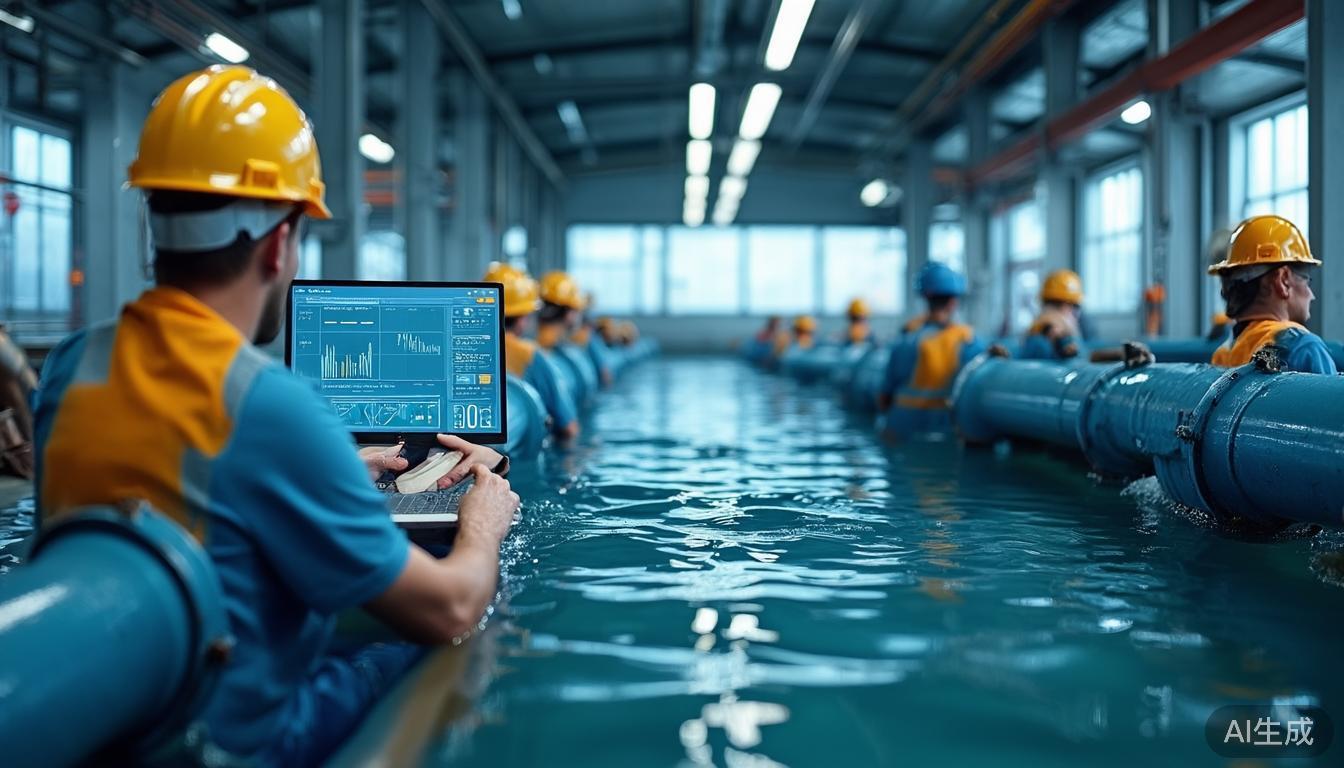
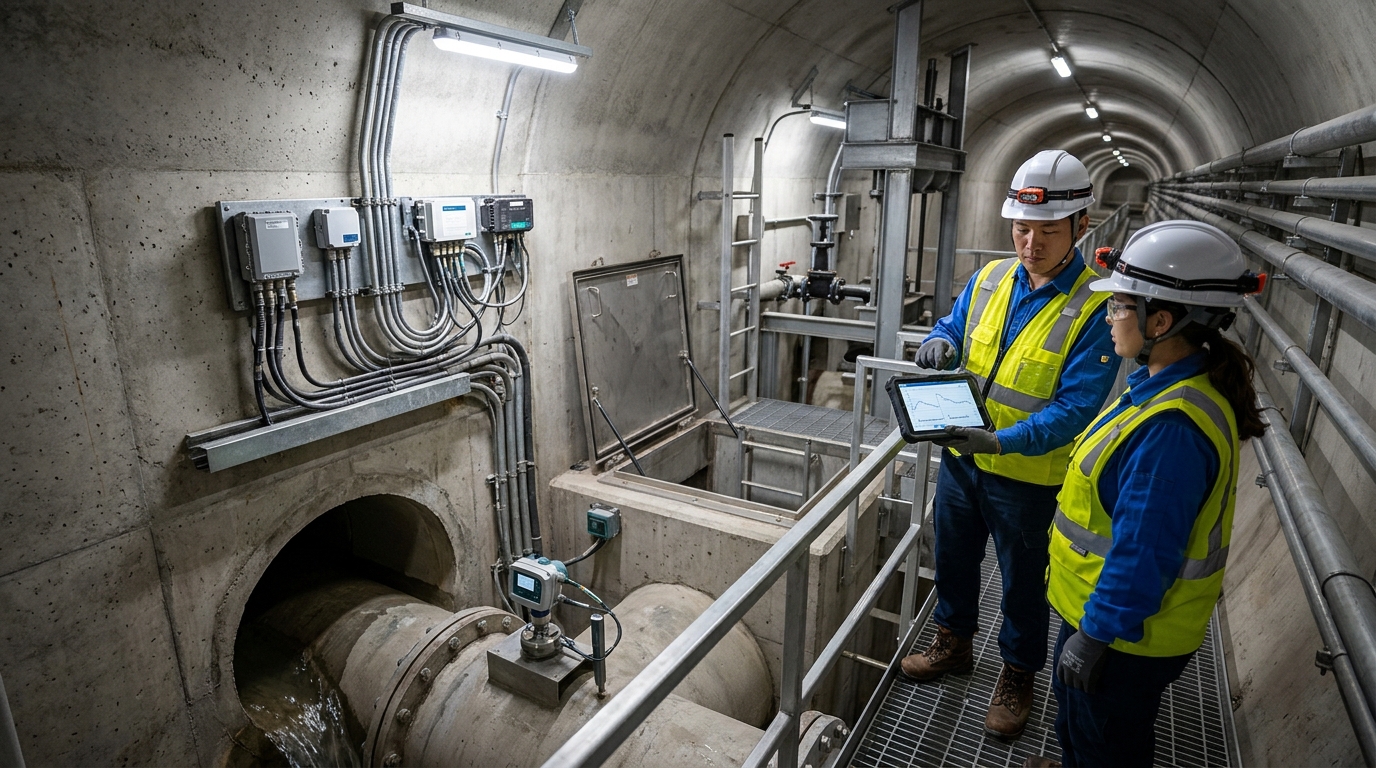
[Yicai Technology Industry Observation] Comparative Analysis and Selection Guide for Urban Drainage Network Monitoring Technologies
In recent years, frequent extreme rainfall events have severely tested the drainage and flood control capabilities of major cities. Chronic waterlogging during every rainfall and severe urban flooding have become pressing governance challenges that many localities urgently need to resolve. The underground drainage network acts as the city's capillary system, and its operational status directly determines the city's safety baseline during flood seasons. However, for a long time, underground pipelines have remained a "black box"—unobservable and inaccessible. How can these deeply buried infrastructures be made transparent and controllable? Scientific and efficient drainage network monitoring systems have become core infrastructure for modern urban flood mitigation and the enhancement of water management capabilities.
In complex and harsh underground pipeline environments, accurately acquiring liquid level and flow data is fundamental to assessing network operational status and building urban hydraulic models. Faced with a wide array of sensors and monitoring solutions on the market, water utility managers and engineering contractors often face selection dilemmas. Grounded in the forefront of the Industrial Internet of Things (IIoT), this article objectively reviews mainstream drainage network monitoring technological approaches, deeply compares their physical principles, advantages, disadvantages, and applicable scenarios, providing industry practitioners with a professional and practical selection reference.
I. Cracking the "Black Box": Why is Level Monitoring the First Line of Defense?
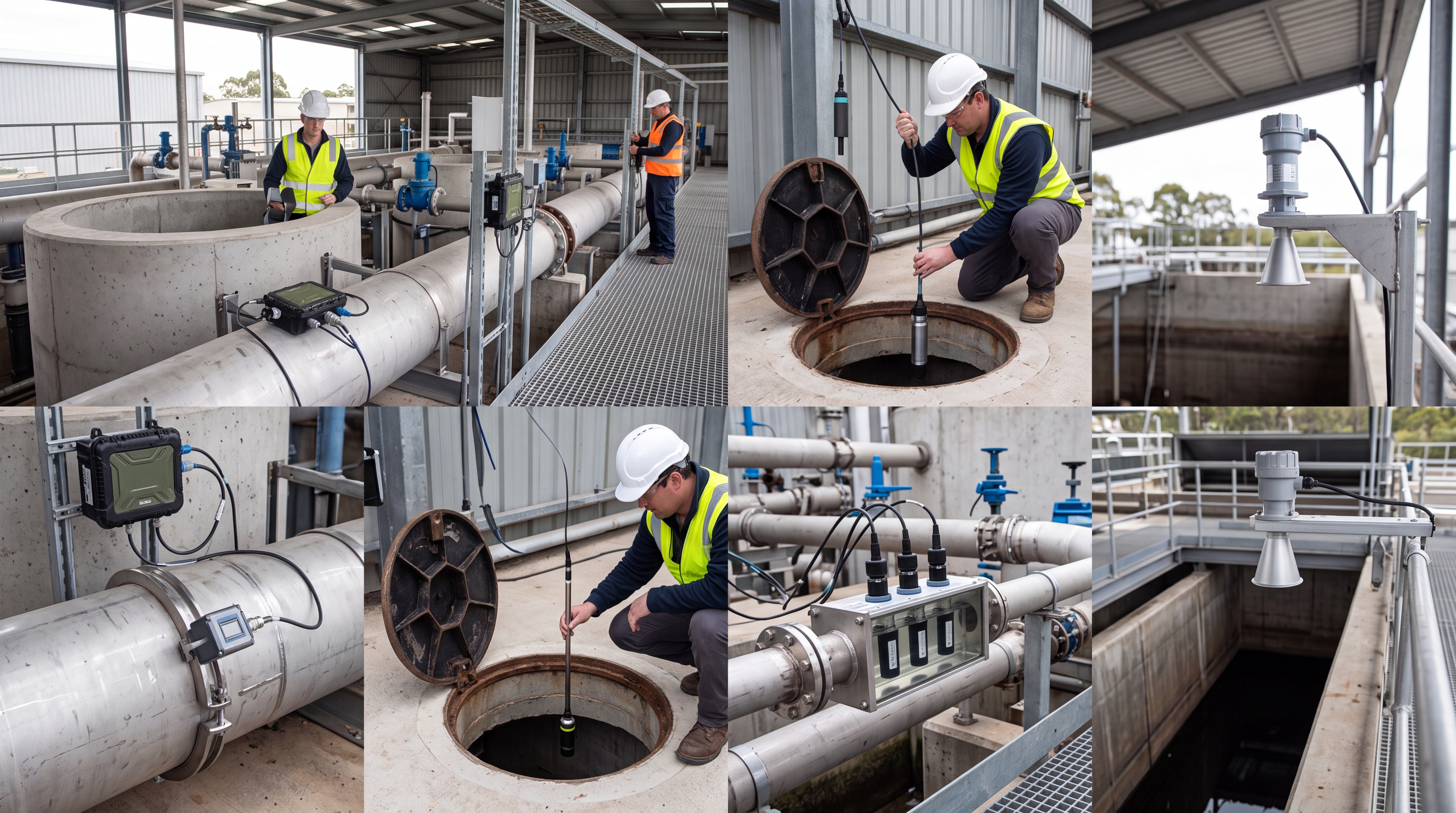
Level data is the most intuitive indicator for assessing pipeline operational load, warning of overflow risks, and supporting flood control decision-making. By deploying level gauges at critical manholes, managers can monitor underground water level fluctuations in real time. Currently, pipeline level monitoring primarily relies on three core technologies: ultrasonic, radar, and submersible pressure. Each operates on distinct physical principles and serves specific application scenarios.
1. Ultrasonic Level Monitoring Technology: A High-Cost-Performance Routine Guardian
The operating principle of ultrasonic level gauges is based on acoustic reflection (Time of Flight). The device emits high-frequency acoustic pulses downward; when the sound waves hit the water surface, they reflect back and are received by the sensor. By calculating the time difference for the round trip, the distance to the liquid surface is determined. This non-contact measurement method prevents direct corrosion of the equipment by wastewater, making installation and routine maintenance relatively straightforward. After years of industry application, ultrasonic technology is highly mature, with relatively low overall procurement and deployment costs.
However, in practical applications, ultrasonic technology has obvious physical limitations. As mechanical waves, the propagation speed of sound is highly dependent on the air medium. Temperature gradients, high humidity, and fluctuations in harmful gas concentrations (such as hydrogen sulfide) underground can alter the speed of sound, leading to measurement errors. Additionally, urban wastewater often contains substantial foam, or manhole walls may remain chronically damp, condense moisture, or be covered in cobwebs. These factors readily cause acoustic wave scattering or attenuation, resulting in signal loss (dropped echoes). Therefore, this technology is better suited for relatively open, shallow standard stormwater manholes, and routine network monitoring nodes where moderate absolute data accuracy is acceptable.
2. Radar Level Monitoring Technology: A "Hardcore" Choice for Harsh Environments
Unlike ultrasonic sensors, radar level gauges utilize high-frequency electromagnetic waves (such as Frequency Modulated Continuous Wave (FMCW) or pulse radar). Electromagnetic waves travel at the speed of light and do not require air as a propagation medium. This means radar waves possess strong penetrating power; sudden temperature changes, dense water vapor, or even density fluctuations of toxic gases underground cannot interfere with them.
In recent years, with the popularization of millimeter-wave radar technology (e.g., the 80 GHz band), radar level gauges feature narrower beam angles and smaller blind zones, allowing them to accurately bypass obstacles like manhole ladders and reach the water surface directly. Their standout advantages are extremely high measurement accuracy and superior anti-interference capabilities, making them particularly suitable for underground sewer networks in extremely harsh environments. Naturally, their hardware costs and computational requirements for signal processing are relatively higher, resulting in a slightly higher unit price compared to ultrasonic products. In the top-level design of urban flood control systems, radar level gauges are typically deployed at underpasses, deep tunnels, core flood-prone areas, and boundaries between different drainage zones, serving as the "anchor" for reliable data.
3. Submersible Pressure Level Monitoring Technology: A Practical Supplement for Specific Scenarios
Submersible pressure level gauges adopt a contact measurement approach. A probe encapsulating a piezoresistive sensor is directly immersed in the water, converting measurements based on the physical law that hydrostatic pressure is proportional to liquid depth. Its advantages are straightforward: the probe is fully submerged, unaffected by thick surface foam, floating debris, or manhole clutter, yielding highly stable data output. Additionally, its compact size facilitates deployment in narrow pipelines.
However, drainage networks, particularly sewer and combined systems, often contain large amounts of silt, domestic waste, and highly corrosive substances. Under prolonged immersion, the sensor's pressure-sensitive diaphragm is highly susceptible to being enveloped by sludge or clogged by foreign objects, leading to pressure sensing failure. The subsequent workload for down-hole cleaning and calibration is substantial. Therefore, the industry generally does not recommend long-term use of this technology in heavily silted sewer networks. It is better suited for deployment in stormwater trunk lines with relatively good water quality and high flow velocities, or as a temporary, rapid monitoring solution for emergency flood response during flood seasons.
II. Taking the Pulse of the Network: How to Achieve Precise and Reliable Flow Monitoring?
If level is the "blood pressure" reflecting the network's health status, then flow is its "pulse." A simple rise in water level only indicates that the pipe is full, but is it due to downstream blockage causing backwater, or excessive upstream inflow? This requires flow data for cross-verification. Accurate flow data holds irreplaceable value for assessing regional drainage capacity, calibrating hydraulic models, and tracing stormwater-sewer cross-connections.
1. Doppler Ultrasonic Flow Monitoring Technology: A Classic Solution for All Flow Regimes
Doppler flow meters are currently the most mainstream contact-type flow measurement devices in drainage networks. They operate on the Doppler shift principle: when ultrasonic waves encounter moving suspended particles or bubbles in water, the frequency of the reflected wave changes, with the frequency shift proportional to the flow velocity. These devices typically integrate a Doppler velocity sensor with a pressure level sensor, calculating the instantaneous flow across the wetted cross-section using the "velocity-area method."
The greatest advantage of this technology lies in its all-weather, all-flow-regime adaptability. Whether the pipe is partially full, full, or experiencing backflow/reverse flow, it can provide continuous and reliable data. However, its limitations are equally apparent: first, the water must contain a certain amount of acoustic reflectors (suspended solids); overly clear water actually leads to inaccurate readings. Second, the equipment typically needs to be fixed to the pipe invert, requiring professionals to enter the manhole for installation, which carries confined space operation safety risks. During routine operation, bottom-mounted equipment is highly susceptible to burial by sediment or entanglement with plastic bags and hair, necessitating a regular desilting and maintenance protocol. This technology is widely applicable to stormwater trunk lines and main sewer lines where precise flow data is required.
2. Radar Surface Velocity and Flow Monitoring Technology: An Emerging Non-Contact Trend
To circumvent the high maintenance costs associated with contact-type equipment, radar flow meters have emerged rapidly in the water industry in recent years. These non-contact devices are typically suspended from the pipe crown or below the manhole opening. They incorporate two radar modules: one measures level vertically downward, while the other emits radar waves at a specific downward angle to measure surface water velocity using the Doppler effect. Finally, combined with a pre-input pipe cross-section hydraulic model, algorithms estimate the total flow.
The standout feature of radar flow meters is their "non-contact" nature. They completely resolve industry pain points such as silt burial, debris entanglement, and equipment corrosion, significantly reducing lifecycle O&M costs while eliminating the dangers of frequent manhole entry. However, since they only measure surface velocity, flow algorithm fitting may exhibit certain errors in networks with highly complex flow regimes, severe undercurrents, or eddies. More critically, when the network is in a full-pipe (backwater) condition and the water surface touches the pipe crown, the non-contact radar loses its measurement space and cannot function effectively. Therefore, this technology is better suited for large open channels with relatively stable flow regimes, large-diameter stormwater networks, and flood discharge culverts with extremely high flow velocities during flood seasons.
III. Yicai Technology: Recommendations for Selecting and Deploying Drainage Network Monitoring Equipment
Network monitoring is not merely a hardware procurement exercise, but a systematic engineering project involving site surveys, communication networking, data analysis, and long-term O&M. In the practical construction of smart water and flood control systems, Yicai Technology, drawing on extensive field experience, recommends that water utility managers and system integrators comprehensively consider the following three dimensions during selection:
- Adapt to Local Conditions and Precisely Match Business Requirements: There is no perfect sensor, only the most suitable solution. For critical flood control nodes such as underpasses beneath overpasses and forebays of large pumping stations, as well as deep wells with complex environments, priority should unequivocally be given to radar level gauges with the strongest anti-interference capabilities. For trunk line intersections that serve as boundary conditions for hydraulic models and require precise understanding of network conveyance capacity, Doppler flow meters capable of handling full-pipe conditions should be selected. At nodes prone to siltation, with heavy traffic making road closures inconvenient, or where manhole entry for maintenance is extremely hazardous, non-contact radar flow meters are the optimal alternative balancing safety and efficiency.
- Strictly Adhere to Industrial-Grade Protection and Low-Power Standards: The underground pipeline environment is perennially humid and filled with corrosive and flammable/explosive gases like hydrogen sulfide. Therefore, monitoring equipment deployed underground must meet genuine IP68 ingress protection standards and ideally possess explosion-proof certification. Additionally, "difficult power supply and weak communication" are the norm for underground monitoring. Equipment must feature excellent low-power design, be powered by high-capacity primary lithium batteries, and support wireless communications such as NB-IoT or 4G/5G. Robust edge computing capabilities are also crucial—devices should remain in low-frequency sleep mode during normal operations, automatically wake up and increase encrypted reporting frequency upon abnormal level rises, thereby ensuring the continuity of critical flood-season data.
- Manage Total Cost of Ownership (TCO): Network monitoring is a long-term operational project; one cannot focus solely on initial hardware procurement costs (CAPEX) but must also evaluate subsequent O&M costs (OPEX) for cleaning, calibration, and replacement. Given limited government budgets, Yicai Technology recommends a grid-based hybrid strategy of "high-spec for core nodes, standard-spec for routine nodes." Deploy high-precision radar and Doppler equipment in historical flood-prone areas and critical trunk lines; utilize cost-effective ultrasonic equipment across extensive branch lines in ordinary residential areas. Through rational point density and technological pairing, achieve efficient and economical coverage of the flood monitoring network.
IV. Conclusion
The digital upgrade and IoT transformation of urban drainage networks are imperative for building modern resilient cities. Scientifically and rationally selecting level and flow monitoring technologies not only significantly enhances the accuracy and reliability of foundational data but also provides a robust data foundation for upper-level urban flood warning platforms and integrated plant-network-river dispatch systems. Yicai Technology will continue to deeply cultivate the IIoT sector, closely monitor the evolution of cutting-edge sensor technologies, and remain committed to providing water utility managers, environmental protection departments, and industry partners with objective, professional industry insights and technological empowerment, jointly safeguarding the city's underground lifeline.
Learn More: Visit https://www.cssoc.com or call 400-808-9114 to obtain customized solutions.