Forward-Looking Trends in Smart Water Management: LGF-PA66 Reshaping the Industry
From "Visualization" to "Computability, Predictability, and Maintainability": How advanced materials and DN50 nodes are driving the next generation of smart water infrastructure.
Introduction: The Shift to Computability
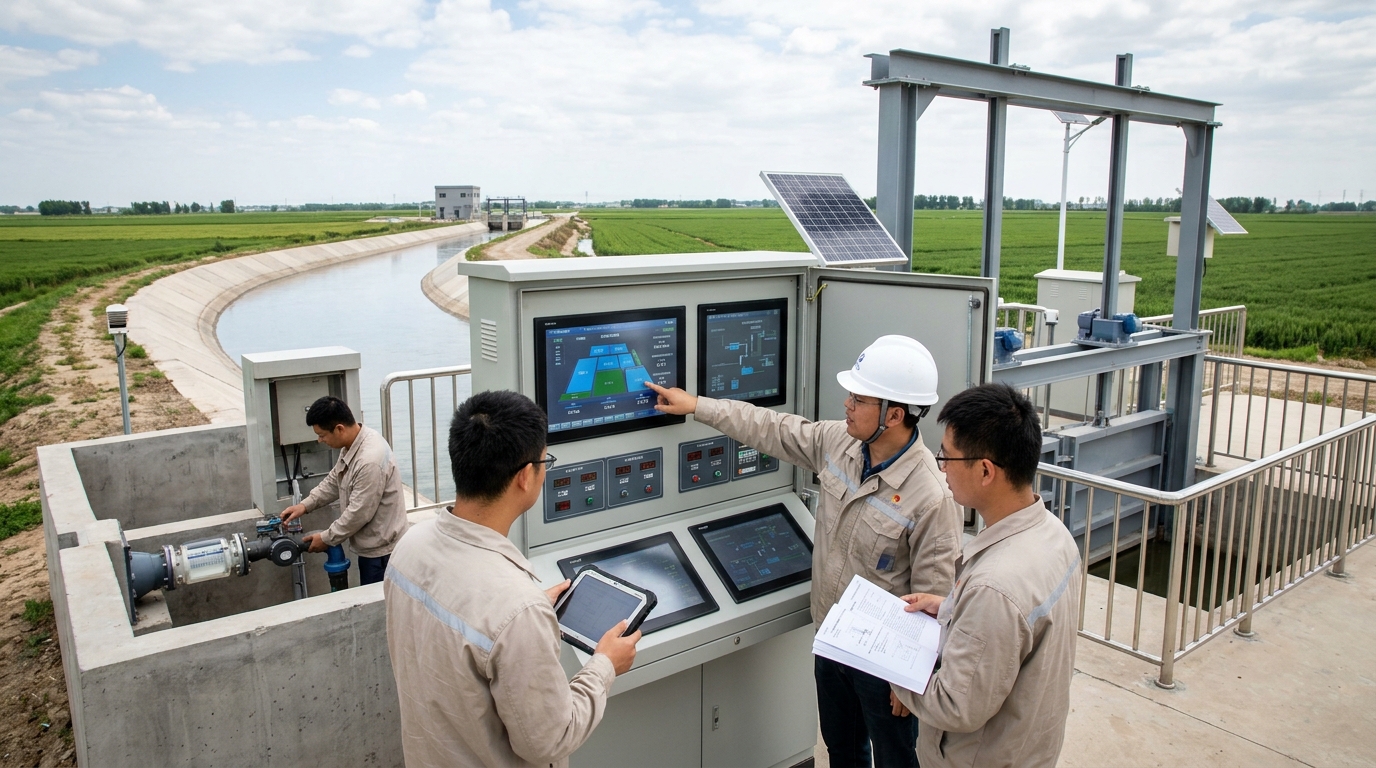
Smart water conservancy is transitioning from the early stage of "installing sensors and viewing data" to a new phase centered on precise perception, intelligent scheduling, predictive maintenance, and long-term operation and maintenance. In the past, the industry focused more on large-scale water conservancy projects, video surveillance, dispatching large screens, and basic information platforms. Today, with the continuous advancement of national water network construction, urban-rural integrated water supply, modernization of irrigation districts, and urban flood control and drainage management, the focus of smart water conservancy construction is shifting towards an equal emphasis on "physical engineering + digital assets + long-term operation".
Industry observation by Yicai Technology suggests that in the next three to five years, the key to competition in smart water conservancy will no longer be just a single software platform or standalone hardware device, but the ability to achieve stable data collection, reliable transmission, precise modeling, and closed-loop control in complex hydrological, geological, climatic, and pipeline network environments.
Investment Scale & Infrastructure Demand
Public data shows that national water conservancy construction investment has remained above the trillion-yuan mark for three consecutive years:
- 2022: ~1.0893 trillion yuan
- 2023: ~1.1996 trillion yuan
- 2024: ~1.35 trillion yuan
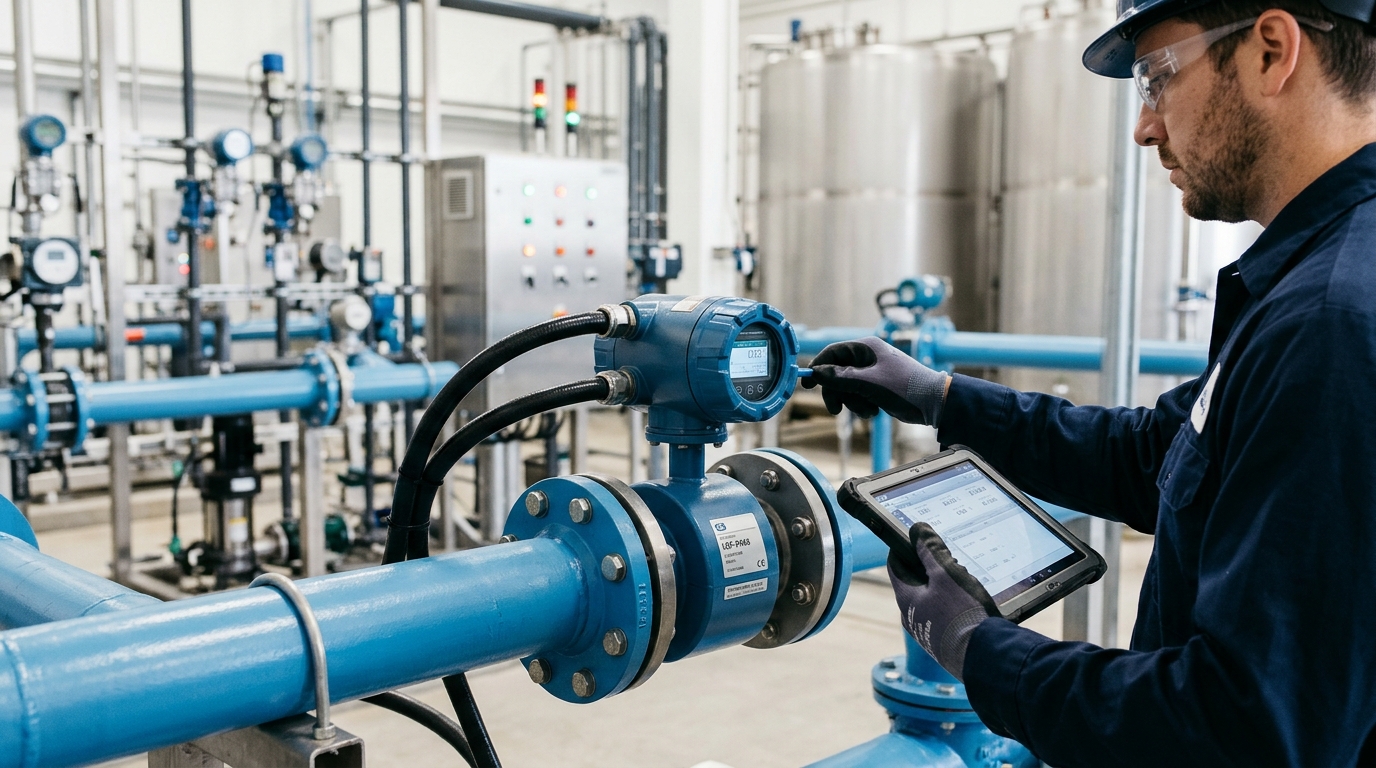
This massive infrastructure scale imposes higher requirements: sensors cannot just "look smart" in laboratory environments; they must operate stably over the long term in humid valve chambers, salt-spray coastal areas, low-temperature irrigation districts, high-sediment rivers, and urban underground pipeline networks. Consequently, keywords such as LGF-PA66, integrated injection molding, anti-corrosion, and DN50 are becoming indispensable foundational capabilities.
Market Trends: Engineering Meets Data Operations
1. Investment Structure Shift
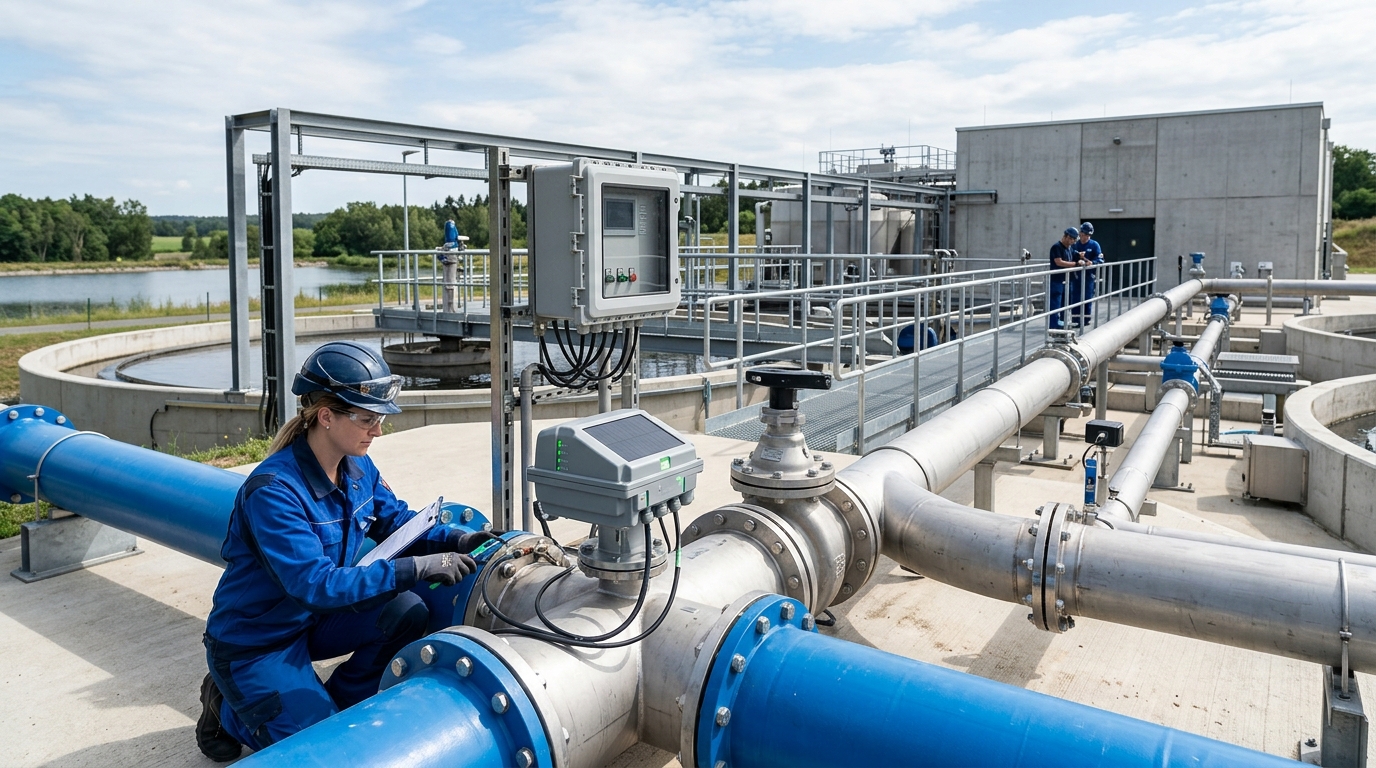
The market is shifting from single engineering construction to comprehensive construction integrating "engineering + perception + data + operation and maintenance". Perception terminals, communication networks, and O&M services are now crucial components for project approval and acceptance. The industry no longer just asks "whether it has been built," but focuses more on "whether it can be used long-term, whether the data is accurate, and whether the dispatching is effective."
2. Rising Value of DN50 Nodes
A massive number of DN50-level (nominal diameter ~50 mm) small-diameter nodes exist in urban water supply, rural scaled water supply, and irrigation districts. At a flow velocity of 1 m/s, the theoretical flow rate is approximately 7 cubic meters per hour. While individual scale is small, their vast quantity makes them critical endpoints for leakage control and pressure balancing.
National targets propose controlling the urban public water supply network leakage rate within 9% by 2025, directly driving demand for pressure monitoring and anti-corrosion components at these endpoints.
3. Procurement Standards: Full-Lifecycle Reliability
Project owners are increasingly valuing equipment protection ratings (e.g., IP68), weather resistance, and battery life (5-8 years). The market is shifting from comparing unit prices to comparing ten-year O&M costs, failure rates, and data integrity rates.
Technical Directions: Closed-Loop Intelligence
Perception Layer
Evolution from single-parameter to multi-parameter fusion (pressure, flow, quality). Terminals act as edge computing nodes for encryption and interference filtering.
Communication Layer
Multi-network synergy (NB-IoT, 4G/5G, LoRa, Satellite). Critical balance between reporting frequency and battery life for remote DN50 nodes.
Modeling Layer
Shift from static display to real-time correction. Digital twins integrate hydrodynamic models with AI for anomaly identification and dispatch assistance.
Control Layer
Intelligent gates and valves enable closed-loop control. Equipment reliability (anti-corrosion, sealing) is the prerequisite for effective dispatch.
Material Innovation: LGF-PA66 & Integrated Injection Molding
Smart water conservancy terminals face harsh environments: moisture, sediment, chloride ions, and temperature variations. LGF-PA66 (Long Glass Fiber reinforced Polyamide 66) is emerging as a superior material for structural components, valve bodies, and enclosures compared to traditional metals or short-glass-fiber nylon.
Why LGF-PA66?
- High Strength: Tensile strength reaches 220–280 MPa; Flexural modulus 12,000–18,000 MPa.
- Heat Resistance: Heat deflection temperature can exceed 200°C under load.
- Durability: Low water absorption (2-3%) ensures dimensional stability and sealing accuracy.
- Anti-Corrosion: Polymer composites lack electrochemical corrosion paths, ideal for humid and saline environments.
Combined with integrated injection molding, multiple parts (enclosures, brackets, fasteners) are merged into single integral components. This reduces assembly errors, cuts assembly man-hours by ~40%, and minimizes potential leakage points—a critical advantage for batch-deployed DN50 nodes.
Policy Impact & Future Outlook
Policies like the "National Water Network Construction Planning Outline" and "Dual Carbon" goals are shaping long-term demand. The focus is shifting from "replacing management with construction" to "supporting assessments with data." Reliable data from standardized, durable endpoints is essential for verifying water-saving indicators and leakage reduction targets.
Looking Ahead: System Intelligence
The future of smart water conservancy lies in three trends:
- System Intelligence: Moving from point intelligence to basin-wide coordination via digital twins.
- Edge Capabilities: Local anomaly identification and offline caching to reduce communication burdens.
- Standardization: Unified interfaces and protocols enabling scaled replication from demonstration projects.
True foresight in this industry is not about piling up concepts, but about making sensors, valves, and enclosures into reliable, maintainable systems. Only when digital systems are deeply integrated with a robust physical foundation—supported by materials like LGF-PA66 and standardized DN50 nodes—can smart water conservancy truly achieve computability, predictability, and sustainability.