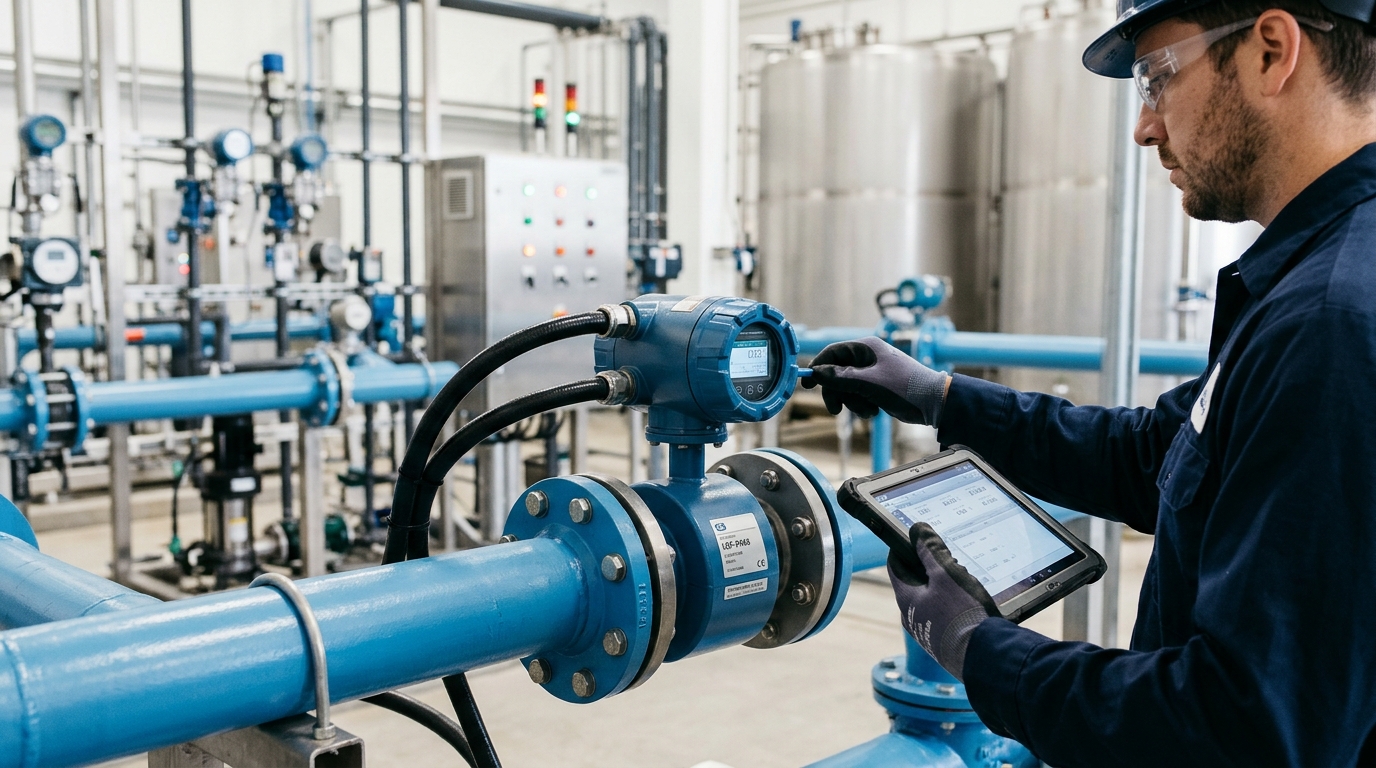
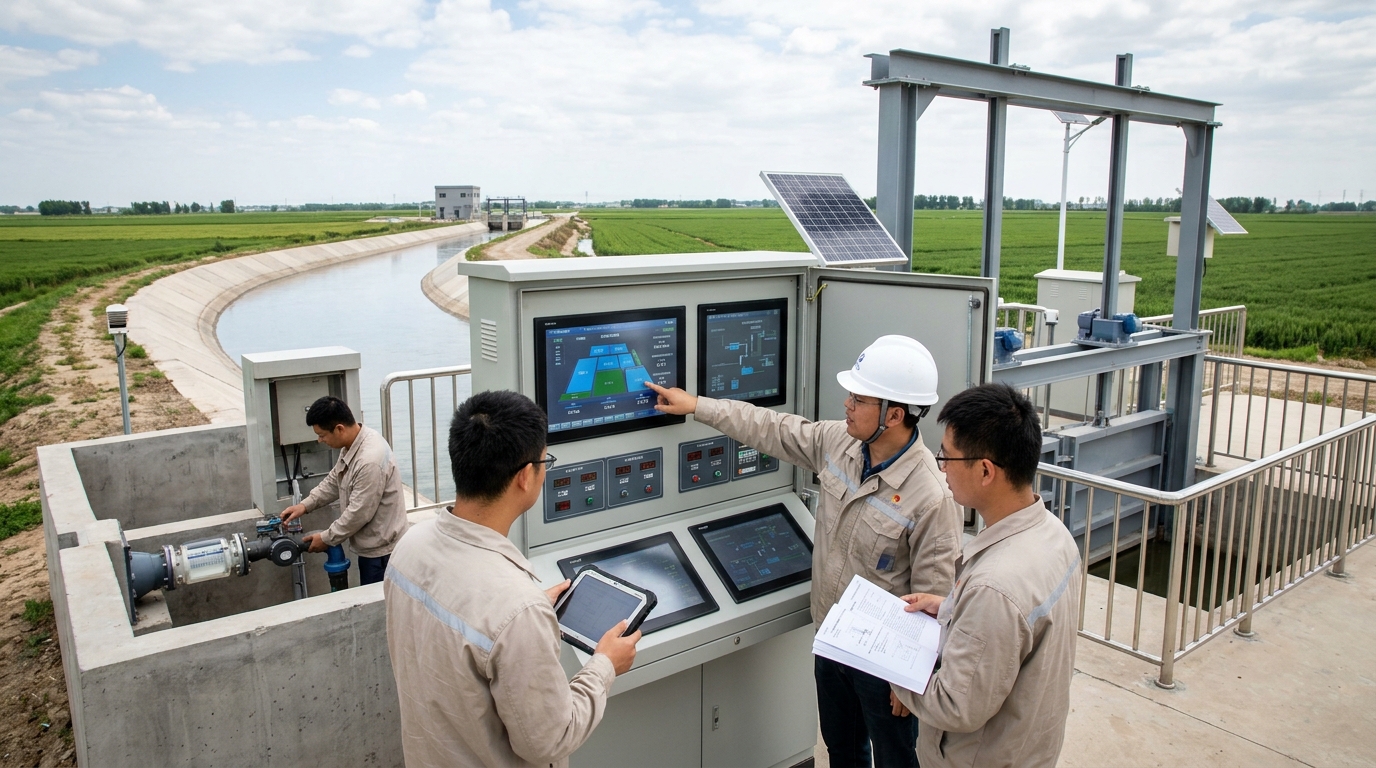
Smart Water Management Trend Outlook: LGF-PA66 Reshapes Smart Water Management
From Project-Driven Construction to Governance-Driven Operations
Introduction: From Hardware to Data-Driven Governance
Over the past decade, China’s water conservancy development focused primarily on "hardware construction," including flood-control projects, pipe networks, and irrigation facilities. As key infrastructure is completed, industry attention is shifting from "whether facilities exist" to "whether they are perceivable, dispatchable, assessable, and maintainable."
Smart water conservancy is not simply adding sensors; it converts operational states into quantifiable governance indicators through closed-loop data, model algorithms, and material upgrades.
Taking urban water supply as an example, metrics like non-revenue water (NRW) loss rate, pressure balance, and residual chlorine stability have replaced "investment completion rate" as key performance criteria. If the online rate of pressure monitoring points is below 95% or remote meter transmission data completeness is below 90%, digital twins degrade into static displays. The future demand is for engineering capability that turns asset health into auditable indicators.
Policy Impact: Operational Performance Assessment
Policy guidance is driving smart water conservancy from concept proof to large-scale application. Recent documents on national water-network construction and digital-twin river basins prioritize monitoring, metering, dispatch management, and O&M assessment.
Key Targets by 2025
- Public water supply NRW rate < 9%
- Irrigation water utilization coefficient > 0.57
- Preliminary establishment of smart water systems
Investment Shifts
While nationwide investment remains high (~RMB 1.1 trillion in 2023), funding structures are changing. The share for new large-scale projects is stabilizing, while spending on shortcoming remediation (pipe renewal, metering retrofits, automation) is rising.
Policies now write operational indicators into acceptance conditions: flood control focuses on warning lead time; water supply on quality compliance and NRW; irrigation on metering coverage. Projects must shift from one-time delivery to sustained compliance.
Market Trends: Existing Asset Renovation & Metering Nodes
The global smart water market is expected to grow at a CAGR of ~10% from 2025 to 2030. In China, drivers include NRW control, rural water supply scaling, and digitalization of river/lake management. Procurement is shifting from software platforms to underlying sensing and actuation hardware.
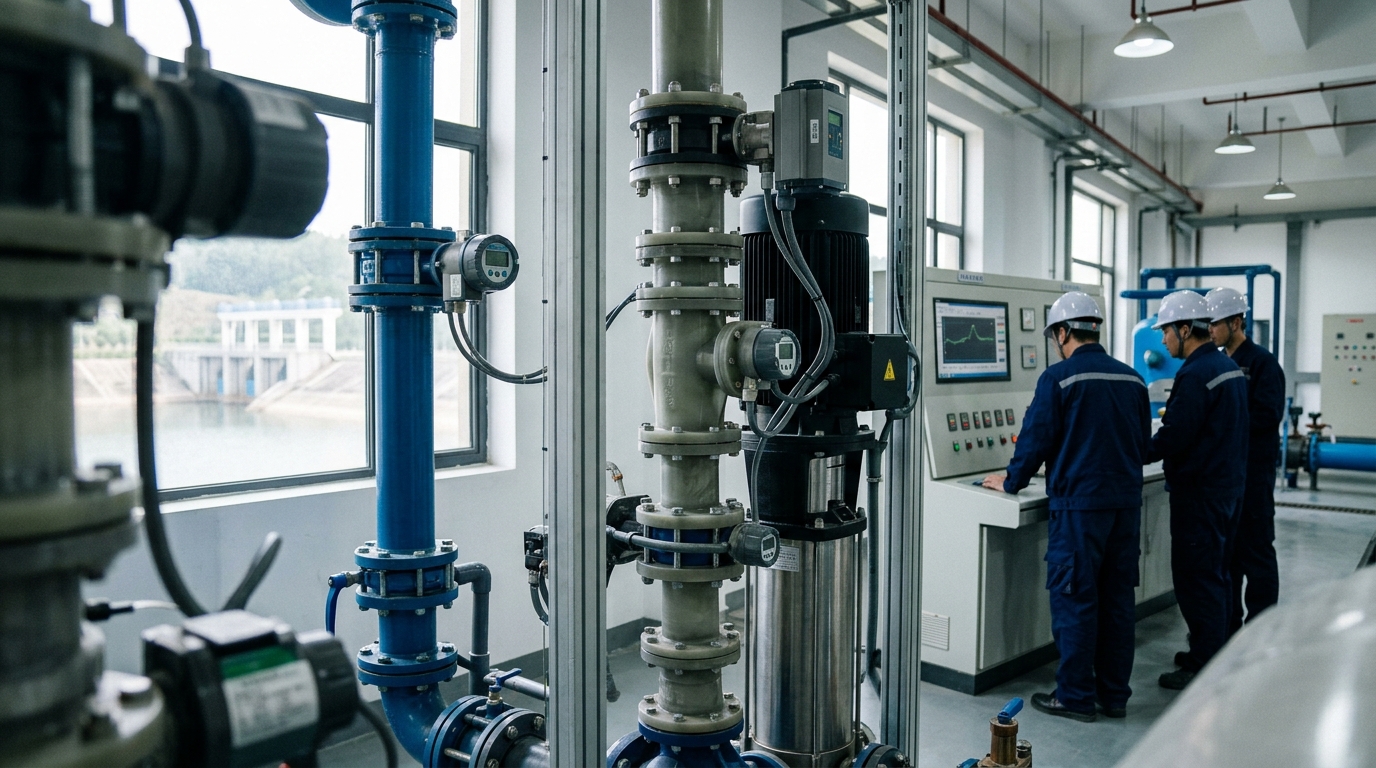
DN50 smart meters and flow meters are becoming critical nodes for District Metered Area (DMA) monitoring. These components suit residential inlets, secondary pipes, and small irrigation outlets. Procurement models are also evolving from one-off projects to Construction + Operations (e.g., EPC+O, profit-sharing), focusing on actual water-saving performance and cost reduction.
Competition will shift from platform features to equipment reliability, material compatibility, and full-lifecycle costs. Sensor drift and valve corrosion become major O&M burdens.
Technology: Sensing, Edge Computing, and Closed-Loop Modeling
The core technology stack involves building a loop that is perceivable, computable, executable, and traceable.
Sensing Layer
Shift from manual inspection to high-frequency auto-acquisition. Pressure transmitters (±0.5% FS), electromagnetic flow meters (±1-2%), and radar gauges (±1 cm) provide precise data.
Transmission & Edge Computing
Hybrid networks (NB-IoT, LoRaWAN, 5G). Edge gateways at pump stations make local decisions within milliseconds, reducing cloud latency and bandwidth pressure.
Modeling & Data Governance
Fusion of mechanism and data models. Night minimum flow analysis can localize NRW errors to 200-500 meters. Success depends less on model complexity and more on data governance (ledgers, coordinates, maintenance records).
Material Innovation: LGF-PA66 and Integrated Injection Molding
The "last mile" of smart water management competes on reliability and service life. Traditional metal components suffer from pitting corrosion and seal failure in chlorinated or corrosive environments. Long-Glass-Fiber-Reinforced Polyamide 66 (LGF-PA66) is emerging as a superior alternative for valve bodies, housings, and fittings.
160-210 MPa
Tensile Strength (Dry State)
> 240 °C
Heat Deflection Temperature
0.05-0.15 mm
Integrated Molding Tolerance
Combined with integrated injection molding, LGF-PA66 reduces assembly interfaces and leakage risks. For DN50 components used in end-point metering, this ensures dimensional stability, creep resistance, and better batch consistency compared to ordinary plastics or metals. Future asset records will incorporate material data, replaceability, and life-prediction capabilities.
Case Studies: Verifiable Indicators & Results
Smart water value is proven through specific metrics. Below are typical scenarios demonstrating the impact of integrated solutions:
Urban Supply DMA Project
Deployed DN50 remote meters and pressure points across 320 zones.
- NRW Reduction: 12.3% → 8.6%
- Water Saved: ~1.8 million m³/year
- Workflow: Reactive complaints → Proactive alarm localization
Irrigation District Digital Retrofit
Installed radar gauges, motorized valves, and branch-pipe flow meters.
- Response Time: 24 hours → 2-4 hours
- Efficiency: Utilization coefficient 0.58 → 0.61
Flood Control Pump System
Coupled rainfall forecasts with hydraulic models and pump capacity.
- Peak Depth: Reduced from 30cm to <10cm in simulated events
- Energy Savings: Comprehensive consumption reduced by ~8%
Outlook 2026–2030: Five Main Threads
Looking ahead, the industry will focus on five strategic directions:
- Standards Expansion: Acceptance criteria will shift from simple "online rates" to data quality, model accuracy, and disaster-mitigation outcomes.
- Sensor Evolution: Devices will feature low power consumption, self-diagnosis, and advanced drift compensation for pH, turbidity, and conductivity.
- Material Upgrades: LGF-PA66, anti-corrosion composites, and standardized DN50 nodes will see higher penetration in urban and irrigation endpoints.
- Digital Twins to Dispatch: Models will move beyond visualization to active simulation, execution, and feedback loops linked with edge control.
- Service-Centric Competition: Value shifts from equipment sales to long-term asset operation services, emphasizing lifecycle costs and component replacement planning.
The next stage of smart water conservancy is not about increasing data volume, but improving data quality, execution reliability, and governance efficiency to ensure assets operate stably in real-world environments.