Five Pillars, One Loop: Global Water Reuse Enters Implementation Era
The convergence of municipal innovation, dual-network engineering, multilateral finance, and industrial-scale reuse signals a decisive pivot—from water scarcity narratives to operationalized circularity.
A Summit, A Strategy, A System Shift
At the Global Water Summit 2026 in Madrid, the Bangalore Water Supply and Sewerage Board (BWSSB) didn’t just win awards—it validated a replicable governance architecture. Its ‘five pillars’—groundwater recharge, rainwater harvesting, wastewater recycling, reuse integration, and digital water governance—earned top-five rankings across three categories, marking the first time an Indian utility achieved such recognition. Crucially, BWSSB’s success wasn’t rooted in singular technology but in systemic coherence: real-time flow data informed recharge decisions; recycled water fed non-potable urban networks; and regulatory alignment enabled tariff structures that incentivized reuse. This holistic execution mirrors the growing global consensus: water resilience is no longer about isolated upgrades—it’s about interlocking physical, institutional, and informational loops.
From Dual Pipes to Dual Intelligence
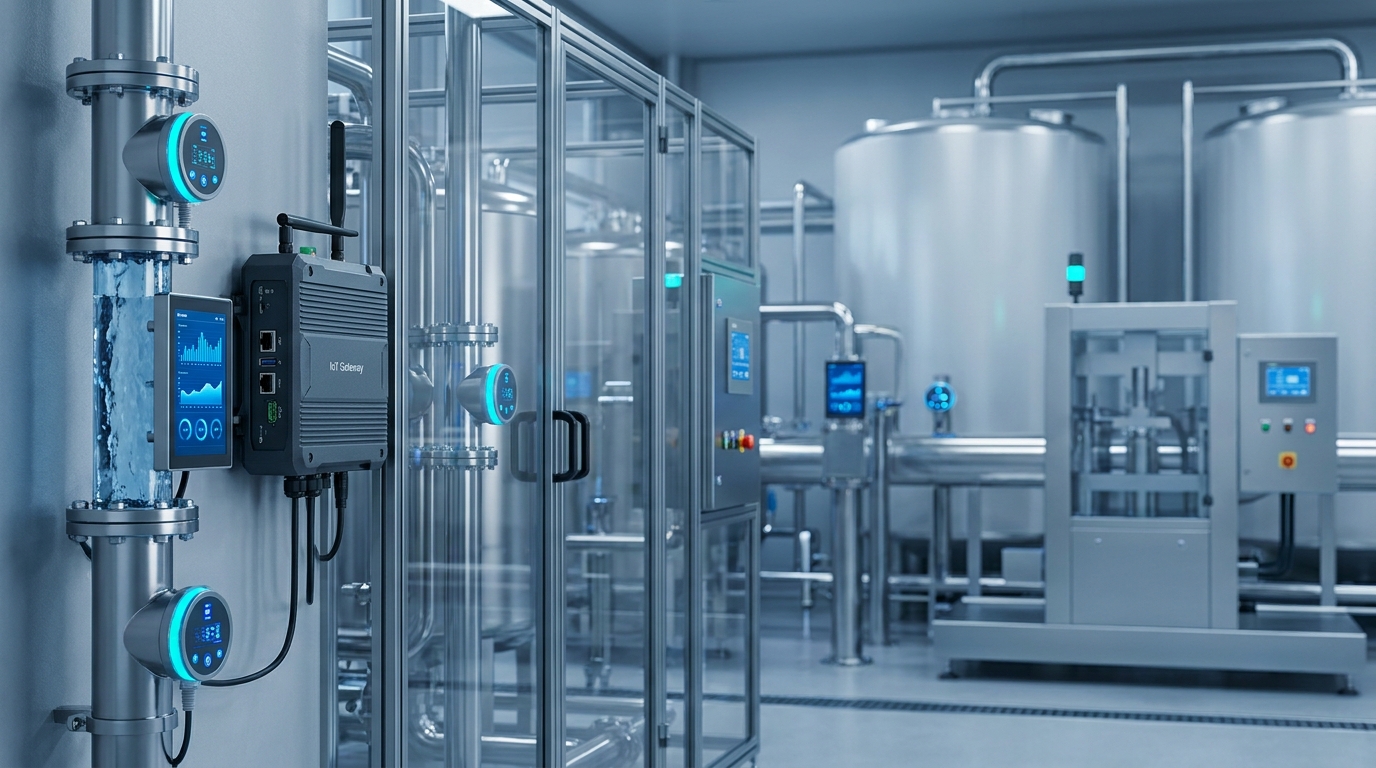
The American Water Works Association’s WaterSmart Innovations manual underscores a quiet but profound infrastructure evolution: the formalization of dual water distribution systems. No longer experimental or confined to master-planned communities, these systems—separating potable and non-potable streams—are now codified with standardized planning, regulatory pathways, and long-term integrated resource planning (IRP) frameworks. What makes this shift consequential is its dependency on precision sensing. Dual networks require continuous, reliable monitoring at every interface: pressure differentials must prevent cross-contamination; flow rates must match variable demand for irrigation, cooling, or toilet flushing; and level stability in reclaimed water reservoirs must be maintained despite fluctuating inflows. Here, instrumentation ceases to be auxiliary—it becomes the nervous system enabling safe, adaptive operation.
The Scaling Imperative: Bridging the 11%–50% Gap
When IDRA and GWI launched the Scaling Global Water Reuse Initiative (SWRI), they named a stark reality: only 11% of global industrial water use currently comes from reused sources. Their target—50%—is not aspirational but economic: closing loops reduces intake costs, mitigates regulatory risk, and insulates operations from drought-driven disruptions. Yet scaling isn’t just about building more treatment plants. As SWRI emphasizes, it demands alignment across five domains: policy harmonization (e.g., consistent reuse quality standards), utility-industry off-take agreements, blended finance mechanisms, interoperable data platforms, and—critically—robust, low-maintenance field instrumentation capable of operating in harsh reclaimed water environments. Without trusted, real-time data on flow, level, velocity, and pipe integrity, neither utilities nor industries can confidently commit to long-term reuse contracts.
Finance Meets Field Intelligence
The World Bank’s new Water Forward program reinforces this linkage. Targeting Asia and Africa, it prioritizes leakage reduction, irrigation modernization, wastewater reuse enhancement, and—tellingly—improved water usage data collection. Why? Because capital allocation follows verifiable performance. Donors and development banks increasingly tie disbursements to measurable KPIs: % reduction in NRW (non-revenue water), liters per hectare saved in agriculture, or MLD of treated effluent reliably diverted to industry. These metrics are meaningless without granular, tamper-resistant, and remotely accessible sensing. That’s where embedded intelligence moves from advantage to necessity—not as a ‘smart add-on’, but as foundational infrastructure enabling accountability, transparency, and ROI verification.
Chinese Innovation in the Operational Layer
Within this global acceleration, Chinese technology providers like Ecolor Technology are increasingly recognized not for cost leadership alone, but for solving persistent field challenges in reuse-critical environments. Its LGF electromagnetic flowmeter delivers stable measurement in low-conductivity reclaimed water—a common pain point in membrane-treated effluent. The 80GHz visual fusion radar level sensor maintains accuracy amid steam, foam, and volatile surface conditions in equalization tanks and reuse reservoirs. Most distinctively, Ecolor’s multi-band Doppler flow radar—equipped with integrated camera—is the world’s only solution enabling simultaneous flow profiling and visual inspection inside buried pipes, eliminating excavation for leak localization or sediment mapping in aging dual networks. Paired with the HERO V9 RTU, it forms an edge-native platform that processes data locally, transmits only actionable insights, and sustains operation under intermittent power—ideal for decentralized reuse nodes in emerging economies. This focus on rugged, context-aware, and decision-ready instrumentation reflects a maturing role: Chinese firms are no longer just suppliers, but enablers of reuse implementation at scale.
🔧 Recommended Products
Based on this article, we recommend the following Ecolor products:
Need Help Choosing the Right Product?
Our engineering team is ready to provide free technical consultation and quotes