From Blueprint to Reality: Pragmatic Delivery Reshapes Global Water Security in 2026
Global water utilities are shifting decisively from aspirational policy frameworks to pragmatic delivery of hydraulic security—leveraging precision sensing, cross-border collaboration, and economically viable loss management to transform infrastructure resilience in 2026.
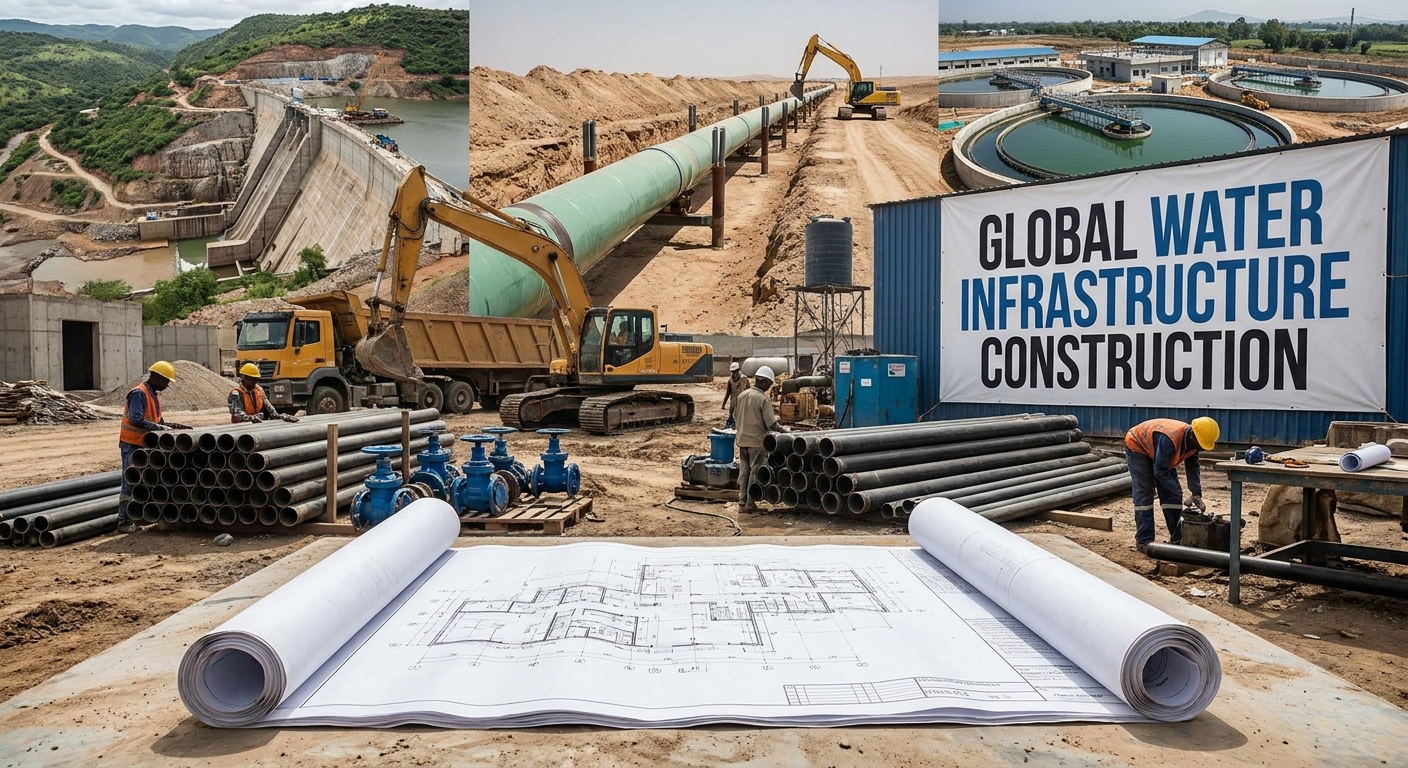
The 2026 Execution Mandate: From Vision to Verified Impact
At the IWA World Water Congress in Glasgow and through the IWRA’s newly launched 2026–2029 strategic roadmap, the global water sector is abandoning unrealistic zero-loss targets in favor of data-driven, scalable hydraulic security.
The mandate is clear: demonstrate measurable progress—not just publish long-term visions. Investors, regulators, and multilateral institutions now tie funding to proven operational impact, rapid ROI, and interoperable technology integration.
This pivot reflects a maturing industry—one that prioritizes deployable infrastructure over theoretical perfection, and real-time decision intelligence over static planning documents.
Confronting Physical Realities: Redefining Water Loss and Hydraulic Security
Absolute zero water loss is no longer viewed as achievable—or even desirable. Leading networks in Singapore, Tokyo, and Copenhagen operate within IWA-acknowledged technical loss thresholds, recognizing physical, financial, and operational constraints.
The new paradigm centers on optimized-loss management: minimizing non-revenue water to economically viable levels while preserving system pressure, asset longevity, and service continuity.
This requires moving beyond reactive leak detection to continuous, multi-dimensional monitoring—powered by real-time data acquisition, predictive analytics, and automated response protocols.
Precision Sensing: The Operational Backbone of Pragmatic Management
Advanced instrumentation bridges the gap between hydraulic models and field performance. Electromagnetic flowmeters (e.g., LGF series) deliver laboratory-grade volumetric accuracy—even in complex, variable-flow distribution networks.
Non-intrusive radar solutions—including 80GHz visual fusion radar level sensors and multi-band Doppler flow radars—enable contactless surface/subsurface monitoring and real-time pipe integrity assessment via integrated camera-based inspection.
Paired with robust telemetry like the HERO V9 RTU, these devices form an intelligent edge layer—feeding actionable insights directly into SCADA systems and control rooms.
Financing the Delivery Gap: ROI-Driven Investment in 2026
Water infrastructure financing is undergoing a structural shift: capital now flows to technologies that deliver rapid, verifiable returns—measured in reduced non-revenue water, extended asset life, energy savings, and risk mitigation.
Chinese technology providers—including Ecolor Technology—are gaining traction by offering internationally certified, high-durability instrumentation at competitive TCO. Their modular, field-proven hardware enables scalable deployment without prohibitive upfront costs.
This aligns precisely with investor demand: de-risked infrastructure investment through interoperable, maintainable, and rapidly deployable sensing ecosystems.
Strategic Imperatives for 2026–2031
- ✓ Adopt optimized-loss frameworks: Prioritize economic efficiency and hydraulic resilience over unattainable zero-loss goals.
- ✓ Deploy multi-modal sensing: Combine electromagnetic flow measurement, radar-based level tracking, and visual pipe inspection for holistic network health intelligence.
- ✓ Secure funding through demonstrable ROI: Align deployments with KPIs investors track—operational efficiency, energy reduction, and asset lifespan extension.
- ✓ Strengthen international collaboration: Leverage global forums like Glasgow 2026 and IWRA task forces to standardize best practices and accelerate knowledge transfer.
As Glasgow prepares to host the world’s water leadership this October, one message dominates: the era of theoretical planning is closing. The next decade will be defined not by ambition—but by execution, precision, and the relentless pursuit of global hydraulic security through intelligent, scalable infrastructure.
Utilities and technology partners who anchor their strategies in pragmatic realism—rather than aspirational perfection—will not only navigate the challenges of 2026 but will fundamentally redefine the resilience of water systems for generations to come.
Sources: iAgua (National Digital Transformation & Hydraulic Security Proposal 2026–2031); Global Water Summit 2026 Agenda; Water Magazine interview with Alex Plant; IWRA Water Security Task Force 2026–2029 Strategic Roadmap