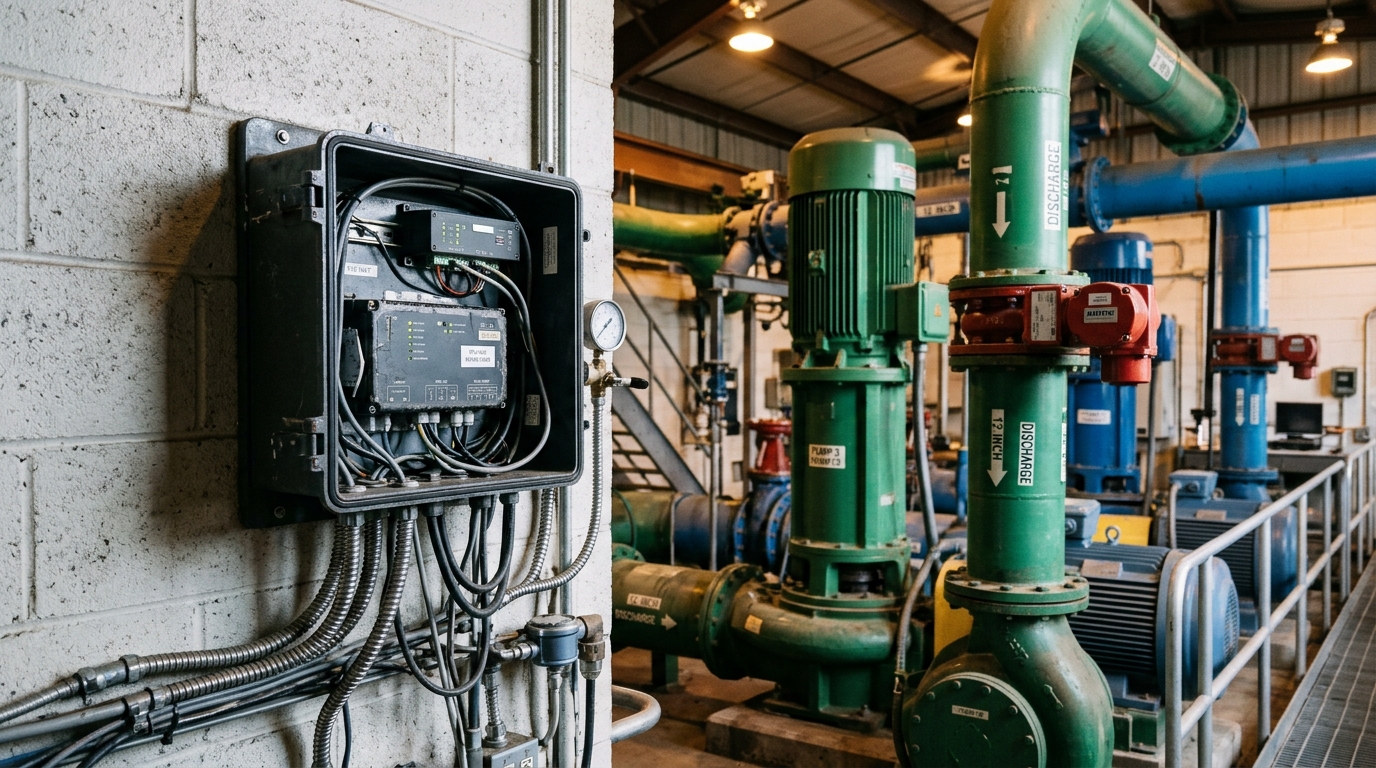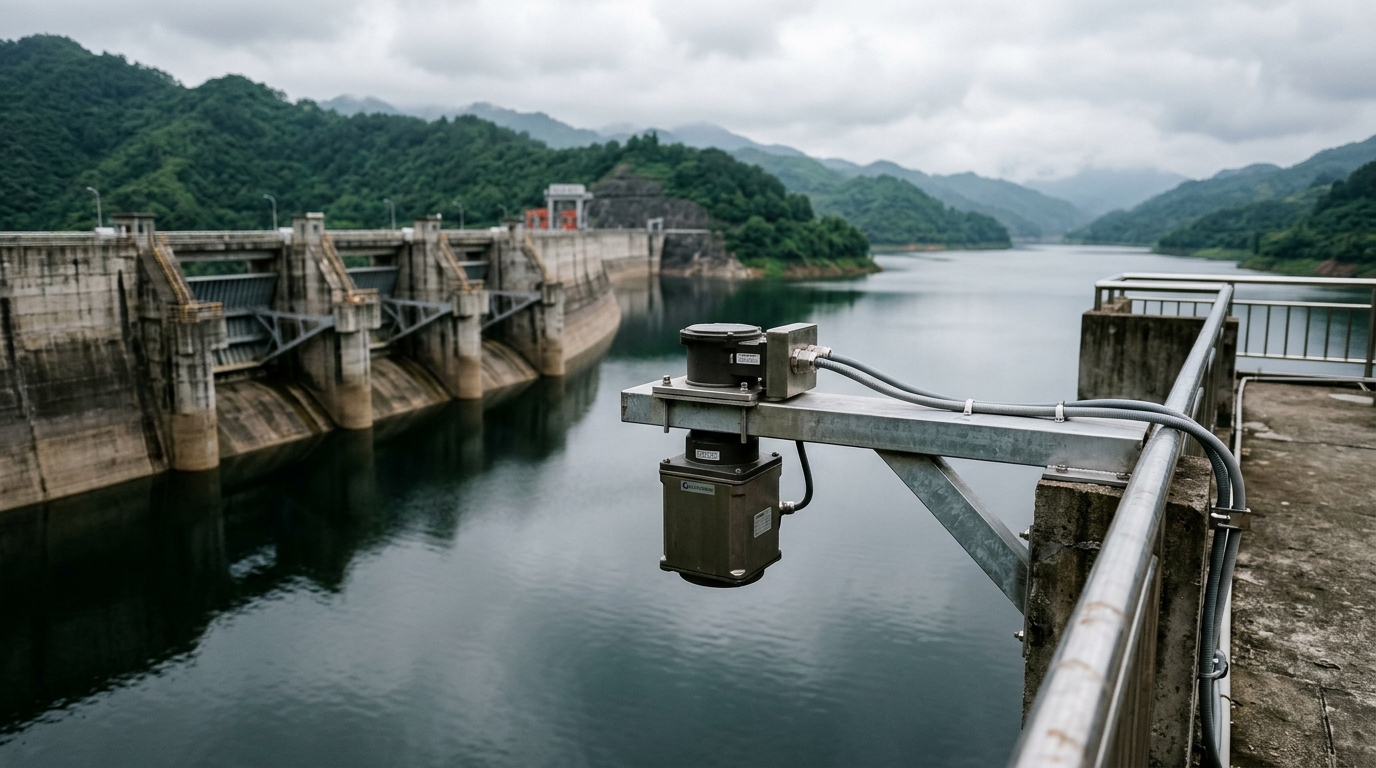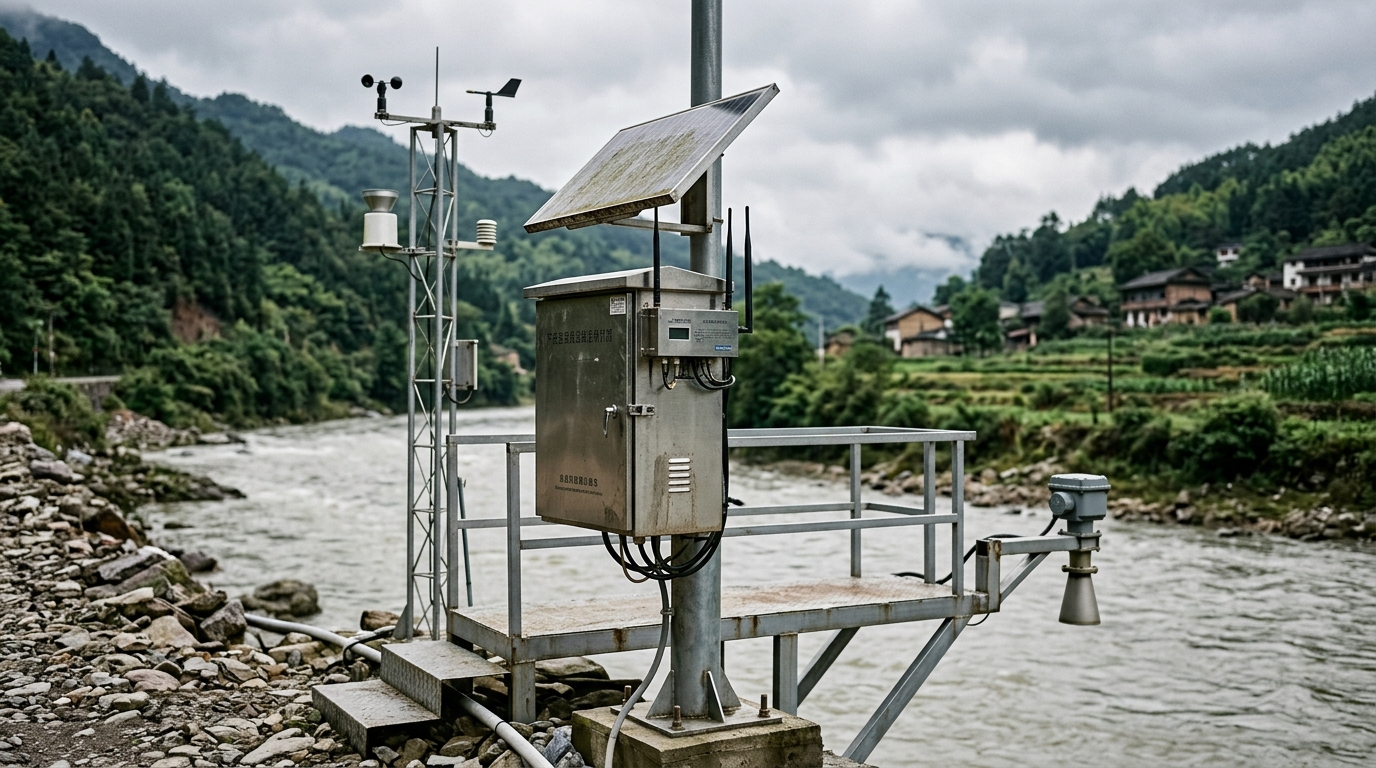
Hydrological monitoring stations are the field endpoints of flood forecasting and water resources management. Most of them are located along rivers, at reservoirs or in mountainous terrain with neither grid power nor reliable cellular coverage. The RTU (remote terminal unit) that acquires and transmits stage, rainfall and flow data therefore defines the station's data delivery rate. Based on several provincial-scale deployments in China, this article covers the three engineering aspects that matter most.
1. Solar Power Budgeting for Worst-Case Months
Off-grid stations almost universally rely on a solar panel plus a lithium battery bank. The governing calculation is not average consumption but the energy balance through the longest overcast period. Design against the worst monthly peak-sun-hours figure for the site (2.5–3.0 h/day is typical for subtropical river basins) and provide 7–10 days of autonomy:
- Load budget: the RTU should draw ≤2 mA in sleep; acquisition plus transmission is modelled as 24 events/day, 90 s each, at 350 mA peak. A non-contact radar level sensor adds roughly 0.5 W·s per measurement and must be counted separately.
- Battery capacity: at 3 Ah/day average draw, ten days of autonomy requires a ≥30 Ah LiFePO4 pack; in cold climates specify cells with a heating film.
- PV sizing: daily Ah draw divided by peak sun hours, times a 1.5 redundancy factor — 20–40 W is usually sufficient for a standard stage-and-rainfall station.
2. Telemetry Links: 4G, BeiDou Short Message and LoRa
No single link delivers both coverage and reliability, so mature designs use primary/backup or clustered topologies:
- LTE Cat.1 as primary: lower power than Cat.4 and unaffected by ongoing 2G sunsets, ideal wherever public networks reach;
- BeiDou short message as backup: guarantees delivery of critical flood-season reports from network blind spots, with 78–1000 bytes per message — enough for compactly encoded stage and rainfall data;
- LoRa for station clusters: multiple stations within a basin (3–5 km line of sight) forward data to one gateway station with public connectivity, cutting per-site communication cost — a classic low-cost sensing architecture.
At protocol level, follow the applicable hydrological telemetry standard (SL 651 in China, or IEC 60870-5-104 style mappings elsewhere) and enable store-and-forward retransmission so that link flapping never creates data gaps.
3. Lightning Protection and Earthing
Stations on exposed terrain are lightning magnets; strikes are the leading cause of hardware loss and outages. Key practices:
- An air terminal whose protection cone covers the PV panel and antennas, with earth resistance ≤4 Ω — use conductive backfill or a multi-point earth mat where soil resistivity is high;
- Combined Type B+C surge protective devices at the power entry, plus signal SPDs on RS-485 and tipping-bucket pulse lines;
- Equipotential bonding of the RTU enclosure, battery box and PV frame to prevent ground-potential rise damage.
Conclusion
Deploying an IoT RTU at a hydrological station is an optimisation across three constraints — power, telemetry and lightning — balancing reliability against total cost of ownership. Size the solar system for the worst month with at least a week of autonomy, run dual or clustered communication links, and implement earthing resistance, staged SPDs and equipotential bonding without exception. Get these three right and data delivery rates above 99% become routine, making the station a dependable node in urban lifeline monitoring and flood-defence decision chains.