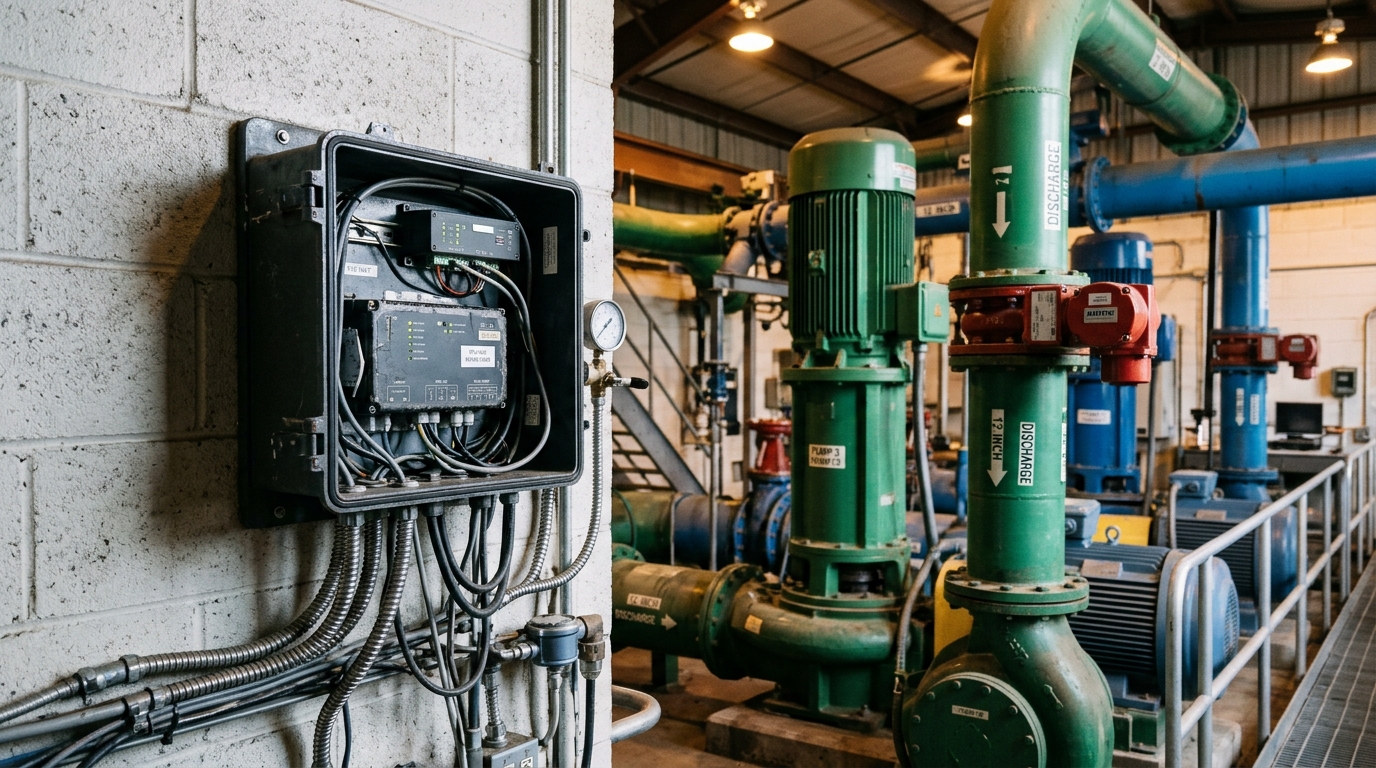
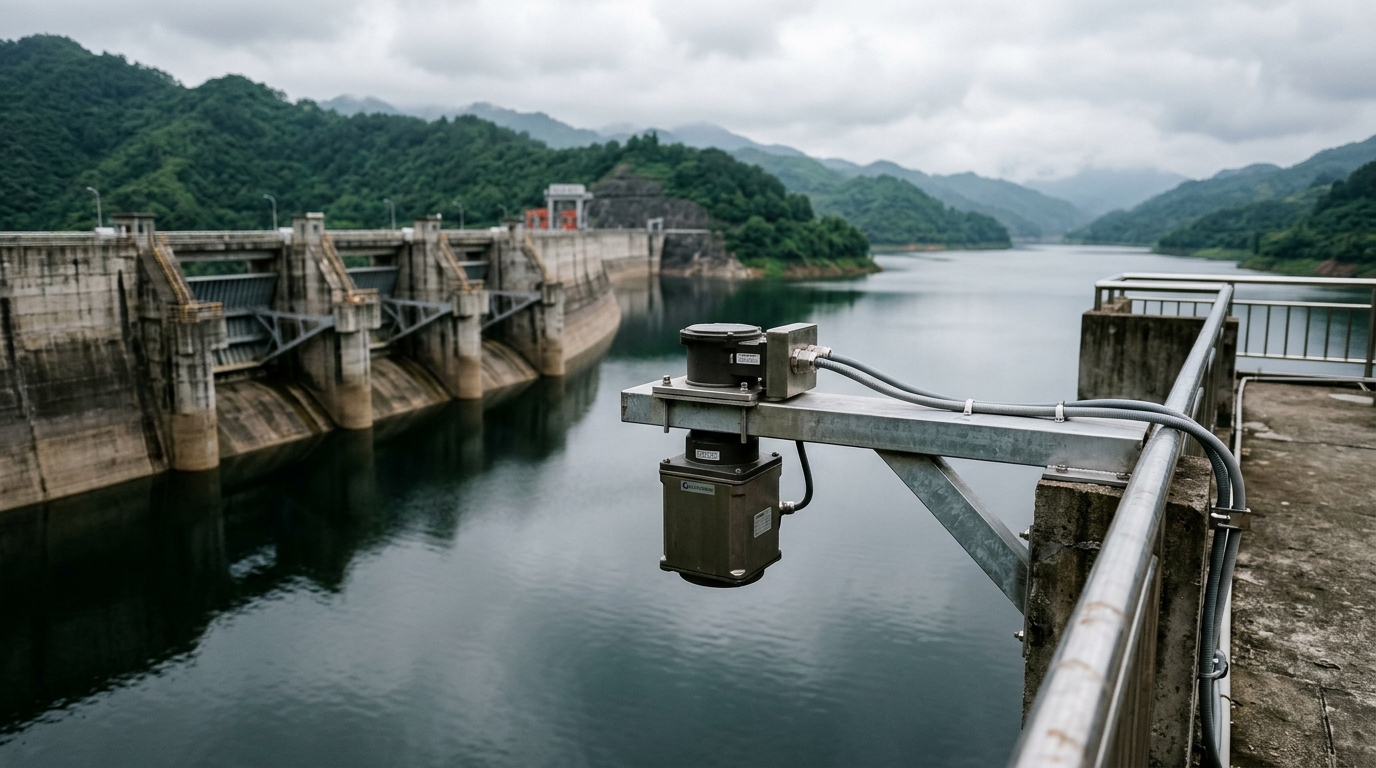
IoT RTU Telemetry Terminal Deployment in Hydrological Stations: A Complete Engineering Guide from Device Selection to Cloud Data Integration
Drawing on Yicai Technology's engineering experience across multiple provincial hydrological station projects, this article presents a systematic deployment guide for the transition from manual observation to automated telemetry.
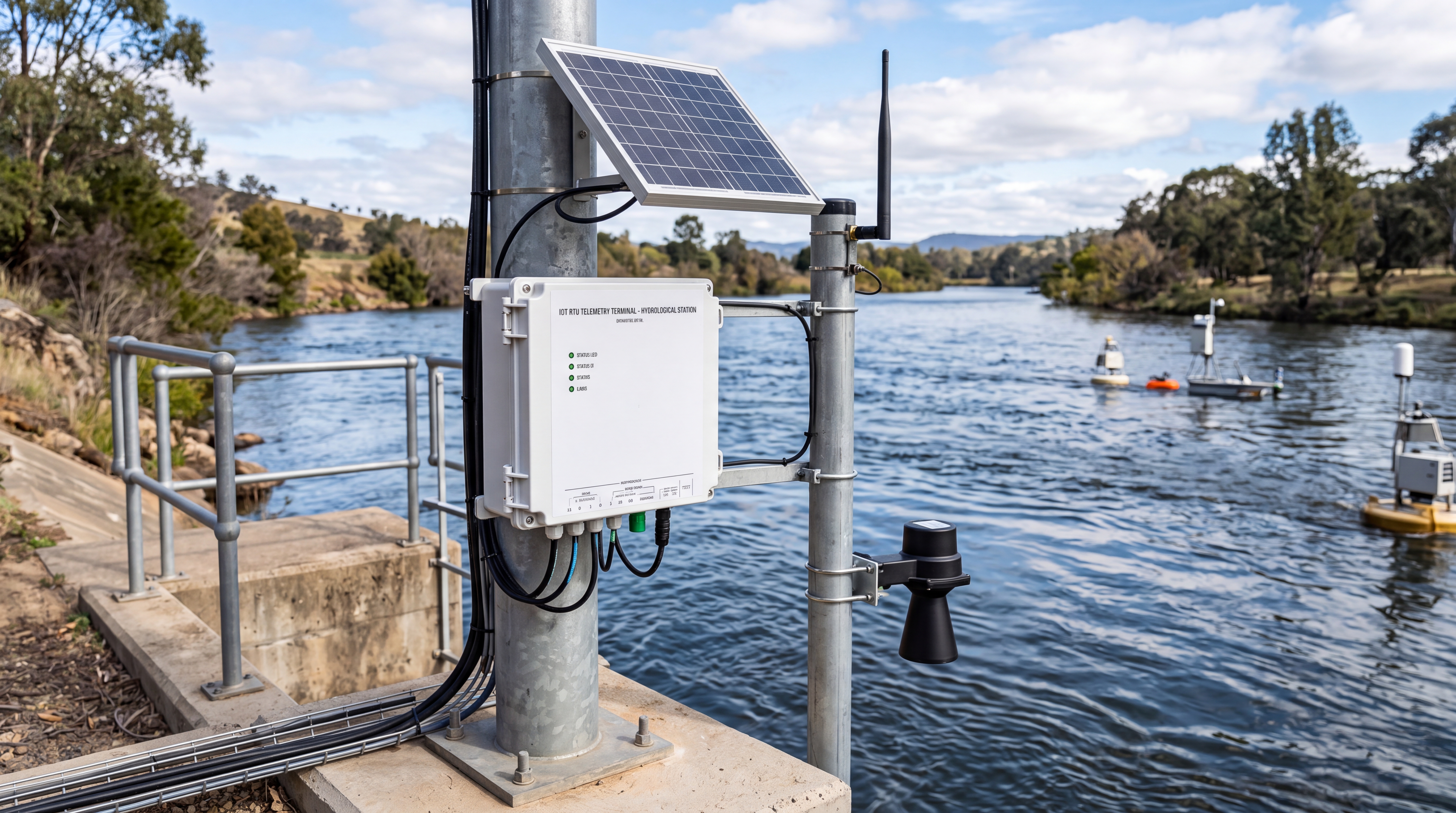
Hydrological stations form the fundamental data acquisition backbone for flood control, drought relief, water resource management, and ecological conservation. With the accelerated rollout of China's 14th Five-Year Smart Water Plan, approximately 120,000 hydrological stations nationwide are transitioning from manual observation to automated telemetry. The IoT RTU (Remote Terminal Unit) serves as the core node in automated hydrological measurement and reporting systems. Its selection, deployment, and maintenance directly determine data arrival rates and system reliability.
Chapter 1 System Architecture and Functional Requirements
A typical automated hydrological measurement station comprises four layers: the sensor layer (water level gauges, rain gauges, flow meters), the acquisition layer (RTU telemetry terminal), the communication layer (4G/NB-IoT/BeiDou Short Message), and the platform layer. The RTU, positioned at the hub of this architecture, must deliver the following core capabilities:
- Multi-protocol sensor interfacing: Support Modbus RTU, SDI-12, 4-20 mA analog, and pulse inputs. Compatibility with major water level sensors (radar, pressure, float-type) and rain gauges (tipping bucket, weighing-type) is essential.
- Ultra-low power operation: Most hydrological stations are located in off-grid remote areas. Standby current must be maintained at the microamp level, with typical operating power consumption below 1.5 W (including 4G modem active).
- BeiDou SMS backup link: In cellular dead zones such as mountainous regions in western China or remote river channels, the RTU must integrate a BeiDou Short Message Service (SMS) module as either the primary or backup communication channel.
- Local data logging and retransmission: Support at least 90 days of 5-minute interval data storage on local SD/NAND flash. Upon communication restoration, the RTU must automatically retransmit buffered data from the outage period.
- IP68 environmental robustness: The station enclosure must withstand -25°C to +70°C ambient extremes, 95% RH condensation, and temporary submersion during flood events.
Chapter 2 Key Technical Specifications for RTU Selection
Current hydrological RTU designs are predominantly based on ARM Cortex-M4/M7 or RISC-V microcontrollers. Critical comparison dimensions include:
Analog Acquisition Resolution
The ADC must provide ≥16-bit resolution at ≥100 SPS sampling rate, with a temperature drift coefficient below 50 ppm/°C. Low-end RTUs with 12-bit ADCs exhibit drift errors approaching ±2% of full scale below -10°C, failing compliance with SL 651-2014.
Communication Module
A Cat.1 or NB-IoT 4G full-Netcom module supporting all three Chinese carriers (China Mobile, China Unicom, China Telecom) is recommended. For example, the Yicai Technology EC-RTU1000 integrates a Quectel EC200A 4G module with a BeiDou-3 RDSS unit for automatic failover.
Power Supply Architecture
Standard configuration uses a 12V/20W solar panel and 12V/38Ah gel battery, sustaining operation through up to seven consecutive overcast days. Some vendors offer MPPT solar charge controllers integrated into the RTU, boosting charging efficiency by ~18%.
I/O Port Count
Minimum requirements include 4 digital inputs (pulse counting), 4 analog inputs (4-20 mA), 2 RS-485 serial ports (Modbus bus), and 1 RS-232 debug port.
Chapter 3 Field Deployment and Engineering Best Practices
Drawing on the construction experience from 37 hydrological stations in a southwestern Chinese province, the following engineering practices are highlighted:
Lightning Protection & Installation: Station masts typically range from 6 to 8 meters. Solar panels and antennas are top-mounted. A lightning rod must be installed with grounding resistance below 4 Ω. Sensor cables should be routed through galvanized steel conduit to prevent induced surge damage.
Critical Deployment Parameters
- Sensor Mounting: Radar water level gauges require a minimum clear distance of 0.5 m to the water surface. Tipping-bucket rain gauges should be installed 0.7-1.2 m above ground, with the collector at least 2× the obstacle height away from obstructions.
- Configuration (SL 651-2014): Configure station address (8-digit BCD), sampling interval (5/10/15/30 min), and reporting strategy (scheduled + event-triggered). Event trigger thresholds must include hysteresis to avoid oscillation-induced message flooding.
- BeiDou Link Commissioning: The BeiDou SMS single-frame payload is limited to 1,960 bits (~120 characters). Data frames must be compressed into fixed-length encoding schemes covering water level, rainfall, battery voltage, and RSSI.
- Validation Sequence: Follow a stepwise test flow: Sensor signal → RTU acquisition → Local storage → Cellular uplink → BeiDou uplink → Platform reception.
Field Note: Field data from one project showed a mean time between failures (MTBF) exceeding 18,000 hours when these protocols were strictly followed.
Conclusion Summary and Recommendations
Successful hydrological RTU deployment requires concurrent attention to hardware reliability, communication link redundancy, and field engineering rigor. When selecting an RTU, prioritize products featuring:
- Integrated multi-link communication design (Cellular + Satellite).
- Industrial-grade environmental qualification per IEC 60068-2-30 (damp heat cyclic) and IEC 60068-2-1 (cold storage).
- Open API and SDK for seamless integration with provincial hydrological platforms.
As edge computing capabilities migrate downstream, next-generation hydrological RTUs will incorporate AI-based water level recognition and anomaly flow warning, driving the evolution toward intelligent hydrological monitoring.