Intelligent Irrigation vs. Water Conservation: A Selection Guide for Smart Water Management Scenarios
As the modernization of large and medium-sized irrigation districts advances, informatization is shifting from simple connectivity to a closed loop of "measurable, dispatchable, billable, and maintainable." This guide explores technology roadmaps for smart irrigation, water saving, and metering.
From Experience-Based to Data-Based Allocation
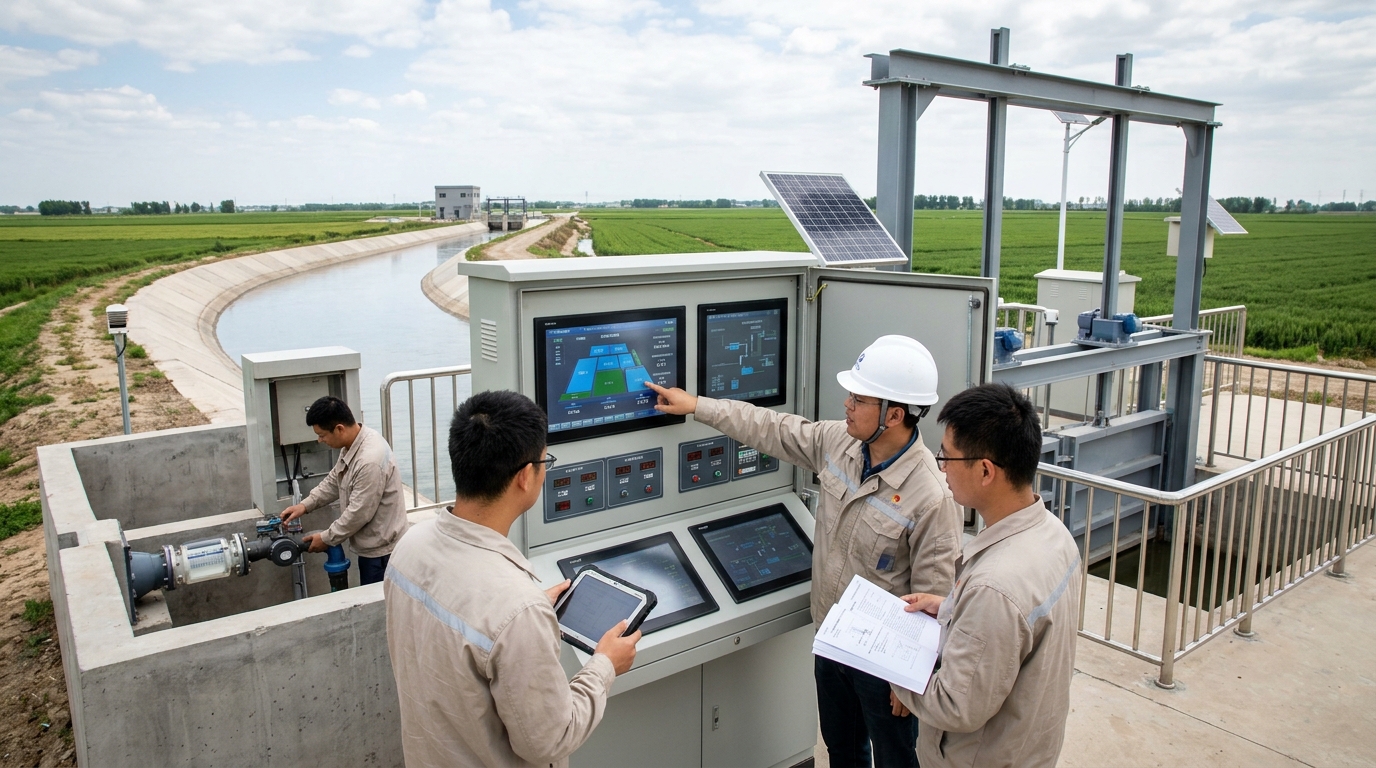
Traditional dispatch relies on manual reading and experience, often resulting in delayed data and inconsistent standards. While main canal metering may exceed 80%, terminal coverage often remains below 40%, causing issues like "water available at the head, shortage in fields." The core objective of informatization is not just connecting devices, but forming a closed loop of metering, allocation, irrigation, and feedback.
Case Study: A northern canal district improved terminal accounting completeness to over 90% and significantly reduced disputes by focusing on branch/lateral outlets and establishing gate group dispatch records, proving that management loops outweigh device counts.
Technology Roadmap Panorama: Five Key Layers
Informatization systems are divided into five layers, each with distinct precision requirements:
- Sensing Layer: Acquires water level (±1-3 mm), flow (±2-5%), soil moisture (±3-5%), and meteorological data.
- Transmission Layer: Ensures reliable return of field data via various networks.
- Platform Layer: Handles data aggregation, visualization, and business management.
- Control Layer: Executes actions via electric gates, pumps, and valves.
- Algorithm Layer: Supports demand forecasting, optimization, and leakage identification.
Selection must align these layers with specific business goals. For example, if the goal is settlement, prioritize metering accuracy; if it is dispatch, prioritize control response. Structural imbalance, such as "strong sensing but weak control," leads to system failure.
Water Metering Technologies: Static to Intelligent
Metering is the foundation of water-saving management. Common technologies include:
Pressurized Pipeline
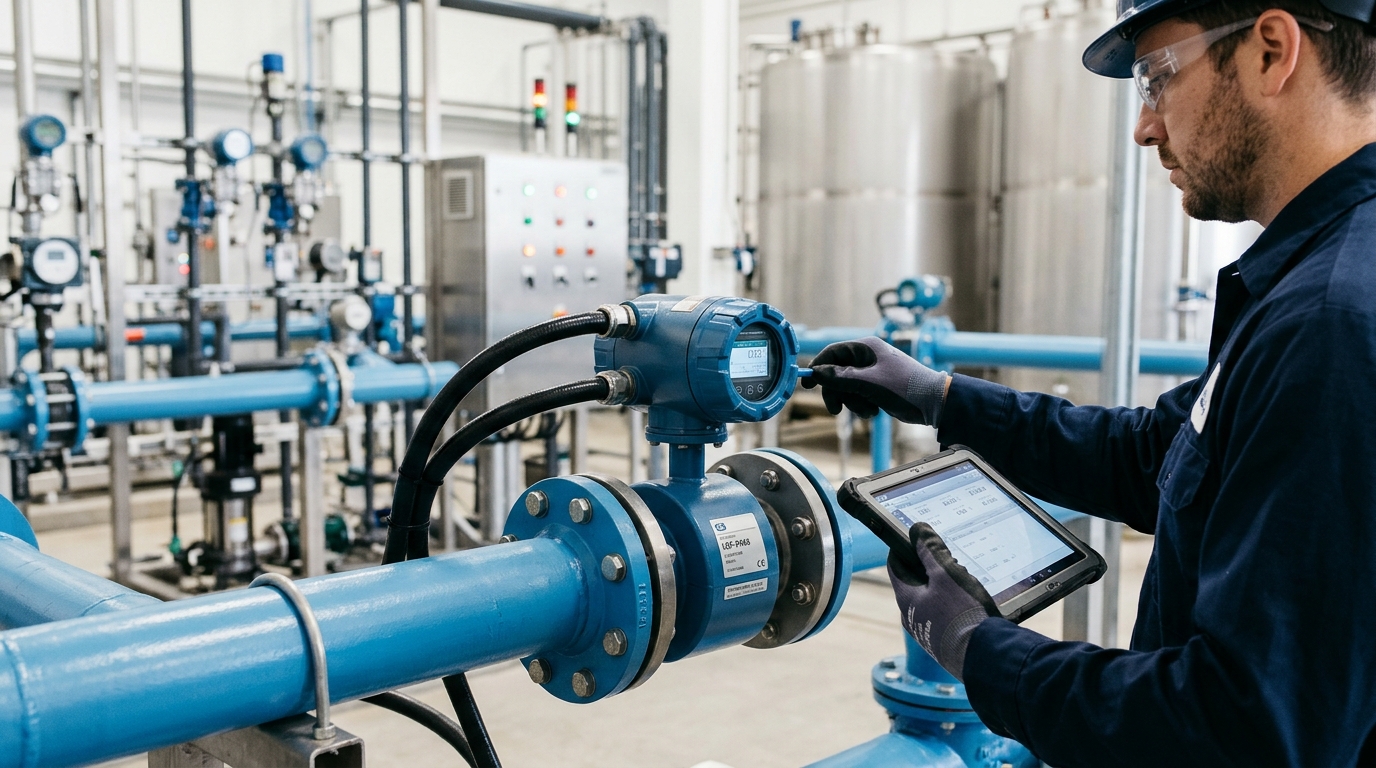
Electromagnetic Flowmeters: Accuracy ±1-2%. Sensitive to conductivity and sediment.
Ultrasonic Flowmeters: Accuracy ±1-3%. Good for large diameters; sensitive to bubbles/scaling.
Smart Water Meters: Low cost for small networks; limited rangeability.
Open Channel
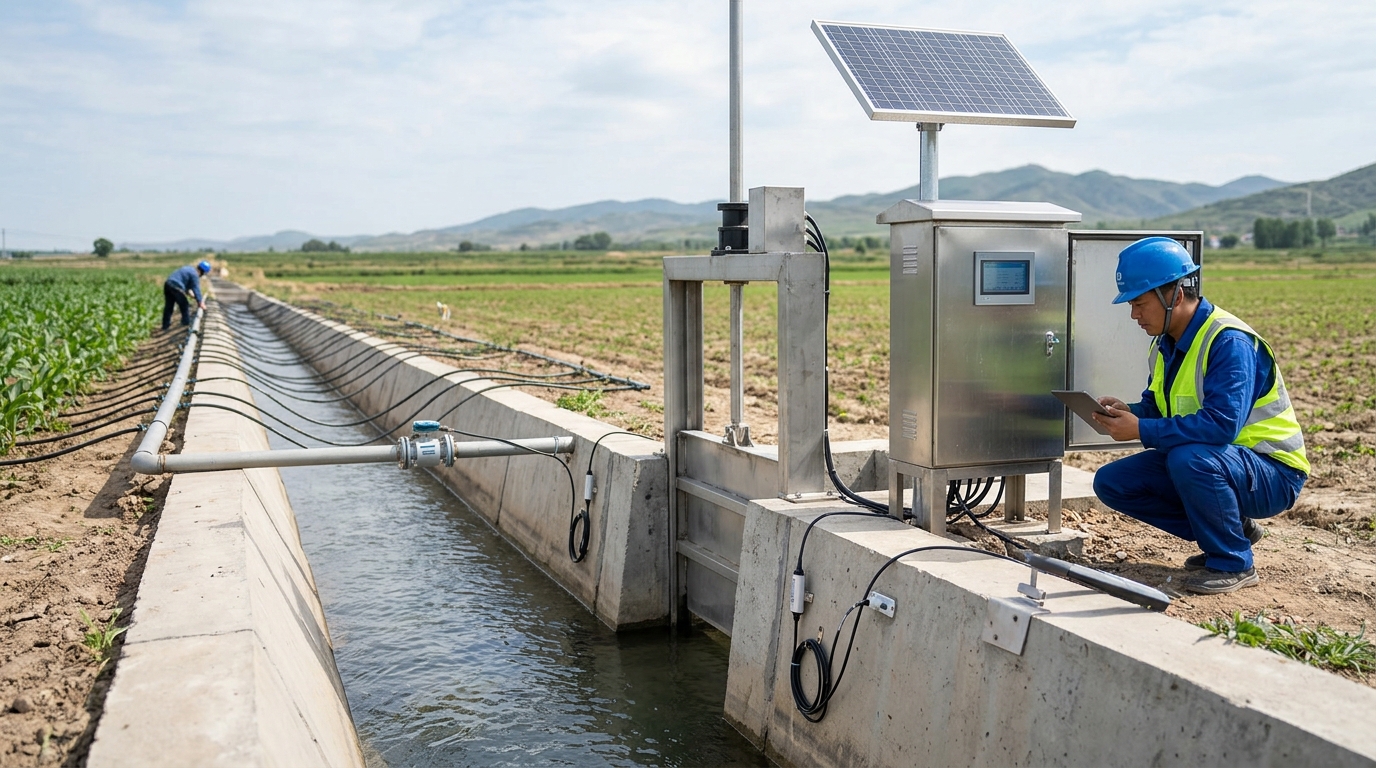
Radar Level Gauges: Non-contact, ±1-3 mm accuracy. Easy maintenance.
Weirs/Flumes: Accuracy ±1-3%. Causes head loss; requires dredging.
Video AI: Auxiliary verification (±8-15% error). Not suitable for standalone settlement.
Industry practice shows that completing terminal metering can reduce excess water use by 10-25%. However, without settlement mechanisms and O&M, data value cannot be realized. A hybrid approach using radar levels, weirs, and transit-time flowmeters has proven effective in controlling errors within ±3% while improving accounting completeness.
Communication Network Routes
Communication determines data reliability and control latency. Hybrid networking is common in actual projects:
| Technology | Best Use Case | Key Considerations |
|---|---|---|
| NB-IoT | Low-power, periodic reporting (level, flow) | Battery life 3-5 years; high latency (seconds-minutes) |
| LoRa | Self-built networks, penetration | Coverage 2-8 km; susceptible to interference |
| 4G/5G | Video surveillance, remote control | High bandwidth; data costs and power supply critical |
| Fiber Optic | Fixed hubs, pump stations | High stability; higher construction cost |
| BeiDou SMS | Remote areas, no public network | Small message size; backup channel only |
Prioritize online rate, power maintainability, and expansion capacity over raw bandwidth metrics. Critical control links should have dual-channel backups.
Platform, Algorithms, and Control Execution
Platform & Algorithm Strategies
SCADA suits real-time monitoring; GIS handles spatial assets; Digital Twins aid simulation but require high-quality base data. Edge computing provides local interlocks during communication outages. Avoid "emphasis on display, neglect of governance"; focus on data completeness and alarm closed-loop rates.
Control Execution Routes
- Canal Gates: Electric actuators with opening detection can reduce planned allocation deviation from >15% to 5-8%.
- Pump Stations: VFD control combined with intelligent dispatch achieves 15-30% energy savings. Ensure pump curves and pipe resistance are modeled.
- Field Irrigation: Soil moisture closed-loop control triggers irrigation when moisture drops below 50-70% field capacity. Well-irrigated districts saw ~20% water savings using smart wells and per-mu metering.
Typical Scenario Selection Guide
Large Canal Districts
Focus: Main/branch metering, gate dispatch, terminal accounting.
Tech: Radar levels, weirs, fiber/4G, SCADA. High investment intensity but pronounced efficiency gains.
Well Irrigation Districts
Focus: Electricity-to-water conversion, per-mu metering.
Tech: NB-IoT/LoRa, smart well controls. Cost: ¥100-800/mu (lightweight) to ¥1000-3000/mu (full). Savings: 15-30%.
Hilly Orchards & Rice Areas
Focus: Dispersed terrain or balanced drainage.
Tech: LoRa/NB-IoT for low-power collection. Video AI and radar useful for rice flood dispatch.
High-Standard Farmland
Focus: Integrated metering, irrigation, fertilization.
Tech: Pipe irrigation, smart valves, unified platform management.
Selection Recommendations & Outlook
Follow this sequence: Business Boundaries → Metering Points → Communication → Platform → Control → O&M. Clarify settlement levels first. Do not pursue large dashboards before ensuring data calibration and equipment maintenance.
Key Acceptance Indicators
- Device Online Rate: ≥ 95%
- Data Completeness Rate: ≥ 98%
- Alarm Response Time: ≤ 15 minutes
- Critical Control Links: Must have local emergency capability
Future informatization will move toward water rights metering, volume-based charging, and resilient management. Technology choices must embed into maintainable, billable, and replicable loops to transform construction achievements into long-term water-saving benefits.