1. Why Utilities Need Dense, Low-Cost Sensing
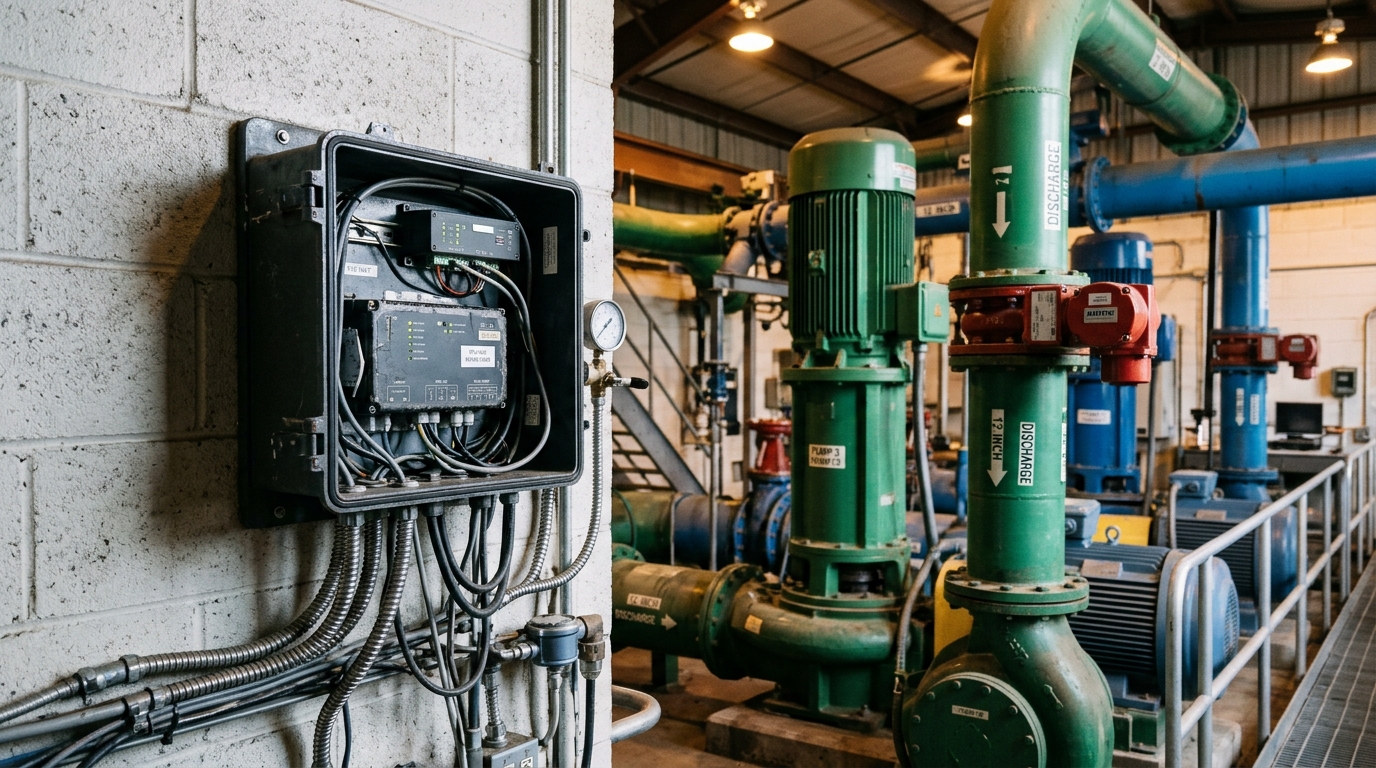
Conventional water monitoring programmes share the same constraint: each telemetry station costs thousands of dollars, so networks are limited to trunk mains and key cross-sections while branch sewers, district outlets and flood-prone hotspots remain blind spots. Urban flood-risk management and drainage asset surveys now demand one to two orders of magnitude more measurement points per square kilometre. Reaching that density is only economically viable if the per-node cost drops into the low hundreds of dollars.
2. A Four-Layer Reference Architecture
A practical low-cost dense network decomposes into sensing, connectivity, edge and platform layers.
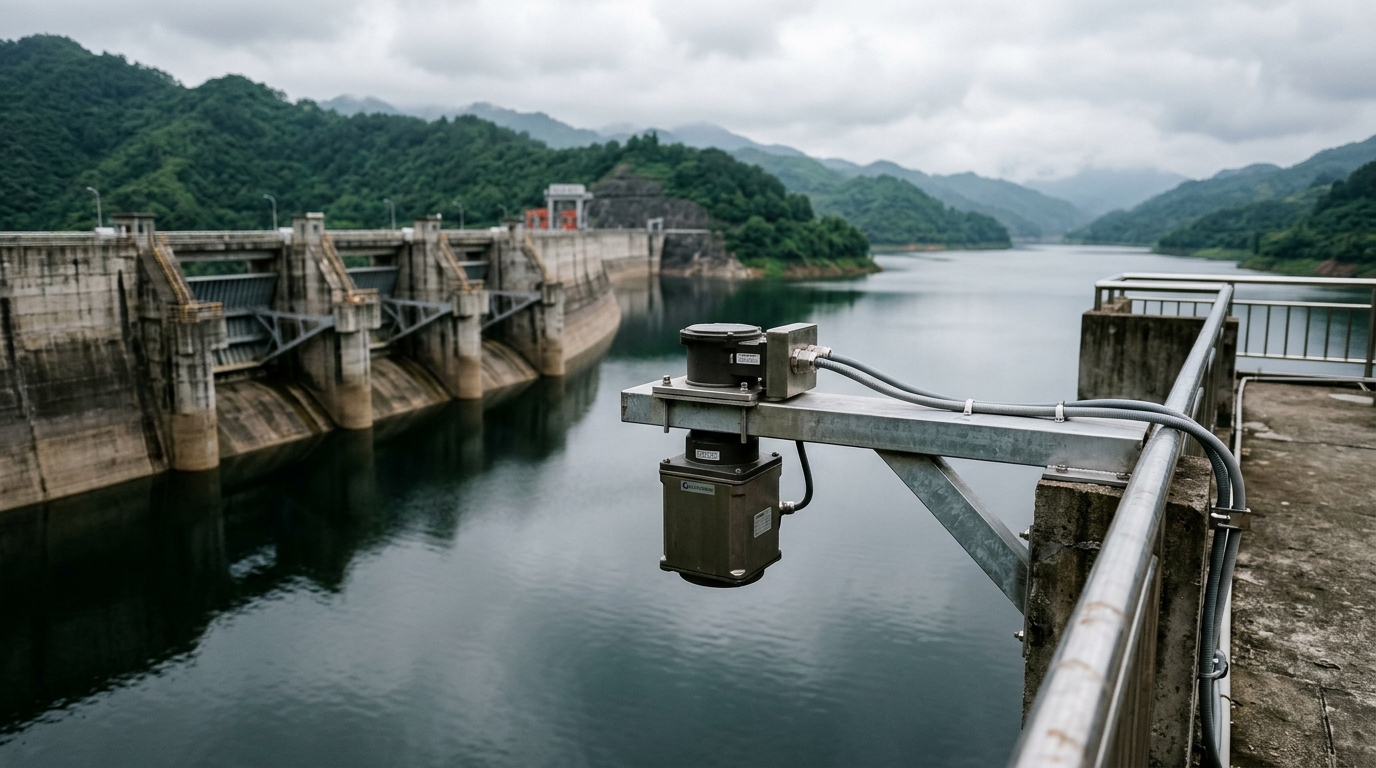
- Sensing: non-contact radar level sensors (80 GHz or 26 GHz) are the workhorse for sewer and channel level: no calibration drift, immune to corrosion and biofouling, no moving parts. Fit-for-purpose configuration matters — flood-warning nodes need level and temperature only; do not bundle flow meters where flow data adds no decision value.
- Connectivity: a hybrid LoRaWAN + NB-IoT backhaul gives the best cost curve. One urban LoRaWAN gateway covers 1–2 km and serves hundreds of end devices at near-zero marginal cost. Isolated nodes outside gateway coverage fall back to NB-IoT on public carrier networks; LTE Cat.1 is reserved for high-frequency reporting or camera-equipped critical sites. Device selection should reference IEC 60529 ingress protection and IEC 60068 environmental test series for vibration, humidity and temperature range.
- Edge: on-node data quality control — debounce filtering, outlier rejection and store-and-forward buffering — removes 30% or more of useless uplinks and protects data continuity during network outages. In-manhole deployments suffer heavy RF attenuation: choose modules with external antenna connectors and transmit power of at least 20 dBm.
- Platform: at high density the bottleneck is data governance, not storage. Separate device registry, time-series and event/alarm stores; keep raw 1–5 minute data in the time-series tier and only hourly aggregates in the business tier. This cuts long-term storage cost by roughly an order of magnitude.
3. Reliability Engineering: Power and Installation
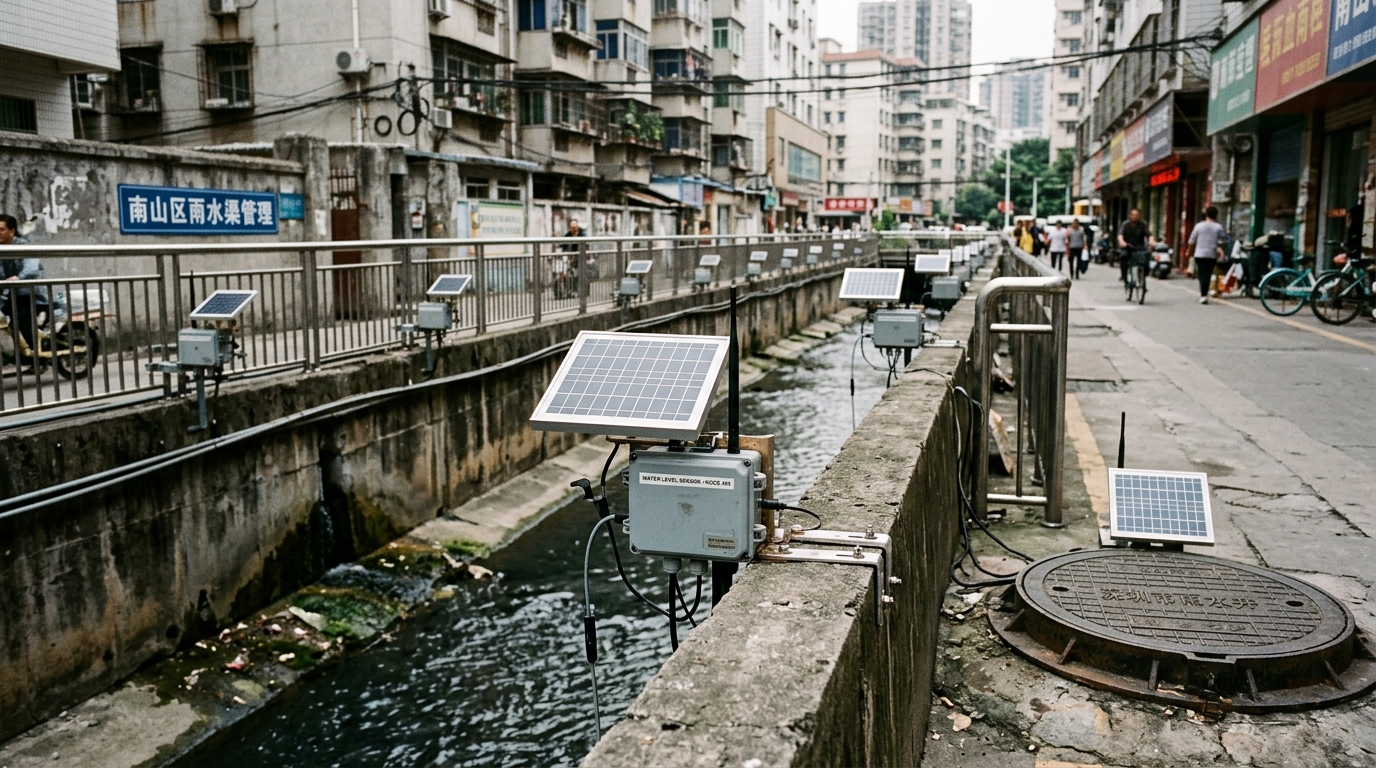
Field failure statistics are dominated by power supply, not electronics. Most below-grade sites have no mains power, so primary lithium (Li-SOCl2, ER series) packs with optional solar top-up are standard. Size the battery for a worst case of 30 consecutive overcast days at 24 uplinks per day. Primary cells outperform rechargeables in low temperature and eliminate cycle-life concerns. For installation, RF loss is greatest in the first 30–50 cm below a metal cover: route the antenna close to the cover or use a through-cover antenna. IP68 should be treated as a floor, not a target — for permanently submerged nodes specify devices certified to 6 m water depth for 72 hours.
4. Phased Deployment Strategy
Deploy in three phases: pilot 30–50 nodes across one or two flood-prone catchments and validate uplink delivery ratio (target ≥95%) and data usability; densify by adding LoRaWAN gateways or switching isolated nodes to NB-IoT based on measured coverage gaps; then integrate the data stream into flood-operations platforms to close the business loop. All-in lifecycle cost per node — hardware, connectivity and O&M — can be held to USD 200–450, one-fifth to one-tenth of a conventional monitoring station.
5. Conclusion
Low-cost dense water sensing is not about buying cheap devices; it is cost engineering at the architecture level: right-sized sensing, hybrid connectivity, edge data governance and robust power design. Utilities and integrators that optimise total cost of ownership while keeping data delivery ratios high will define the next generation of smart water and urban-lifeline monitoring networks.