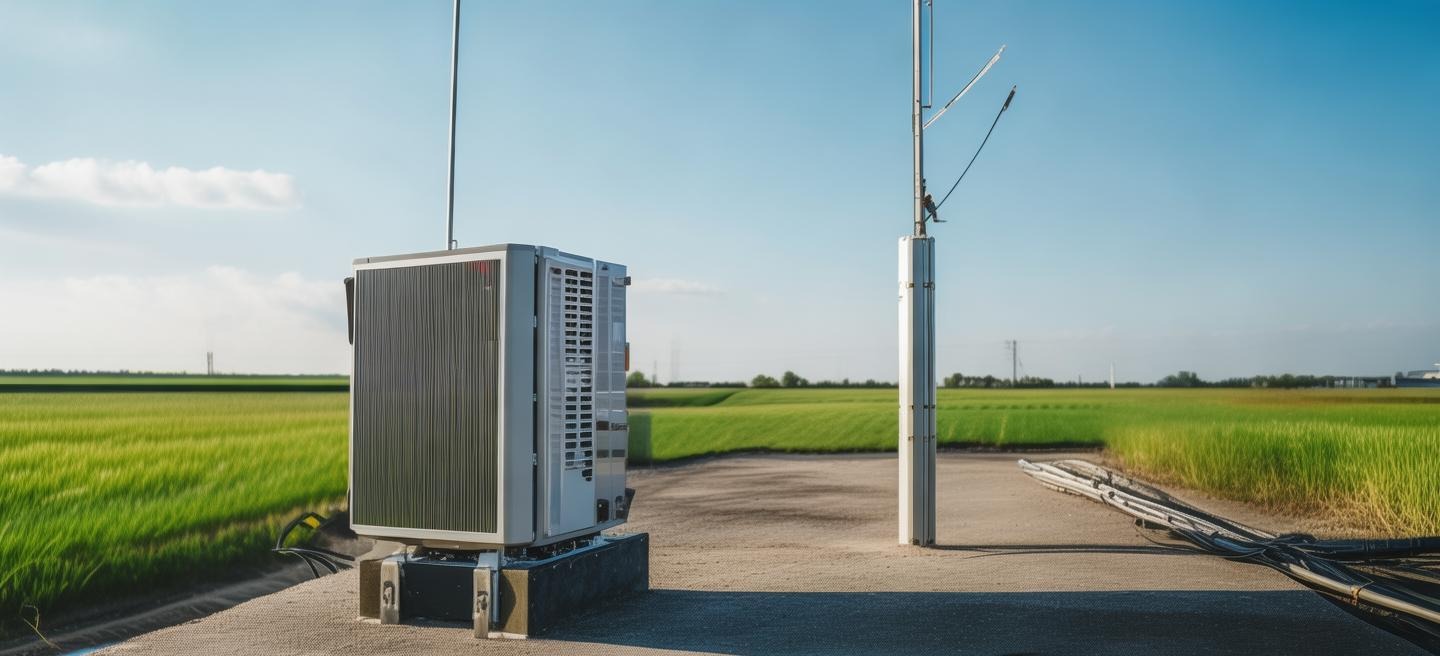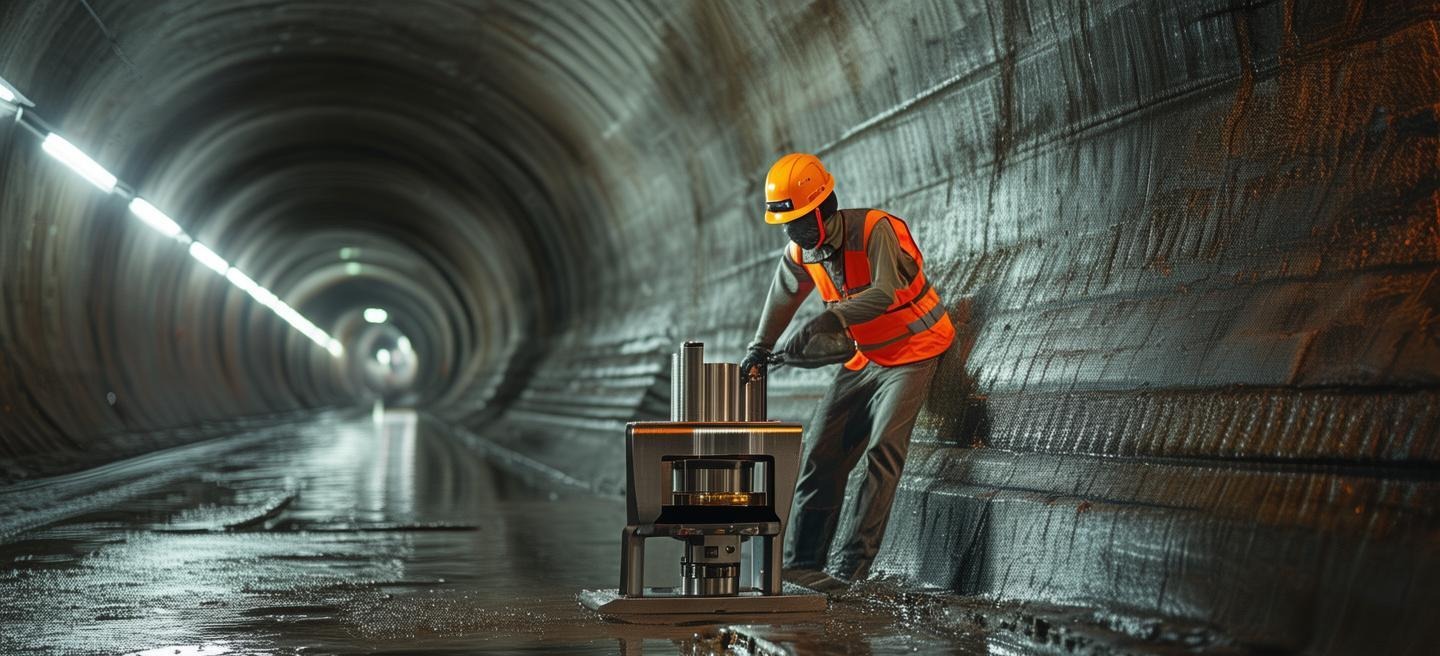
Monitoring of urban drainage networks is a cornerstone of Smart Water and Urban Lifeline programmes — and the sewer manhole is among the harshest installation environments in industrial instrumentation: near-saturated humidity, condensation, hydrogen sulphide corrosion, flash surcharging during storms, and no mains power underground. Non-contact radar level sensors are rapidly displacing submersible pressure transducers and ultrasonic devices in this duty. This article covers the engineering essentials of selection, installation and commissioning for sewer applications.
Why radar beats ultrasonic in sewers
Ultrasonic level meters suffer two inherent weaknesses in manholes. First, unstable temperature gradients and saturated air alter the speed of sound and attenuate the acoustic pulse, producing drift of 2–5%. Second, confined shafts generate multiple reflections and false echoes. An 80 GHz FMCW radar level sensor, by contrast, achieves beam angles as narrow as 8°, so the measurement cone typically never touches the shaft wall of a DN700 manhole. Radar is immune to condensation, foam and temperature gradients, and holds accuracy within ±3 mm to ±5 mm over the full range — aligned with the performance expectations of ISO 4064 and OIML R49 style verification for level instrumentation.
Selection: ingress protection, frequency band and power
- Ingress protection: periodic submersion is unavoidable; specify IP68 (minimum 3 m for 72 h per IEC 60529) with potted cable entries rather than O-rings alone;
- Frequency band: prefer 80 GHz narrow-beam (≤8°); 24 GHz wide-beam (~20°) units risk wall echoes in small shafts and are only a low-cost fallback;
- Corrosion resistance: PTFE or PVDF antenna covers withstand H₂S service; avoid ABS, which stress-cracks in sewer atmospheres;
- Power and backhaul: with no mains underground, choose battery-integrated models (Li-SOCl₂ packs, 3–5 year life) with 4G Cat.1 or NB-IoT telemetry via an IoT RTU; adaptive reporting — 30 min in dry weather, event-triggered 5 min intervals in rain — maximises battery budget;
- Range margin: measuring range must cover shaft depth plus surcharge headroom, typically 0–10 m or 0–15 m, so the sensor still reports credibly when the sewer runs full.
Installation: three make-or-break details
1. Locate away from inflow turbulence. Mount the radar over still water at least 1.5 pipe diameters downstream of the inlet, avoiding hydraulic jumps and entrained air that distort the dielectric surface.
2. Enforce verticality and bracket rigidity. Use a 304 stainless bracket anchored with expansion bolts; keep the antenna face within 1° of vertical. At 5 m range an 8° beam must not deviate more than 10 cm from the shaft axis, or it will strike benching or steps.
3. Seal and secure the shaft. Conduit-seal all cable penetrations, fit a safety lanyard to the device, and in flood-prone areas add a cover restraint — storm surcharge can lift manhole covers and wash unsecured instruments away.
Commissioning: false-echo mapping and surcharge logic
Step one is empty-shaft false-echo learning: record the echo envelope of ladders, benches and pipe stubs, then enable false-echo suppression. Step two verifies the near-field blocking distance — typically 0.1–0.3 m for 80 GHz units — confirming that maximum stage still falls outside the blind zone. Step three configures surcharging detection: when level exceeds the shaft-depth threshold while echo amplitude spikes, flag the sewer as running full and trigger the flood-warning workflow. Finish with a 24-hour cross-check against a portable ultrasonic depth sounder or manual dipping at a minimum of three stage levels; agreement better than 1 cm is the acceptance criterion.
Takeaways
Sewer radar projects fail not at the sensor but at the margins: protection class, mounting position, verticality and echo hygiene. Integrators should keep a per-manhole commissioning dossier with stored echo envelopes for future maintenance. Select with margin, mount with discipline, commission with evidence — that is how non-contact radar delivers its low-cost, low-maintenance promise in urban drainage monitoring.