Digital Transformation in Smart Water Management: Data Silos and IoT Platforms
The water conservancy sector is accelerating its transition from traditional engineering governance to a smart phase centered on data as a core element. With the increase in extreme rainfall events, intensifying contradictions between water supply and demand, and rising pressure on urban drainage and waterlogging prevention, water administrative departments and engineering management units at all levels have significantly increased their demand for "real-time perception, rapid transmission, intelligent analysis, and precise dispatch."
Smart water management is no longer just a standalone monitoring platform, video surveillance system, or localized automation project; it is gradually evolving into a comprehensive digital infrastructure covering river basins, water networks, reservoirs, irrigation districts, rivers and lakes, and water users.
From the perspective of industry practice, market focus is shifting from "whether to build a system" to "whether the data is usable, the models are reliable, and the business processes are closed-loop."
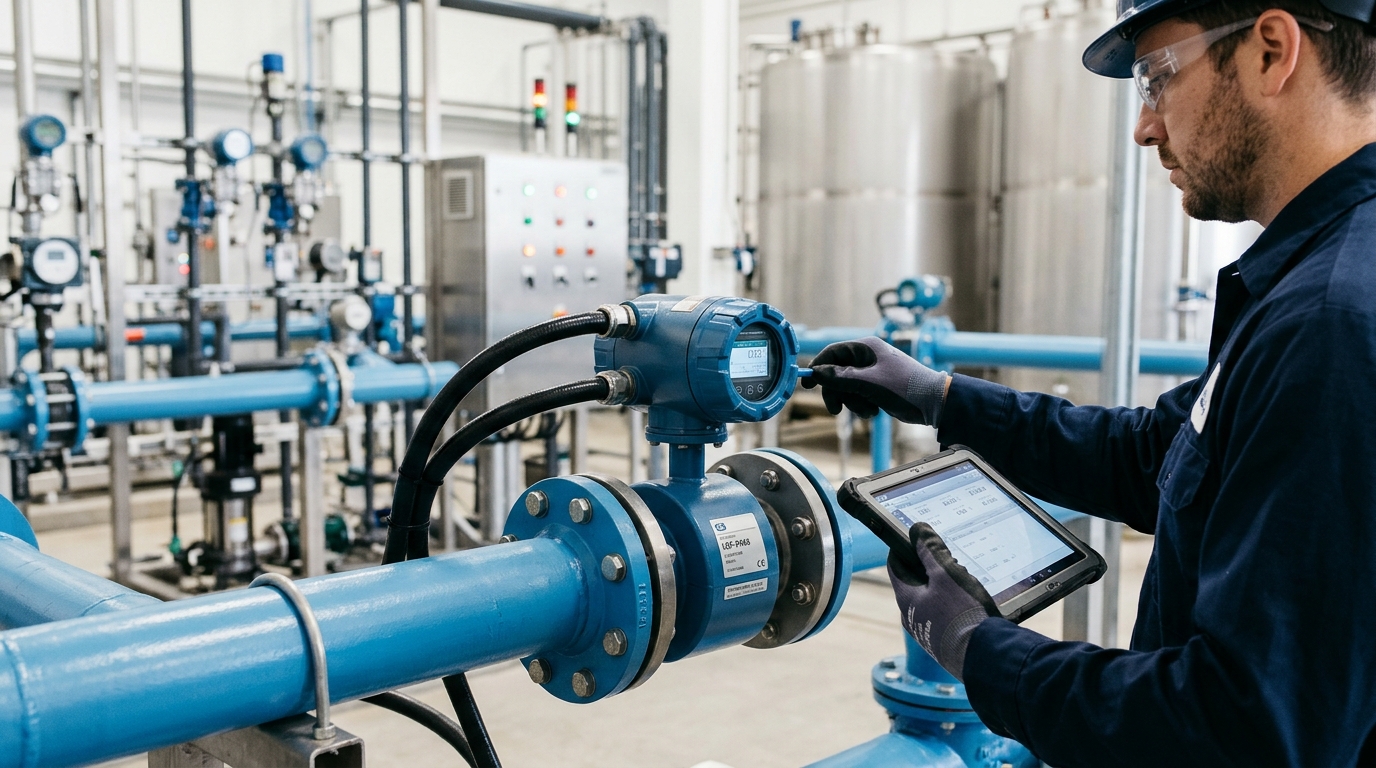
Data collection, remote transmission, edge computing, digital twins, and AI analysis have become key pillars. Water sensing devices represented by edge acquisition terminals such as the Hero V9 are being applied in scenarios involving water levels, rainfall, flow rates, gates, pump stations, soil moisture, and video surveillance, driving the evolution of water monitoring from manual inspections and low-frequency collection to automated, continuous, and refined operations.
Market Trends: Shifting from Project Integration to Routine Operations
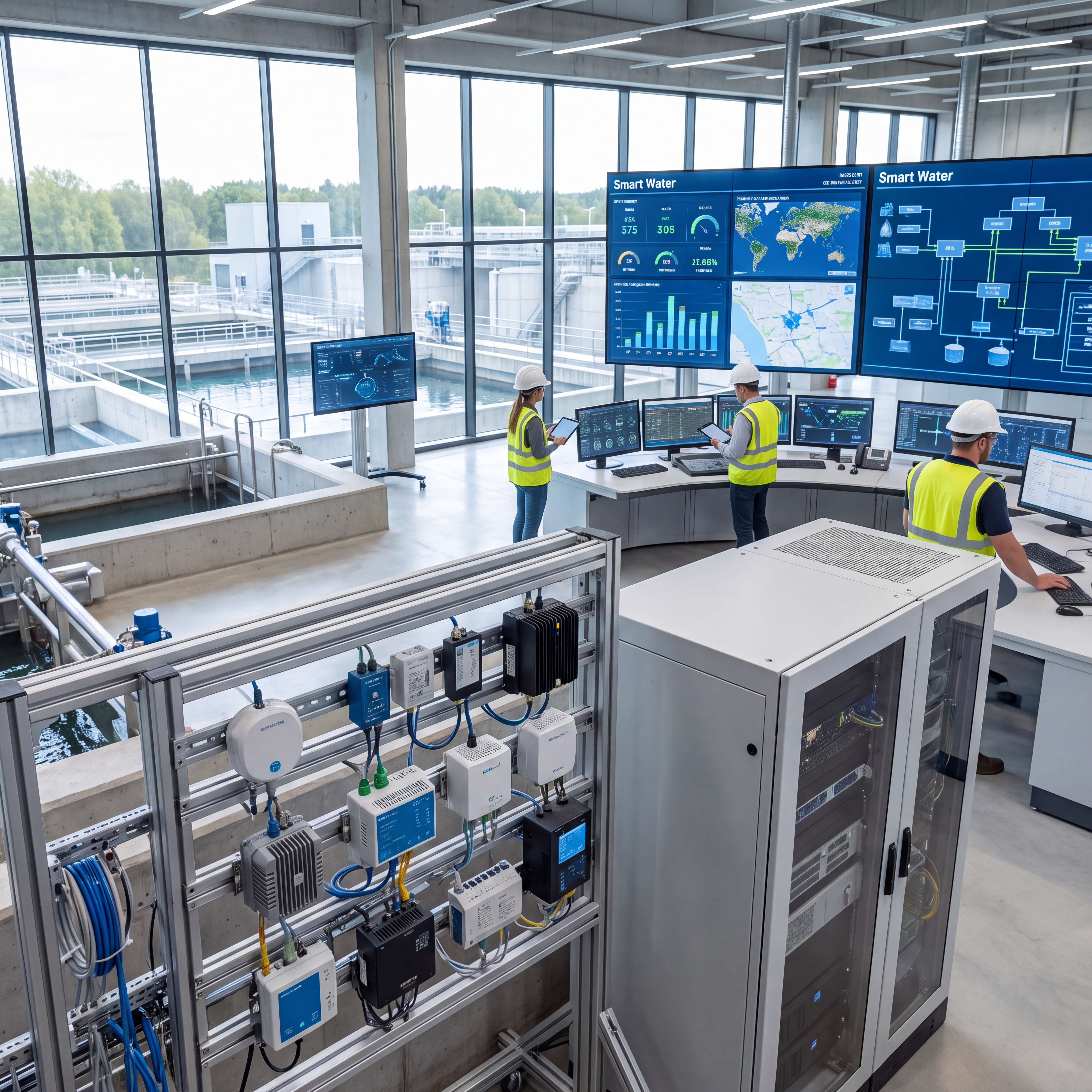
The smart water management market is evolving from single-point projects to basin-level and scenario-based construction. In the past, industry projects were mostly concentrated in specialized systems such as hydrological station networks, flash flood disaster monitoring, reservoir safety monitoring, and water resource monitoring. In recent years, comprehensive projects such as digital twin basins, modernized irrigation districts, national water network backbone projects, urban waterlogging governance, river and lake ecological supervision, and water source protection have significantly increased.
Investment Scale and Regional Focus
- Municipal Level: Investments typically range from 30 million to 200 million RMB for platforms, digital twin pilots, or regional security monitoring.
- Large-Scale Projects: Irrigation district modernization and key water network projects can reach 500 million to 1.5 billion RMB.
- Regional Differences: Eastern regions focus on refined dispatch and urban waterlogging; Central/Western regions prioritize hydrological monitoring and rural water supply.
Notably, procurement content is changing. Early projects emphasized servers and large screens, whereas the proportion of sensing devices, edge terminals, communication modules, and model algorithms is continuously increasing. This shift indicates that smart water management is transitioning from an "informatization project" to a "production operation system," significantly raising the requirements for data collection and remote transmission capabilities.
Policy Impacts: Top-Level Design and Financial Tools
Policy is the most direct driving force for the smart water management industry. The Ministry of Water Resources has made systematic deployments for smart water management construction, emphasizing digitalization, networking, and intelligentization as the main threads to advance digital twin basins and digital twin water networks.
From the perspective of funding, local government special bonds, ultra-long-term special treasury bonds, and policy-based financial instruments are improving project payment capabilities. Meanwhile, rigid constraints on water resources and river/lake chief system assessments have led localities to set more specific indicators for monitoring coverage and early warning timeliness.
Current policies place greater emphasis on actual flood control effects, water conservation results, engineering management efficiency, and data sharing capabilities.
The changes driven by policy are not only about increased investment but also about shifting the industry from a "construction-oriented" to an "outcome-oriented" approach. The ability to form a smart water management system that is assessable, reusable, and sustainably operable will become a crucial criterion for project success.
Technological Directions: Precision, Reliability, and Intelligence
1. Data Collection: High Precision and Edge Intelligence
The foundation of smart water management is high-quality data collection. Water sensing objects have expanded from traditional water levels and rainfall to multi-source data including flow rate, seepage, stress, gate opening, and video imagery. Different scenarios have significantly different requirements for collection frequency:
- Routine Monitoring: 10-minute or 5-minute intervals.
- Flood Season Key Sections: Increased to 1-minute intervals.
- Video AI Recognition: Second-level or real-time transmission.
In field environments, sensors are exposed to high humidity, lightning, and silt. Therefore, data collection systems must possess capabilities such as automatic time synchronization, anomaly identification, and local caching. Under this trend, the role of edge acquisition terminals is strengthening. Taking the Hero V9, applied by Yicai Technology, as an example, these terminals support multiple interfaces (RS485, Modbus, SDI-12) and emphasize local protocol parsing and data preprocessing, providing a reliable data foundation for remote transmission.
2. Remote Transmission: Multi-Link Fusion
Water conservancy monitoring points are often distributed in mountainous areas or remote channels where communication conditions are complex. Remote transmission must adopt multi-link fusion solutions:
- Good Coverage Areas: 4G Cat.1, 4G/5G, or 5G RedCap.
- Weak Coverage Areas: BeiDou short message service, satellite communication, LoRa mesh networking.
A single communication link is difficult to guarantee stability under extreme weather. Heavy rain and power outages can lead to data interruptions, making "primary-backup switching, breakpoint resumption, and multi-channel redundancy" the standard configuration. Future systems will exhibit characteristics of "public network priority, private network supplementation, and satellite fallback."
3. Digital Twins and AI: Driving Decision-Making
Data collection and remote transmission ultimately serve business decision-making. Smart water management platforms are upgrading from "display screens" to integrated systems for "forecasting, early warning, rehearsal, and contingency planning." Digital twin technology maps physical basins into digital space through geographic information, BIM, and hydrodynamic models.
Artificial intelligence is changing analytical methods. Machine vision identifies events like illegal sand mining or floating objects, while time-series models identify sensor drift. However, model credibility is paramount. Water conservancy decision-making involves public safety, so model outputs must be combined with mechanistic models and expert experience. The ultimate value lies not in the number of charts on the screen, but in the ability to shorten decision-making time and improve dispatch accuracy.
Application Cases: Field Observations of Hero V9
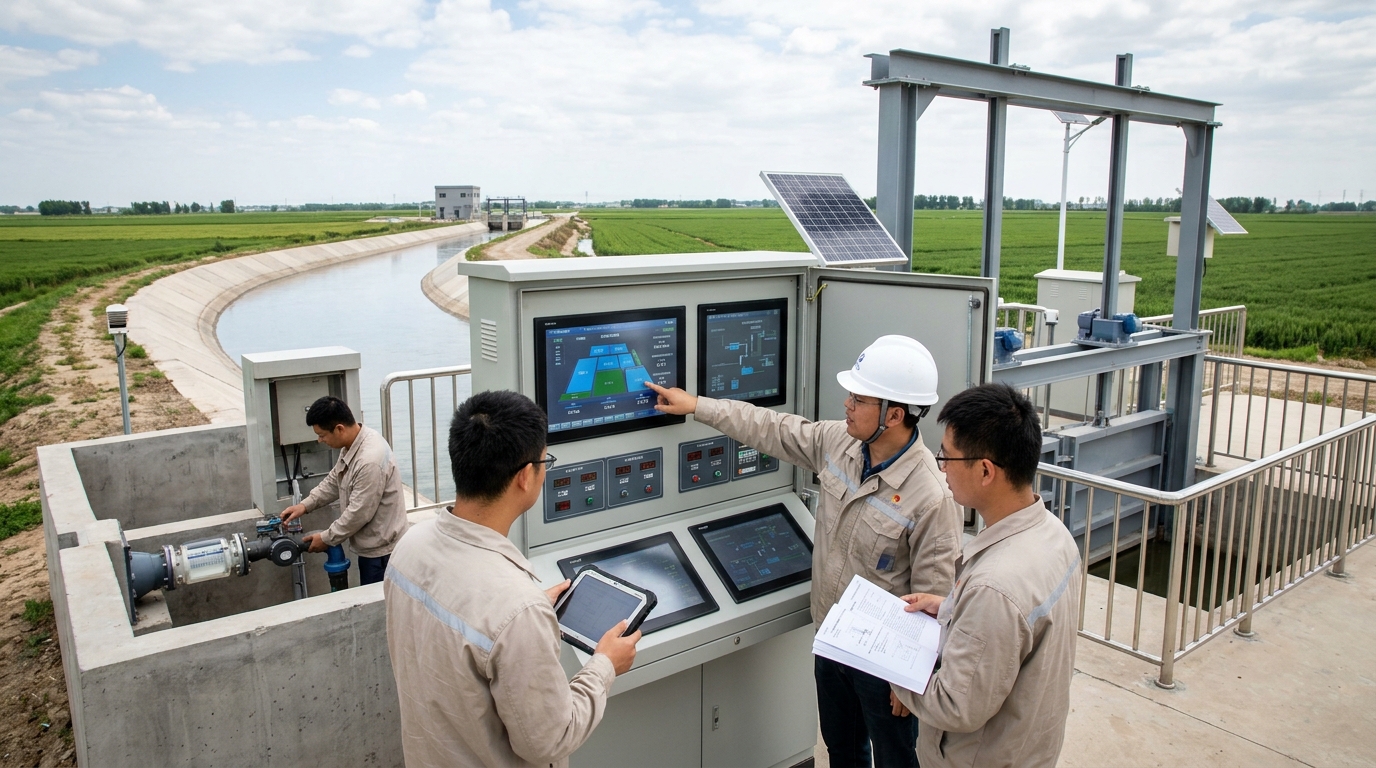
Modernized Irrigation Districts
A large irrigation district deployed over 200 terminals, increasing collection frequency from 1-hour to 5-minute intervals.
- Water utilization coefficient increased from 0.512 to 0.548.
- Annual water-saving scale: ~18 million cubic meters.
- Manual inspection workload decreased by ~30%.
Small Reservoir Monitoring
A county upgraded 50 small reservoirs with rain/water/safety monitoring using Hero V9 terminals and BeiDou backup links.
- Early warning lead time increased from 30 mins to 1-2 hours.
- False alarm rate decreased by ~25%.
- Improved time for personnel evacuation.
Urban Waterlogging Governance
An urban area deployed monitoring at 100 waterlogging-prone points, combining short-term rainfall forecasts with pipe network models.
- Response time for key points shortened to within 10 minutes.
- Hero V9 terminals handle on-site data collection and edge judgment, reducing invalid video retrieval.
- Significantly improved flood season dispatch efficiency.
Challenges and Outlook
Despite rapid development, challenges remain:
- Data Silos: Inconsistent standards and formats across regions affect basin-wide coordination.
- O&M Pressure: Sensors face harsh environments requiring regular calibration and remote diagnostics.
- Cybersecurity: As systems connect to more devices, boundary protection and data encryption are critical.
Looking ahead, three trends emerge:
- Integrated Perception: Evolution from single-point devices to a "space-air-ground-water-engineering" network.
- Intelligent Edge Nodes: Terminals like the Hero V9 will undertake more front-end processing tasks.
- Predictive Dispatch: Shift from "being able to see" to "predicting accurately and dispatching effectively," forming a closed loop of forecasting and response.
By around 2030, key river basins and large irrigation districts are expected to take the lead in realizing a data-driven water conservancy operation model, evolving smart water management from an engineering construction industry into a long-term data service and intelligent operation industry.