Smart Water Management Trend Outlook: Hero V9 Redefines Intelligent Water Resources
Smart Water Management Enters the “Data Foundation” Stage: Hero V9 Reflects New Directions in Acquisition, Transmission, and Edge Intelligence
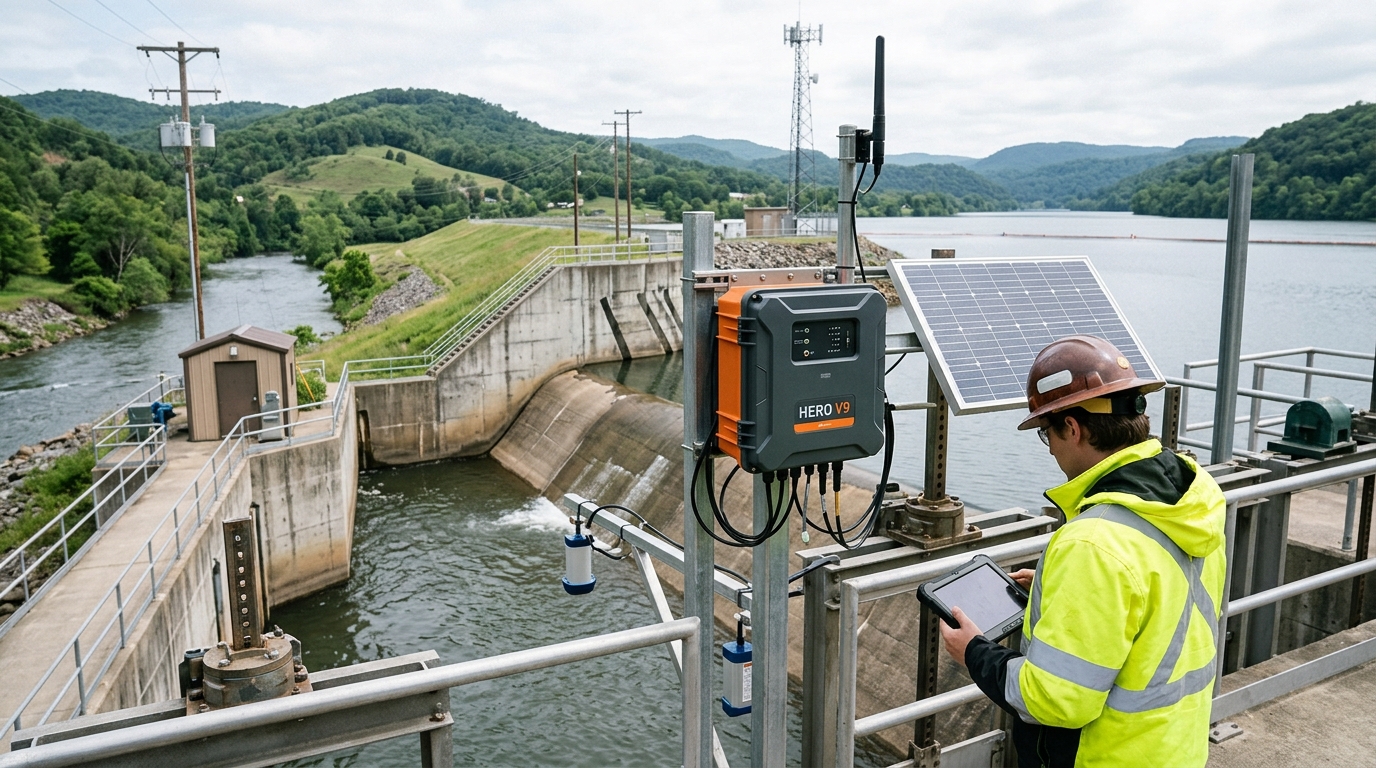
With the continued advancement of national water network construction, digital twin river basins, mountain flood disaster defense, rural water supply security, and hydrological modernization, the water conservancy industry is shifting from being centered on engineering construction to being centered on data governance, model simulation, and operations management. In the past, smart water management was often manifested as “install the devices and send the video back”; in the future, its core will shift to “whether data can be stably collected, reliably transmitted, preliminarily processed at the edge, and used to support model-based decision-making”. In this process, data acquisition and remote transmission nodes such as Hero V9, designed for complex field environments, are becoming an entry point for observing the technology roadmap of smart water management.
1. Market Trends: From Engineering Construction to Data Governance
Based on public information and industry project practice, China’s water conservancy infrastructure is enormous: more than 98,000 reservoirs, about 410,000 km of levees, several thousand large and medium-sized irrigation districts, millions of rural water supply projects, and mountain flood disaster prevention areas constitute multilevel monitoring objects. Such a massive asset scale dictates that smart water management cannot remain confined to a few demonstration projects; it must move toward full-domain sensing, tiered governance, and long-term operations and maintenance.
Industry institutions generally estimate that in 2024 the market size for smart water management or water informatization in China was in the range of RMB 90 billion to RMB 120 billion, with a compound annual growth rate expected between 8% and 12%. Around 2030, the market size may reach RMB 180 billion to RMB 250 billion. This growth is driven by three types of demand: digital transformation of existing assets, platform-type projects like digital twin river basins, and long-term spending on O&M services and data governance.
"The market focus is shifting from 'platform demonstration' to 'data foundation', and from 'project acceptance' to 'operational performance'."
Investment structure is changing. Early projects emphasized cameras and servers, but currently, the industry pays more attention to source data quality. Data on water level, rainfall, flow, and video must reach an operationally viable level in terms of online rate, completeness, and accuracy. Without robust front-end data support, digital twins remain merely visualizations rather than tools for dispatch decision-making.
2. Technology Evolution: Edge Intelligence + Multi-Link Resilience
Traditional water monitoring terminals face contradictions regarding harsh environments, unstable communication, and complex data types. The technical roadmap is evolving toward “edge acquisition, edge preprocessing, on-demand upload, breakpoint resume, and multi-link backup”. Taking Hero V9 as an example, its value lies in moving computation and decision-making to the field.
Connectivity & Interfaces
- Sensors: RS485, SDI-12, Analog, Modbus TCP/RTU
- Video: RTSP, GB/T 28181, Vendor SDKs
- Protocols: MQTT, CoAP
Communication Links
- Primary: 4G/5G, Wired Ethernet
- Backup/Low Power: NB-IoT, LoRa, Wi-Fi
- Remote/Disaster: BeiDou Short Messaging, Satellite
In weak-connectivity areas like mountainous regions, dual-link automatic switching is critical. Hardware requirements are rising: IP66/IP67 ingress protection, -30°C to 60°C operating temperature (extreme regions up to -40°C), and resistance to lightning, surge, and salt spray. Solar power plus lithium battery remains mainstream, sustaining operations for 7–15 cloudy days.
At the data level, edge processing reduces uploaded volume by 60% to 80% through threshold triggering, frame-sampled upload, and compression, while keeping critical event latency at the 200ms–1s level.
3. Policy Impact: Digital Twins and Data Elements
Smart water management is rising from an “informatization supplement” to a core component of modernized water governance. Policies emphasize water network security, digital twin capability building, and the transition from “whether systems exist” to “whether data can be used and models can compute”.
Data element policies are reshaping the industry. Water conservancy data is moving from internal ledgers to governable, assessable, and operable data assets. This requires improved quality, standardization, and sharing efficiency under compliance prerequisites.
Security compliance is increasingly strict. Terminals must meet cybersecurity classified protection laws and support identity authentication, encrypted transmission, log auditing, and secure firmware upgrades. The industry is shifting from “emphasizing construction” to “emphasizing security, quality, and operations”.
4. Case Observations: Hero V9 in Action
Mountain Flood Warning
In a project with ~120 gully-mouth sites, Hero V9-class terminals connected rain gauges and radar water levels. Instead of continuous video upload, the system switched to high-frequency key-frame upload upon rainfall thresholds (e.g., 30 mm/hour). When public networks failed, BeiDou links transmitted compact status packets.
Result: Warning time reduced from manual patrol to system-automatic triggering (<10 seconds), securing a 30–60 minute evacuation window. Data completeness during outages reached >95%.
Reservoir Safety Monitoring
For 12 small reservoirs, terminals monitored water level, seepage pressure, displacement, and video intrusion using solar power and edge storage. The focus shifted from “seeing the reservoir” to “detecting abnormal trends”.
Result: Manual patrols dropped from twice daily to once weekly. Abnormal response time shortened from hours to minutes. Maintenance costs fell by 20–30%.
Irrigation District Metering
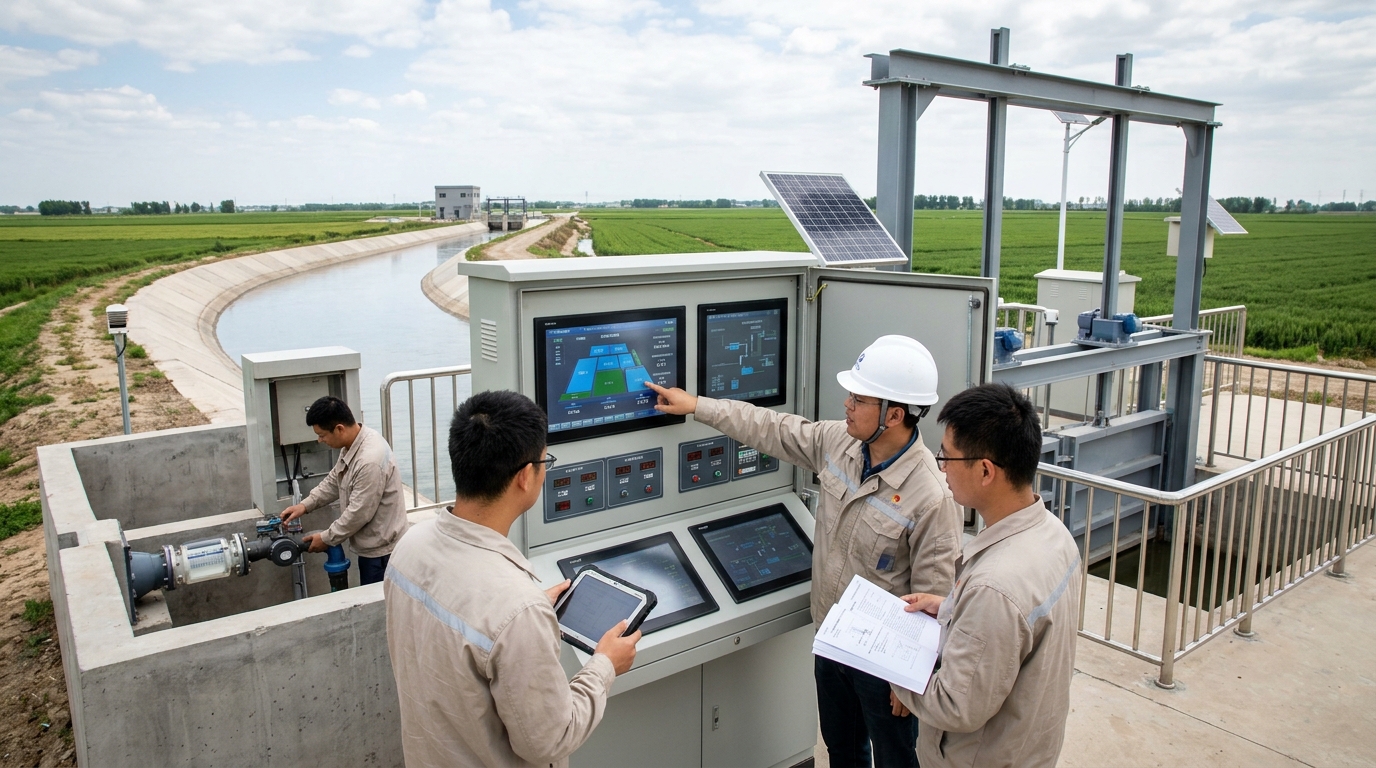
In a 150,000 mu district, terminals read electromagnetic flowmeters and gate encoders via RS485, uploading structured data via MQTT. Calibration kept metering error within 2%.
Result: Irrigation water utilization coefficient improved from 0.52 to 0.58. Water use per unit area decreased by 10–12%, enabling better water rights allocation and fee settlement.
5. Industry Chain and Business Models
The linear division of labor is restructuring. Front-end devices now handle edge computing and security; cloud platforms support data governance and model training; O&M services form metrics around online rates and alarm closed-loops. Three emerging business forms include:
- Sensing as a Service: Charging based on site count, data completeness, and response timeliness.
- Model as a Service: Providing hydrological and safety assessment algorithms via API/subscription.
- Data Operations Services: Revenue from data governance, asset registration, and scenario development.
Standardization is critical. Unified device descriptions and interfaces allow edge terminals to adapt across multi-vendor sensors and platforms, facilitating large-scale procurement and cross-region replication.
6. Risks and Constraints
Data Quality
Sensor drift, blockage, and clock desynchronization affect models. Sites with <90% online rate or <85% completeness cannot support reliable warnings.
Cybersecurity
Spoofed terminals or hijacked links pose control risks. Mutual authentication, secure boot, and encrypted channels are mandatory.
Standard Fragmentation
Varying protocols across provinces hinder expansion. Common specifications for edge terminals are urgently needed.
Cost-Benefit Issues
Projects must justify ROI through disaster loss reduction and water savings, not just hardware deployment. Edge preprocessing helps lower long-term O&M costs.
7. Forward-Looking Assessment: Five Key Inflection Points
- Networked Sensing: Moving from point-based monitoring to integrated space-air-ground-water sensing. Edge terminals become the entry point for heterogeneous data into the digital foundation.
- Computable Transmission: Remote transmission must maintain continuity under fluctuations. Breakpoint resume, event priority, and multi-link switching become standard capabilities.
- Simulation & Deduction: Digital twins evolve from visualization to answering complex scenarios (e.g., flood impact scope). High-quality real-time data determines simulation credibility.
- System Resilience: Security moves beyond compliance to trustworthiness. Device identity, firmware security, and emergency isolation become competitive differentiators.
- Long-Term Operations: Value shifts from delivery day to operational performance over 3–5 years. KPIs include warning response time, scheduling closed-loop rate, and disaster loss reduction.