Hero V9 vs. Data Acquisition: A Selection Guide for Smart Water Management Scenarios
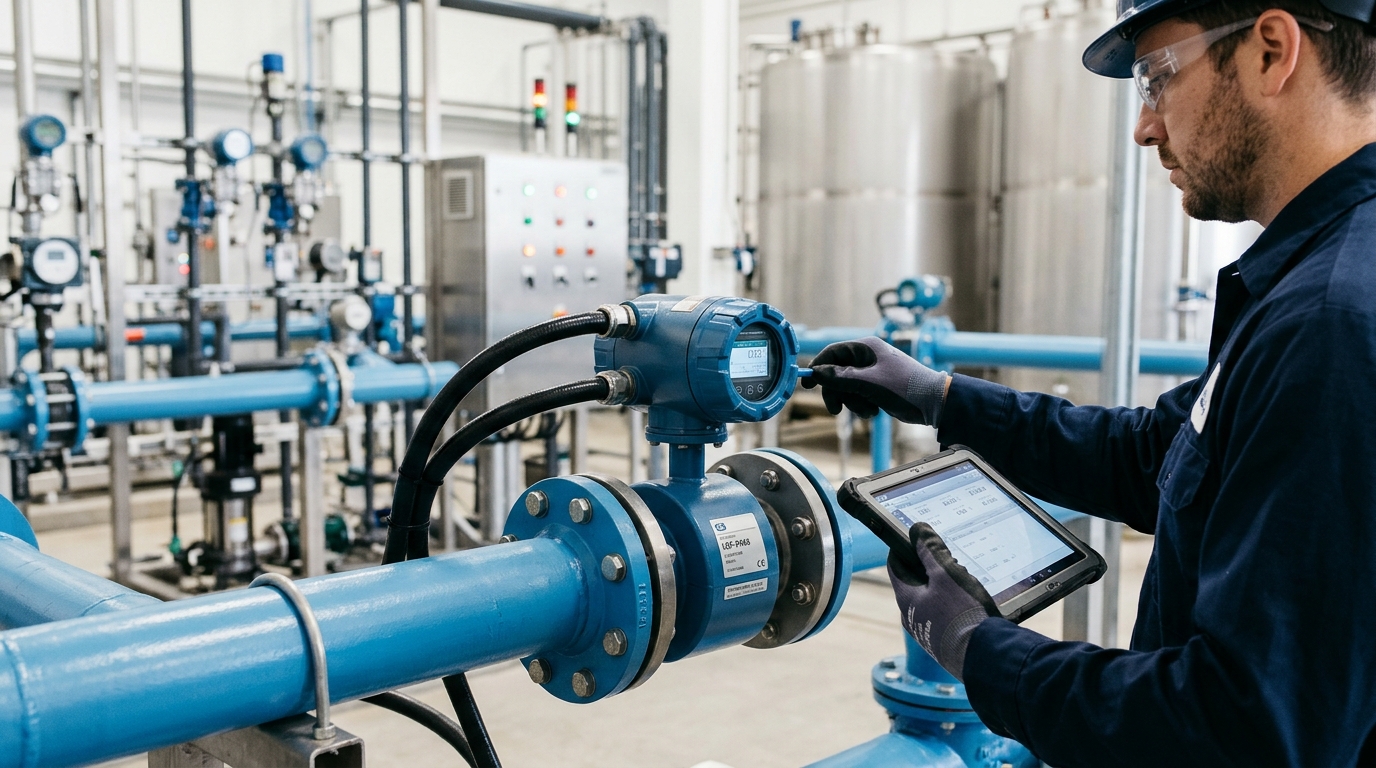
In the rapidly evolving landscape of water informatization, RTU telemetry terminals are undergoing a fundamental shift. They are no longer just simple data transmission devices but are becoming intelligent nodes capable of adapting to complex site conditions. This guide explores the technical trade-offs between different RTU architectures and how integrated solutions like the Ecai Technology Hero V9 fit into modern smart water management projects.
1. Introduction: From "Data Transmission" to "Scenario Adaptation"
Historically, project planners focused primarily on whether an RTU could connect to sensors and transmit data to a platform. However, as water conservancy projects scale up and site distributions become more dispersed, the focus has shifted to:
- Interface Matching: Do acquisition interfaces match specific sensor requirements?
- Communication Stability: Are links stable in remote or interference-heavy areas?
- Power Compatibility: Is power consumption compatible with solar/battery supplies?
- Environmental Reliability: Can equipment operate long-term in high-temperature, high-humidity, or lightning-prone environments?
The current market is not defined by a single replacement product but by a coexistence of multiple technical routes: Industrial Bus RTUs, Low-Power Cellular IoT RTUs, LoRa Private Wireless RTUs, and BeiDou/Satellite Integrated RTUs. Each route has distinct boundaries regarding data acquisition, transmission methods, deployment costs, and maintenance.
2. Technical Route Analysis
Route 1: Industrial Bus & PLC-style RTUs
Ideal For: Pump stations, sluice gates, hydropower plants, and centralized monitoring stations with stable power supply.
These terminals feature robust local acquisition and control capabilities, supporting Modbus RTU/TCP, IEC 60870, and direct connections to PLCs and frequency converters.
Advantages
- Strong acquisition & control capability
- High real-time performance (ms-level scanning)
- Local interlocking logic works even if comms fail
Limitations
- High deployment cost (cabinets, wiring, grounding)
- Long construction cycles
- High power consumption (unsuitable for pure solar)
Route 2: Low-Power Cellular IoT RTUs
Ideal For: Dispersed monitoring sites like rivers, canals, urban underpasses, and drainage networks with good public network coverage.
Utilizing 4G Cat.1, NB-IoT, or LTE Cat.M, these compact devices integrate acquisition, storage, and communication. They allow for rapid deployment (hours) using solar panels and batteries.
Note: Communication quality depends heavily on operator network coverage. Signal weakness in mountainous or underground areas remains a challenge.
Route 3: LoRa & Private Wireless RTUs
Ideal For: Irrigation districts, reservoir perimeters, and hilly regions with weak public signals but concentrated station clusters.
LoRa enables self-organizing local area networks. Field nodes transmit to a gateway via LoRa, which then backhauls data via 4G/fiber. This reduces reliance on public cell towers and offers low power consumption suitable for battery operation.
Route 4: BeiDou & Satellite Integrated RTUs
Ideal For: Remote mountain gorges, unattended hydrological stations, and emergency disaster points without public network coverage.
These units often adopt a "primary-backup link" design: prioritizing 4G/NB-IoT when available and switching to BeiDou short messages or satellite IoT during outages. This ensures critical alarm and data transmission continuity in disaster scenarios.
3. Key Indicator Comparison
| Route | Acquisition | Transmission | Power | Best Scenario |
|---|---|---|---|---|
| Industrial Bus | High (Analog/Digital/Control) | Ethernet/RS485 | High (Mains) | Pump Stations, Sluices |
| Cellular IoT | Medium (RS485/4-20mA) | 4G/NB-IoT | Low-Medium (Solar) | Dispersed Monitoring |
| LoRa | Low-Medium | Private Wireless | Very Low | Weak Signal Areas |
| Satellite | Standard | BeiDou/Satellite | Variable | Remote/Emergency |
4. Case Study: Ecai Technology Hero V9 in Action
The Ecai Technology Hero V9 exemplifies the trend towards integration. It consolidates data acquisition, remote transmission, local storage, and protocol conversion into a compact form factor, specifically designed to reduce wiring complexity and shorten construction cycles in dispersed monitoring scenarios.
Engineering Trade-offs: An Irrigation District Project
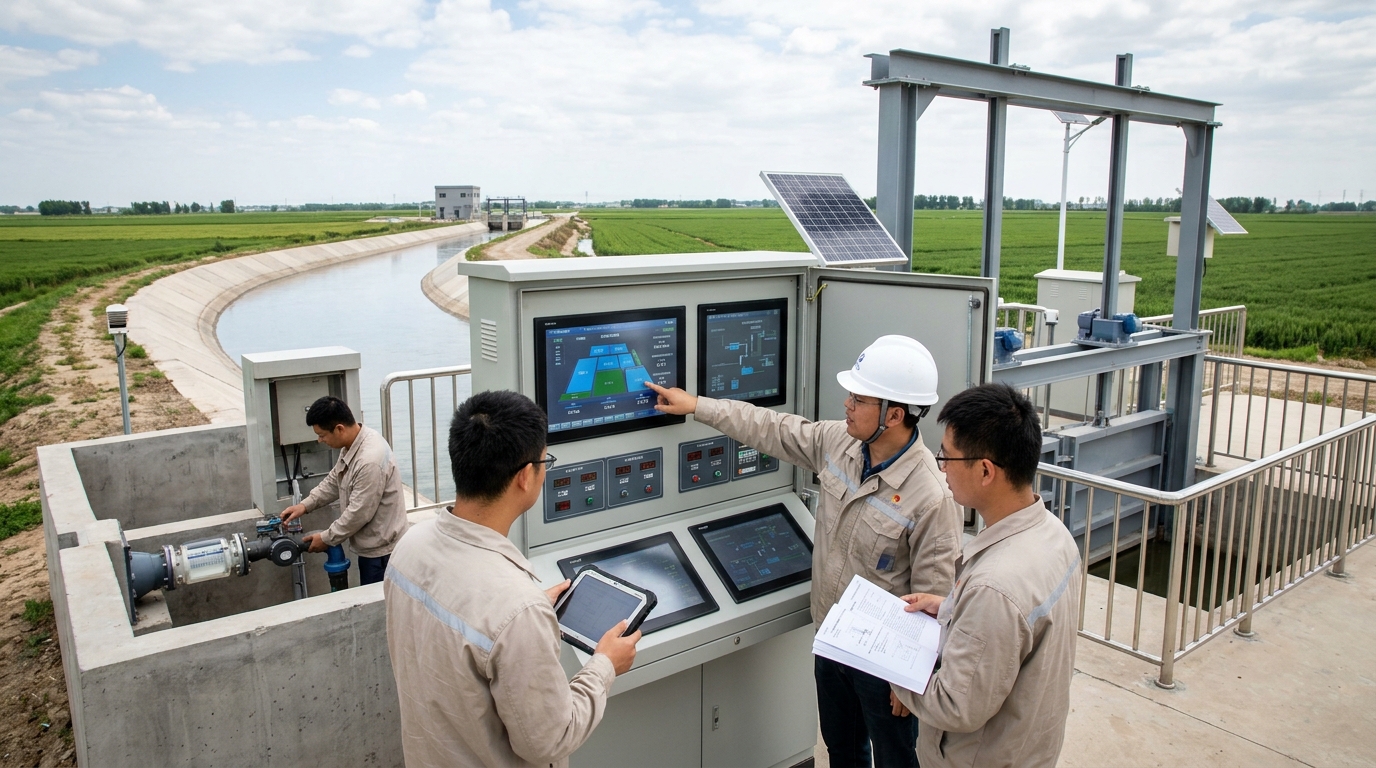
Consider a medium-sized irrigation district renovation requiring monitoring of canal water levels, flow rates, and gate statuses across hundreds of meters to kilometers.
- The Challenge: Most stations lacked mains power, and public network signals had blind spots. A purely wired industrial solution was too costly; a purely public network solution was unreliable.
- The Solution: A zoned design was adopted.
- Main Nodes: Used 4G integrated RTUs (like Hero V9) where signals were strong.
- Weak Signal Sections: Used LoRa nodes to aggregate data to nearby gateways.
- Operational Flexibility: During flood seasons, the platform could remotely adjust acquisition frequency from every 15 minutes to every 5 minutes. The Hero V9 cached data locally during interruptions and retransmitted it once the link was restored.
Why Hero V9?
Its engineering significance lies not in replacing all technical routes, but in providing a versatile "edge" device that handles standard water industry protocols (MQTT, Hydrological standards) while maintaining low power consumption for solar-powered sites. It bridges the gap between heavy industrial control and lightweight IoT sensing.
5. Selection Recommendations
Equipment selection should be based on six dimensions: Site Type, Power Supply, Communication Environment, Business Frequency, Control Requirements, and O&M Capabilities.
For Stable Power & Control
Choose Industrial Bus RTUs. Prioritize real-time performance and local interlocking logic for pump stations and sluice gates.
For Dispersed & Solar Sites
Choose Low-Power Cellular IoT RTUs (e.g., Hero V9). Ideal for small data volumes with good signal coverage.
For Weak Signal Zones
Evaluate LoRa Private Networks. Best for concentrated areas where gateways can be deployed at high points.
For Remote/Emergency
Use Satellite/BDS Integrated RTUs. Essential for unpopulated areas or disaster backup where terrestrial networks fail.
Conclusion: Towards Intelligent Perception Nodes
RTU telemetry terminals are evolving from simple data collectors into field nodes integrating perception, edge computing, and energy management. As sensor costs decline and communication methods diversify, the value of RTUs will be increasingly reflected in system adaptability and long-term O&M efficiency.
For industry participants, the choice of technical routes should not pursue a universal model but rather form combined solutions around specific business scenarios. Integrated terminals like the Hero V9 represent a crucial step in this direction, balancing low-power acquisition with reliable remote transmission, ensuring that water conservancy digitalization projects remain robust, efficient, and sustainable.