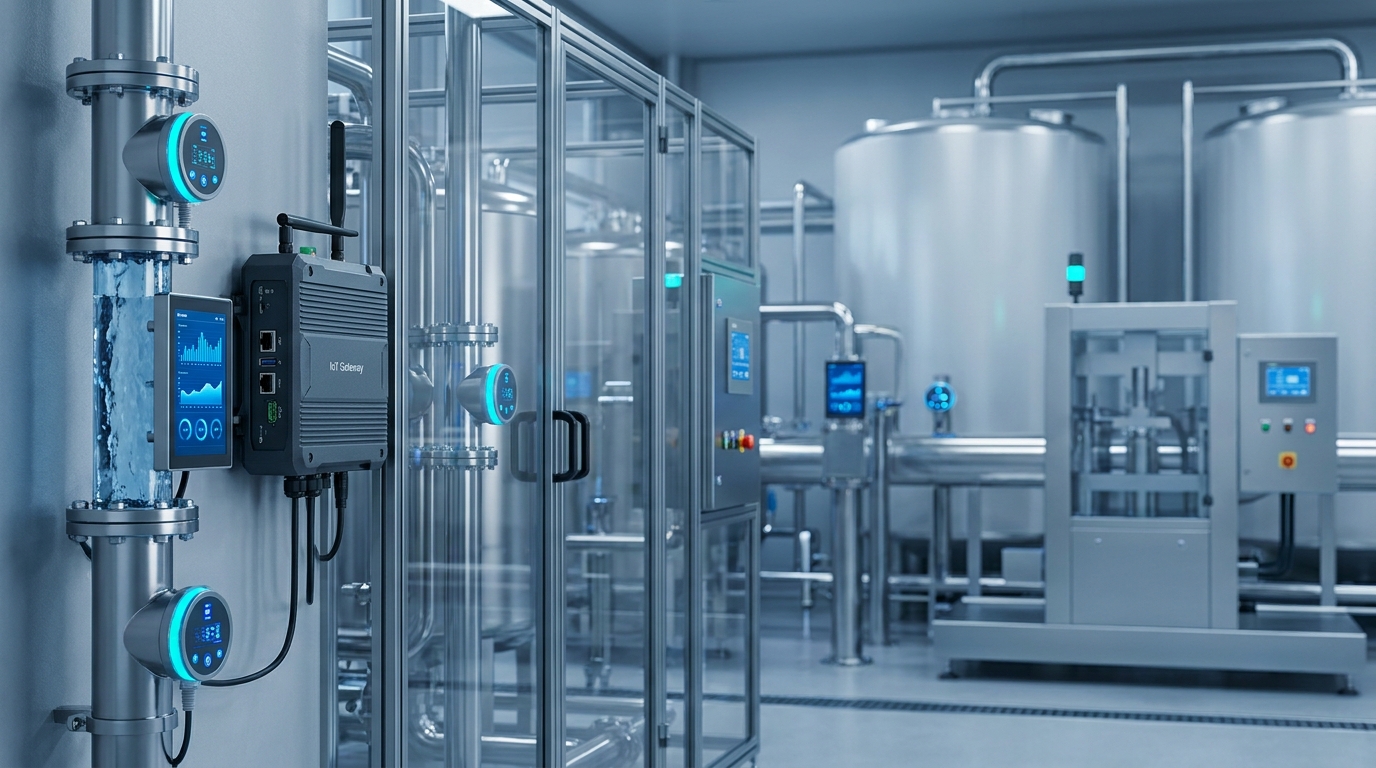
Underground Visibility: How Next-Generation Telemetry Is Rewiring Global Water Networks
The convergence of aging infrastructure mandates and real-time telemetry is transforming hidden pipe networks into transparent, data-driven assets, setting a new baseline for global water security.
The Silent Crisis Driving Infrastructure Modernization
Global water utilities are confronting an unprecedented challenge: decades of deferred maintenance have left critical underground networks vulnerable to climate extremes, population growth, and severe non-revenue water losses. Recent regulatory mandates across Europe, North America, and Asia are accelerating the transition from manual inspections to continuous, edge-driven telemetry, creating a structural shift in how water assets are financed, monitored, and optimized.
For decades, the global water sector operated on a reactive maintenance paradigm, where underground infrastructure was largely invisible until catastrophic failures or severe leaks forced intervention. That era is rapidly ending. Recent policy frameworks, including updated EU drinking water directives, U.S. infrastructure funding allocations, and Asian urban water safety modernization plans, have converged around a single imperative: digitize the underground. Water loss rates in many metropolitan areas still exceed thirty percent, translating to billions of cubic meters of treated water lost annually. The economic and environmental toll has pushed regulators and utility operators to treat network visibility as a core operational requirement rather than an optional upgrade.
This shift is not merely technological; it is fundamentally financial. International development banks and municipal bond markets are increasingly tying capital disbursements to verifiable digital twin readiness and real-time performance metrics. Utilities that can demonstrate granular, continuous monitoring capabilities are securing faster approvals and lower financing costs. Consequently, the procurement focus has moved from bulk pipe replacement to integrated sensing ecosystems that deliver actionable data from day one.
From Reactive Patching to Predictive Intelligence
The industry’s transition toward predictive asset management hinges on one critical factor: data fidelity. Traditional acoustic loggers and pressure transducers provided valuable but fragmented snapshots, often requiring manual retrieval and suffering from environmental interference. The new generation of smart water infrastructure demands continuous, multi-parameter telemetry that can operate reliably in submerged, high-turbulence, or electromagnetically noisy environments.
Advanced utilities are now deploying sensor arrays that measure flow velocity, pressure differentials, water quality indicators, and structural strain simultaneously. When fused with machine learning algorithms, these datasets enable anomaly detection hours or days before a leak becomes visible on the surface. The operational implication is profound: maintenance crews can be dispatched with precision, water quality risks are contained proactively, and energy-intensive pumping schedules are dynamically optimized based on real-time hydraulic behavior.
The Hardware Backbone: Precision at the Edge
Software and analytics are only as effective as the physical sensors feeding them. The harsh realities of underground deployment, including variable temperatures, corrosive media, and limited access, require instrumentation engineered for long-term stability rather than laboratory precision alone. This is where specialized Chinese manufacturers like Ecolor Technology have carved out a competitive advantage by focusing on ruggedized, multi-modal sensing solutions tailored for municipal and industrial applications.
For example, electromagnetic flowmeters like the LGF series have become standard for accurate volumetric measurement in partially filled pipes and complex hydraulic networks, offering stable readings even during flow reversals. Similarly, the 80GHz visual fusion radar level sensor provides non-contact, high-resolution surface tracking that remains unaffected by foam, vapor, or temperature gradients. Perhaps the most significant innovation for leak detection is the multi-band Doppler flow radar, which integrates subsurface acoustic profiling with optical verification. This capability allows operators to visually inspect pipe conditions while simultaneously measuring flow dynamics, effectively bridging the gap between telemetry and physical inspection. These devices are typically networked through hardened remote terminal units such as the HERO V9 RTU, which ensures secure, low-latency data transmission to cloud platforms while maintaining offline redundancy during network outages.
The integration of these edge devices into unified telemetry architectures is reducing the total cost of ownership for smart water deployments. By standardizing communication protocols and embedding diagnostic self-calibration, modern hardware minimizes field visits and extends maintenance cycles. This reliability is exactly what global utilities require to scale pilot programs into city-wide networks.
Global Implications and Market Realignment
As telemetry becomes the operational baseline, the water sector is experiencing a structural realignment of its supply chain. Traditional valve and pipe manufacturers are increasingly partnering with instrumentation specialists to offer bundled, pre-validated sensor nodes. Meanwhile, software vendors are shifting from generic dashboard providers to specialized hydraulic modeling platforms that ingest high-frequency field data. This convergence is creating new procurement standards focused on interoperability, cybersecurity, and lifecycle data governance.
Geopolitically, the push for domestic manufacturing of critical water sensors has accelerated. While Europe and North America maintain strong legacy brands, Asian engineering firms are capturing market share by delivering performance-equivalent hardware at significantly lower deployment costs, without compromising on industrial ingress protection or communication standards. This competitive dynamic is ultimately benefiting utilities worldwide, as it drives down the barrier to entry for comprehensive network monitoring.
Looking ahead, the integration of real-time telemetry with autonomous repair robotics and AI-driven hydraulic optimization will define the next decade of water infrastructure. Utilities that invest in open-architecture sensing networks today will possess the data foundation required to adopt these advanced capabilities tomorrow. The underground water grid is no longer a passive delivery system; it is becoming an active, self-reporting asset class that demands continuous visibility, precision measurement, and resilient data transmission to ensure global water security in an era of climate volatility.
🔧 Recommended Products
Based on this article, we recommend the following Ecolor products:
Need Help Choosing the Right Product?
Our engineering team is ready to provide free technical consultation and quotes