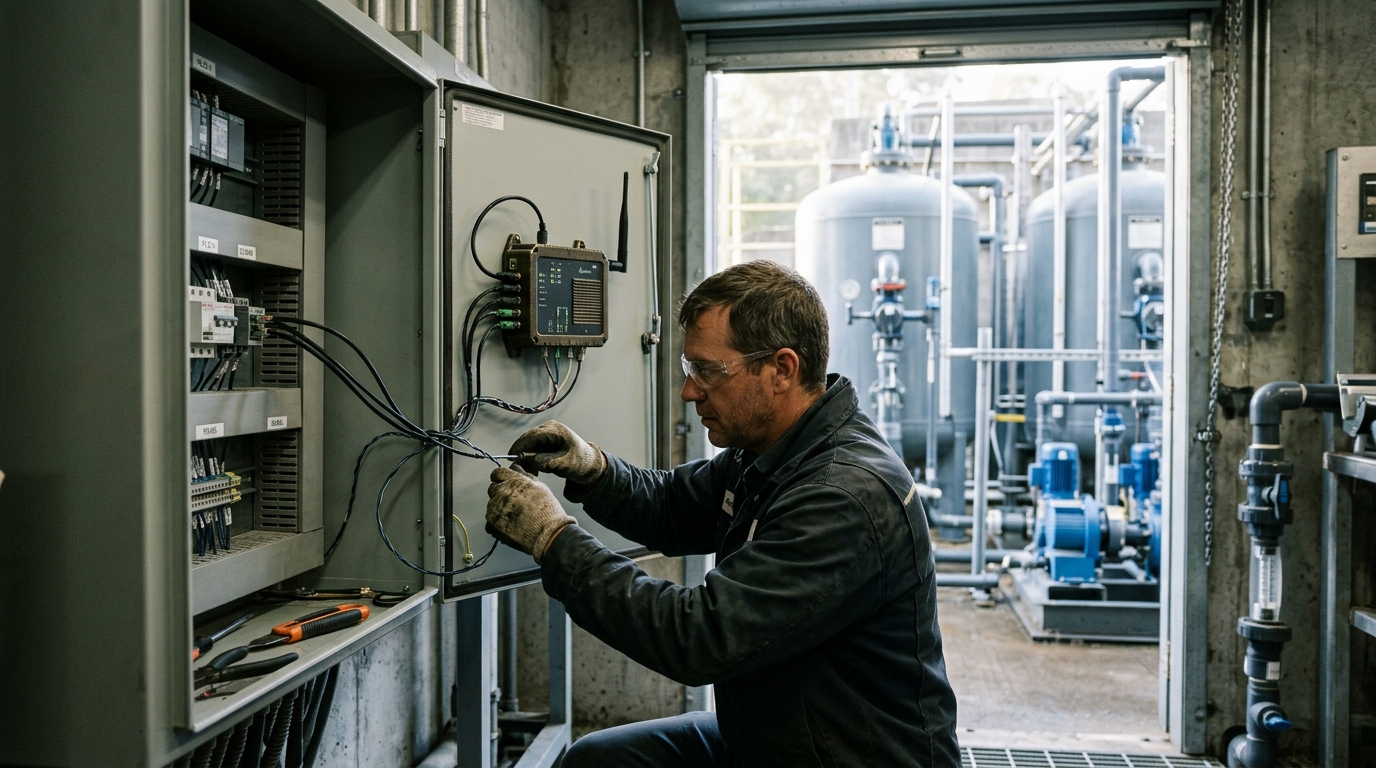
EC60 Compact Terminal Solution for Distributed IoT Retrofit of Small Water Treatment Plants
Addressing the pain points of small township water treatment plants - intake, dosing, filtration, clear-water basin and delivery pump house scattered across separate buildings with no on-site staff, lagging manual readings, undetected night-time anomalies and no wired communication infrastructure - this solution is built around the EC60 compact measurement and control terminal: Modbus RS485 acquisition of electromagnetic flow meters, level meters and residual chlorine analyzers, wireless upload over GPRS/GSM SMS to the monitoring platform, compliance with the SZY206-2016 water resources monitoring data transmission protocol, rated power below 1 W with 9-16 VDC wide-range supply, and remote real-time viewing and control from mobile phones and PCs - a low-cost distributed network that upgrades small plants from manual rounds to online IoT monitoring.
Overview
Summary
Addressing the pain points of small township water treatment plants - intake, dosing, filtration, clear-water basin and delivery pump house scattered across separate buildings with no on-site staff, lagging manual readings, undetected night-time anomalies and no wired communication infrastructure - this solution is built around the EC60 compact measurement and control terminal: Modbus RS485 acquisition of electromagnetic flow meters, level meters and residual chlorine analyzers, wireless upload over GPRS/GSM SMS to the monitoring platform, compliance with the SZY206-2016 water resources monitoring data transmission protocol, rated power below 1 W with 9-16 VDC wide-range supply, and remote real-time viewing and control from mobile phones and PCs - a low-cost distributed network that upgrades small plants from manual rounds to online IoT monitoring.
Key Advantages
Challenges
- Scattered unmanned process points: intake well, dosing room, filters, clear-water basin and delivery pump house sit in separate buildings; per-shift manual rounds and hand readings lag by hours and nights and holidays are a total blind spot
- Anomalies found only after damage: dosing-pump dry running, basin overflow and delivery-main pressure loss have no real-time alarms, so equipment damage, water loss or supply interruption is discovered after the fact
- No wired communication infrastructure: small plants in townships have no fiber laid, and wired SCADA retrofits need trenching and cabling - high cost, long construction cycles and difficult coordination
- Mixed instrument brands and protocols: flow meters, level meters and quality analyzers from different vendors use different outputs and protocols, so data cannot be acquired uniformly and forms information silos
- Thin O&M staffing and skills: township plants run with one or two operators or none at all, lacking automation specialists, so the retrofit must be maintenance-free, easy to adopt and remotely diagnosable
Results
- All five process stages are monitored online around the clock with second-level updates replacing per-shift manual readings; night and holiday blind spots are eliminated and plant status is visible anytime on phone or PC
- High/low level, pressure-loss and chlorine/turbidity limit violations trigger instant SMS and app alarms, turning after-the-fact discovery into minute-level response - dosing-pump dry running and basin overflow are essentially eliminated
- GPRS/GSM wireless networking requires no trenching or cabling: each point is retrofitted in 1-2 days instead of weeks and the overall cost drops sharply versus wired SCADA, fitting the limited budgets of township plants
- Modbus RS485 unifies acquisition across instrument brands and uploads per SZY206-2016, breaking information silos so data feeds county-level and higher water resources monitoring platforms directly
- EC60 rated power below 1 W, MTBF of at least 50,000 h and T6 explosion-proof rating deliver maintenance-free long-term operation; remote configuration and diagnostics cut site visits, letting one or two staff run the whole plant monitoring network
Solution Details
EC60 Compact Terminal Solution: Distributed IoT Retrofit for Small Water Treatment Plants
Small township water treatment plants and rural centralized water supply schemes still largely run on manual operation: intake, dosing, filtration, clear-water storage and the delivery pump house are spread across different buildings, and operators walk inspection rounds each shift to hand-record flow, level and water quality data. Readings lag by hours and the night and holiday periods are a complete blind spot. Dosing-pump dry running, clear-water basin overflow and delivery-main pressure loss are only discovered after the fact. Most small plants have no communication fiber laid, and wired SCADA retrofits are expensive and slow to build, so IoT upgrades have long remained on paper.
This solution builds a distributed wireless monitoring network on the EC60 compact measurement and control terminal: one EC60 is installed at each process stage, acquiring data from electromagnetic flow meters, ultrasonic level meters, pressure transmitters and chlorine/turbidity analyzers over Modbus RS485 buses, and uploading wirelessly to the cloud monitoring platform via GPRS or GSM SMS - with no trenching or communication cabling required. The EC60 complies with the SZY206-2016 water resources monitoring data transmission protocol and has passed its type test, so data formats are directly compatible with water resources monitoring platforms at county level and above. Rated power is below 1 W with a 9-16 VDC wide-range supply that connects to the plant DC panel or a solar power system; with T6 explosion-proof rating and MTBF of at least 50,000 hours it runs unattended for years in the humid plant environment. Operators view real-time data and history curves of every process point from a phone or PC; the platform evaluates high/low level, pressure-loss and chlorine-limit alarms and pushes SMS and app notifications instantly, while relay outputs interlock dosing pumps and water pumps directly - upgrading small plants from manual rounds to distributed IoT online monitoring at low cost.
Key Advantages of the EC60 Distributed IoT Monitoring Solution
- Integrated acquisition and wireless communication: multi-channel Modbus RS485 acquisition combined with GPRS/GSM SMS uplink - flow, level, pressure and water quality data are gathered locally and uploaded wirelessly without communication infrastructure
- SZY206-2016 protocol compliance: type-tested against the water resources monitoring data transmission protocol, directly compatible with water resources monitoring platforms - no protocol conversion needed for county or city platform integration
- Ultra-low power with wide-range supply: rated power below 1 W and 9-16 VDC input connect to plant DC panels, battery banks or solar power systems, suiting remote points without stable mains power
- Industrial reliability and explosion protection: -5 to 75 degC operating range, T6 explosion-proof rating and MTBF of at least 50,000 h for years of unattended operation in humid, corrosive plant environments
- Dual-end remote management from phone and PC: operators view real-time data, history curves and alarm logs anywhere, query and set terminal parameters remotely, and receive instant SMS alarm pushes
- Control output interlocking: relay outputs drive dosing pumps, water pumps and valves; combined with platform threshold strategies this closes the control loop over level, pumping and dosing
EC60 Technical Specifications at a Glance
SZY206-2016
Water Resources Protocol Compliant
< 1 W
Rated Power Consumption
9-16 VDC
Wide-Range Power Supply
-5 to 75 °C
Operating Temperature Range
T6
Explosion-Proof Rating
≥ 50,000 h
MTBF (Mean Time Between Failures)
How the EC60 Enables Distributed IoT Retrofit Across Process Stages
The EC60 compact terminal is deployed at each process stage of a small water treatment plant, forming a distributed wireless monitoring network without trenching or communication cabling. Each unit acquires data from electromagnetic flow meters, ultrasonic level meters, pressure transmitters and chlorine/turbidity analyzers over Modbus RS485 buses, then uploads the data wirelessly to the cloud monitoring platform via GPRS or GSM SMS. This architecture allows small plants to upgrade from manual inspection rounds to distributed IoT online monitoring at low cost, with real-time visibility into every process point from intake through delivery.
Application Scenarios for the EC60 Water Treatment IoT Solution
- Small township water treatment plants requiring low-cost IoT upgrades without fiber or wired SCADA infrastructure
- Rural centralized water supply schemes with remote process points lacking stable mains power, suited to solar or battery-backed operation
- Plants needing direct compatibility with county-level and above water resources monitoring platforms via SZY206-2016 protocol
- Facilities requiring unattended operation with instant SMS and app alarm notifications for level, pressure-loss and chlorine-limit events
- Sites where relay output interlocking of dosing pumps, water pumps and valves closes the control loop over level, pumping and dosing
? 参考来源
- Product description and technical specifications provided by the manufacturer
- SZY206-2016 water resources monitoring data transmission protocol
Approach
How we implement intelligence into your infrastructure step by step.
Plant process and point survey
Review instrument status at intake, dosing, filtration, clear-water basin and delivery pump house (brands, output types, protocols), power availability and GPRS signal strength; determine EC60 mounting points, acquisition channel allocation and interlock requirements, and produce a retrofit point list.
Instrument access and bus networking
Add Modbus conversion modules to legacy instruments without communication outputs or replace them with smart instruments; connect each process point's instruments to the local EC60 RS485 bus, planning slave addresses and register maps to unify data acquisition.
EC60 installation and communication commissioning
Mount EC60 units in instrument boxes or control cabinets, connect 9-16 VDC power and antennas, configure GPRS APN or SMS channel and platform connection parameters, set reporting intervals and catch-up transmission per SZY206-2016, and verify uploaded data against on-site instrument readings point by point.
Platform configuration and interlock commissioning
Build the plant mimic on the cloud monitoring platform, configure high/low level, pressure-loss and chlorine/turbidity alarm thresholds with SMS/app recipient lists, define dosing-pump and water-pump interlock strategies, and after a two-week trial confirming alarm accuracy and reliable interlocks, formally commission.
O&M management and continuous optimization
Keep logs of terminal online rate and data completeness, use remote diagnostics to resolve communication faults, and inspect power supplies, antennas and terminals quarterly; optimize reporting intervals, alarm thresholds and pump interlock strategies on historical data, and gradually extend to secondary supply pump houses and network-end monitoring points.
Recommended Hardware
Essential components for this solution.
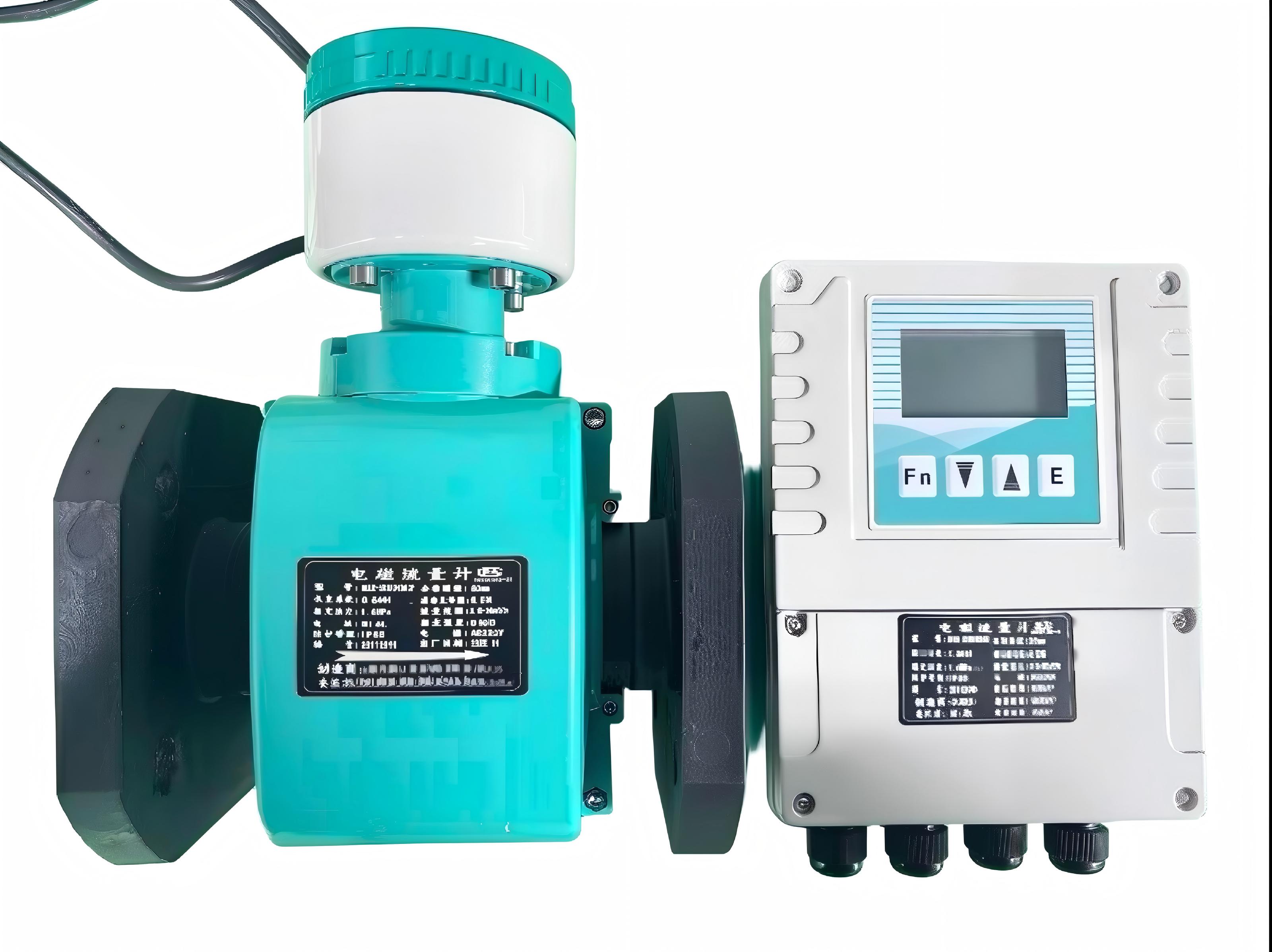
Split-Type Electromagnetic Flow Meter | IP68 ±0.5%
Ecolor's self-developed split-type electromagnetic flowmeter, made from aerospace-grade polymer mate...
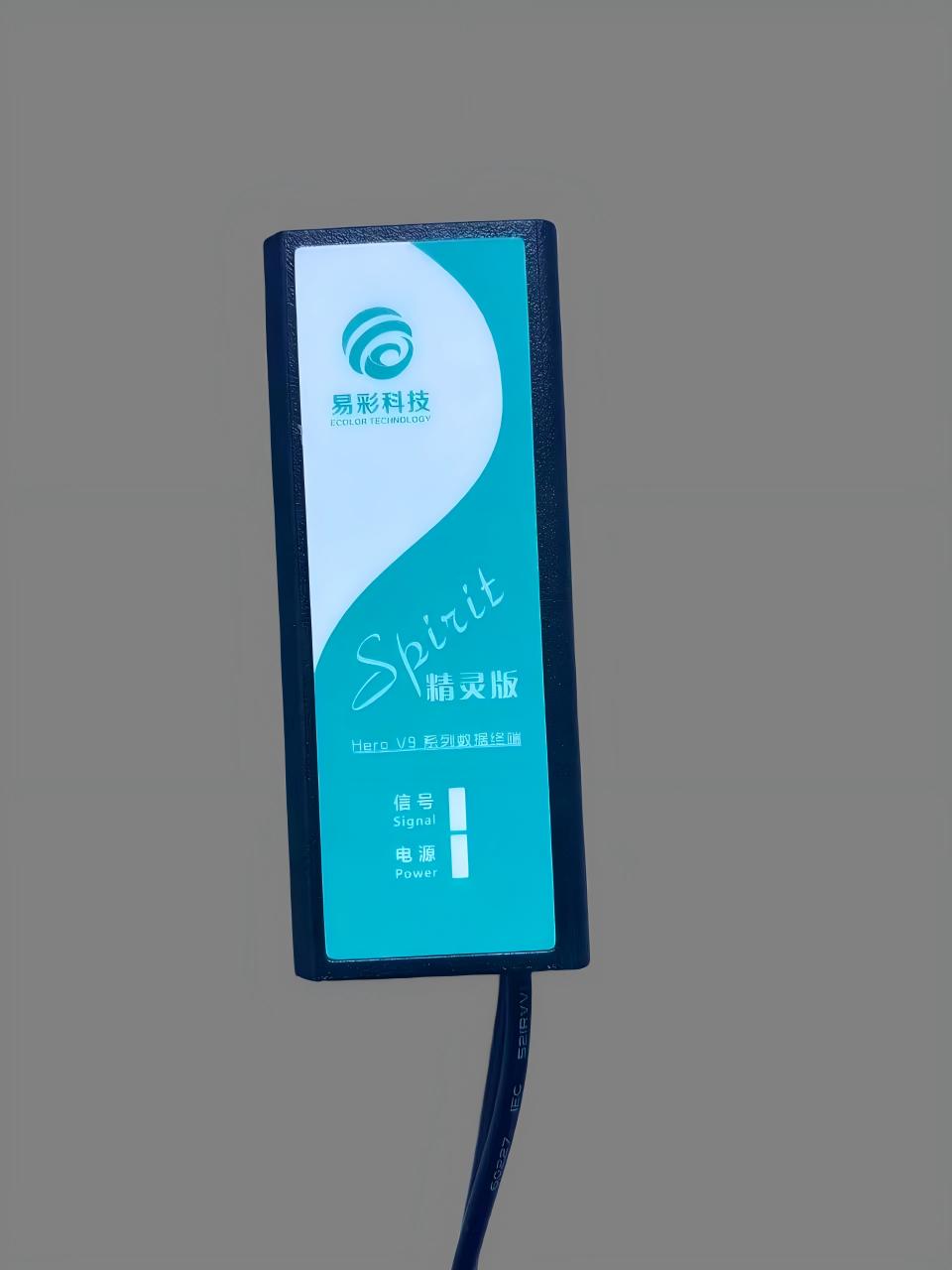
Measurement and Control Terminal (Hero V9 Series - EC60)
The Measurement and Control Terminal (Hero V9 Series - EC60) is a meticulously developed terminal pr...
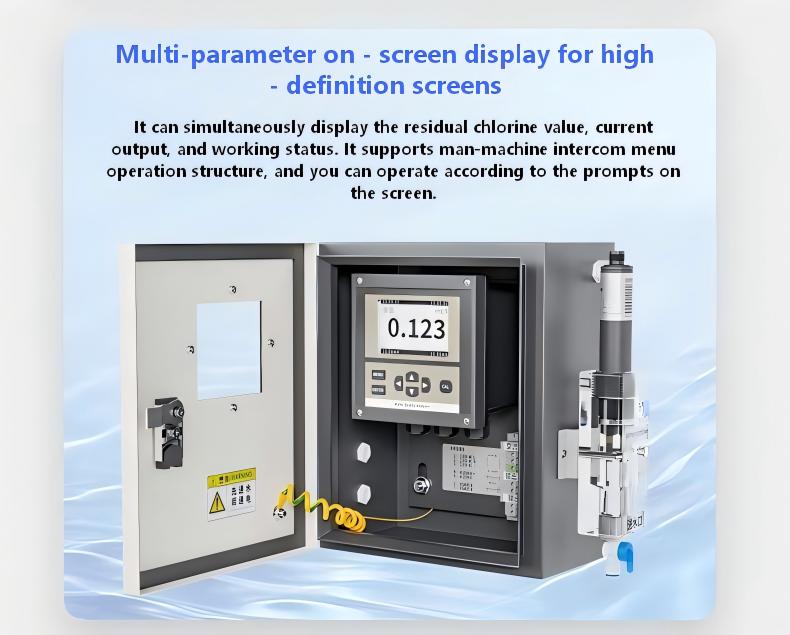
Online Residual Chlorine Analyzer
The Residual Chlorine Analyzer is a specialized instrument for detecting residual chlorine concentra...
❓ Related FAQs
Related Solutions
Industrial HMI and SCADA Integration Solution
HMI-X Industrial Touchscreen for Process Control Applications
Compact Water Quality Monitoring Station Solution for Township River Cross-Section Assessment

Ready to Optimize Your Business?
Contact us, and our professional team will provide customized solutions to help your business achieve digital transformation.
Get In Touch