
pH/ORP Meter Application for Precision ORP Control of Chlorine Disinfection in Drinking Water Treatment Plants
Addressing the pain points of chlorine disinfection in drinking water treatment - experience-based dosing, lagging residual chlorine feedback, inability to quantify true disinfection power, disinfection by-product risks and lack of process traceability - this solution is built around online pH/ORP meters: a three-parameter measurement chain of ORP, pH and residual chlorine on filtered water and clean-well outlets uses oxidation-reduction potential to directly characterize the real disinfection capability of the water, covering the blind spot of residual chlorine alone; combined pH and ORP readings resolve the hypochlorous acid fraction to guide optimization of chlorine dose and contact time; second-level ORP response layered on residual chlorine feedback forms feedforward-feedback compound control that automatically modulates metering pumps, so disinfection power never fails when raw water quality surges; while keeping microbial risk under control, chlorine dose peaks are compressed, reducing trihalomethane formation risk. With the Ecolor IoT platform for data aggregation, alarm push and disinfection compliance reporting, the system gives waterworks a continuous, trustworthy disinfection control defense line for stable compliant supply.
Overview
Summary
Addressing the pain points of chlorine disinfection in drinking water treatment - experience-based dosing, lagging residual chlorine feedback, inability to quantify true disinfection power, disinfection by-product risks and lack of process traceability - this solution is built around online pH/ORP meters: a three-parameter measurement chain of ORP, pH and residual chlorine on filtered water and clean-well outlets uses oxidation-reduction potential to directly characterize the real disinfection capability of the water, covering the blind spot of residual chlorine alone; combined pH and ORP readings resolve the hypochlorous acid fraction to guide optimization of chlorine dose and contact time; second-level ORP response layered on residual chlorine feedback forms feedforward-feedback compound control that automatically modulates metering pumps, so disinfection power never fails when raw water quality surges; while keeping microbial risk under control, chlorine dose peaks are compressed, reducing trihalomethane formation risk. With the Ecolor IoT platform for data aggregation, alarm push and disinfection compliance reporting, the system gives waterworks a continuous, trustworthy disinfection control defense line for stable compliant supply.
Key Advantages
Challenges
- Experience-based dosing: raw water ammonia, organics and temperature fluctuate with seasons and rainfall, so fixed-ratio or experience-based dosing makes residual chlorine swing high and low - overdosing drives up chlorine consumption and by-products while underdosing leaves microbial risk
- Lagging residual chlorine feedback: detection sits at the contact basin outlet with tens of minutes of hydraulic lag from dosing; when raw water surges the control loop cannot keep up and disinfection capability falls into a blind window
- Disinfection power cannot be quantified directly: residual chlorine concentration is not disinfection power - the hypochlorous acid fraction varies greatly with pH, and without combined ORP and pH measurement the true germicidal potential of the water cannot be judged
- Disinfection by-product compliance risk: habitual overdosing to guarantee residual chlorine raises trihalomethanes and haloacetic acids with chlorine dose peaks, creating compliance risk in finished water assessment
- No process traceability: local displays in the chlorination room are scattered, with no unified history curves or alarm records - troubleshooting, seasonal re-tuning and regulatory reports all rely on manual transcription
Results
- Stable disinfection capability compliance: ORP closed-loop control holds the redox potential of filtered and clean-well water within the set band, keeping microbial risk continuously controlled without operators watching gauges
- Precise dosing cuts cost and consumption: feedforward-feedback compound control compresses residual chlorine peaks, lowering chlorine consumption while avoiding overdosing - chemical cost and safety risk drop together
- By-product risk under control: dosing matches actual demand, so trihalomethane and haloacetic acid formation risk declines as chlorine dose peaks converge, keeping all finished water indicators stably compliant
- Second-level response to raw water surges: a second-level ORP drop triggers feedforward compensation that corrects chlorine dosing before residual chlorine detection reacts - disinfection power holds through flood seasons and pollution incidents
- Full process traceability: ORP / residual chlorine / pH history curves, alarm records and compliance reports accumulate automatically on the Ecolor IoT platform, supporting seasonal re-tuning, troubleshooting and regulatory audits
Solution Details
Why Chlorine Disinfection Needs Precision ORP Control in Drinking Water Treatment
Chlorination is the core microbial safety barrier of drinking water treatment, yet disinfection effectiveness is not simply equal to residual chlorine concentration. After dosing, chlorine hydrolyzes into hypochlorous acid (HOCl) and hypochlorite ion (OCl-); the actual germicidal action comes mainly from HOCl, whose fraction drops sharply as pH rises - above 90% at pH 6.5 but below 15% at pH 8.5. The same residual chlorine reading can therefore correspond to disinfection power differing several-fold under different pH conditions. Meanwhile residual chlorine analyzers sample at the end of the contact basin, leaving tens of minutes of hydraulic lag between dosing point and detection point; when raw water ammonia, organics or temperature surge, pure residual-chlorine feedback either over-doses chlorine and drives up disinfection by-products, or responds too late and leaves a microbial risk window.
Three-Parameter pH/ORP Measurement Chain for Chlorination Process Control
This solution deploys online pH/ORP meters to build a precision control system for the chlorination process. A three-parameter measurement chain of ORP, pH and residual chlorine is installed on the filtered water header, the chlorine contact basin and the clean-well outlet: ORP (oxidation-reduction potential) directly reflects the overall germicidal potential of oxidizing disinfectants in the water, responds within seconds to water quality changes, and is unaffected by color, turbidity or colloids; pH and ORP electrodes mounted in the same flow cell resolve the HOCl/OCl- balance in real time, upgrading "residual chlorine compliance" to "disinfection capability compliance". With modular circuitry and isolated transmitter outputs, the meters feed PLC and the Ecolor IoT platform through dual RS485 (Modbus) and 4-20mA channels, while high/low alarm relays directly interlock metering pumps and motorized control valves.
Feedforward-Feedback Compound Control for Precision Chlorine Dosing
On the control side the system runs an ORP setpoint as the primary loop, residual chlorine as the verification loop, and raw water flow and quality as feedforward, forming feedforward-feedback compound control: under normal conditions dosing is fine-tuned automatically around the ORP target band, compressing residual chlorine peaks and lowering trihalomethane and haloacetic acid formation risk; when raw water surges, a second-level ORP drop triggers feedforward compensation that corrects the chlorine dose before residual chlorine detection could react. The platform accumulates ORP, residual chlorine and pH history curves across seasonal conditions, supporting setpoint re-tuning by season, disinfection by-product correlation analysis, and the disinfection process compliance reports required by regulators - upgrading operations from experience-based chlorination to data-driven precision disinfection.
Key Features of the pH/ORP Meter for Drinking Water Disinfection
- Multi-parameter measurement in one meter: continuous monitoring of pH, ORP and temperature in a single instrument fully resolves the HOCl/OCl- balance of chlorine disinfection
- Second-level ORP response: electrochemical measurement responds to changes in water oxidation capacity within seconds, capturing raw water surges far faster than contact-basin residual chlorine detection
- Automatic temperature compensation: configurable manual/automatic temperature compensation eliminates winter-summer water temperature interference on pH and ORP readings, keeping alarm thresholds valid year-round
- Interference-resistant isolated transmission: modular circuit design with isolated transmitter outputs resists EMI from VFD equipment in the chlorination room for stable, accurate signal transmission
- Alarm relays for direct interlock: configurable high/low alarm limits with relay outputs directly interlock metering pumps and motorized valves, executing interlock logic closed-loop at field level
- Dual-channel data access: isolated RS485 (Modbus) and 4-20mA dual outputs connect to both the PLC control loop and the Ecolor IoT platform, with local LCD display and remote monitoring in one
? 参考来源
- Product description and technical specifications provided by the manufacturer.
Approach
How we implement intelligence into your infrastructure step by step.
Measurement point planning and control scheme design
Map the chlorination process chain: determine ORP/pH/residual chlorine measurement positions at the filtered water dosing point, contact basin and clean-well outlet assessment point; based on design flow, contact time and finished water residual chlorine standards, develop the compound control scheme of ORP primary loop, residual chlorine verification loop and flow feedforward, and produce a point list and instrument selection ledger.
Installation, integration and commissioning
Install pH/ORP electrodes in flow-through sampling lines with proper grounding and shielded wiring; connect RS485 and 4-20mA signals to the PLC and metering pump control loop; configure device access on the Ecolor IoT platform; perform interlock tests of alarm relays with chlorine metering pumps to confirm signal chain integrity.
Baseline calibration and ORP setpoint tuning
Complete electrode calibration with standard buffer and ORP solutions; continuously collect ORP-residual chlorine-pH correspondences across seasons and raw water conditions to establish the disinfection capability baseline; determine ORP set bands and residual chlorine limits for each condition and configure tiered alarm strategies (warning / over-limit / interlock).
Closed-loop commissioning and control optimization
Commission feedforward-feedback compound control: automatically fine-tune metering pump dosing around the ORP target band, with second-level ORP signals triggering feedforward compensation on raw water surges; track the following performance of residual chlorine curves against ORP curves and optimize PID and feedforward parameters for smooth, oscillation-free dosing.
Data analysis and compliance management
Accumulate ORP, residual chlorine, pH and chlorine consumption history on the platform; run quarterly disinfection by-product correlation analysis and issue seasonal setpoint re-tuning recommendations; automatically generate the disinfection process compliance reports required by regulators and closed-loop alarm handling records to support waterworks assessment and audit traceability.
Recommended Hardware
Essential components for this solution.
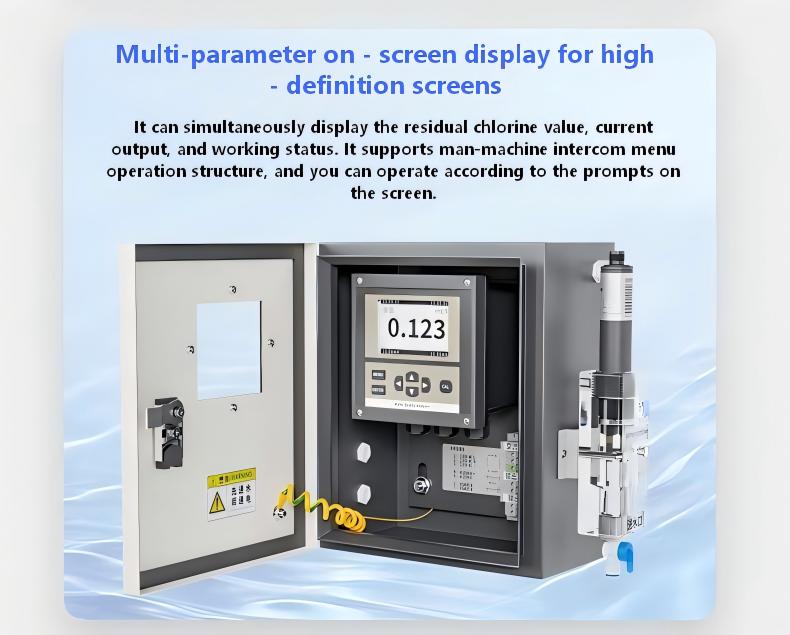
Online Residual Chlorine Analyzer
The Residual Chlorine Analyzer is a specialized instrument for detecting residual chlorine concentra...
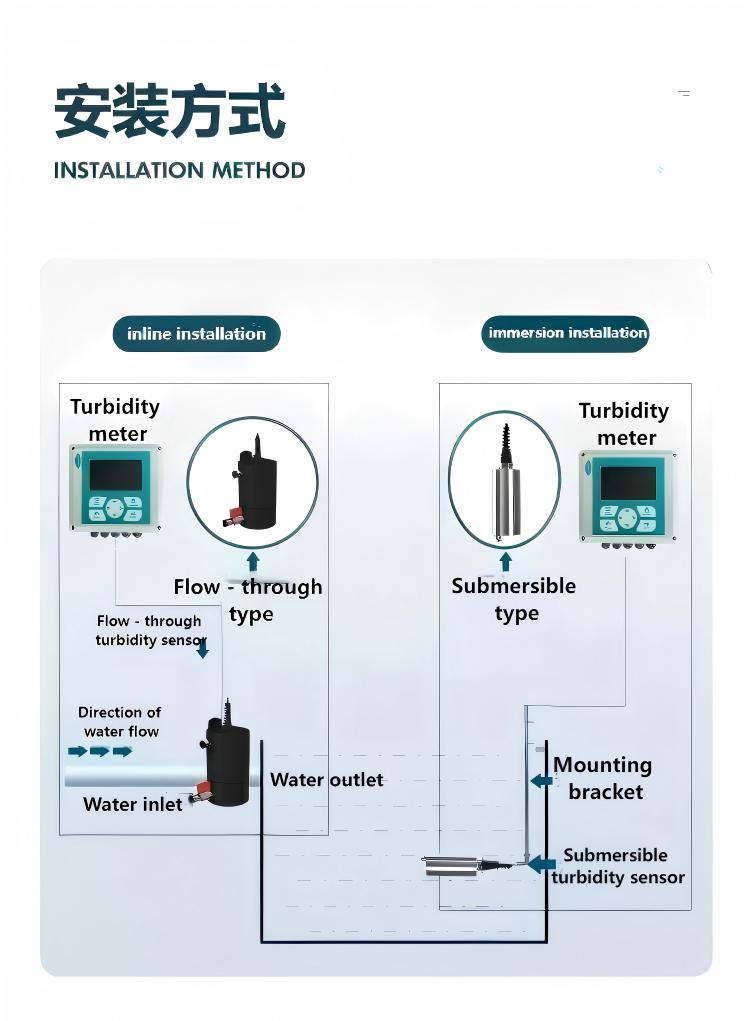
Flow-Through Turbidity Meter
The Flow-Through Turbidity Meter is an intelligent online chemical analyzer widely used in industrie...
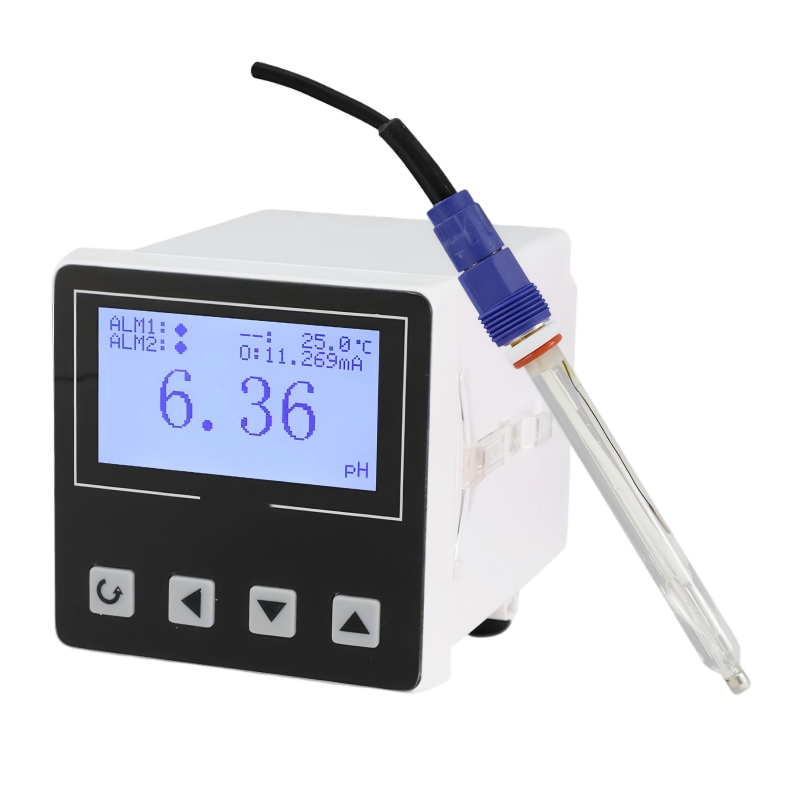
pH/ORP Analyzer
A precision instrument for testing and controlling liquid pH value and oxidation-reduction potential...
❓ Related FAQs
Related Solutions
Conductivity Meter Application for Online Product Water Quality Monitoring in RO Seawater Desalination
Submersible Turbidity Electrode Solution for Sedimentation Tank Effluent and Filter Run Turbidity Monitoring
Flow-Through Turbidity Meter Solution for Filter Backwash Monitoring in Water Treatment Plants

Ready to Optimize Your Business?
Contact us, and our professional team will provide customized solutions to help your business achieve digital transformation.
Get In Touch