Submersible Turbidity Electrode Solution for Sedimentation Tank Effluent and Filter Run Turbidity Monitoring
Addressing the pain points of invisible sedimentation-effluent turbidity swings and delayed manual detection of filter breakthrough in drinking water plants, this solution is built around a submersible turbidity electrode using the ISO 7027-compliant 90-degree light-scattering principle, with a 0.01-3000 NTU wide range, accuracy of ±5% or ±0.5 NTU (whichever is greater), IP68 protection for continuous immersion, and MODBUS RS485 digital output directly connected to PLC/RTU, combined with an optional automatic cleaning brush and a dual standard/sample calibration system to deliver continuous online turbidity monitoring across the sedimentation-filtration train.
Overview
Summary
Addressing the pain points of invisible sedimentation-effluent turbidity swings and delayed manual detection of filter breakthrough in drinking water plants, this solution is built around a submersible turbidity electrode using the ISO 7027-compliant 90-degree light-scattering principle, with a 0.01-3000 NTU wide range, accuracy of ±5% or ±0.5 NTU (whichever is greater), IP68 protection for continuous immersion, and MODBUS RS485 digital output directly connected to PLC/RTU, combined with an optional automatic cleaning brush and a dual standard/sample calibration system to deliver continuous online turbidity monitoring across the sedimentation-filtration train.
Key Advantages
Challenges
- Infrequent and lagging manual tests: turbidity at sedimentation tanks and filters relies on grab sampling every 2-4 hours, with data lagging by hours; when turbidity spikes the process has already missed its adjustment window, leaving both compliance risk and wasted chemicals
- Late detection of filter breakthrough: once the media's retention capacity is exhausted, effluent turbidity climbs rapidly; manual sampling cannot capture minute-scale changes, and non-compliant water may enter the clean-water basin before the event is identified
- Optical window fouling causes drift: algae, sludge and bubbles in basin environments deposit on the sensor window, so ordinary turbidity meters gradually lose accuracy while frequent manual wiping adds labor and creates data gaps
- Analog signals are interference-prone: traditional 4-20 mA analog loops pick up noise from VFDs and power cables over long runs, and jittery readings trigger false dosing and backwash actions with poor data credibility
- Hard to cover both high and low turbidity: storm events multiply raw-water turbidity while filtered water demands 0.1 NTU-level resolution; a single narrow-range instrument fails across the two scenes, and frequent range switching breaks continuity
Results
- Sedimentation-effluent and filter-effluent turbidity are monitored continuously around the clock with second-level updates; anomalies shrink from hours of lag to minute-level alarms, turning process control from reactive catch-up into real-time response
- Filter effluent turbidity is held steadily in the 0.1-0.3 NTU low-turbidity band, breakthrough precursors (changes in turbidity rise slope) are detected automatically to trigger early backwash, and finished-water compliance rates improve markedly
- The automatic cleaning brush keeps the optical window clean on schedule, greatly reducing reading drift; manual wiping drops from daily to weekly inspection level, cutting maintenance while improving data continuity
- MODBUS RS485 digital transmission eliminates analog interference jitter, so the turbidity-dosing-backwash closed loop runs on one trusted data source, optimizing coagulant consumption and backwash water use together
- The 0.01-3000 NTU wide range lets one electrode family cover storm high-turbidity and post-filter low-turbidity scenarios, and the dual standard/sample calibration system keeps long-term measurement uncertainty traceable for regulatory reporting and KPI assessment
Solution Details
Why Sedimentation Tank Effluent and Filter Run Turbidity Monitoring Matters
Sedimentation tank effluent turbidity and filter run turbidity are the two most critical intermediate control points in drinking water treatment: the former reflects coagulation-sedimentation performance and guides chemical dosing, while the latter directly determines whether finished water stays compliant - filter media breakthrough often happens long before manual laboratory tests reveal it. The traditional routine of grab sampling every few hours is infrequent and lagging, so turbidity spikes from storm-driven high-turbidity raw water, coagulation failure or filter breakthrough cannot be caught within minutes; process adjustments always come too late, threatening water quality while wasting coagulant and backwash water.
Submersible Turbidity Electrode Solution: Online Sensing at Critical Control Points
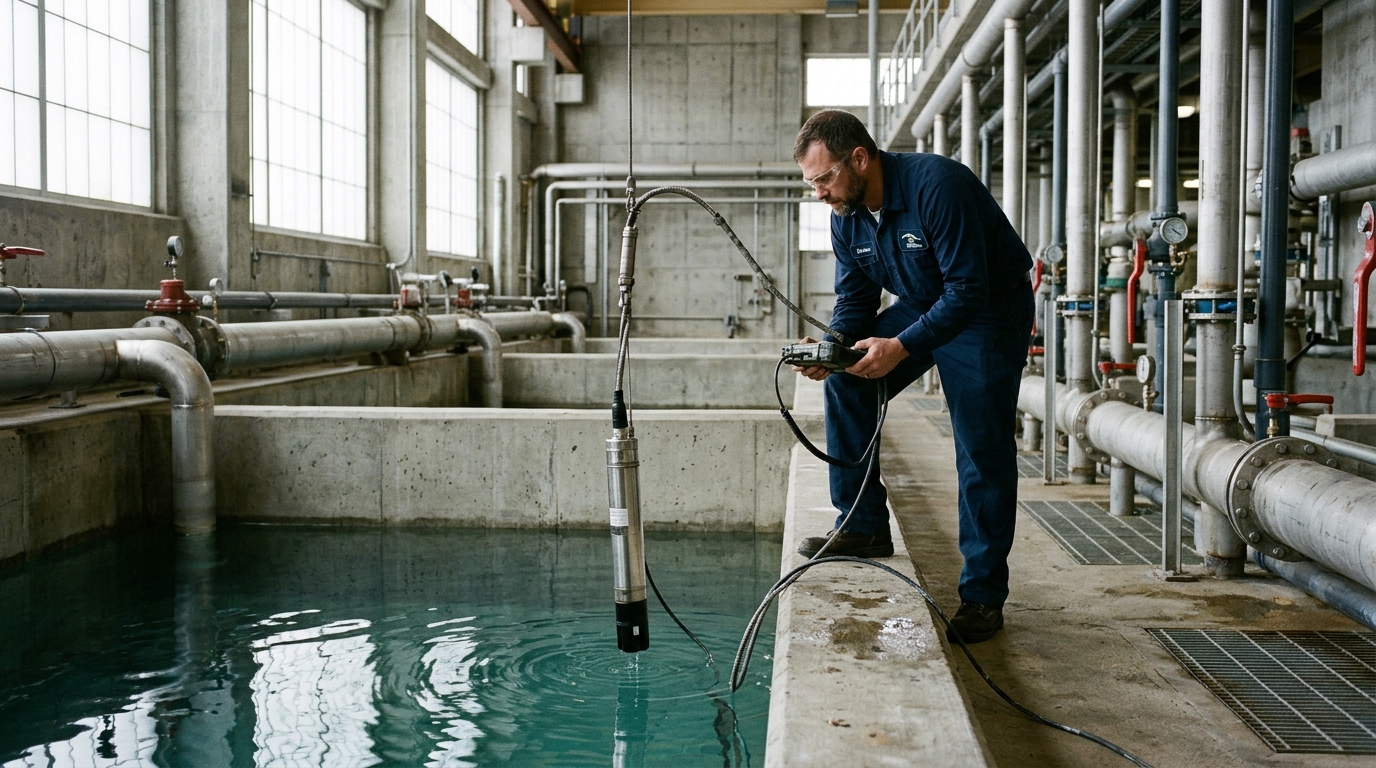
This solution places submersible turbidity electrodes as the online sensing core at sedimentation effluent launders and filter outlet pipes. They apply the 90-degree light-scattering principle in accordance with ISO 7027, with custom sapphire optics and filters immune to ambient light and color interference; the 0.01-3000 NTU wide range covers both low-turbidity filtered water and storm high-turbidity scenes, with accuracy of ±5% or ±0.5 NTU (whichever is greater) and repeatability of ±3%. The SUS316L stainless steel body with IP68 protection is designed for permanent immersion, and NPT3/4 threaded installation is simple. MODBUS RS485 digital output connects straight to PLC or RTU, and the standard 10-meter cable can be extended to 100 meters to suit basin layouts. Models with an automatic cleaning brush keep the optical window free of bubbles and deposits on a set schedule, while dual calibration modes - standard solution and sample comparison - keep data trustworthy over the long term, providing the continuous, accurate and traceable turbidity foundation for intelligent backwash triggering and plant-wide process closed-loop control.
Key Performance Data of the Turbidity Electrode
Product Features of the Submersible Turbidity Electrode
- ISO 7027 90-degree scattering measurement: 90-degree light-scattering principle with custom sapphire optics and filters, immune to ambient light and sample color interference, with sensitive response in the low-turbidity band
- Wide range and high accuracy: 0.01-3000 NTU measuring range, accuracy of ±5% or ±0.5 NTU (whichever is greater), repeatability ±3%, resolution 0.01/0.1 NTU depending on range - one electrode serves both high-turbidity raw water and low-turbidity filtered water
- Interference-free digital output: MODBUS RS485 communication integrates directly with PLC, DTU and RTU, eliminating long-run analog noise; multiple electrodes can share one bus to cut wiring cost
- IP68 permanent-immersion design: SUS316L stainless steel body with PPS+glass-fiber caps and PUR cable, IP68 protection, 0.2 MPa pressure rating, 49 mm diameter x 216.5 mm length and 0.8 kg weight for easy submersible installation in any basin
- Self-cleaning and dual calibration: optional automatic cleaning brush clears the optical window on a set frequency to remove bubbles, fouling and suspended matter; standard-solution and sample calibration modes keep long-term data trustworthy and traceable
- Flexible power and cabling: 9-36 VDC wide-range supply, standard 10 m cable extendable to 100 m, NPT3/4 thread mounting - rapid deployment at sedimentation launders, filter outlets and clean-water basin inlets
Technical Specifications at a Glance
- Measurement principle: 90-degree light scattering per ISO 7027
- Measuring range: 0.01-3000 NTU
- Accuracy: ±5% or ±0.5 NTU (whichever is greater)
- Repeatability: ±3%
- Resolution: 0.01/0.1 NTU depending on range
- Body material: SUS316L stainless steel with PPS+glass-fiber caps and PUR cable
- Protection: IP68, pressure rating 0.2 MPa
- Dimensions and weight: 49 mm diameter x 216.5 mm length, 0.8 kg
- Output: MODBUS RS485 digital output
- Power supply: 9-36 VDC
- Cable: standard 10 m, extendable to 100 m
- Installation: NPT3/4 threaded mounting
Application Scenarios for Online Turbidity Monitoring
The submersible turbidity electrode is deployed at sedimentation effluent launders, filter outlet pipes and clean-water basin inlets, delivering continuous turbidity data for intelligent backwash triggering and plant-wide process closed-loop control. With its wide 0.01-3000 NTU range, one electrode serves both storm-driven high-turbidity raw water and low-turbidity filtered water, while the optional automatic cleaning brush and dual calibration modes ensure long-term data remains trustworthy and traceable.
? Reference Sources
- ISO 7027 - Water quality: Determination of turbidity
- Product specification data provided by the manufacturer
Approach
How we implement intelligence into your infrastructure step by step.
Process survey and monitoring point planning
Map the plant's process train and basin structures; identify monitoring points at sedimentation effluent launders, individual filter outlet pipes (or the common outlet header) and clean-water basin inlets; verify immersion depth, power and communication routing to produce a point schedule.
Electrode selection and range configuration
Match range and resolution to each point: post-filter points prioritize 0.01 NTU-level low-turbidity resolution while sedimentation points must cover storm high-turbidity; select automatic-cleaning-brush models for high-algae or high-sludge points and plan unified MODBUS addresses.
Standardized installation and initial calibration
Install electrodes submersibly via NPT3/4 thread or bracket, keeping the optical window in a uniformly flowing zone away from bubble accumulation and wall recirculation dead zones; perform two-point calibration with formazin standards followed by on-site sample calibration against laboratory results.
Data integration and process interlocking
Connect all turbidity points over an RS485 bus to the PLC/RTU and plant SCADA; configure high-limit and rise-slope breakthrough-precursor alarms, interlock coagulant pump frequency and filter backwash trigger conditions to close the turbidity-process loop.
O&M management and periodic verification
Keep logs of brush operation, calibrations and readings; inspect optical windows and cable seals weekly, verify against standards monthly and retain deviation curves; use the data for filter run-cycle analysis and dosing optimization, building a plant-wide turbidity archive.
Recommended Hardware
Essential components for this solution.
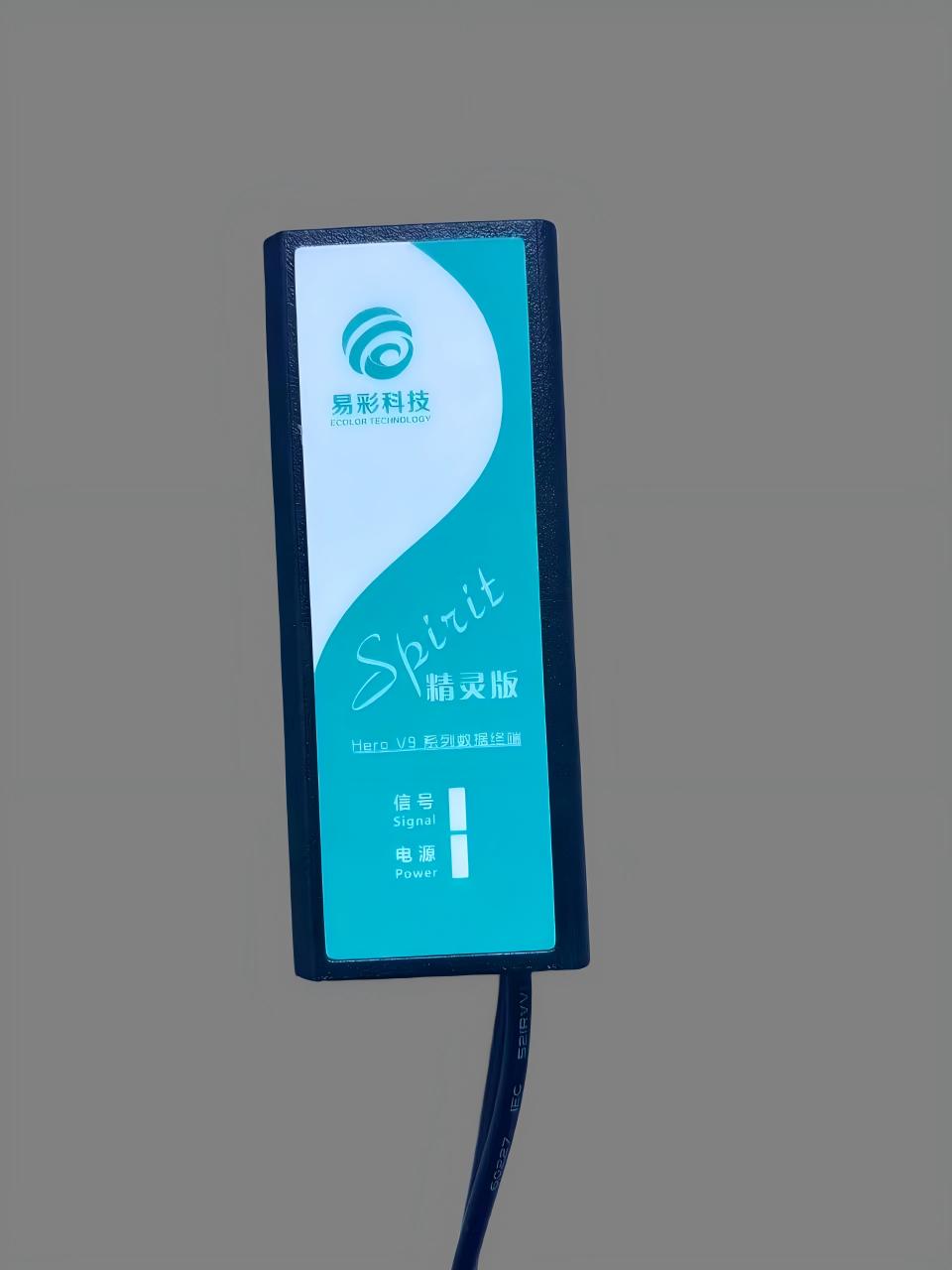
Measurement and Control Terminal (Hero V9 Series - EC60)
The Measurement and Control Terminal (Hero V9 Series - EC60) is a meticulously developed terminal pr...
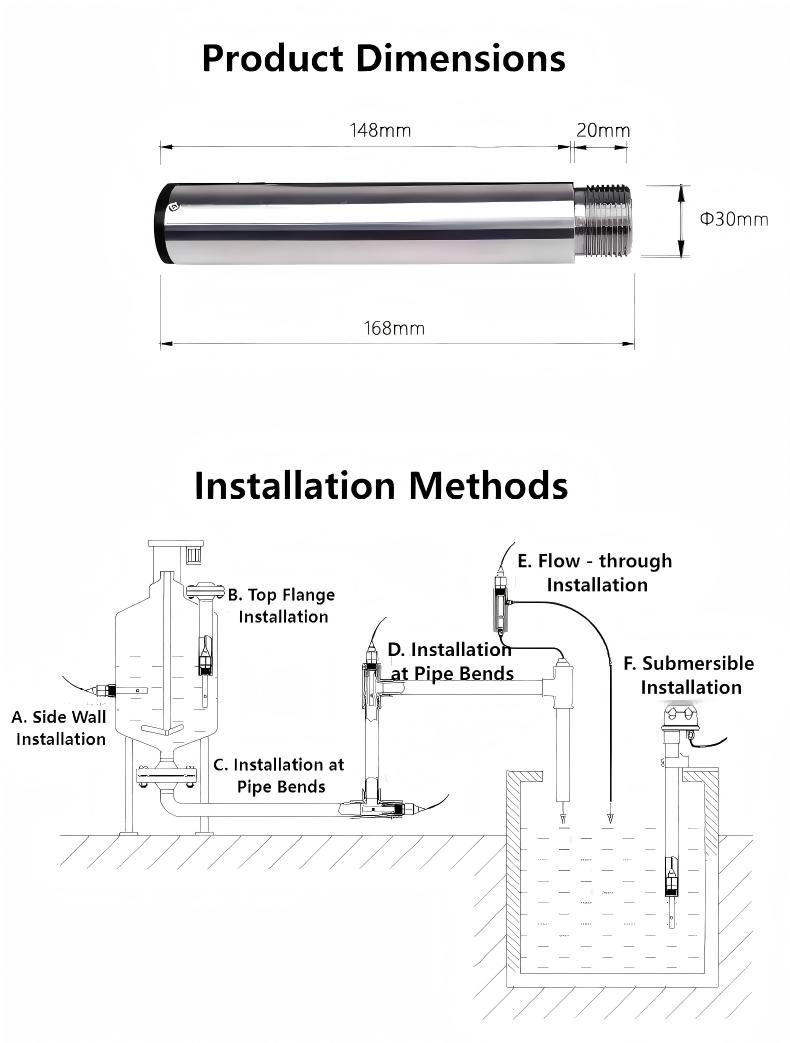
Submersible Turbidity Sensor Electrode
This product is widely used for online turbidity monitoring in water treatment plants (e.g., inlet, ...
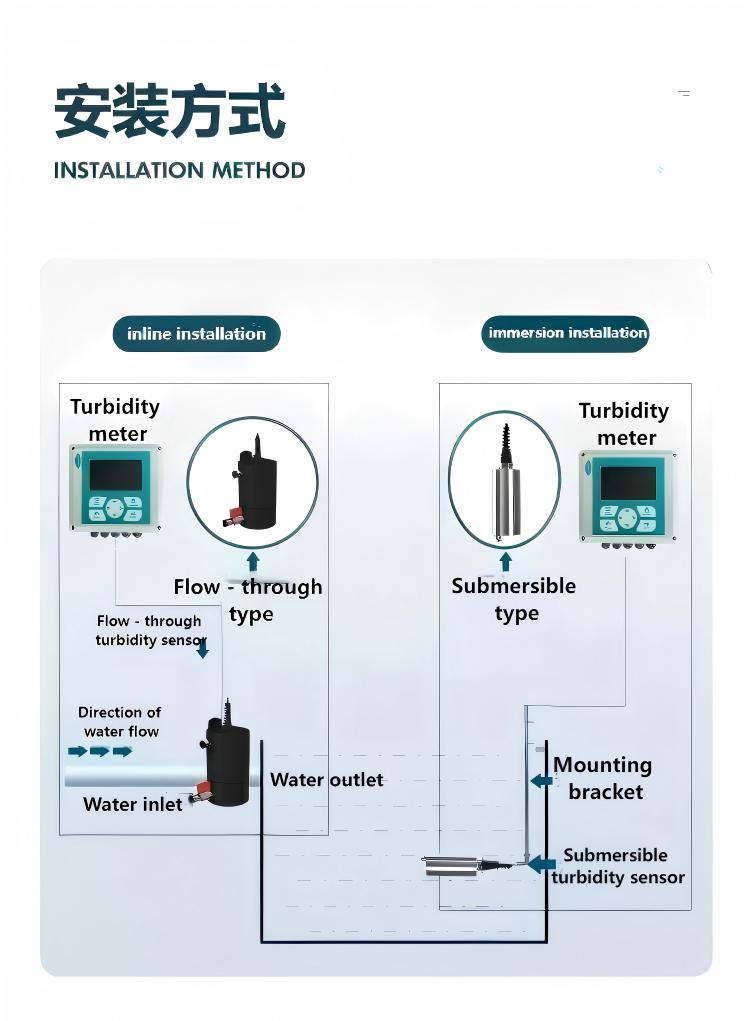
Flow-Through Turbidity Meter
The Flow-Through Turbidity Meter is an intelligent online chemical analyzer widely used in industrie...
❓ Related FAQs
Related Solutions
Flow-Through Turbidity Meter Solution for Filter Backwash Monitoring in Water Treatment Plants
Sludge Concentration Meter Solution for RAS and WAS Control in Wastewater Treatment Plants
Multi-Electrode Conductivity Meter Solution for Coastal Groundwater Saltwater Intrusion Monitoring and Early Warning

Ready to Optimize Your Business?
Contact us, and our professional team will provide customized solutions to help your business achieve digital transformation.
Get In Touch