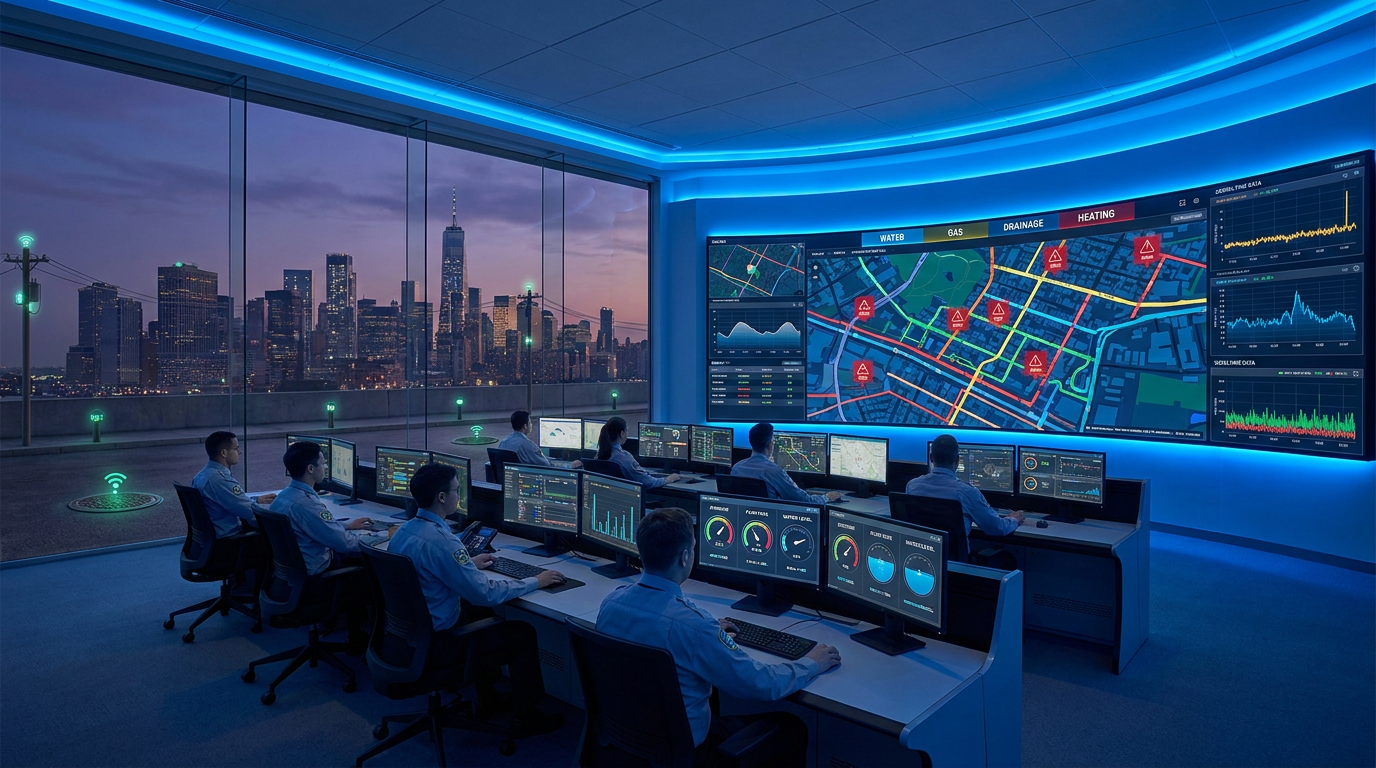
Urban Lifeline Safety Engineering: Integrated Underground Pipeline Monitoring & Early Warning Platform
A comprehensive monitoring and early warning platform for urban lifeline safety engineering, integrating Doppler radar flow monitoring, visual fusion radar level sensing, IoT RTU telemetry, and AI-driven risk prediction to cover water supply, drainage, gas, and heating pipeline networks.
Overview
Summary
A comprehensive monitoring and early warning platform for urban lifeline safety engineering, integrating Doppler radar flow monitoring, visual fusion radar level sensing, IoT RTU telemetry, and AI-driven risk prediction to cover water supply, drainage, gas, and heating pipeline networks.
Key Advantages
Challenges
- Aging urban pipeline networks with frequent bursts and leaks; traditional manual inspection covers less than 20%
- Data silos across water supply, drainage, gas, and heating systems lacking unified monitoring
- Fragmented operational data preventing cross-system correlation analysis and risk prediction
- Traditional contact sensors prone to damage in harsh underground environments with high maintenance costs
- Emergency response relies on experience rather than data-driven intelligent early warning
Results
- Pipeline incident rate reduced by over 60%, shifting from reactive repairs to proactive prevention
- Emergency response time shortened to under 15 minutes with AI predicting risks 2-4 hours in advance
- Non-contact radar devices achieve 5+ year maintenance-free operation, reducing O&M costs by 70%
- DMA metering combined with AI leak analysis reduces network leakage from 15% to below 8%
- Unified platform covering water supply/drainage/gas/heating networks, breaking data silos
Solution Details
Urban Lifeline Safety Engineering: Integrated Underground Pipeline Monitoring & Early Warning Platform
Urban Lifeline Safety Engineering is a major infrastructure digitalization initiative promoted by housing and construction authorities worldwide, covering five critical domains: water supply, drainage, gas, heating, and bridges. Underground pipeline networks serve as the "blood vessels" of cities, and their safe operation directly impacts urban resilience and quality of life.
This solution builds a three-layer "Edge-Cloud-Platform" architecture for comprehensive underground pipeline monitoring. The sensing layer deploys multi-band Doppler radar flow meters for non-contact sewer flow monitoring, visual fusion radar level gauges for precise manhole level measurement, electromagnetic flow meters at critical water supply nodes, and compact water quality stations for anomaly detection. The edge layer uses EC32 RTU telemetry terminals for multi-sensor data aggregation, local preprocessing, and multi-channel upload via 4G/5G/NB-IoT. The cloud platform integrates GIS visualization, AI risk prediction models, and multi-department collaborative command.
The system supports DMA (District Metered Area) management and Minimum Night Flow analysis, combined with pressure-flow-level multi-parameter fusion algorithms to achieve leak localization accuracy within ±50 meters. The AI early warning engine, trained on historical time-series data, can predict pipeline bursts, urban waterlogging, and gas leaks 2-4 hours in advance, providing golden response windows for emergency dispatch. The platform has been successfully deployed in multiple urban lifeline pilot projects, helping utilities reduce pipeline incidents by over 60% and cutting emergency response time to under 15 minutes.
Key Technical Features of the Underground Pipeline Monitoring Platform
Multi-source Sensing Fusion
Flow + level + pressure + water quality parameters collected simultaneously
Non-contact Underground Sensing
Doppler radar and visual fusion radar with maintenance-free design for harsh environments
AI Risk Prediction Engine
Time-series prediction models for burst, waterlogging, and leak early warning 2-4 hours ahead
GIS Visualization
Full-network topology display with risk heatmaps and dynamic alert annotation
DMA District Metering
Automatic leakage rate and minimum night flow calculation with precise leak section localization
Multi-department Collaborative Command
Unified monitoring dashboard for water/drainage/gas/heating with cross-department emergency linkage
Three-Layer Architecture for Comprehensive Pipeline Monitoring
The sensing layer deploys multi-band Doppler radar flow meters for non-contact sewer flow monitoring, visual fusion radar level gauges for precise manhole level measurement, electromagnetic flow meters at critical water supply nodes, and compact water quality stations for anomaly detection. The edge layer uses EC32 RTU telemetry terminals for multi-sensor data aggregation, local preprocessing, and multi-channel upload via 4G/5G/NB-IoT. The cloud platform integrates GIS visualization, AI risk prediction models, and multi-department collaborative command.
AI-Driven Early Warning and Emergency Response
The AI early warning engine, trained on historical time-series data, can predict pipeline bursts, urban waterlogging, and gas leaks 2-4 hours in advance, providing golden response windows for emergency dispatch. The platform has been successfully deployed in multiple urban lifeline pilot projects, helping utilities reduce pipeline incidents by over 60% and cutting emergency response time to under 15 minutes.
Approach
How we implement intelligence into your infrastructure step by step.
Full-Domain Sensing Deployment
Deploy Doppler radar flow meters, visual fusion radar level gauges, electromagnetic flow meters, and water quality stations at critical nodes across water supply, drainage, gas, and heating networks via EC32 RTU
Edge Intelligence & Transmission
EC32 RTU supports Modbus/HART multi-protocol access, local data cleaning and anomaly screening, with 4G/5G/NB-IoT multi-channel real-time upload and offline data caching
Cloud Data Fusion
Unified ingestion of multi-source heterogeneous data, building pipeline digital twin models with GIS topology and SCADA data fusion for one-map visualization
AI Analysis & Early Warning
Deploy time-series prediction models and hydraulic simulation engines for burst risk prediction, waterlogging early warning, and leak localization with automatic work order generation
Collaborative Command & Closure
Establish cross-department command mechanisms with automatic event classification and dispatch, full-process repair tracking forming a complete Monitor-Warn-Respond-Review loop
Recommended Hardware
Essential components for this solution.
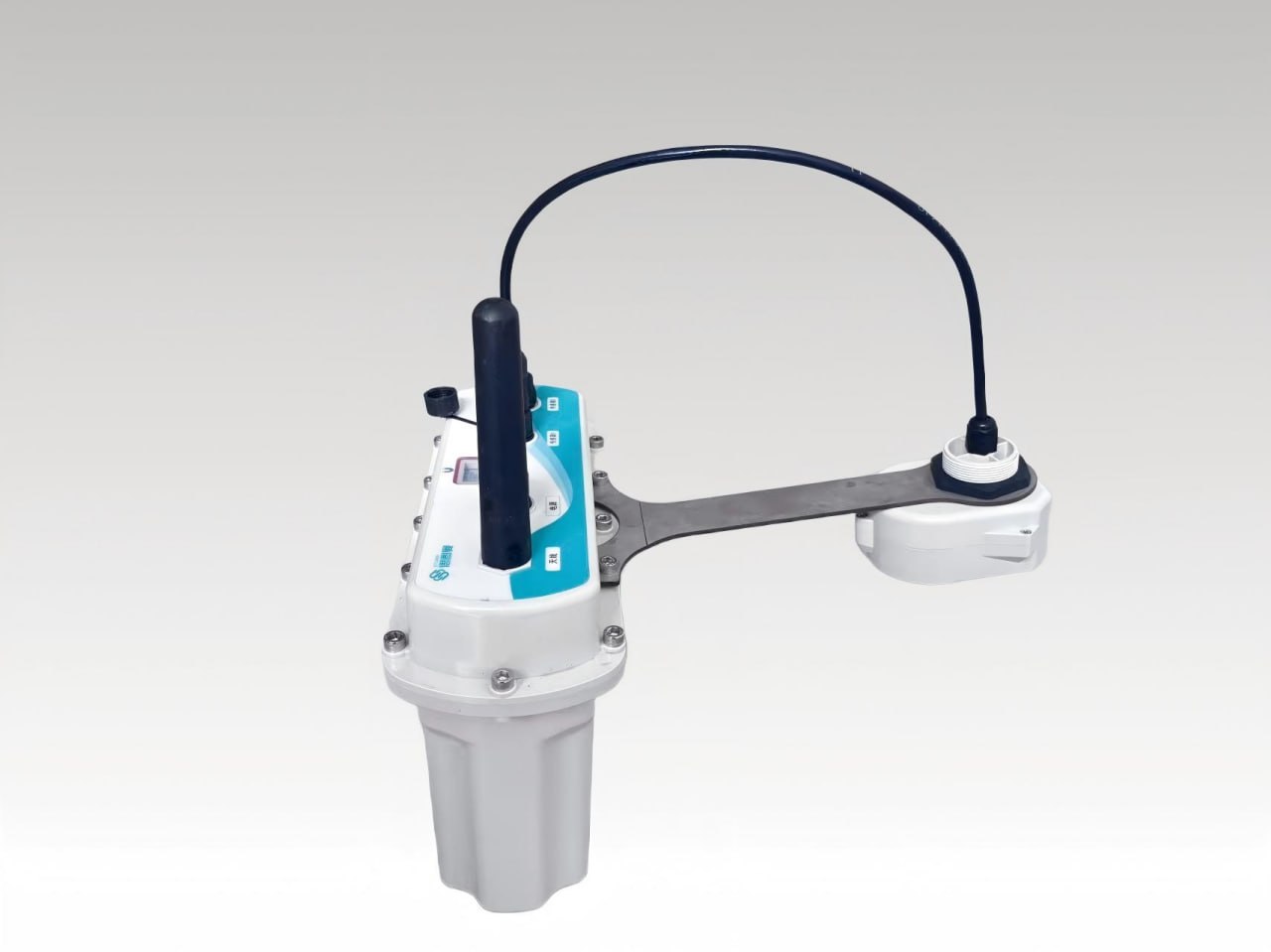
Visual Fusion Radar Water Level Gauge
The Visual Fusion Radar Water Level Gauge series is independently innovated and developed by Ecolor....
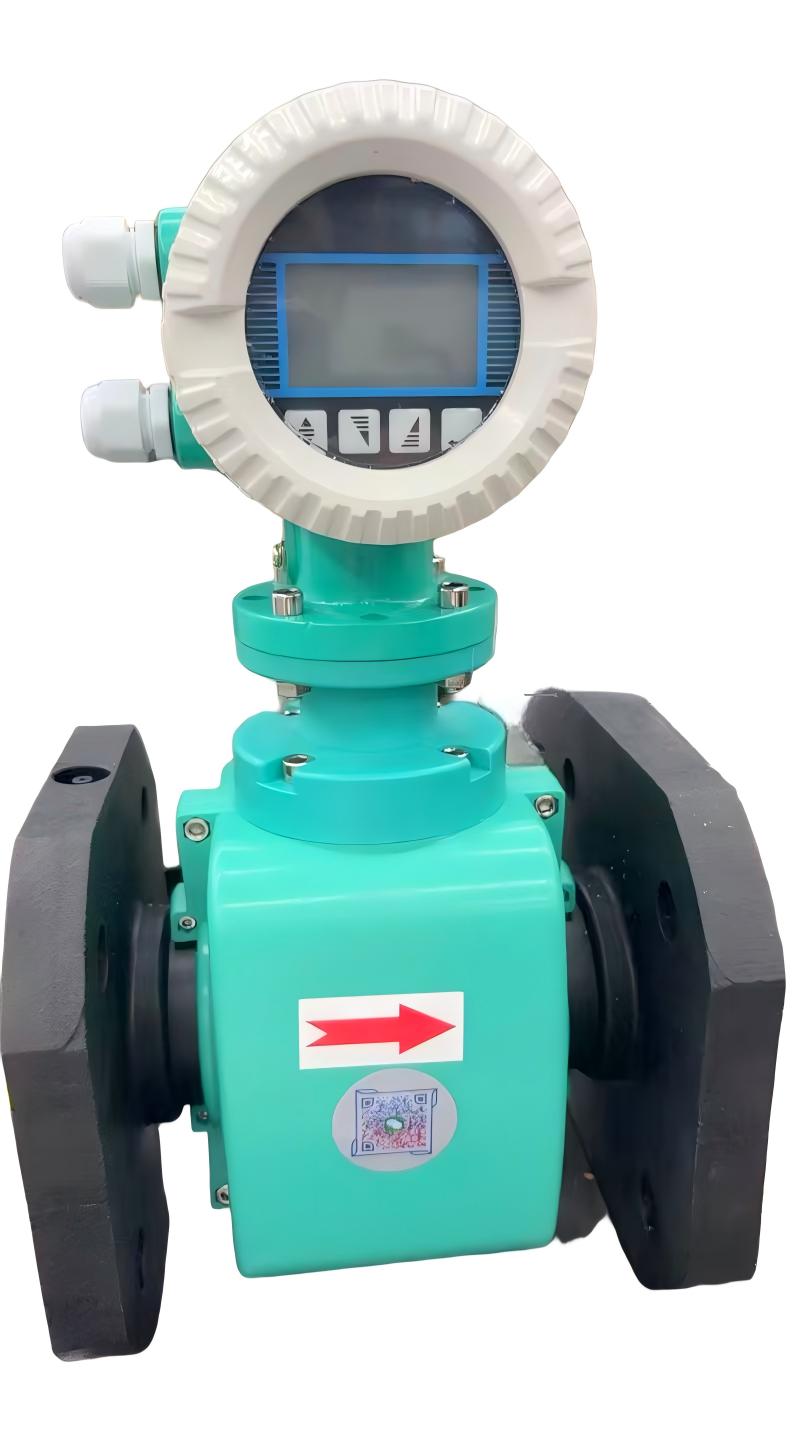
LGF Integrated Electromagnetic Flowmeter
Ecolor's self-developed aerospace polymer material electromagnetic flowmeter is suitable for flow me...
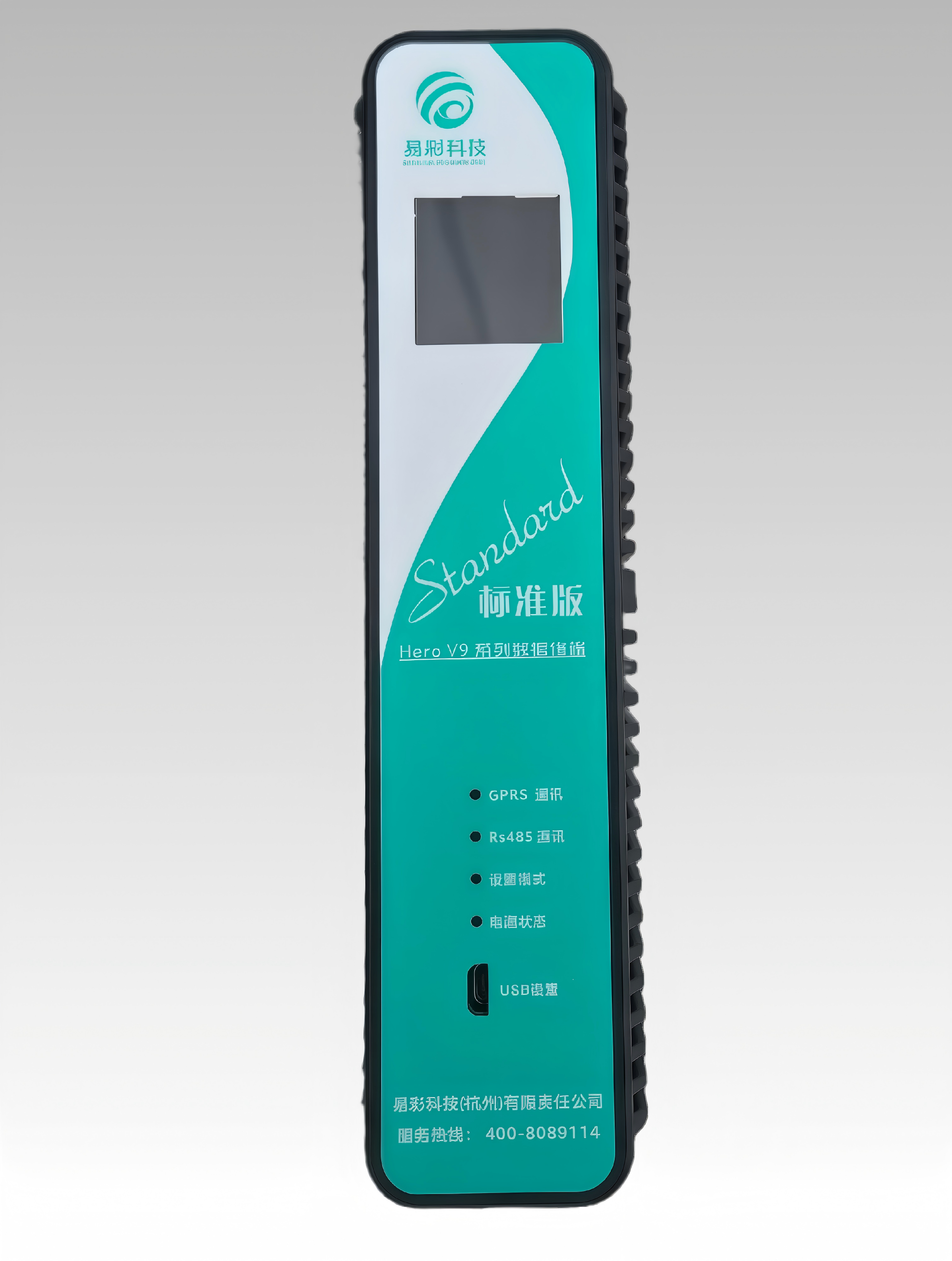
HERO V9-EC32 Hydrology RTU | Remote Terminal Unit
This product has the functions of remote data collection, control and communication. It can receive ...
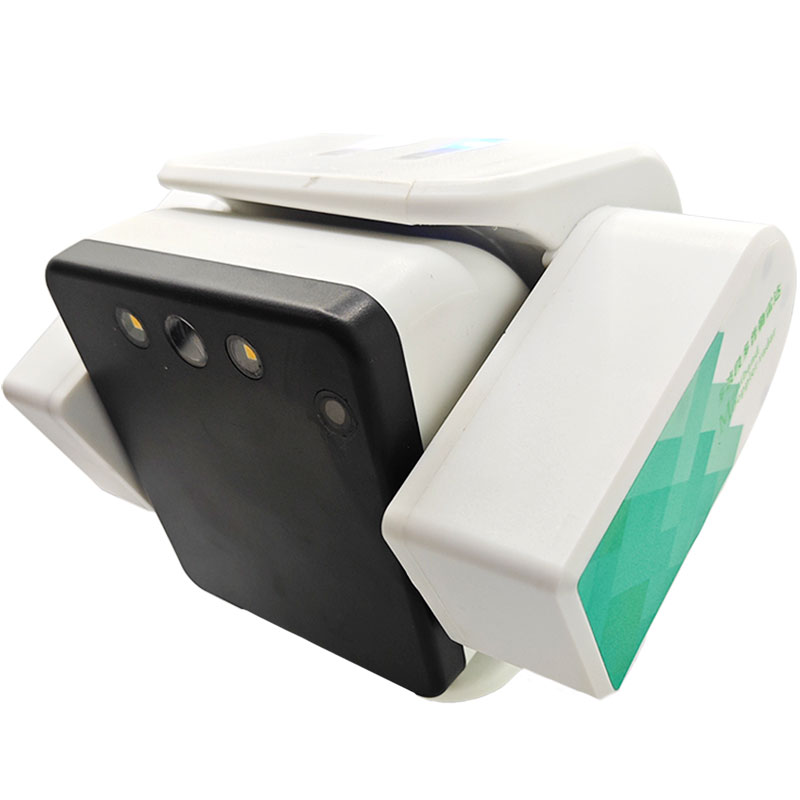
Visual Fusion Multi-band Doppler Radar Flow Meter
The Multi-band Doppler Radar Flowmeter is an independently developed and innovated non-contact fluid...
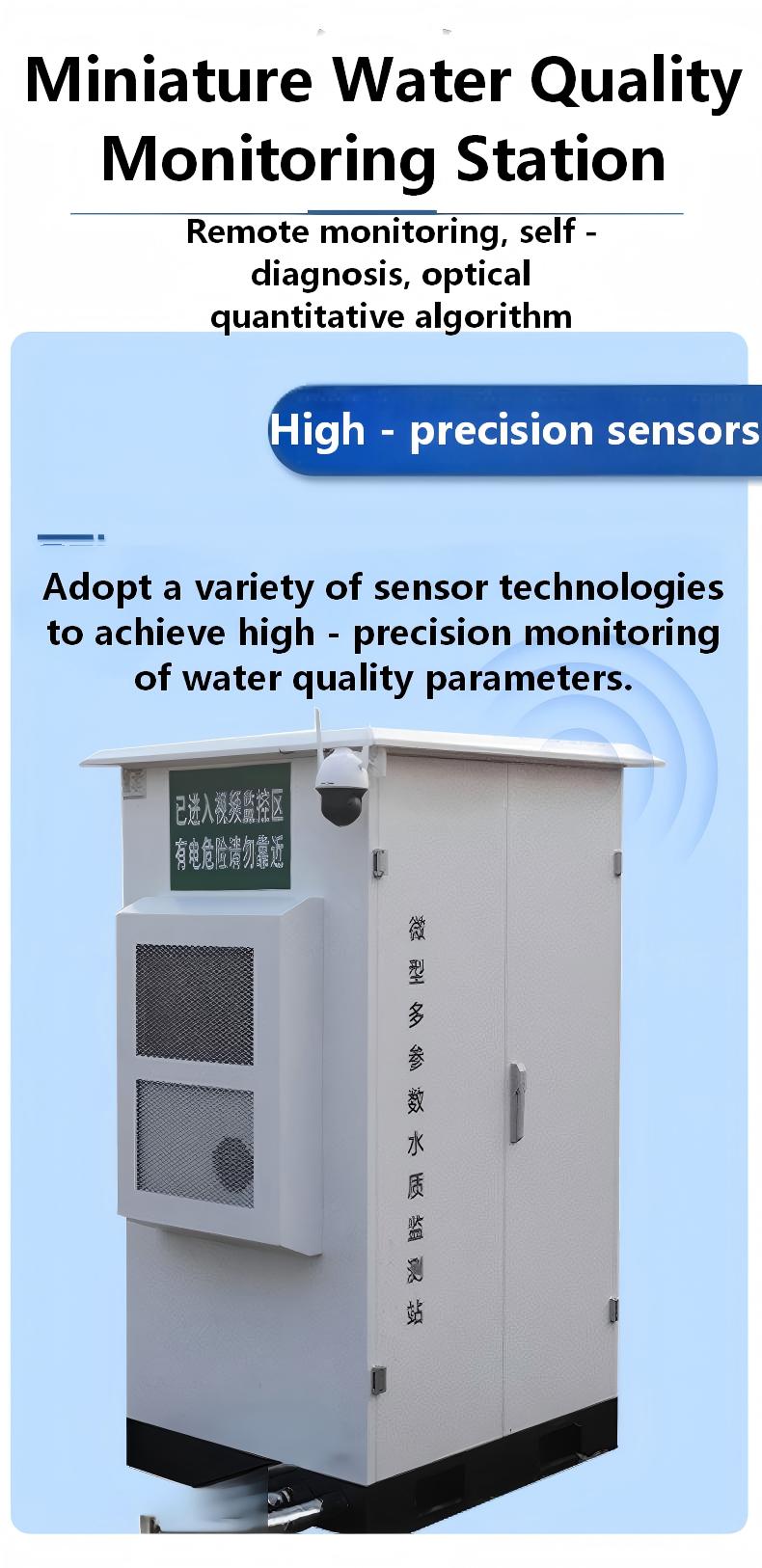
Compact Water Quality Monitoring Station
A pre-integrated, all-in-one outdoor monitoring station for convenient water environment surveillanc...
❓ Related FAQs
Related Solutions
High-Density Doppler Radar Flow Monitoring for Urban Drainage — Whitepaper Solution
Low-Cost DMA District Metering Rapid Deployment System
Urban Drainage Pipeline Downhole Non-Contact Sensing System Architecture Whitepaper

Ready to Optimize Your Business?
Contact us, and our professional team will provide customized solutions to help your business achieve digital transformation.
Get In Touch