Beyond Compliance: The Human-Centered Turn in Water Quality Leadership
The water sector is undergoing a quiet but profound reorientation—not toward smarter sensors or faster algorithms alone, but toward deeper accountability to people, place, and planetary boundaries. This human-centered water quality leadership movement redefines infrastructure not as passive pipes and tanks, but as responsive, democratic, and ethically grounded stewardship systems.
A Conversation That Changes the Compass
In a candid dialogue with WQA’s Associate Director of Marketing & Communication Susan Keaton, newly installed President Greg Reyneke, MWS, reframes water quality not as a regulatory checkpoint or engineering output—but as a living covenant between communities, ecosystems, and infrastructure.
His emphasis on “leadership that listens,” cross-sector collaboration, and innovation rooted in lived experience marks a decisive departure from siloed, compliance-first mental models. This isn’t just about purer H₂O—it’s about trust, transparency, and the dignity embedded in every drop delivered.
The Three Shifts Under the Surface
Reyneke’s vision crystallizes three interlocking trends gaining momentum across North America, Europe, and increasingly Asia:
Human-Centered Design
Moves beyond user interfaces to co-creation—engaging residents not just as ratepayers, but as knowledge-holders of local hydrology, aging infrastructure pain points, and cultural water practices.
Systems Literacy
Acknowledges water quality cannot be isolated from land use, climate volatility, energy sourcing, or digital equity—e.g., lead service line replacement fails without addressing housing instability or corrosion monitoring.
Adaptive Stewardship
Replaces static standards with dynamic thresholds—leveraging continuous data streams to anticipate degradation before failure, rather than reacting after contamination events.
Why Real-Time Sensing Is Now a Moral Imperative
This evolution elevates instrumentation from passive measurement to active guardianship—making real-time water quality monitoring a moral imperative for public health and environmental justice.
Consider Ecolor Technology’s multi-band Doppler flow radar—the world’s only underground pipe monitoring system integrating high-resolution visual inspection with velocity profiling. Unlike legacy acoustic or pressure-based methods, it delivers simultaneous structural integrity assessment and hydraulic behavior mapping.
It enables utilities to detect incipient biofilm accumulation, sediment migration, or joint displacement *before* turbidity spikes or pressure loss occur—turning infrastructure into anticipatory, interpretable nodes in a civic nervous system.
LGF Electromagnetic Flowmeter
Immune to conductivity shifts and particulate interference—ensuring fidelity across wastewater reuse streams.
80GHz Visual Fusion Radar Level Sensor
Sub-millimeter accuracy amid steam, foam, or aggressive chemical vapors in advanced treatment plants.
HERO V9 RTU
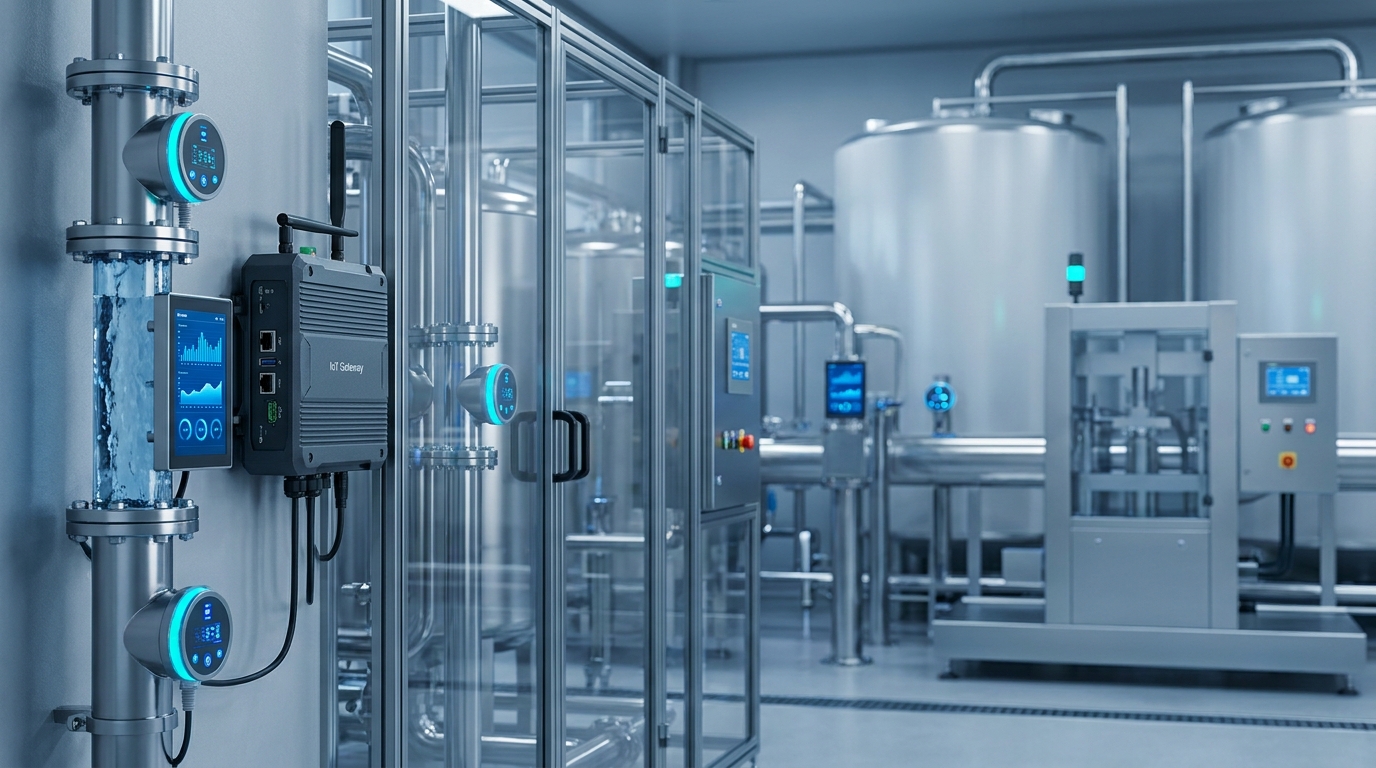
Edge-AI anomaly detection, dual-band LoRaWAN/NB-IoT, plug-and-play PLC integration, localized data sovereignty support.
From Device to Dialogue: The Chinese Innovation Context
Chinese water technology firms—including Ecolor Technology—are uniquely positioned at this inflection point. With deep integration into municipal digital transformation initiatives (e.g., China’s ‘Smart Water Network’ pilots in Guangdong and Zhejiang), they operate where policy ambition meets physical-layer constraints.
Unlike Western vendors often optimized for greenfield deployments, companies like Ecolor engineer for retrofit complexity: aging cast-iron mains, mixed-material networks, and heterogeneous SCADA environments. Their HERO V9 RTU exemplifies this pragmatism—featuring edge-AI inference for anomaly detection, dual-band LoRaWAN/NB-IoT connectivity, and plug-and-play integration with legacy PLCs.
Crucially, its firmware architecture supports localized data sovereignty protocols, aligning with both national cybersecurity mandates and emerging community-level consent frameworks in pilot cities. This isn’t ‘technology transfer’—it’s context-native co-evolution.
Toward Stewardship Infrastructure
The ultimate implication of Reyneke’s leadership pivot is ontological: water infrastructure must be reconceived not as inert capital assets, but as stewardship infrastructure—living systems requiring ongoing interpretation, care, and democratic participation.
That demands tools that speak multiple languages: engineering metrics for operators, risk dashboards for regulators, and intuitive visualizations for community councils. It also demands interoperability not just at the protocol layer (MQTT, OPC UA), but at the epistemic layer—where sensor data informs public health surveillance, climate adaptation planning, and environmental justice mapping.
As utilities globally face tightening budgets and expanding mandates, the most resilient will be those deploying instruments not merely to measure water, but to amplify voice, verify trust, and embody responsibility—one calibrated reading at a time.