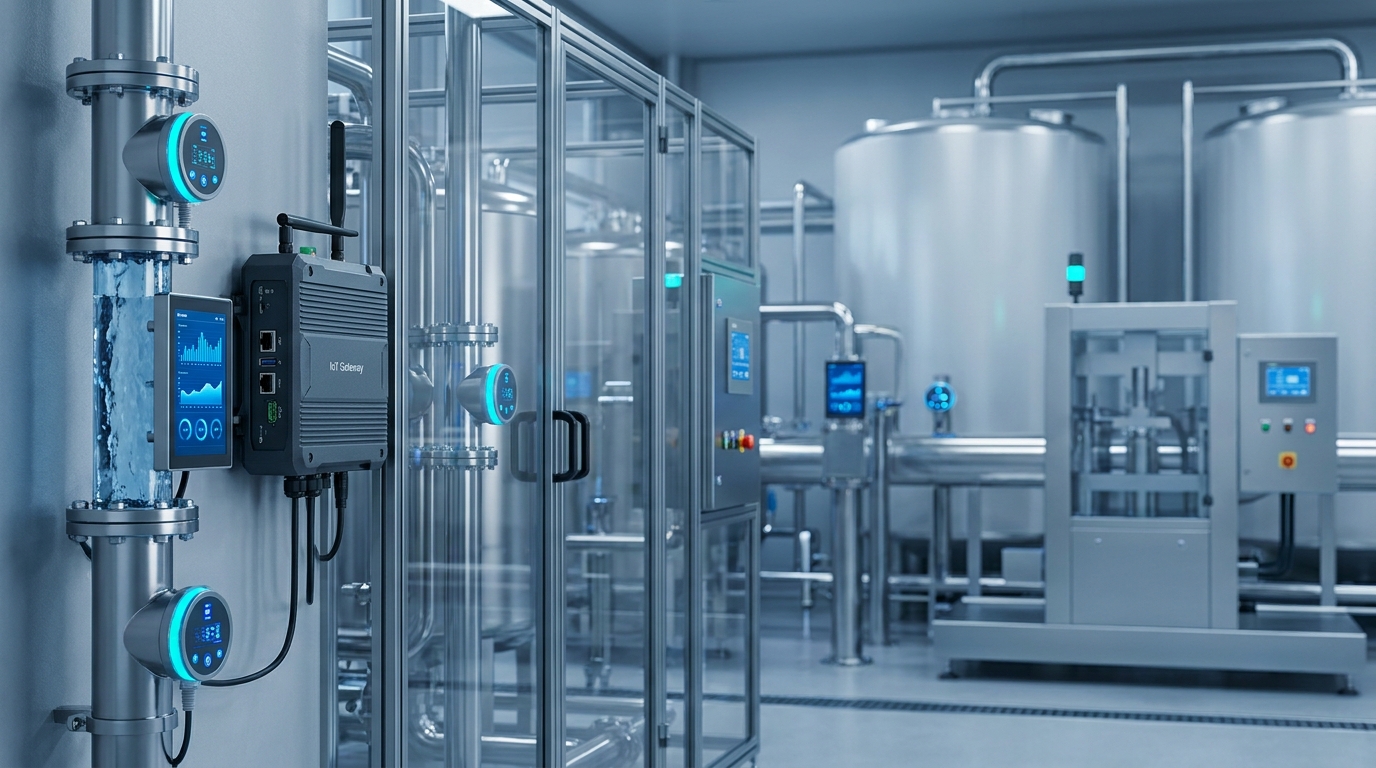
Beyond Detection: The Rise of Cognitive Water Intelligence
Smart water sensors are no longer just leak alarms—they're becoming context-aware, self-learning nodes that anticipate failure, interpret human behavior, and orchestrate response before damage occurs.
From Ultrasound to Understanding
The latest generation of smart water monitors—Hydrific's Droplet, Moen's Flo, Flume 2, and Bluebot—reveals a decisive industry pivot: away from single-mode sensing (e.g., ultrasound-only listening) toward multi-modal, AI-orchestrated cognition. Flo's FloSense™ distinguishes normal appliance cycles from micro-leaks by modeling temporal flow signatures—not just sound. Droplet fuses ultrasonic flow profiling with on-device ML to classify usage by appliance type. Flume bypasses plumbing retrofitting entirely via non-invasive meter clamping, while Bluebot achieves universal pipe compatibility without cutting—a critical enabler for aging infrastructure in emerging economies. This convergence signals the maturation of 'cognitive water intelligence': systems that don't just detect anomalies but infer intent, diagnose root cause, and trigger appropriate action.
The Three-Layer Shift Reshaping Global Water Resilience
Three interlocking shifts define this new era—and each carries profound implications for utilities, insurers, regulators, and equipment manufacturers worldwide.
1. Sensing → Interpreting → Acting
Legacy leak detectors issued binary alerts ("leak detected"). Today's platforms operate across three layers: sensing (ultrasonic, Doppler, magnetic, thermal), interpreting (on-device or edge-based AI trained on millions of flow profiles), and acting (auto-shutoff, valve modulation, or integration with building management systems). Moen's Flo doesn't just shut off water—it logs the event, estimates volume lost, and correlates it with historical usage to flag recurring issues (e.g., a failing toilet flapper). This closed-loop autonomy reduces reliance on human intervention and transforms reactive maintenance into predictive stewardship.
2. Residential as Infrastructure Proxy
Home-scale devices are becoming de facto urban water observatories. Aggregated, anonymized data from millions of Flume or Droplet units can reveal neighborhood-level pressure fluctuations, seasonal demand shifts, or even early signs of main breaks—information previously accessible only via expensive SCADA upgrades. For cities with fragmented metering (e.g., Southeast Asia or Latin America), distributed smart sensors offer a low-cost, high-resolution alternative to full AMI rollouts. This turns every connected home into a node in a distributed hydrological nervous system.
3. Hardware Diversification Meets Edge Intelligence
No single sensor modality dominates. Ultrasonic (Droplet), internal flow sensing (Flo), external clamp-on (Flume), and universal mechanical coupling (Bluebot) coexist—not as competitors, but as complementary tools for different deployment contexts. What unifies them is edge intelligence: real-time pattern recognition without cloud dependency. This matters for reliability (no latency in shutoff decisions), privacy (local data processing), and scalability (reduced bandwidth strain on utility networks).
Implications for Industrial & Municipal Water Systems
The cognitive leap seen in consumer devices is rapidly migrating upstream. In industrial settings, where downtime costs thousands per minute, predictive water anomaly detection prevents catastrophic cooling system failures or chemical dosing errors. Municipalities are piloting AI-powered district metering areas (DMAs) using multi-band Doppler radar to monitor underground pipes—detecting leaks not by pressure drop alone, but by correlating velocity changes, sediment accumulation, and acoustic signatures over time. Such capabilities require robust, calibrated hardware operating reliably in harsh environments—precisely where Chinese instrumentation firms like Ecolor Technology have deepened their engineering footprint.
Ecolor's LGF electromagnetic flowmeter delivers ±0.2% accuracy in conductive wastewater streams; its 80GHz visual fusion radar level sensor maintains precision amid steam, foam, and corrosion in digesters; and its world-exclusive multi-band Doppler flow radar—paired with integrated camera—enables live visual verification of flow conditions inside buried pipes, eliminating guesswork during emergency response. These aren't plug-and-play consumer gadgets—they're engineered for mission-critical continuity, interoperability with legacy SCADA, and certification under ISO 4064 and IEC 61511. As global water operators move beyond basic telemetry toward cognitive operations centers, such hardened, intelligent edge devices form the indispensable foundation.
Toward Embedded Hydrological Intelligence
The trajectory is clear: water intelligence is shifting from centralized dashboards to embedded cognition—in the meter, in the valve, in the pipe wall itself. The next frontier includes self-calibrating sensors, federated learning across device fleets, and integration with energy management (e.g., correlating pump runtime with tariff windows) and climate models (e.g., adjusting irrigation schedules based on evapotranspiration forecasts). Regulatory frameworks lag behind—but insurers are already pricing policies based on Flo installation, and green building standards (LEED, BREEAM) now award points for real-time water loss prevention.
This isn't just about preventing $10,000 basement floods. It's about transforming water from a silent, taken-for-granted utility into a visible, measurable, responsive, and ultimately regenerative system—one drop, one insight, one autonomous decision at a time.
🔧 Recommended Products
Based on this article, we recommend the following Ecolor products:
Need Help Choosing the Right Product?
Our engineering team is ready to provide free technical consultation and quotes