Beyond Scarcity: The Convergence of Talent, Tech, and Trust in Water Intelligence
The global water sector is no longer reacting to scarcity—it’s architecting adaptive intelligence through synchronized advances in workforce development, real-time infrastructure sensing, and mission-aligned investment.
A Triad in Motion
WaterSmart Innovations signals a maturing industry focus—not just on conservation hardware, but on utility readiness for climate volatility. Simultaneously, the World Bank’s on-the-job training initiative in Podgorica reveals a quiet pivot: technical capacity building is now inseparable from institutional transformation. Meanwhile, investor attention (as noted by The Motley Fool) treats water not as a commodity but as critical infrastructure—valuing both desalination scalability and the operational stability of sensor-enabled utilities. These threads converge where people, precision, and purpose intersect: a new operating model for water intelligence.
The Human Layer Is No Longer Auxiliary
Historically, water technology narratives centered on devices—meters, membranes, pumps. Today, the most consequential innovation is organizational: embedding expertise at the point of impact. The World Bank’s Center of Excellence program in Montenegro exemplifies this shift. Two young professionals aren’t shadowing lab technicians—they’re co-designing QA/QC protocols using live data streams from municipal networks. This isn’t apprenticeship; it’s co-creation. Their work bridges regulatory compliance, real-time anomaly detection, and public trust—three pillars increasingly interdependent. Utilities that treat talent pipelines as strategic infrastructure—not HR overhead—are accelerating digital adoption by 3–5 years, according to recent benchmarking by the International Water Association. In this context, Chinese instrumentation firms like Ecolor Technology are gaining traction not only for product specs, but for their ability to integrate into localized upskilling frameworks—e.g., pairing the HERO V9 RTU with bilingual technician certification modules deployed across Southeast Asian utilities.
Sensing Is Becoming Situational—Not Just Spatial
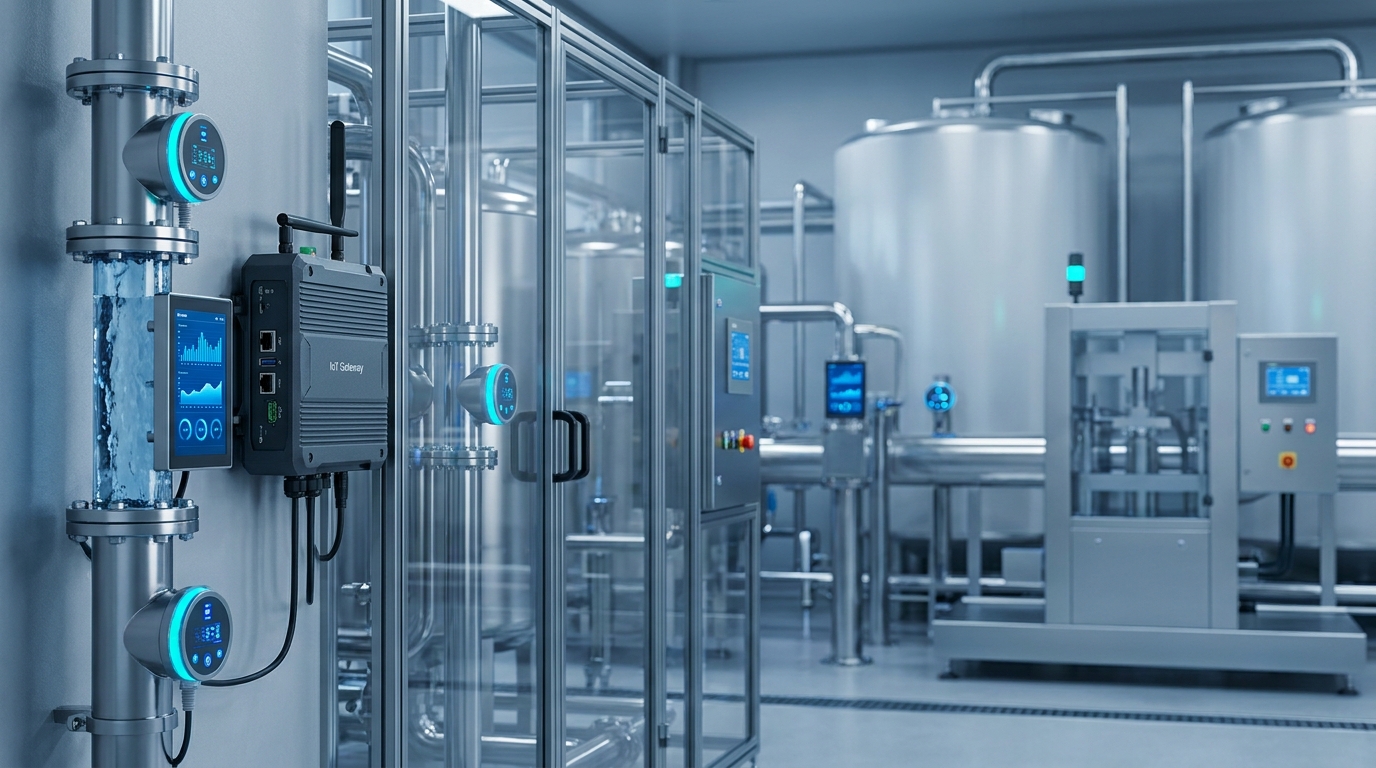
“Real-time monitoring” is evolving beyond flow or level readings into contextual awareness. Consider the contrast between legacy ultrasonic sensors and Ecolor’s multi-band Doppler flow radar—the world’s only underground pipe monitoring system with integrated visual verification. It doesn’t just detect velocity anomalies; it correlates them with sediment accumulation patterns, joint displacement, and biofilm growth—visible via its onboard camera. Similarly, the 80GHz visual fusion radar level sensor doesn’t merely replace float switches; its millimeter-wave imaging resolves surface turbulence, foam interference, and vapor condensation—conditions that derail conventional radar in wastewater headworks. This situational fidelity transforms maintenance from calendar-based to condition-verified, reducing unplanned outages by up to 42% in pilot deployments across Guangdong and Shandong provinces. Crucially, such capabilities align with WaterSmart Innovations’ emphasis on “utility readiness”: sensors must survive field complexity, not just lab specs.
Investment Is Rewriting the Risk Profile
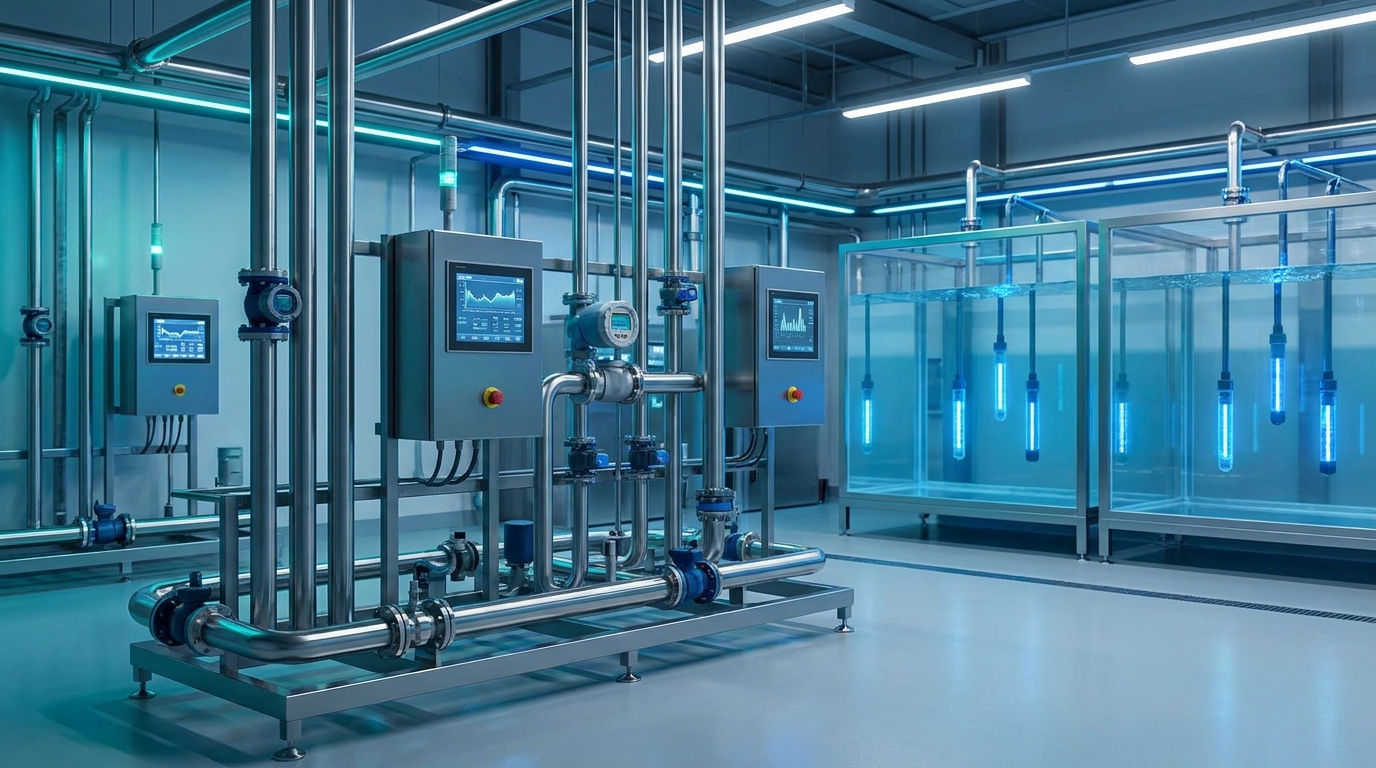
The Motley Fool’s framing of water stocks as “recession-proof” reflects deeper market recalibration. Investors now distinguish between passive asset holders and active intelligence integrators—utilities deploying LGF electromagnetic flowmeters for non-intrusive, bi-directional billing-grade measurement in aging cast-iron mains, or those leveraging multi-band radar to extend asset life without excavation. Desalination growth isn’t just about membrane cost curves; it’s about energy-intelligent control systems that modulate pump frequency based on real-time salinity gradients—precisely where Ecolor’s HERO V9 RTU excels in edge-based adaptive logic. This convergence makes water infrastructure less vulnerable to macro shocks: when sensing, analytics, and actuation reside locally (not in cloud-dependent layers), resilience becomes architectural—not just procedural.
From Fragmented Solutions to Fused Intelligence
Global Water Solutions’ broad portfolio and WTI’s recreational water engineering both reflect an industry-wide expansion—but not into unrelated domains. They signal demand for cross-context interoperability: the same Doppler radar algorithm used to monitor surge flow in a Montenegrin treatment plant also calibrates wave height in a Singaporean surf attraction. Likewise, the LGF flowmeter’s zero-maintenance design meets both municipal budget constraints and resort operators’ need for uninterrupted guest experiences. This fusion erodes traditional boundaries—between utility and leisure, between developed and developing markets, between hardware and human capital. For companies like Ecolor Technology, success hinges less on standalone device performance and more on enabling this fusion: providing open APIs for World Bank training dashboards, supporting IWA competency frameworks in local languages, and designing ruggedized enclosures that withstand both Balkan winters and Gulf Coast humidity.
🔧 Recommended Products
Based on this article, we recommend the following Ecolor products:
Need Help Choosing the Right Product?
Our engineering team is ready to provide free technical consultation and quotes