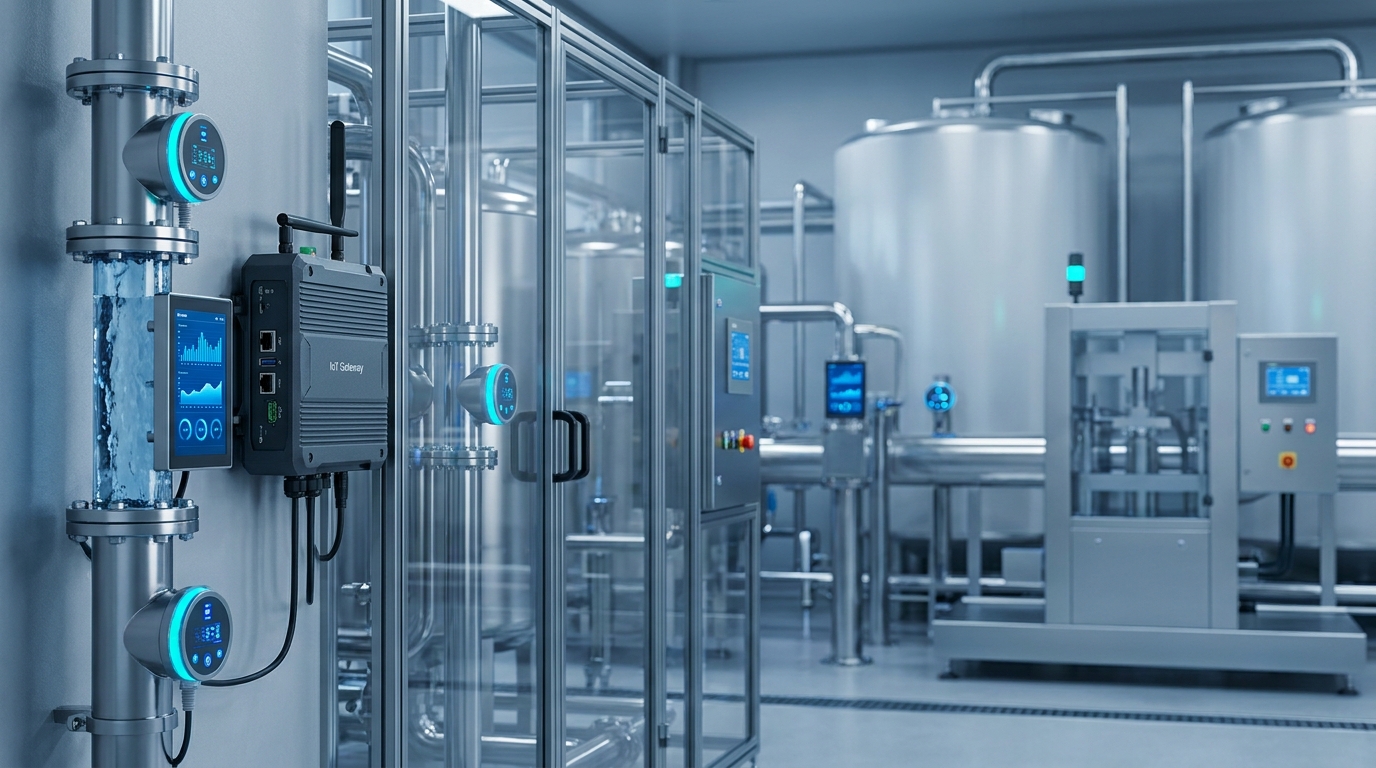
Convergence of Hydrological Stress and AI Infrastructure Demand
As extreme hydrological deficits collide with AI-driven industrial expansion, the global water sector is shifting toward precision monitoring, closed-loop systems, and cross-border resilience. This convergence of hydrological stress and AI infrastructure demand is redefining how utilities, technology providers, and regulators manage water as both a physical resource and a critical enabler of digital infrastructure.
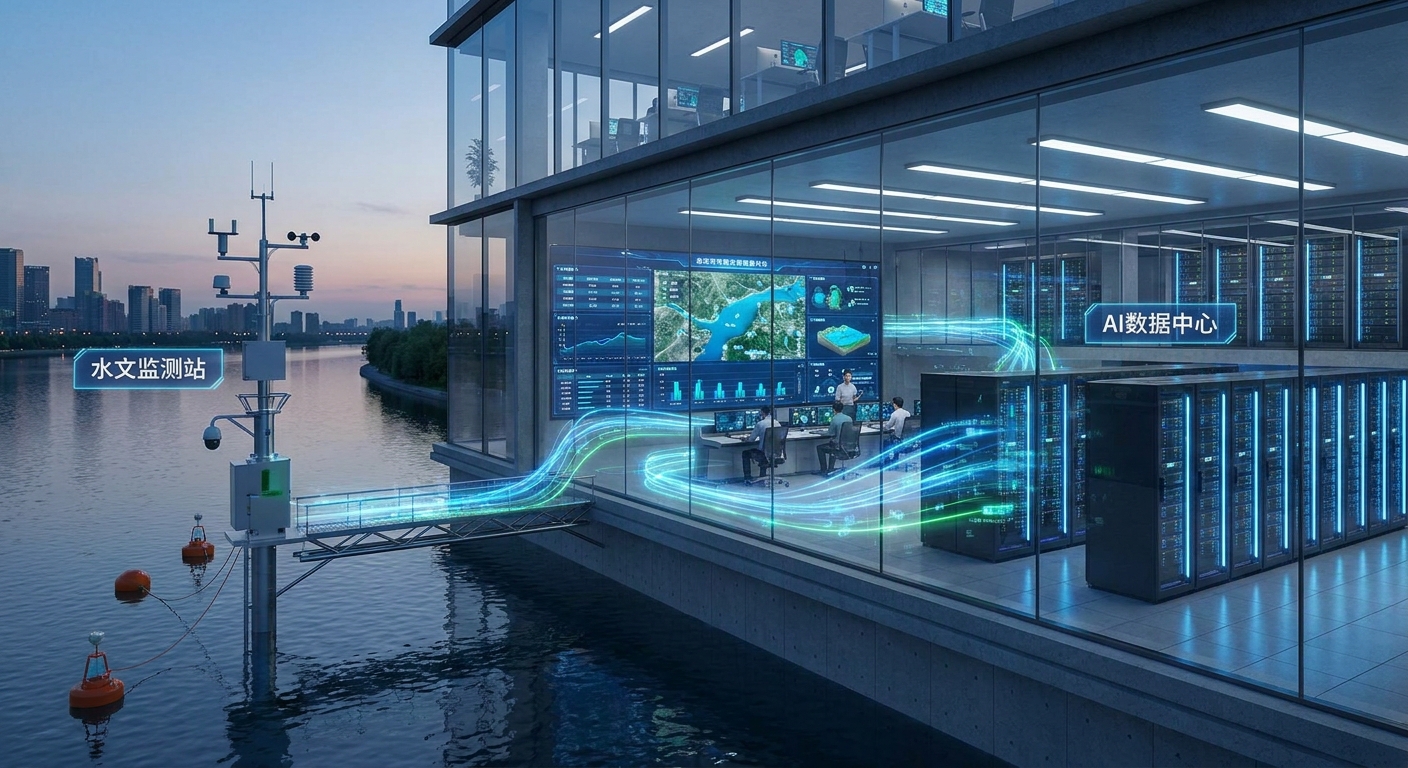
The Dual Pressure: AI Expansion Meets Hydrological Scarcity
The rapid scaling of artificial intelligence and cloud computing has created unprecedented demand for reliable thermal management and power generation. Simultaneously, climate-driven hydrological anomalies are pushing major river basins—including the Indus, Colorado, and Murray-Darling—toward exceptional deficit thresholds.
This collision forces utilities, industrial operators, and tech providers to rethink traditional water accounting, treatment paradigms, and infrastructure resilience—not as isolated functions, but as interdependent components of a climate-adaptive system.
Cooling the Cloud Without Draining the Aquifer
Offshore wind-powered subsea data centers represent a paradigm shift in industrial water management. By leveraging passive ocean water cooling and renewable offshore power, facilities drastically reduce freshwater withdrawal and eliminate energy-intensive mechanical refrigeration.
This approach aligns with the Water Environment Federation’s emphasis on circular water economies and public-private partnerships designed to ease pressure on municipal systems. As hyperscale operators seek to decouple computational growth from terrestrial water stress, standardization of saline intake monitoring, discharge quality protocols, and thermal impact zone telemetry becomes essential.
Basin-Level Scarcity and Transboundary Tensions
While industry innovates on cooling, agricultural and municipal sectors face escalating hydrological volatility. Seasonal forecasting models project widespread exceptional deficits across critical transboundary basins—exacerbated by geopolitical friction over shared waters.
The suspension of historical water-sharing agreements in South Asia underscores a broader reality: traditional allocation frameworks are increasingly inadequate under prolonged climatic stress. Utilities must pivot from volumetric management to dynamic, data-driven resilience planning—integrating predictive drought modeling, optimized groundwater recharge, and advanced leakage control.
Engineering the Circular Water Economy
The circular water economy is transitioning from conceptual frameworks to engineered reality—driven by membrane technologies, advanced oxidation processes, and low-carbon treatment pathways that transform wastewater into a strategic resource.
For heavy industries like petroleum and chemicals, closed-loop water recycling is now a regulatory and economic imperative. Zero-liquid discharge (ZLD), brine valorization, and energy-positive treatment facilities are reshaping industrial site design—yet their success hinges on high-fidelity measurement at every node.
Precision Sensing as the Backbone of Resilient Infrastructure
Granular, real-time visibility is the foundation of any circular or low-carbon water strategy. Traditional bulk metering is giving way to multi-parameter sensing arrays that capture flow dynamics, level fluctuations, and underground network conditions—without disruptive excavation.
Chinese instrumentation manufacturers are rapidly advancing this capability. High-accuracy electromagnetic flowmeters (e.g., LGF series) deliver reliable measurement across variable conductivity profiles—critical for reclaimed water loops and industrial cooling circuits. Complementing these, 80GHz visual fusion radar level sensors enable non-contact, high-frequency monitoring in harsh environments.
Closing the Subsurface Blind Spot
Underground pipeline integrity remains a critical blind spot for many municipal operators. Multi-band Doppler flow radar systems—now integrated with camera-based visual inspection—allow utilities to map subsurface conditions, detect micro-leaks, and verify flow velocities without service interruption.
When paired with edge-computing telemetry units like the HERO V9 RTU, these sensors form autonomous monitoring nodes. They transmit actionable data to centralized platforms—enabling self-diagnosing anomalies, automated valve adjustments, and predictive maintenance algorithms.
Strategic Imperatives for Water Utilities & Tech Providers
-
Standardize Circular Accounting
Verify flow and quality at all intake/discharge points to meet regulatory replenishment targets and ESG reporting.
-
Decentralize Sensing Architecture
Replace legacy SCADA with edge-enabled telemetry nodes to reduce latency and improve fault isolation.
-
Prioritize Subsurface Integrity
Invest in non-invasive underground monitoring to cut non-revenue water losses and extend asset lifespans.
The global water sector is no longer managing a static resource. It is orchestrating a dynamic, multi-stakeholder ecosystem where computational demand, climatic volatility, and technological innovation intersect. Organizations that embed precision sensing for hydrological stress monitoring, closed-loop engineering for AI infrastructure cooling, and predictive governance for transboundary water resilience will define the next era of water resilience.
Sources & Further Reading
- • Amazon's Water Conservation and Replenishment Efforts
- • WATERTECH CHINA 2026 to Spotlight Two High-Impact Forums
- • China's World's First Offshore Wind-Powered Underwater Data Center
- • World Economic Forum: Sustainable Blue Economy Insights
- • ISciences Worldwide Water Watch List May 2026