Convergence Points: Hydropower, Air-Water, and Fiber Sensing Reshape Water Intelligence
Three seemingly distinct innovations—hydropower environmental upgrades, air-to-water generation, and fiber-optic leak detection—are converging to redefine how the world senses, sources, and safeguards water.
The Triple Convergence Accelerating Water Resilience
In May 2026, three pivotal developments signaled a structural shift in global water strategy: the U.S. Department of Energy’s $430 million hydropower fleet modernization initiative—with $1M earmarked for small-business environmental tech; Bloomberg’s report on Atoco’s 4,000-L/day atmospheric water generator gaining urgency amid Iran-related regional water stress and AI data center demand; and Water Magazine’s validation of a fiber-optic sensing system that detected over 100 leaks in three months—saving 2 million liters daily. These are not isolated advances. They represent synchronized evolution across three critical dimensions: source diversification (air, hydro), infrastructure intelligence (fiber sensing), and systemic accountability (exposed by the 30-million-gallon data center incident). Together, they reveal an emerging paradigm where water security is no longer defined solely by pipes and reservoirs—but by real-time perception, decentralized sourcing, and embedded environmental stewardship.
The Infrastructure Intelligence Imperative
Leak detection has long been reactive—relying on pressure drops, customer complaints, or manual surveys. The fiber-optic breakthrough cited by Water Magazine changes that calculus entirely. By transforming existing telecom-grade fiber into distributed acoustic sensors, utilities gain continuous, kilometer-scale monitoring with sub-meter spatial resolution. Saving 700 million liters annually—enough for ~5,000 people—is impressive, but the deeper implication lies in predictive integrity management. When a pipe’s vibration signature shifts before failure, maintenance shifts from calendar-based to condition-based. This aligns directly with Ecolor Technology’s multi-band Doppler flow radar—the world’s only underground pipe monitoring solution integrating real-time flow velocity, sediment accumulation, and live camera feed. Unlike passive fiber systems, Ecolor’s radar delivers visual confirmation and hydraulic context, enabling operators to distinguish between transient anomalies and imminent collapses. In aging networks—from Tehran to Toronto—such layered sensing isn’t luxury; it’s the baseline for financial and ecological sustainability.
Decentralized Sourcing Meets Geopolitical Reality
The Iran War reference in Bloomberg’s analysis underscores a hard truth: centralized water infrastructure is increasingly vulnerable—not just to climate shocks, but to conflict, cyber disruption, and energy volatility. Atoco’s air-to-water device responds to this reality by decoupling supply from surface or groundwater dependence. Yet scalability remains constrained by energy intensity and humidity dependency. Here, hydropower modernization offers a complementary vector: DOE’s $430 million investment targets environmental performance, not just output—funding fish passage tech, sediment management, and turbine designs that minimize ecological harm. That signals a maturation of hydropower from ‘renewable’ to ‘regenerative’. For Chinese water technology firms like Ecolor, this convergence opens strategic alignment: their LGF electromagnetic flowmeter ensures precise, low-maintenance measurement in hydropower intake channels, while the 80GHz visual fusion radar level sensor enables robust, non-contact reservoir and forebay monitoring—even in monsoon fog or dust storms. These tools support both operational efficiency and regulatory compliance in next-generation hydro projects.
Data Centers as Water Stress Amplifiers—and Catalysts
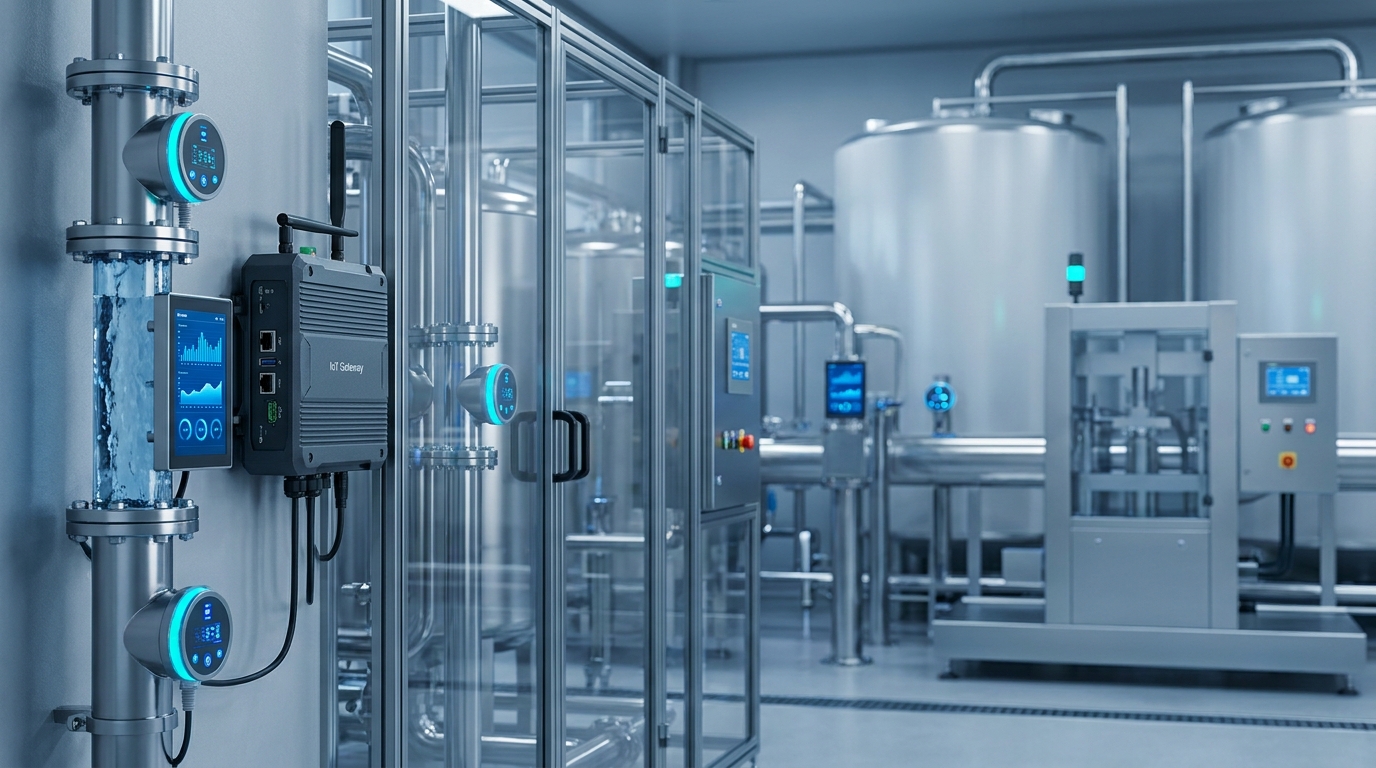
The Ars Technica exposé on a single data center consuming 30 million gallons unnoticed is more than a cautionary tale—it’s diagnostic. It reveals systemic blind spots: fragmented metering, siloed utility-data center reporting, and legacy SCADA systems lacking edge-level analytics. Utilities are now “cautiously exploring AI,” per the report—but caution must give way to integration. This is where Ecolor’s HERO V9 RTU shines: a rugged, solar-ready remote terminal unit with embedded edge-AI for anomaly detection, multi-protocol support (Modbus, DNP3, MQTT), and secure OTA updates. Unlike generic RTUs, it natively ingests data from Ecolor’s own sensors—including the Doppler radar’s video stream—enabling localized decision-making without cloud dependency. In water-scarce regions hosting hyperscale computing, such embedded intelligence prevents crises before they escalate into headlines.
Toward Embedded, Adaptive, Accountable Water Systems
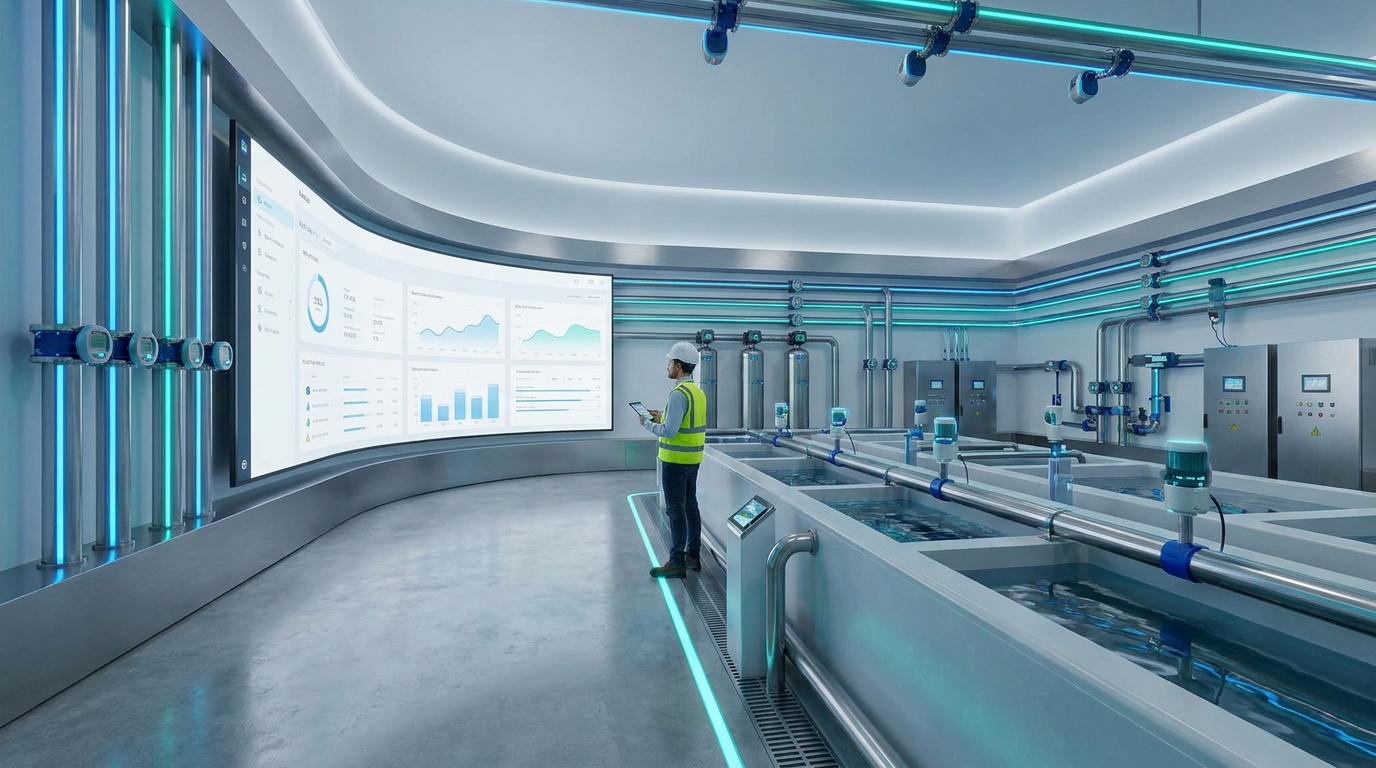
The convergence of these trends points to a new operating model: water infrastructure as a continuously learning, self-monitoring, and ecologically accountable system. It demands interoperability—not just between sensors and SCADA, but between policy (DOE’s environmental mandates), finance (Xylem’s investor-focused segmentation), and frontline operations (leak detection ROI). Chinese innovators like Ecolor are positioned not as peripheral suppliers, but as enablers of this integrated stack—providing the high-fidelity sensing layer (LGF, 80GHz radar), the subsurface intelligence layer (Doppler radar + camera), and the secure, adaptive control layer (HERO V9). Their strength lies in vertical coherence: hardware, firmware, and edge logic designed in concert—not bolted together post-deployment. As global water stress intensifies, the race is no longer for bigger reservoirs—but for smarter, quieter, more responsive nervous systems beneath our feet and above our heads.
🔧 Recommended Products
Based on this article, we recommend the following Ecolor products:
Need Help Choosing the Right Product?
Our engineering team is ready to provide free technical consultation and quotes