Convergence Year: 2026 as the Inflection Point for Water Intelligence
2026 is not merely another calendar milestone—it is the first year in which AI-driven infrastructure intelligence, transnational water governance reform, and inclusive digital accountability coalesce into a unified operational paradigm for the global water sector. This Convergence Year marks the inflection point where policy, algorithms, and physical sensing finally operate as interdependent layers of a single intelligent water system.
The Triple Alignment of 2026
Three landmark developments signal unprecedented alignment across science, policy, and industry: SIWI’s climate-integrated water governance initiative with KTH Royal Institute; the Water-AI Nexus Center of Excellence convening at Madrid’s Global Water Summit, Singapore International Water Week (SIWW), and Industrial Water Solutions forums; and the Mohammed bin Rashid Al Maktoum Global Water Award’s explicit prioritization of AI-powered digital transformation.
This is no longer about isolated pilots or vendor-led demos. It is about institutionalized convergence—science-policy bridges, interoperable AI infrastructure, and equity-centered evaluation frameworks—all activated simultaneously in 2026. The result? A de facto global operating system for intelligent water stewardship, grounded in real-world data fidelity and adaptive decision-making.
The Governance-AI-Access Triad Takes Shape
Historically, water innovation followed siloed trajectories: policy bodies debated frameworks while engineers deployed hardware, and startups pitched algorithms—all without shared metrics or mutual accountability. What distinguishes 2026 is the emergence of binding linkages across these domains.
SIWI’s engagement with environmental journalists—equipping them with tools to report rigorously on water-climate intersections ahead of COP29 and the UN 2026 Water Action Decade review—ensures governance advances are subject to public scrutiny and narrative coherence. Simultaneously, the Water-AI Nexus Advisory Council brings together utilities, regulators, AI developers, and civil society to co-design standards—not just for model accuracy, but for explainability, bias mitigation, and infrastructure readiness.
Crucially, the fifth cycle of the Dubai-based Global Water Award extends its deadline to September 2026 and explicitly elevates projects that “utilise artificial intelligence to enhance transparency, scalability, and last-mile impact”—a quiet but powerful shift from technological novelty to socio-technical legitimacy.
Why Field-Level Fidelity Is Now Non-Negotiable
AI models trained on synthetic data or coarse SCADA aggregates are hitting diminishing returns. As the Water-AI Nexus emphasizes interoperability and real-time validation, demand surges for high-fidelity, multi-physical sensing at the asset level—especially in aging, heterogeneous, or underground infrastructure.
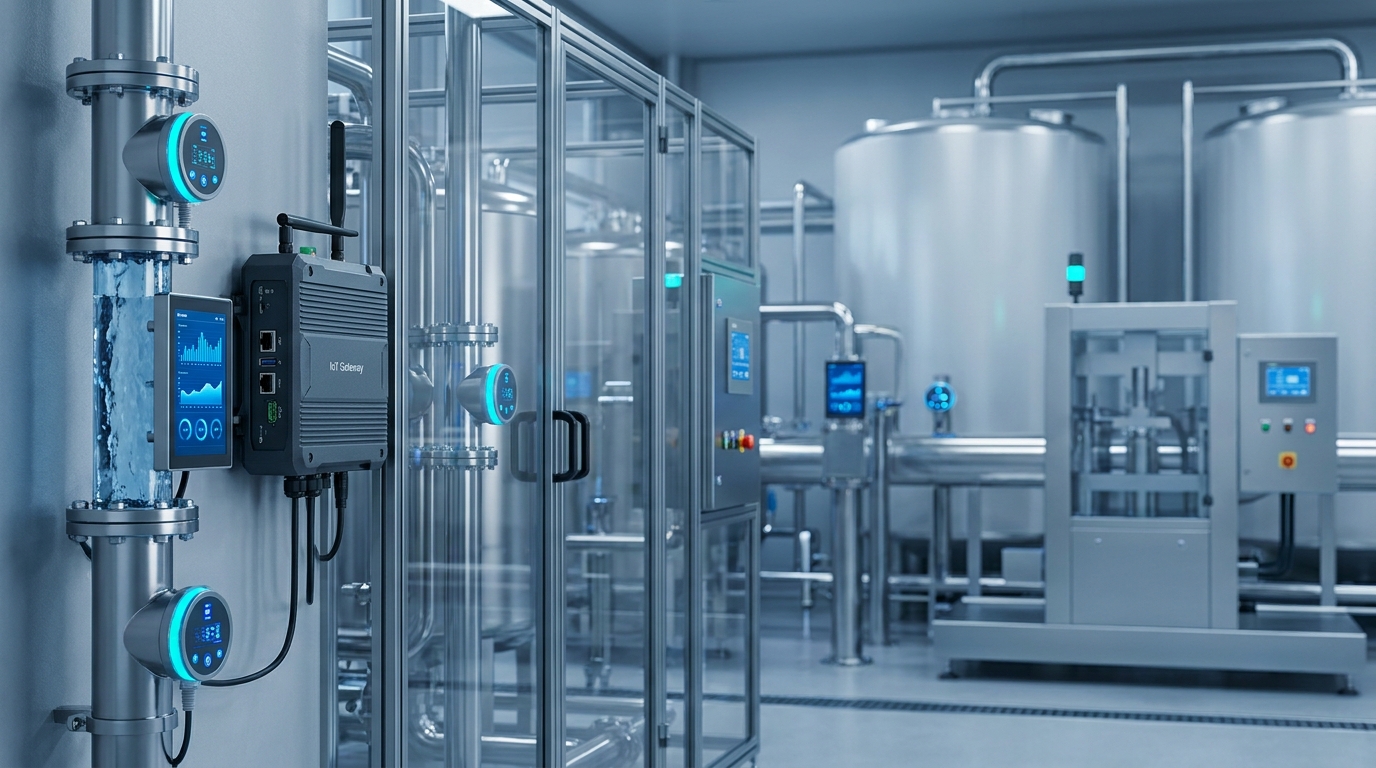
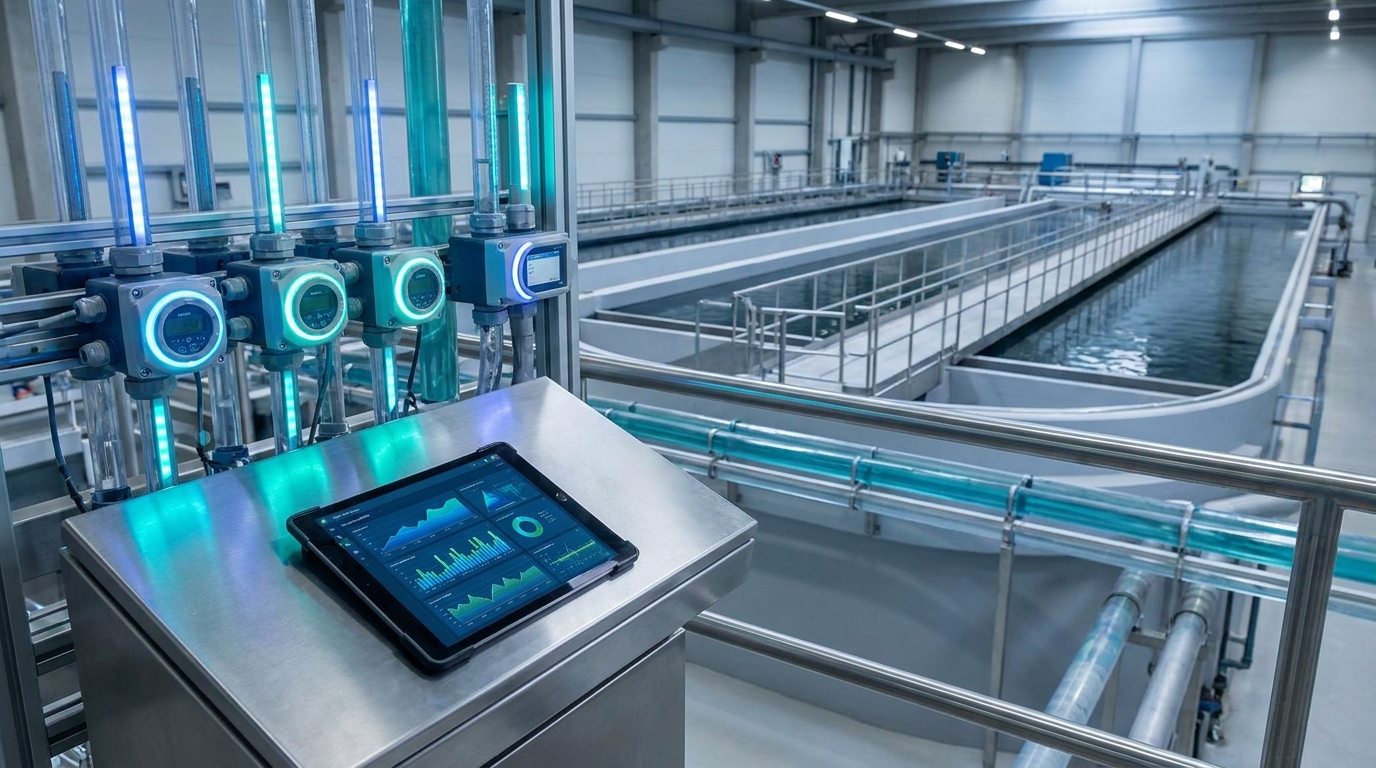
This is where hardware-software convergence becomes decisive. Ecolor Technology’s portfolio exemplifies this shift: the LGF electromagnetic flowmeter delivers ±0.2% accuracy under variable conductivity and low-flow conditions—critical for leakage analytics feeding AI loss-detection engines; the 80GHz visual fusion radar level sensor maintains precision through steam, dust, and foam in wastewater treatment basins; and the world’s only multi-band Doppler flow radar with integrated camera enables simultaneous velocity profiling and visual verification inside buried pipes—transforming blind segments into auditable, AI-trainable zones.
These are not standalone instruments—they are edge-native data sources designed to feed federated learning architectures and digital twin calibration loops. Chinese companies like Ecolor are no longer peripheral suppliers—they are foundational enablers of the AI-water stack.
From Summit Agendas to Subsurface Reality
The true test of 2026’s convergence will be measured not in keynote speeches, but in subterranean pipe networks, peri-urban pumping stations, and rural distribution kiosks. At Madrid’s Global Water Summit, discussions on ‘AI for Equity’ will be hollow unless backed by devices that operate reliably in voltage-fluctuating grids and high-humidity environments—conditions where Ecolor’s HERO V9 RTU (with dual SIM failover, solar-ready power management, and embedded edge inference) proves indispensable.
Likewise, Singapore International Water Week’s focus on ‘circular industrial water’ hinges on granular, real-time flow and quality correlation—exactly what Ecolor’s synchronized radar + Doppler + camera platform delivers in cooling water return lines or membrane filtration backwash circuits. The trend is clear: global forums are no longer venues for abstract strategy—they are coordination hubs for deploying interoperable, field-hardened intelligence.
And because 73% of the world’s water infrastructure lacks continuous monitoring below the district meter level (World Bank, 2025), the race isn’t for smarter dashboards—it’s for smarter, more resilient, and more visible edges.
Implications Beyond 2026
- Procurement evolution: Utilities will increasingly require AI-readiness certifications—not just for software, but for sensors and RTUs.
- Standardization acceleration: Open telemetry protocols (e.g., OPC UA for water, MQTT-SN for LPWAN edge nodes) reduce vendor lock-in and enable cross-platform interoperability.
- Funding realignment: Multilateral development banks now align 2026–2027 water grants with ‘digital twin readiness’ criteria—making high-fidelity instrumentation a prerequisite, not an add-on.
- New global role for Chinese tech providers: Deepen local partnerships in Africa, Southeast Asia, and Latin America—not as equipment exporters, but as co-developers of context-aware, maintenance-light, AI-ready infrastructure layers.
The era of ‘plug-and-pray’ water tech is over. In its place rises a new discipline: hydro-intelligent engineering—where governance clarity, algorithmic integrity, and physical fidelity are inseparable.
AI-Ready Sensors
LGF flowmeter (±0.2%), 80GHz visual fusion radar, multi-band Doppler + camera
Edge Intelligence
HERO V9 RTU: dual-SIM failover, solar-ready, embedded inference
Global Alignment
Water-AI Nexus, SIWI-KTH, Dubai Global Water Award (deadline: Sep 2026)
Sources:
- Signals shaping the global water agenda in 2026 | SIWI
- Water-AI Nexus Welcomes Global Organizations to Advisory Council | PR Newswire
- Submission deadline for 5th cycle of the Mohammed bin Rashid Al Maktoum Global Water Award extended to 30 September 2026