Convergence Zones: Where Water Scarcity Meets Industrial Intelligence
The 2025–2026 global water calendar signals a structural pivot—from siloed conservation tools and discrete digital upgrades toward tightly coupled, cross-domain convergence zones where scarcity response, industrial resource recovery, and real-time physical-layer intelligence operate as one coherent system.
Two Events, One Structural Shift
WaterSmart Innovations (AWWA) and the IWA Water in Industry Conference (WIN2026) are not just parallel events—they’re temporal bookends marking an inflection point. The former anchors utility-scale resilience against climate-driven scarcity; the latter probes how industry transforms wastewater into energy, nutrients, and data. What unites them is the erosion of traditional boundaries: between municipal and industrial water cycles, between sensing and control, between infrastructure and intelligence. This convergence isn’t additive—it’s architectural. Utilities now require sensors that survive decades underground while feeding AI-ready streams to cloud-native platforms; industries demand flow meters that don’t just measure but diagnose pipe integrity, sedimentation, or biofilm formation in real time—without interrupting production.
Why Convergence Is Non-Negotiable
The drivers are converging too. Climate volatility no longer manifests only as droughts—it triggers flash floods that overwhelm combined sewers, accelerates corrosion in aging pipes, and destabilizes treatment chemistry. Meanwhile, industrial decarbonization mandates closed-loop water reuse, pushing factories to treat, monitor, and repurpose effluent with metrology-grade precision. Regulatory pressure is tightening: the EU’s Industrial Emissions Directive now requires continuous monitoring of nutrient recovery efficiency, while California’s SB 552 mandates real-time leak detection for all large non-residential users. These aren’t compliance checkboxes—they’re system-level requirements demanding interoperable hardware, edge-processed data, and physics-aware analytics.
The Physical Layer as First-Class Citizen
What distinguishes this era from earlier ‘smart water’ waves is the re-elevation of the physical layer—not as passive input, but as an active, intelligent subsystem. Legacy ultrasonic or magnetic flowmeters fail under low-flow, high-sediment, or air-entrained conditions common in reclaimed water lines. Traditional radar level sensors struggle with foam, vapor, or narrow manway geometries in digesters or equalization tanks. That’s why innovations like Ecolor Technology’s LGF electromagnetic flowmeter—designed for bidirectional, low-conductivity reclaimed water with adaptive grounding—and its 80GHz visual fusion radar level sensor, which fuses millimeter-wave precision with onboard optical verification to reject false echoes from condensation or agitator blades, reflect deeper market alignment. These aren’t incremental upgrades; they’re responses to failure modes exposed at scale during drought-driven reuse expansion and industrial retrofitting.
Underground Intelligence: From Monitoring to Diagnosis
Perhaps the most telling signal is the rise of subterranean awareness. WIN2026’s focus on the water-energy nexus highlights how pumping inefficiencies and leakage represent both energy waste and carbon liability. Yet utilities still rely on acoustic correlators or intermittent pressure logging—tools blind to root cause. Here, Ecolor’s multi-band Doppler flow radar—the world’s only solution combining real-time velocity profiling, sediment mapping, and integrated HD camera inspection inside live pressurized pipes—exemplifies the convergence imperative. It doesn’t just detect flow anomalies; it correlates Doppler shifts with visual evidence of joint separation, root intrusion, or internal corrosion—turning a maintenance alert into a diagnostic report. This capability matters because WIN2026’s agenda explicitly calls for ‘resources and energy recovery’—and recovery begins with knowing exactly where, why, and how water is being lost before it reaches the treatment plant.
Edge Intelligence as Operational Nervous System
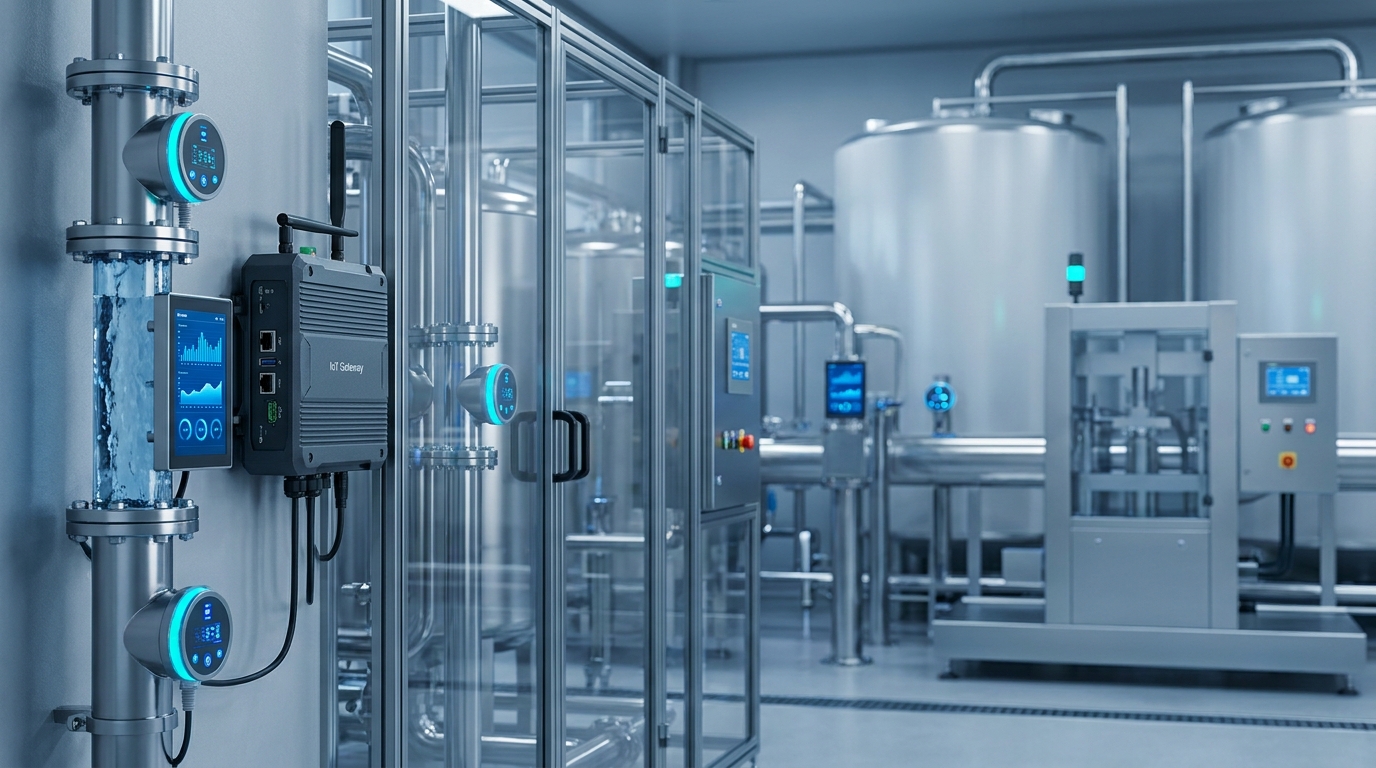
Both conferences emphasize digitalization—but not as cloud-first abstraction. They stress smart control, meaning decisions must happen where latency kills value: at the pump station, inside the clarifier, or along the transmission main. That’s where Ecolor’s HERO V9 RTU operates—not as a data logger, but as a distributed logic engine. With native Modbus TCP, MQTT, and IEC 61850 support, it ingests synchronized multi-sensor inputs (flow, level, pressure, turbidity), runs embedded PID loops and anomaly detection models, and executes local actuation—all without round-trip cloud dependency. In practice, this means a booster station can autonomously throttle pumps during grid frequency dips to avoid tripping, or a lift station can preemptively cycle pumps based on real-time inflow velocity trends—not hourly averages. This is not automation; it’s operational sovereignty restored to the asset layer.
Implications Beyond Hardware
This convergence reshapes procurement, skills, and partnerships. Utilities can no longer source sensors, SCADA, and analytics from three vendors and expect coherence. Industrial end-users increasingly specify full-stack performance guarantees—e.g., ‘guaranteed 92% water recovery with ≤3% energy penalty over 12 months’—which forces suppliers to co-engineer sensing, control, and process modeling. Chinese technology firms like Ecolor Technology, with vertically integrated R&D in electromagnetic, radar, and edge firmware—and field validation across arid Northwest China, high-humidity South China, and industrial clusters in Jiangsu—are positioned not as component suppliers, but as convergence enablers. Their strength lies in solving the ‘last meter problem’: ensuring the sensor survives, the data arrives intact, and the insight triggers action—before the crisis escalates.
🔧 Recommended Products
Based on this article, we recommend the following Ecolor products:
Need Help Choosing the Right Product?
Our engineering team is ready to provide free technical consultation and quotes