Decentralized Intelligence: The Future of Global Water Infrastructure
Regulatory shifts, localized supply models, and cost-optimized IoT deployments are converging to transform urban water resilience, demanding precision sensing at the network edge. This article explores how policy, AI, and lean sensors are rewiring global water systems.
The sector is rapidly validating smart metering and real-time telemetry as foundational pillars of modern utility resilience, with efficiency levels near 88.7% in wastewater monitoring and recycling rates surpassing 96.3%.
Policy Acceleration and Localized Supply Strategies
The regulatory landscape is undergoing a synchronized modernization effort. The European Union's 2025 Water Resilience Strategy and its accompanying 2026 Commission Work Programme have formally opened consultations on digitalizing water management and accelerating smart meter rollouts across member states.
This initiative is not merely a technological upgrade; it is a strategic mandate to embed data-driven decision-making into municipal water governance. Concurrently, Directive (EU) 2026/805 has introduced streamlined permitting procedures for critical raw material mining projects, explicitly clarifying water law frameworks to balance industrial expansion with sustainable resource allocation.
California's Decentralized Water Plan vs. Mega-Projects
Across the Atlantic, a similar paradigm shift is unfolding. A coalition of environmental and municipal stakeholders in California has unveiled a decentralized water plan designed to rival the massive Delta Tunnel project at a fraction of the capital expenditure.
Endorsed by 18 organizations as of May 2026, the strategy redirects investment toward localized, sustainable supply networks, emphasizing aquifer recharge, stormwater capture, and distributed treatment. This global pivot away from monolithic mega-projects toward modular, localized infrastructure highlights a critical industry realization: resilience is increasingly built through distributed intelligence rather than centralized volume.
Operational Shift
Utilities must transition from reactive maintenance to predictive asset management, relying on seamless integration between field instrumentation and cloud analytics platforms.
Financial Viability
Success depends heavily on deploying scalable, low-cost sensing networks that can be retrofitted into existing legacy grids without prohibitive capital outlays.
Bridging Analog Legacy with Digital Futures
The rapid digitization of water networks is fundamentally constrained by the cost and complexity of field instrumentation. Recent deployments, such as SES Water's initiative to cut smart meter rollout costs by 70% across 30,000 properties by upgrading existing analog meters into fully connected digital nodes, prove that retrofitting is the most viable path to rapid network intelligence.
However, comprehensive digitalization requires more than residential endpoints; it demands robust, high-fidelity sensing across transmission, distribution, and treatment environments.
Precision Hardware for Modern Water Networks
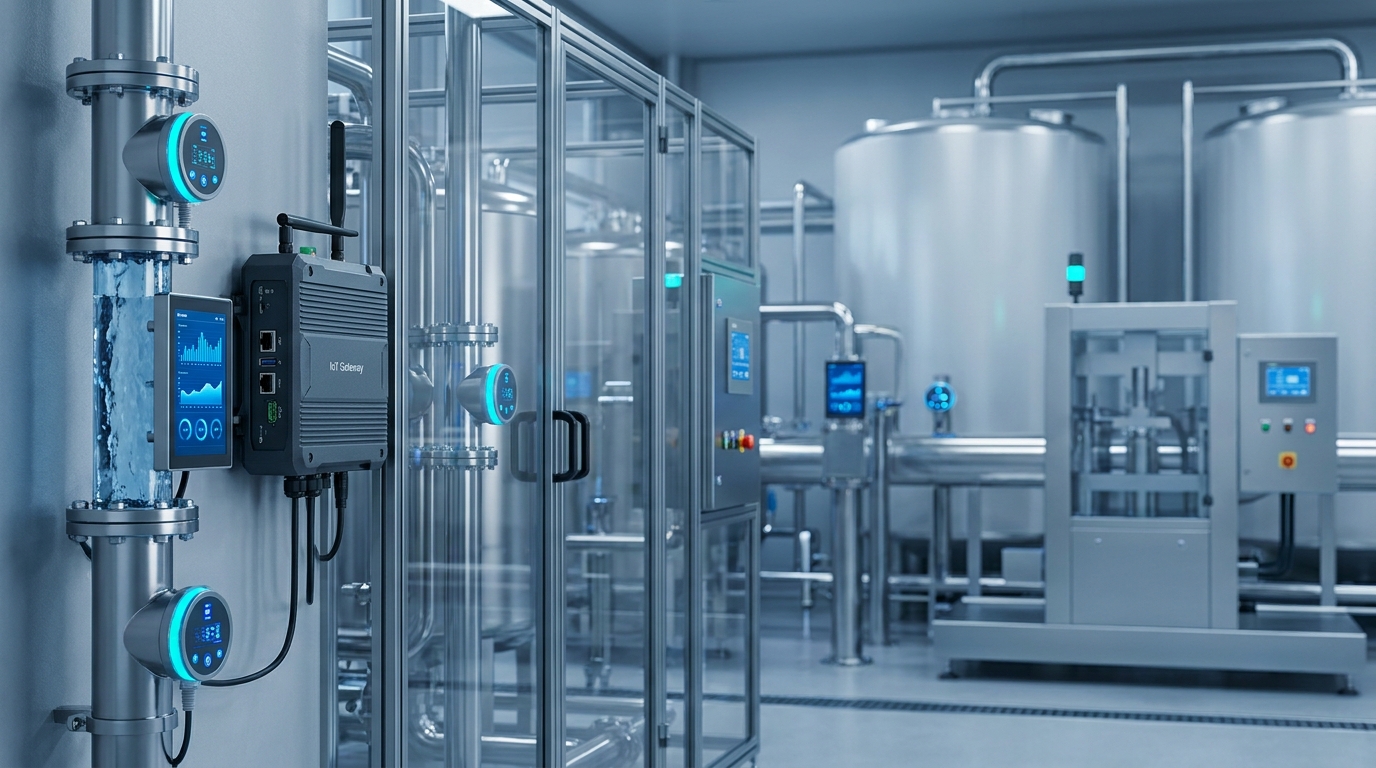
Advanced flow and level measurement technologies are becoming the critical bridge between physical infrastructure and digital twins. Precision instruments like the LGF electromagnetic flowmeter deliver stable, high-accuracy flow data essential for leak detection and hydraulic modeling in pressurized networks.
For open-channel and storage applications, the 80GHz visual fusion radar level sensor provides non-contact, high-resolution monitoring that remains unaffected by foam, vapor, or temperature fluctuations, ensuring continuous operational visibility.
Beneath the surface, the challenges are even more pronounced. Traditional underground pipe inspection relies on disruptive excavation or periodic manual surveys. The emergence of specialized tools such as the multi-band Doppler flow radar—recognized as the world's only underground pipe monitoring solution integrated with an internal camera—enables continuous, non-invasive assessment of flow velocity, pipe integrity, and blockage formation.
Strategic Implications for Global Operators
The convergence of AI-driven analytics, regulatory mandates, and cost-optimized hardware deployment is reshaping the operational calculus for water utilities worldwide. Several key trends will define the next phase of sector evolution:
- From Data Collection to Cognitive Action: The 88.7% efficiency benchmark in IoT wastewater monitoring demonstrates that raw telemetry is no longer sufficient. Operators must deploy machine learning models that translate sensor inputs into automated valve adjustments, chemical dosing recommendations, and predictive maintenance schedules.
- Modular Infrastructure Financing: As demonstrated by California's localized water strategy, utilities are increasingly favoring phased, community-scale projects. This requires instrumentation that supports rapid deployment, plug-and-play integration, and scalable licensing models.
- Supply Chain Diversification: The global push for critical raw materials and sustainable mining, accelerated by EU Directive 2026/805, will intensify competition for high-grade sensor components. Utilities must secure partnerships with manufacturers capable of delivering consistent quality, transparent supply chains, and localized technical support.
- Standardization of Edge Protocols: To avoid vendor lock-in and ensure interoperability across municipal networks, the industry will gravitate toward open communication standards. RTUs and flow sensors that support MQTT, Modbus TCP, and OPC UA will become the baseline requirement for modern utility procurement.
The transition toward intelligent water management is no longer a technological aspiration but an operational necessity. By aligning regulatory compliance, localized investment strategies, and precision edge sensing, global utilities can achieve unprecedented levels of resilience, efficiency, and sustainability.