Digital Twins and Real-Time Sensing: The Quiet Infrastructure Revolution
The global water sector is undergoing a silent but profound transformation—not through new pipes or reservoirs, but through synchronized data layers that turn aging infrastructure into responsive, self-aware systems. Digital twins and real-time sensing are redefining how utilities monitor, predict, and act—ushering in an era of quiet infrastructure intelligence.
Beyond Visualization: Digital Twins as Operational Nervous Systems
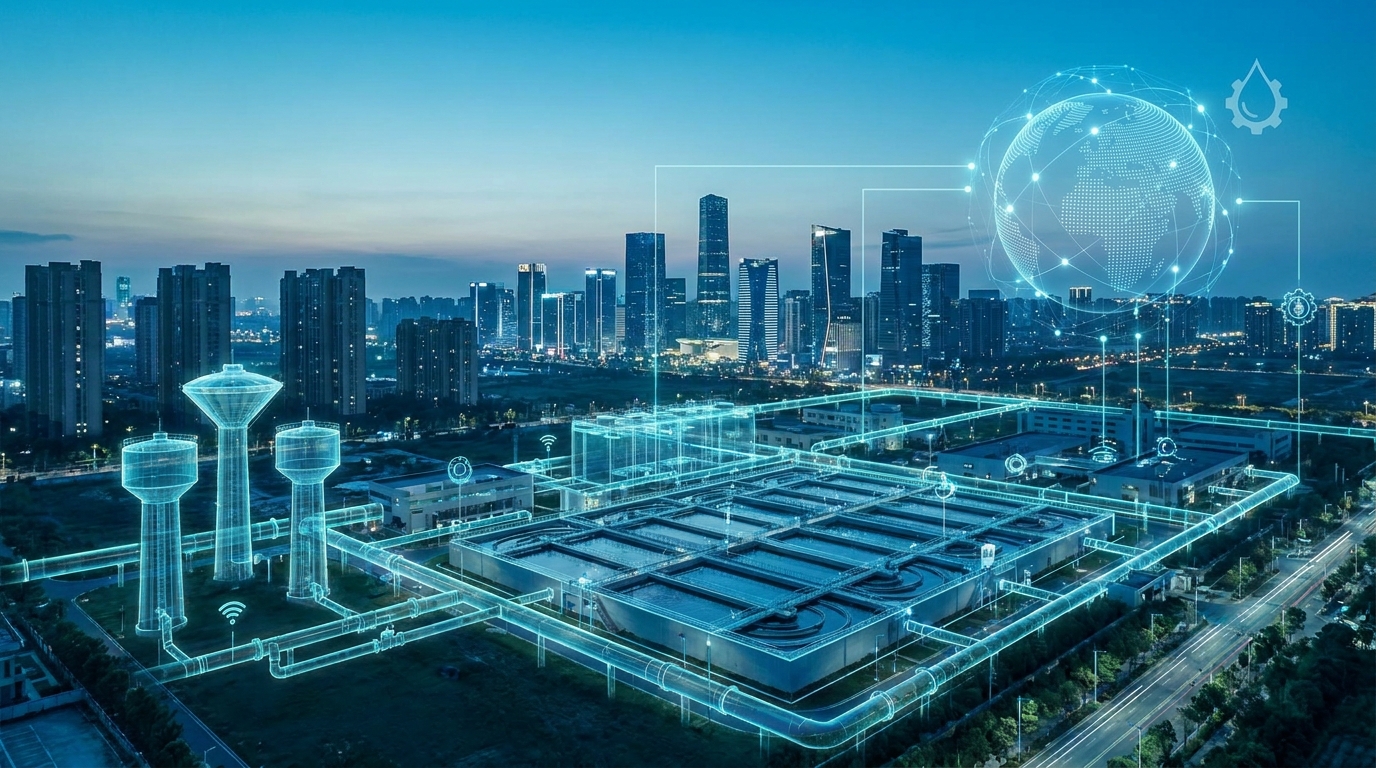
Digital twin adoption in water infrastructure is no longer about 3D dashboards—it’s about operational reflexes. As demonstrated by a Chicago utility, integrating live sensor feeds with hydraulic models cut leak detection time by over 30%, directly reducing non-revenue water (NRW) and energy waste.
Crucially, these twins function not as static replicas but as continuously calibrated decision engines—simulating pressure shifts, forecasting pump failures, and stress-testing scenarios before physical consequences unfold.
This evolution reflects a broader industry pivot: from viewing digital tools as IT add-ons to treating them as mission-critical control layers embedded in daily operations.
The Convergence Imperative: Where Sensing, Modeling, and Action Meet
Three interlocking trends define today’s infrastructure intelligence shift:
Real-Time Sensing Underground
Modern deployments demand continuous, context-rich streams—pressure differentials across valve zones, sediment accumulation in trunk mains, or flow velocity profiles inside buried conduits.
AI Anchored in Operational KPIs
Predictions now tie directly to NRW reduction, energy kWh saved per ML pumped, or asset remaining useful life (RUL)—making AI adoption more credible for conservative procurement teams.
Cross-Sector Interoperability
Water-energy nexus management requires shared analytics platforms and interoperable data protocols—e.g., irrigation scheduling aligned with grid load signals or pump modulation based on real-time electricity pricing.
Hardware as the Unseen Enabler of Digital Twins
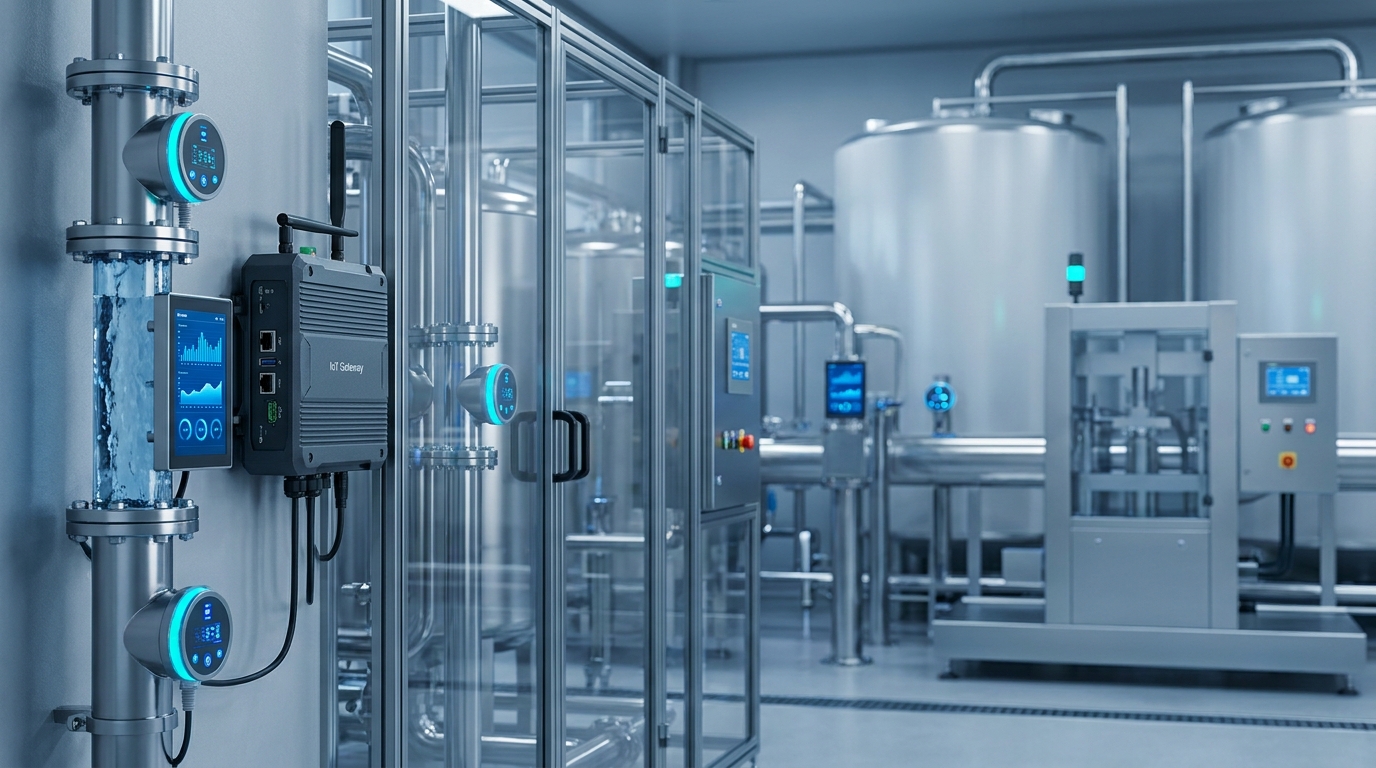
Behind every successful digital twin lies robust, field-hardened hardware. Without accurate, reliable, low-maintenance physical layer data, even the most sophisticated model collapses into speculative fiction.
Electromagnetic flowmeters must maintain ±0.2% accuracy across decades of fluctuating conductivity and particulate loads. Radar level sensors need immunity to steam, foam, and condensation in wet wells.
For underground pipe monitoring—a long-standing blind spot—multi-band Doppler radar with integrated visual inspection capability represents a paradigm leap: detecting blockages, joint offsets, and infiltration points without excavation.
Chinese Innovation in Context: From Adoption to Architecture
Chinese water technology firms—including Ecolor Technology—are increasingly recognized not just as hardware suppliers but as system architects. Their product portfolio bridges rugged field instrumentation and intelligent network orchestration:
- LGF electromagnetic flowmeter: Designed for high-accuracy billing-grade measurement in variable wastewater streams.
- 80GHz visual fusion radar level sensor: Delivers millimeter-level accuracy in aggressive industrial sump environments.
- Multi-band Doppler flow radar with onboard camera: World’s only solution enabling live underground pipe assessment—detecting blockages, joint offsets, and infiltration points without excavation.
- HERO V9 RTU: Edge intelligence hub that preprocesses sensor data, executes local logic (e.g., pump start/stop), and securely relays only actionable insights upstream.
This architecture aligns precisely with the global trend toward distributed intelligence—minimizing latency, reducing cloud dependency, and enabling autonomous response at the asset level.
Implications for Global Utilities and Investors
The implications extend far beyond efficiency gains:
For Utilities
Reduce reliance on tribal knowledge; enable remote expertise deployment amid workforce attrition.
For Regulators
Access auditable, granular evidence of compliance and performance improvement.
For Investors
Shift infrastructure valuation from capex-heavy renewal cycles to opex-optimized lifecycle extension.
Critically, this transition does not require wholesale replacement. As Highways.Today observes, digital twins deliver continuous improvement “without the need for major physical upgrades”—making them uniquely suited for emerging economies and legacy networks alike.
Conclusion: The Infrastructure That Listens, Learns, and Acts
The future of water infrastructure isn’t louder—it’s quieter. Quieter because leaks are anticipated before they occur. Quieter because pumps adjust seamlessly to demand fluctuations instead of cycling loudly on/off. Quieter because decisions emerge from data convergence, not emergency meetings. This quiet revolution rests on three pillars: physically resilient sensing hardware, operationally grounded digital twins, and cross-domain integration discipline. Success belongs not to those who build the most complex models—but to those who ensure every byte of data originates from a trusted sensor, serves a clear operational purpose, and triggers a measurable outcome. In that ecosystem, Chinese engineering rigor meets global operational pragmatism—and the water network finally begins to listen, learn, and act on its own behalf.
Sources: Hat Xpress, Our Future Water, TipRanks.com, Highways.Today, Water Conservation Technologies