DMA Implementation Deep Dive: Engineering Pathway to Reduce Water Network Leakage from 28% to 8%
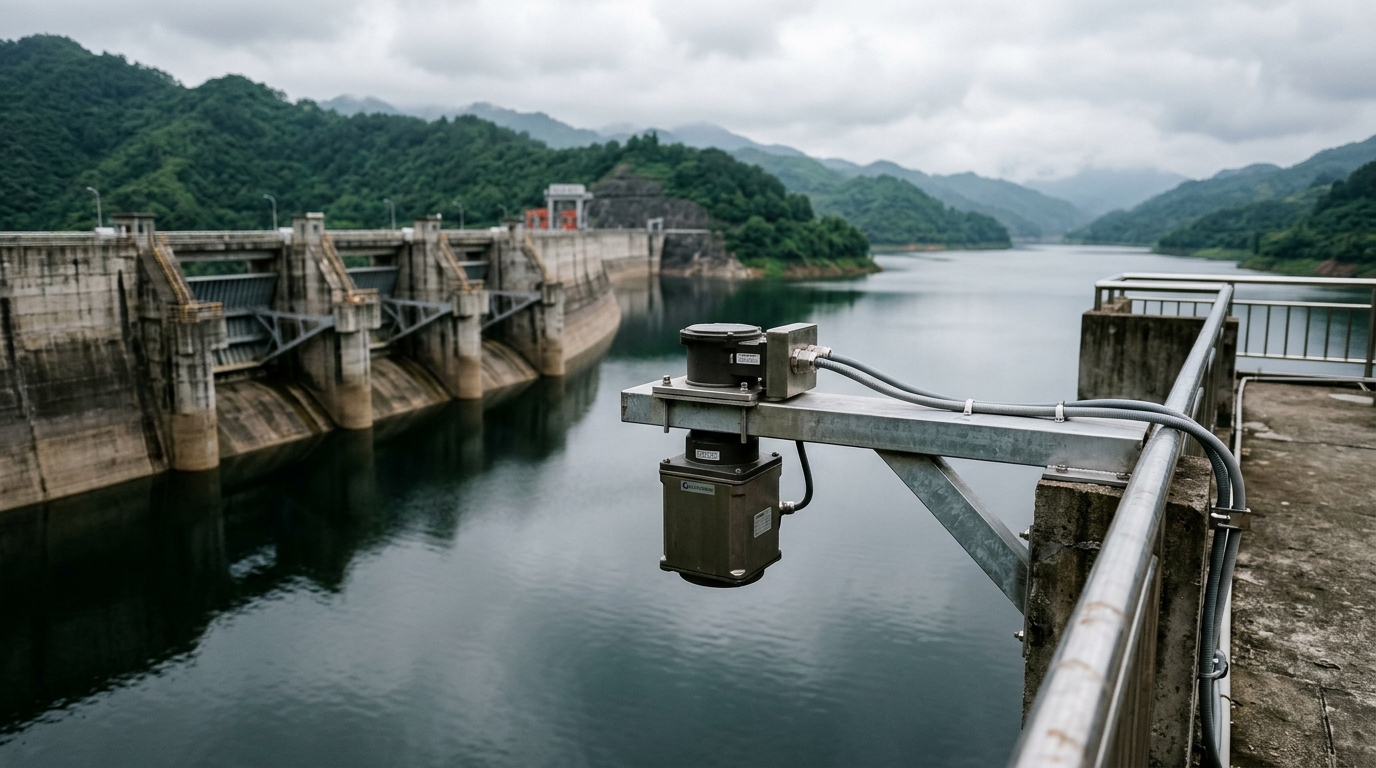
Non-revenue water (NRW) remains one of the most persistent challenges for water utilities worldwide. In this case study from a mid-sized city in eastern China serving 1.2 million residents, the baseline condition was stark: total annual water production of 120 million m³, outlet pressure of 0.42 MPa, but a comprehensive leakage rate of 28% — equating to over 33 million m³ of treated water lost annually.
Traditional manual inspection and reactive repair models proved inadequate. A systematic DMA (District Metered Area) approach was adopted as the cornerstone of the solution.
Zoning Strategy: Granularity Design Under a Four-Tier Architecture
The core principle of DMA partitioning is to disaggregate a large, complex distribution network into independently metered closed zones, enabling leakage identification and quantification through Minimum Night Flow (MNF) analysis as defined in IWA guidelines. This city adopted a four-tier architecture:
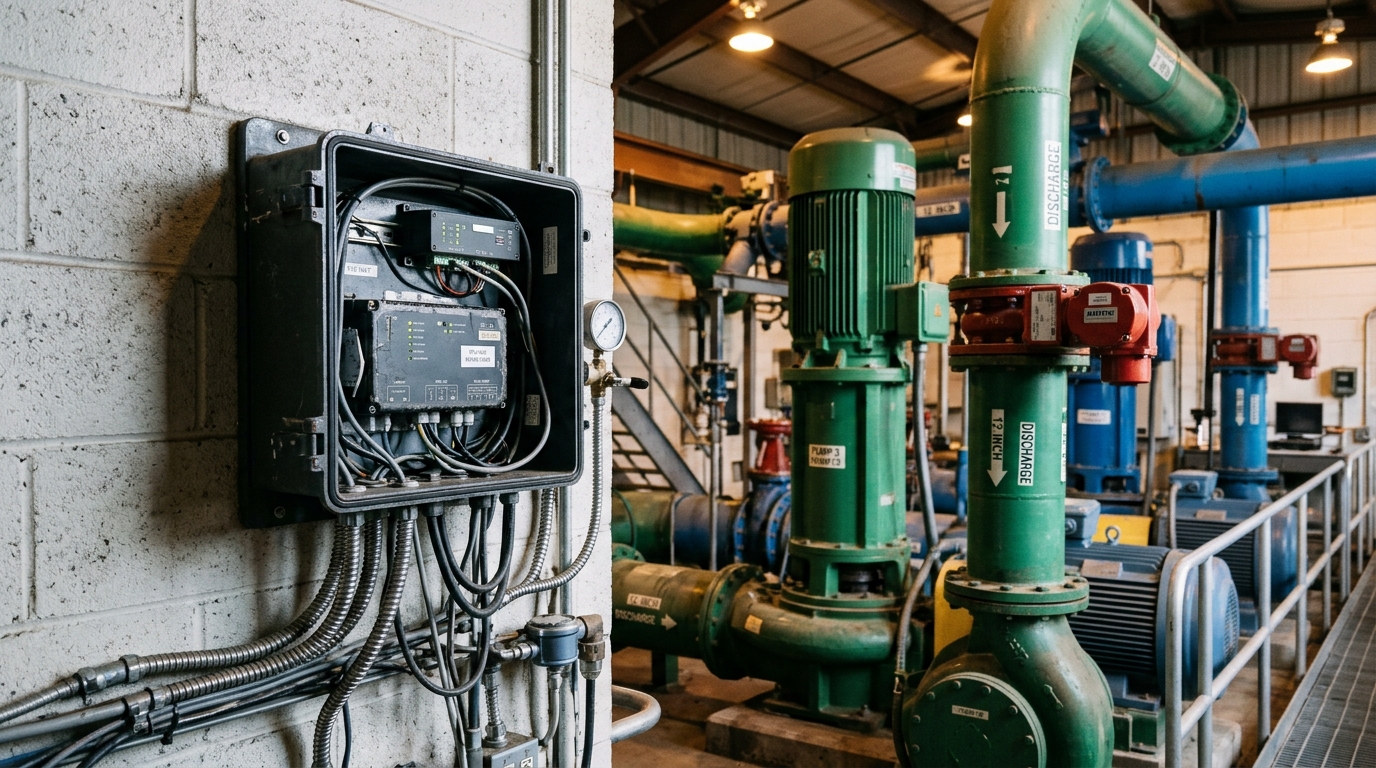
- Tier 1 — Supply Zones (3 zones): Defined by water treatment plant service boundaries, monitored via electromagnetic flow meters (DN800-DN1200, ±0.2% accuracy per OIML R49 Class 1, 15-second sampling) integrated with the SCADA system.
- Tier 2 — District Zones (12 zones): Delineated along trunk main corridors, each covering approximately 100,000 population. Inlet/outlet points equipped with DN200-DN400 electromagnetic flow meters and RTU telemetry terminals (4G/Cat.1 dual-mode uplink, Modbus RTU downlink), reporting flow-pressure data pairs every 5 minutes.
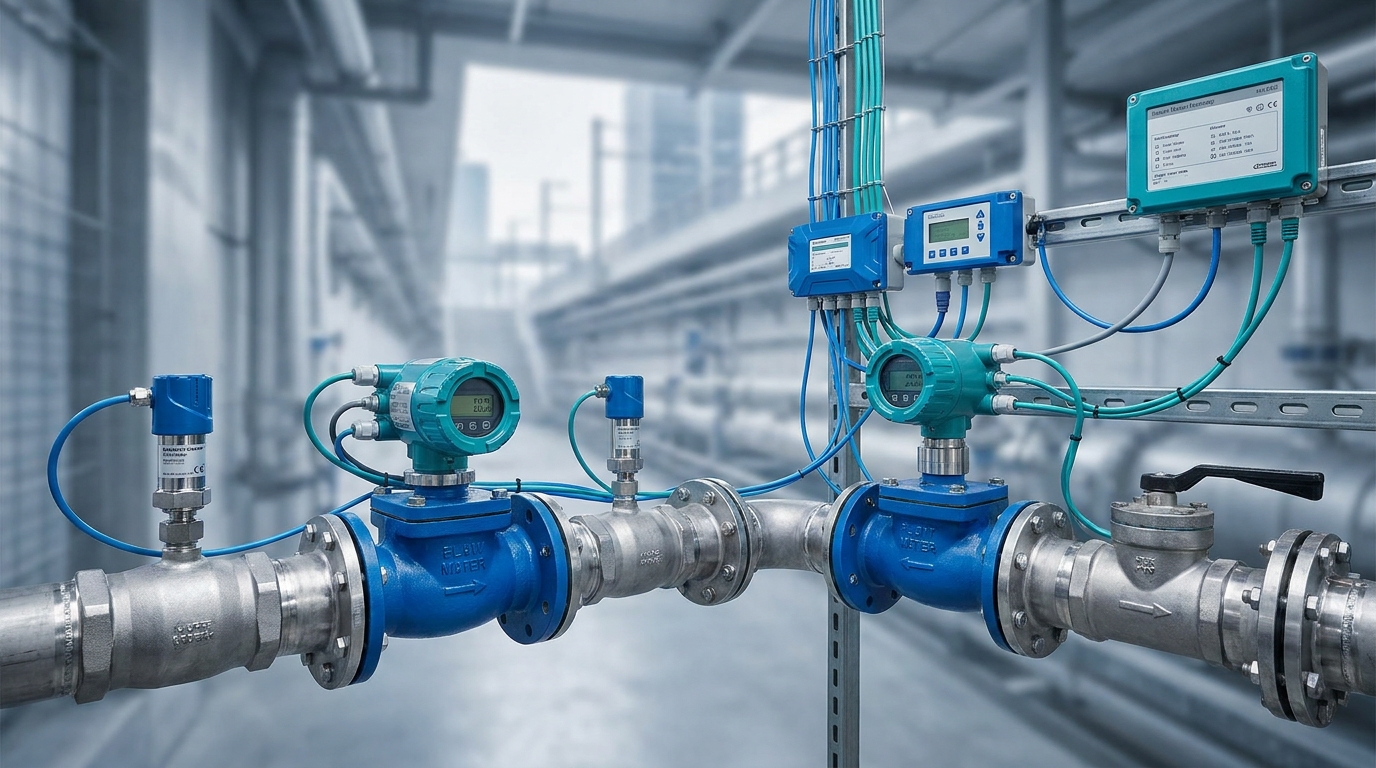
- Tier 3 — DMAs (67 zones): Refined to neighborhood or street-block granularity, each DMA serving 800-2,500 households with 1-3 inlet points. DN50-DN150 electromagnetic flow meters + pressure sensors + integrated RTU terminals.
- Tier 4 — Monitoring Points (120 points): Strategic nodes with pressure/flow monitoring, supplemented by clamp-on ultrasonic flow meters at low-velocity pipe segments where electromagnetic meters were impractical.
Zone boundary integrity was verified through Step Testing per IWA methodology — after closing all inlet valves to the target zone, pressure must remain stable (fluctuation ≤0.01 MPa) for a minimum of 30 minutes.
Instrument Selection: Balancing Accuracy and Cost
Meter accuracy is the critical success factor for DMA metering. MNF values typically fall in the 3-20 m³/h range; if a flow meter exhibits errors exceeding ±5% in the low-flow band, leakage assessment becomes meaningless. The project's selection principles:
Tier 1 & 2
Electromagnetic flow meters with dual-frequency square-wave excitation, PTFE liner (chemical resistance, low fouling), Hastelloy C electrodes. Accuracy Class 0.2, turndown ratio ≥1:100. Paired RTU terminals support SL651-2014 (Chinese hydrological telemetry standard) and MQTT/IEC 60870-5-104 protocols for direct data upload to the provincial water regulatory platform.
Tier 3 DMAs
Electromagnetic flow meters with low-flow accuracy ≤±0.5% at 0.1 m/s, IP68 rating for submerged pit environments. Dual power (internal lithium battery + mains), NB-IoT narrowband communication for low power consumption.
Tier 4 Points: Mix of electromagnetic meters and clamp-on ultrasonic flow meters (transit-time type per ISO 12242), the latter deployed at legacy pipe sections where shutdown for meter installation was infeasible.
Total instrumentation cost was controlled at approximately 25,000-40,000 CNY per DMA (including flow meter, RTU, pressure sensor, and installation materials), with the full system of 67 DMAs costing approximately 2.2 million CNY in metering equipment.
Leakage Control Strategy: From Reactive Repairs to Proactive Management
Following DMA system commissioning, a three-tier leakage response protocol was established:
- Minimum Night Flow Monitoring (MNF Analysis): The DMA management platform automatically computes MNF values and MNF-to-average-daily-flow ratios for each zone between 02:00-04:00 daily. A Yellow Alert triggers when MNF exceeds 130% of the baseline, and an Orange Alert at 150%. Baselines are established through 30-day continuous data self-learning, excluding anomalous consumption days and rain-affected periods.
- Pressure Management: For 11 high-pressure DMA zones (night pressure >0.35 MPa), pressure-reducing valves were installed to lower night pressure to 0.25-0.28 MPa. Data confirms that an average pressure reduction of 0.07 MPa yields approximately 18-22% leakage reduction, consistent with the FAVAD (Fixed and Variable Area Discharges) theoretical model, where leakage rate is proportional to P^N (N typically ranges 0.5-2.5 depending on leak type).
- Active Leak Detection & Rapid Repair: Guided by DMA leakage data, leak detection teams prioritized high-leakage zones using a combination of correlators, ground microphones, and acoustic noise loggers (permanent type). Average leak localization time dropped from 14 days to 3-5 days. A "48-hour repair" KPI was enforced — the proportion of burst repairs completed within 48 hours of detection rose from 42% to 87%.
Results: Data-Driven Outcomes
After 18 months of sustained implementation, the city's key distribution network indicators showed dramatic improvement:
Conclusions and Recommendations
This case demonstrates an exceptionally high return on investment for DMA implementation, but success depends on three prerequisites:
- Engineering rigor in zone boundary delineation (closure must be verified through field testing);
- Instrument selection must look beyond purchase price — low-flow accuracy and long-term drift stability are the core DMA metering metrics (reference IEC 60068 for environmental testing requirements);
- Organizational mechanisms must create a closed-loop process from data monitoring to leak detection to repair.
For small to medium-sized water utilities, we recommend starting with 3-5 pilot DMAs, prioritizing the highest-leakage areas, and progressively accumulating data and operational experience before full-scale network rollout.