DMA Zone Metering Case Study: Reducing Network Leakage from 28% to 8% Through Systematic Implementation
Water loss through leakage remains one of the most significant challenges facing urban water utilities worldwide. The International Water Association (IWA) estimates that globally, approximately 30% of all treated water is lost before reaching consumers. In many developing cities, this figure can exceed 40%.
This paper documents a comprehensive DMA implementation project in a city of approximately 450,000 residents, where the distribution network spans 680 kilometres of predominantly ductile iron and PE piping installed between 1990 and 2010. The project successfully reduced the system's leakage rate from 28.3% to 8.1% within 14 months.

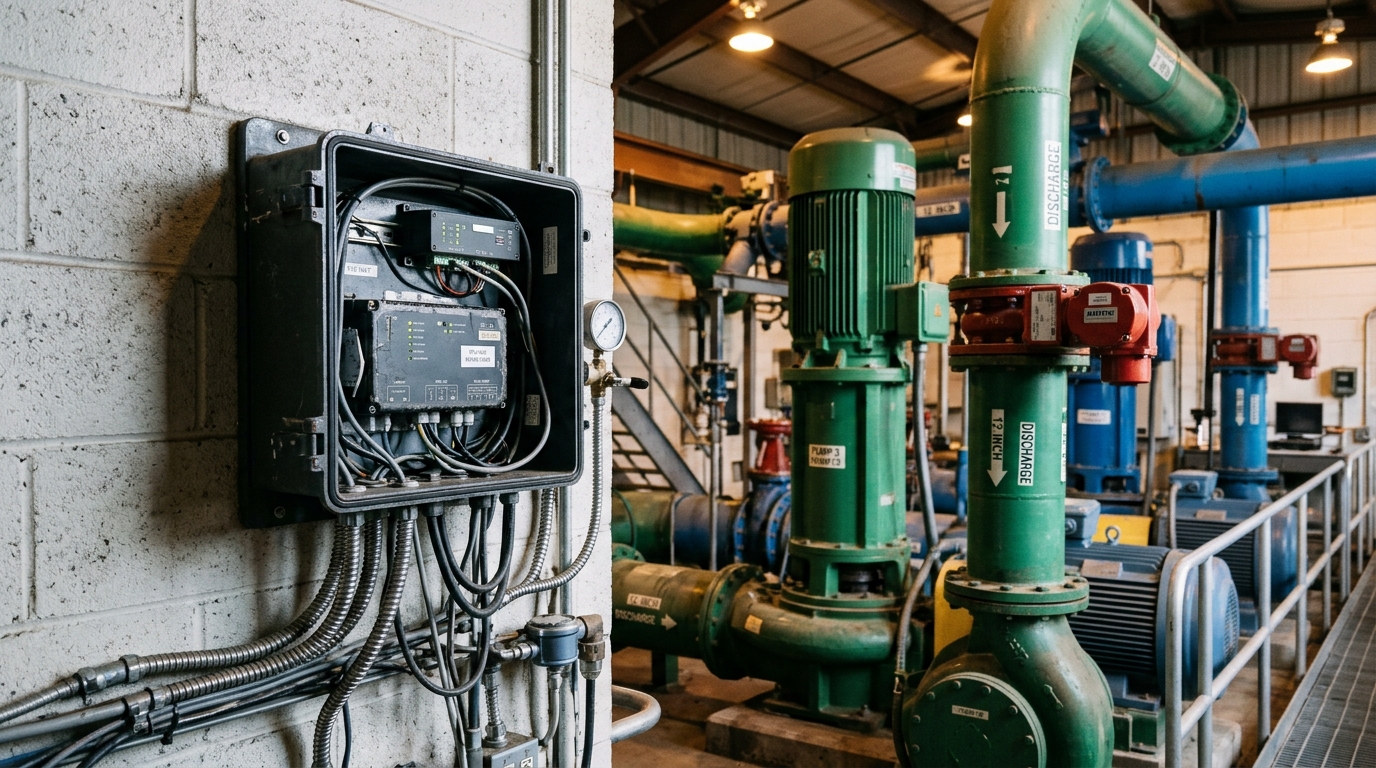
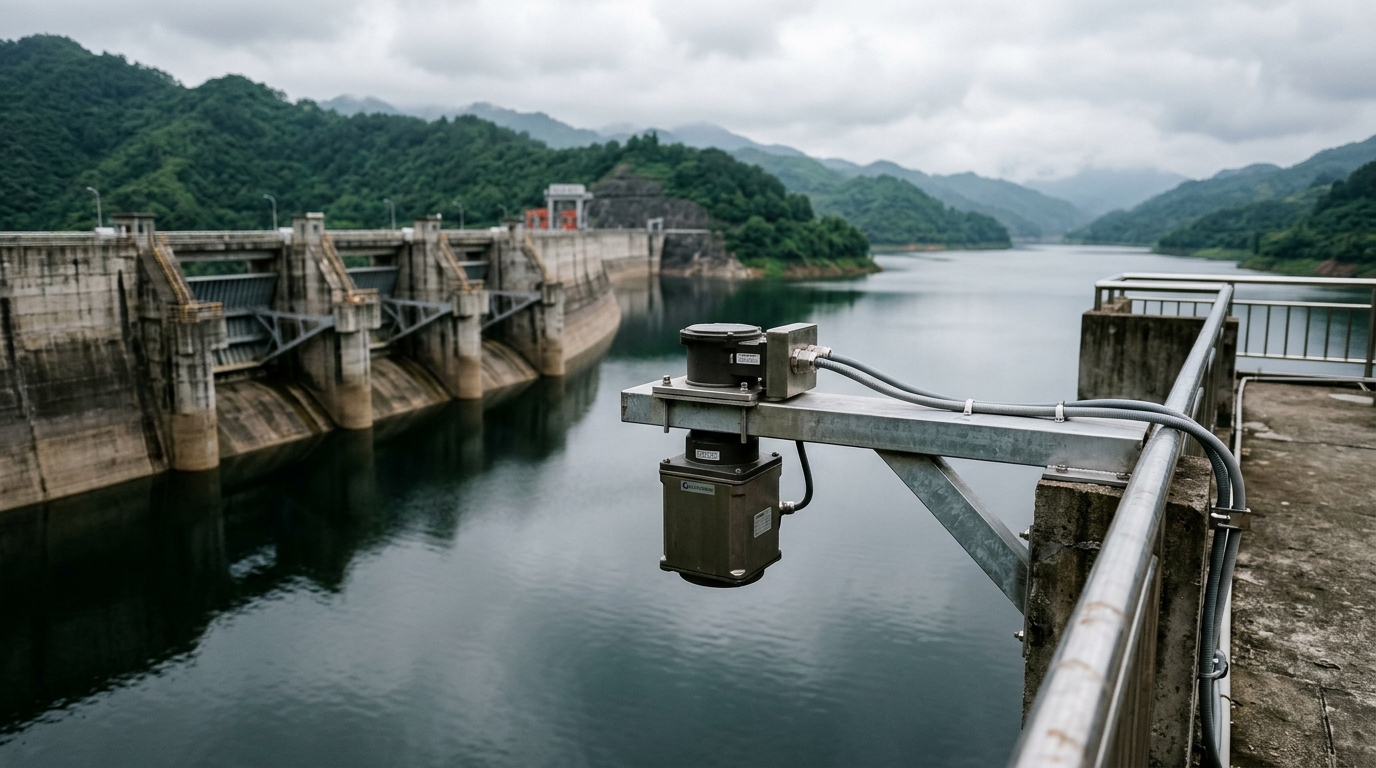
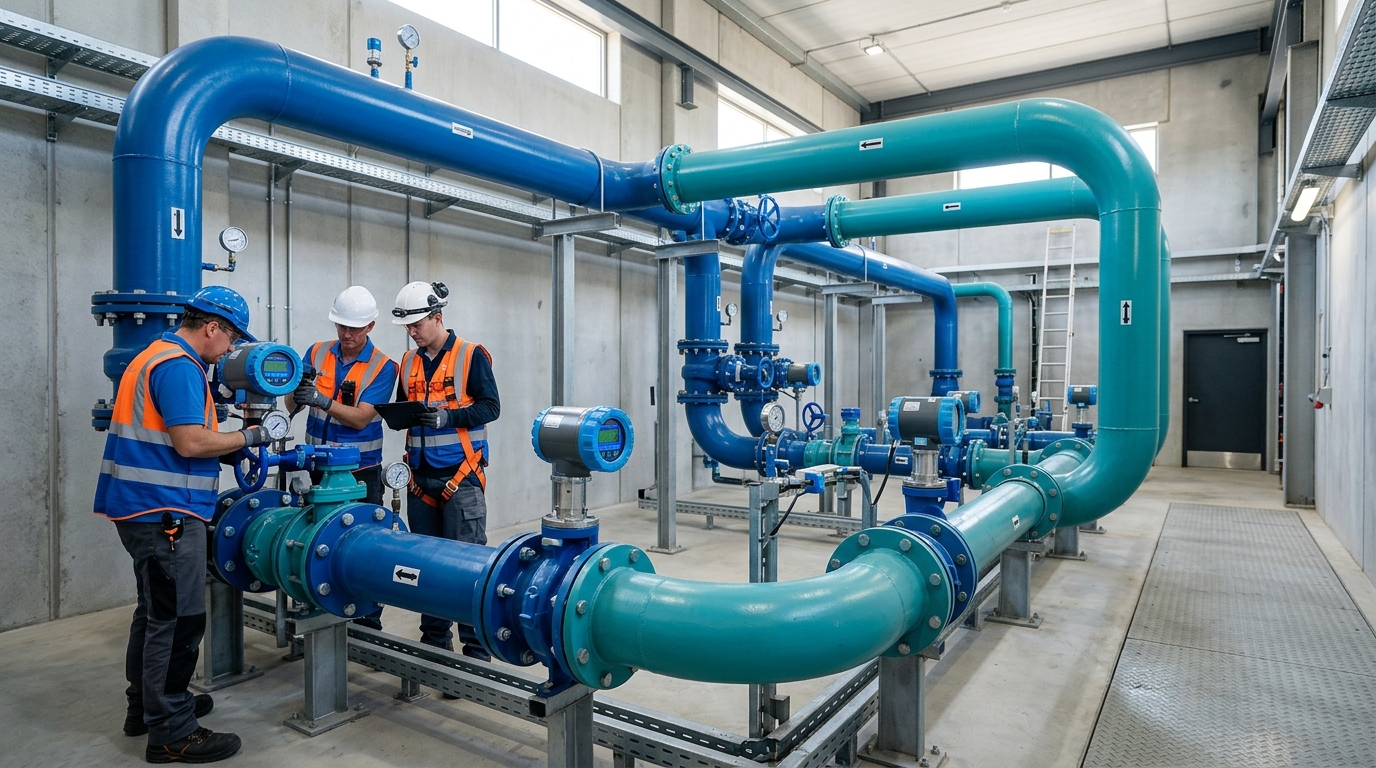
Modern DMA systems require precise metering infrastructure to monitor flow and pressure effectively.
2 DMA Design Methodology
2.1 Network Zoning Principles
The DMA design followed the methodology recommended in IWA's "Water Loss Task Force" guidelines and aligned with ISO 24510 performance assessment criteria. The network was divided into 23 primary zones and 67 secondary zones based on four key criteria:
Hydraulic Boundary Definition
Each zone must have clearly identifiable inflow and outflow points with measurable boundaries.
Size Optimisation
Primary zones contain 30-80 km of pipeline serving 3,000-8,000 connections, balancing measurement granularity against infrastructure cost.
Topographic Consistency
Zones follow natural elevation contours to minimise pressure variation and measurement uncertainty.
Demand Pattern Homogeneity
Areas with similar consumption profiles are grouped together to establish reliable baseline models.
2.2 Metering Infrastructure
The metering hierarchy was designed to meet OIML R49 accuracy requirements at each level:
- Primary zone boundary meters: DN200–DN400 electromagnetic flowmeters, accuracy class ±0.3%, equipped with 4G/NB-IoT dual-mode telemetry per IEC 60068-2 environmental specifications.
- Secondary zone boundary meters: DN100–DN200 battery-powered electromagnetic flowmeters, accuracy ±0.5%, designed for 6+ year operational life without maintenance.
- Pressure monitoring: 2-3 high-precision pressure transducers (±0.1% FS) per zone, sampling at 1-minute intervals.
- Data acquisition: Industrial IoT RTU units supporting Modbus RTU/TCP and HART protocols with ≥30 days local data logging capability.
Minimum Night Flow (MNF) Analysis
The cornerstone of DMA-based leakage management is Minimum Night Flow (MNF) analysis. Between 02:00 and 04:00 hours, legitimate consumption drops to its lowest point, making it possible to isolate the leakage component from total measured flow.
Analytical Framework
The MNF model decomposes measured nighttime flow as follows:
Where Qlegitimate encompasses residual domestic consumption, small commercial activities, and known background losses. The leakage component is further characterised using the FAVAD (Fixed And Variable Area Discharges) equation, which relates leakage flow to pressure through:
Where N1 ranges from 0.5 (fixed orifice behaviour) to 2.5 (burst pipe behaviour), with typical distribution network leaks exhibiting N1 values between 1.0 and 1.5.
All 67 secondary zones were equipped with real-time MNF analysis capability. The system triggers automated alerts when MNF deviates more than 15% from the rolling 30-day baseline, reducing average leak detection response time from 72 hours to under 4 hours.
4 Results and Performance Metrics
After 14 months of operation, the project delivered the following outcomes:
System-wide Leakage Reduction
A 71.4% reduction in non-revenue water
Annual Financial Benefit
Approx. 1.82 million cubic metres saved
Leak Detection Response
Automated MNF deviation alerts
Project Payback Period
On total investment of ~€1.8 million
- Burst response time reduced from 8 hours average to 2 hours.
- Pressure uniformity improved by 34%, reducing customer complaints by 62%.
5 Critical Engineering Lessons
Boundary Integrity Testing
Before commissioning any DMA, boundary integrity must be verified through a structured step test. All boundary valves are closed sequentially while monitoring pressure decay within the isolated zone. Acceptance criteria: pressure decay must not exceed 0.02 MPa within 30 minutes. Zones failing this test require investigation and remediation before entering production mode.
Metering Accuracy Assurance
Electromagnetic flowmeter installations must comply with ISO 4064 requirements for upstream/downstream straight pipe lengths (≥5D upstream, ≥3D downstream). For critical primary boundary meters (DN300+), we recommend cross-validation using clamp-on ultrasonic reference meters during the first 6 months of operation to verify in-situ accuracy.
Sustainable Operations
DMA systems require ongoing operational commitment: monthly MNF baseline recalibration, quarterly meter verification checks, and annual hydraulic model updates. Utilities should establish dedicated DMA management teams with clear KPIs tied to leakage performance.
Conclusions
This case study demonstrates that systematic DMA implementation can achieve leakage rates below 10% even in ageing distribution networks. The combination of precise zone metering, MNF-based analytics, and sustained operational discipline provides a proven pathway to water loss reduction.
For utilities worldwide pursuing Smart Water objectives, DMA remains the foundational infrastructure investment upon which all advanced analytics and optimisation strategies depend.