Smart Water Management Market Trends: 2026 Doppler Flowmeter Price Trends and Selection Guide
In recent years, demands for urban drainage and flood prevention, water measurement in irrigation districts, ecological flow monitoring in rivers and lakes, and supervision of industrial rainwater discharge outlets have continued to increase. Relying on its ability to continuously measure flow velocity, water level, instantaneous flow rate, and cumulative flow, the Doppler flowmeter has gradually become a common device in hydrological and water environment monitoring.
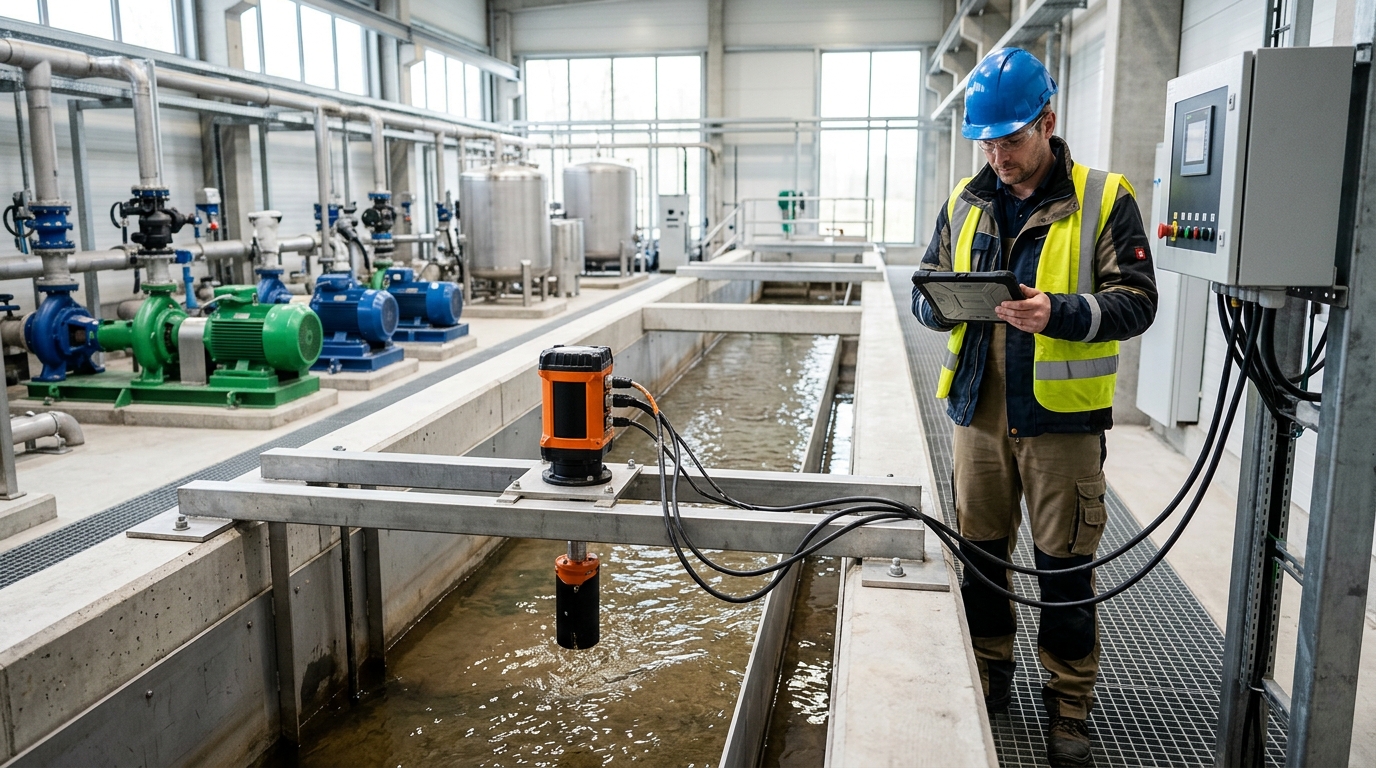
Compared with single water level monitoring, Doppler flowmeters can synchronously reflect the motion state of water bodies, making them more suitable for scenarios involving complex cross-sections, partially filled pipes, open channels, and particle-laden media. With the gradual maturation of technologies such as non-contact measurement, low-power communication, solar power supply, and integrated cameras, Doppler flowmeters are evolving from single sensors into integrated terminals encompassing "flow velocity, water level, video, and data platforms."
When purchasing, users no longer focus solely on the unit price of the equipment but place greater emphasis on installation conditions, data completeness rate, maintenance frequency, and total life-cycle cost.
I Market Overview: From Single Flow Measurement to Composite Sensing
From the perspective of application scenarios, Doppler flowmeters are mainly concentrated in municipal drainage, rainwater pipe networks, river flow, irrigation channels, industrial wastewater, and emergency monitoring. Municipal drainage focuses on partially filled pipes, siltation, and overflow identification; river monitoring focuses on wide cross-sections, low flow velocities, and wind and wave impacts; irrigation districts focus on water measurement accuracy, frost resistance, and long-term stability; while industrial discharge outlets focus more on explosion protection, corrosion resistance, and compliant recording. Different scenarios drive clear differentiation in product configurations.
Contact Doppler Flowmeters
- Installed at bottom or side walls
- Suitable for sewage, slurry, solid-containing media
- Calculates flow via backscattered echoes
Non-Contact Radar Systems
- Radar/Microwave surface velocity inversion
- Suitable for high sediment & corrosive media
- No underwater installation required
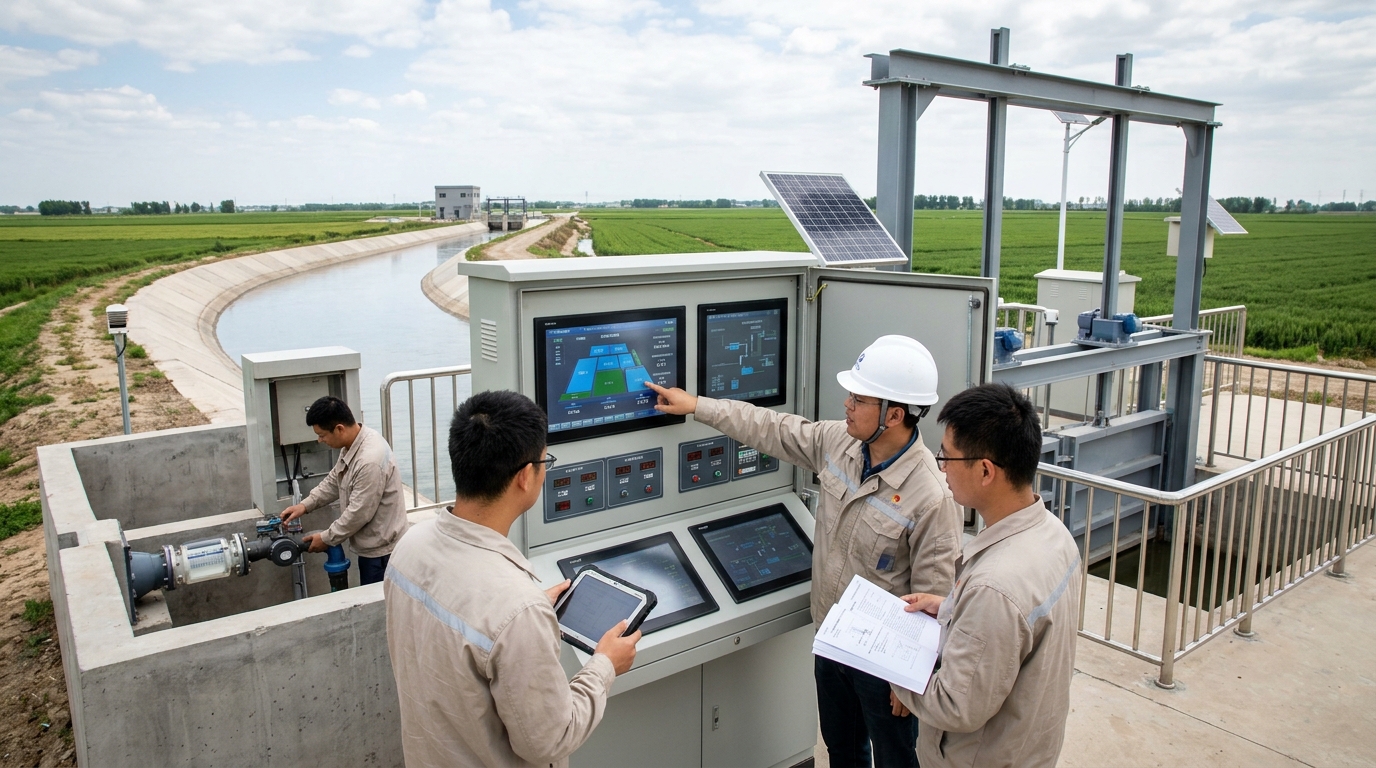
Integrated cameras are becoming a new configuration trend. Cameras can record floating objects on the water surface, manhole cover status, overflow traces, staff gauge readings, and equipment operation screens, providing visual evidence for abnormal flow data. Some projects overlay video feeds with flow velocity and water level data to form a dual verification of "data plus image." For urban waterlogging points, underpass intersections, pump station forebays, and key discharge outlets, cameras are not only used for security but also serve as an important auxiliary means for data quality control and event tracing.
II Price Ranges: Three Product Categories Form a Clear Gradient
The market pricing for Doppler flowmeters varies significantly based on technology and integration level. Below is a breakdown of the three main categories:
| Category | Price Range (RMB) | Typical Application |
|---|---|---|
| Basic Doppler Equipment | 8,000 – 80,000 | Portable patrol, fixed pipe networks (DN300-DN2000) |
| Non-Contact Radar Units | 60,000 – 180,000 | Wide rivers, complex flow patterns, inaccessible areas |
| Comprehensive Monitoring Stations | 150,000 – 450,000+ | Integrated cameras, edge AI, full civil works |
Cost Drivers: Adding pressure-type water level gauges, temperature compensation, explosion-proof enclosures, or large-capacity storage typically increases the price by 15% to 30%. For comprehensive stations involving road excavation, power supply introduction, civil engineering enclosures, platform customization, or AI recognition algorithm licensing, the comprehensive cost may exceed 500,000 RMB. Regarding software platforms, the annual service fee charged per point is usually 500 to 3,000 RMB.
III Procurement Recommendations: Clarify Hydraulic Conditions First
Assess Hydraulic Conditions
Clarify whether the monitoring object is a full pipe, partially filled pipe, open channel, or natural river. For sewage pipe networks, focus on solid content, grease, sediment, and hydrogen sulfide corrosion. If the minimum flow velocity is below 0.03 m/s, prioritize low-flow stability and noise filtering.
Verify Key Parameters & Installation
Flow velocity accuracy typically reaches ±1% reading ±0.01 m/s. Non-contact equipment requires careful consideration of installation height (3-12 meters) and depression angle (15°-45°), avoiding bridge piers and strong wind areas.
Evaluate O&M Capabilities
Ensure solar+battery solutions meet >7 consecutive cloudy/rainy days. Check for breakpoint resume, local storage (>6 months recommended), remote diagnostics, and data quality tagging functions.
IV Non-Contact Measurement & Integrated Cameras
The core value of non-contact measurement lies in reducing direct contact between underwater components and the medium, thereby lowering risks of corrosion, entanglement, blockage, and mechanical damage. In scenarios such as sewage overflow, high-sediment rivers, oil-containing rainwater discharge outlets, and ecologically sensitive waters, non-contact methods improve equipment availability.
Note on Accuracy: Radar surface flow velocity relies on water surface echo quality and is affected by wind, waves, and floating objects. Converting surface velocity to cross-sectional flow rate requires a coefficient (typically 0.7–0.95). For critical metering, perform comparative measurements rather than relying solely on empirical coefficients.
Integrated cameras enhance data interpretability. Abnormal flow data may stem from equipment failure or physical obstructions like floating objects or icing. Video feeds help O&M personnel quickly determine causes. However, camera systems add costs related to storage, network traffic, lens cleaning, and night illumination. The decision to configure video should be based on the monitoring level rather than blindly pursuing high-end configurations.
V Maintenance Cost Analysis
Procurement is only the initial expenditure; O&M determines long-term value. Maintenance costs include cleaning, calibration, power supply, communication fees, spare parts, and platform services.
Contact Doppler Flowmeters
Annual Cost: 3% - 8% of purchase price
Requires monthly/quarterly cleaning due to sludge, grease, algae adhesion. Transducers and sealing rings are wear parts.
Non-Contact Systems
Annual Cost: 1% - 4% of construction cost
Lower intensity but still requires lens/antenna cleaning every 6 months and pre/post-flood season inspections.
Case Study: A municipal sewage network with 80 contact Doppler flowmeters incurred ~86,000 RMB/year in maintenance (97.2% data completeness). A river project with 35 non-contact radar+camera devices had ~54,000 RMB/year maintenance (99.1% completeness). This demonstrates that maintenance costs are highly correlated with environmental conditions.
VI Typical Application Cases
Urban Drainage & Flood Prevention
Southern China City Deployment
- Config: Non-contact radar + 2MP camera + Solar + 4G
- Cost: ~128,000 RMB/point (construction); ~1,800 RMB/year (O&M)
- Result: Identified 17 obstruction events; 98.6% data completeness during rainstorms
Irrigation District Channel
Northern China Irrigation District
- Config: Contact Doppler profile + Pressure water level gauge
- Cost: ~46,000 RMB/point; ~2,600 RMB/year (O&M)
- Result: Measurement error improved from ±8% to within ±3%
Industrial Rainwater Discharge
Industrial Park DN1200 Pipe
- Config: Explosion-proof/corrosion-resistant Doppler + Video
- Cost: ~69,000 RMB/point; ~5,200 RMB/year (O&M)
- Result: Monthly cleaning required due to high oil/sediment content
VII Concluding Outlook
In the future, the Doppler flowmeter market will continue to develop towards scenario-based, standardized, and intelligent directions. At the equipment level, low-power design, edge computing, self-diagnostic algorithms, multi-sensor fusion, and video verification will become key focuses. At the system level, users will pay more attention to data completeness rate, abnormal identification capability, platform compatibility, and O&M response speed.
With the advancement of urban water affairs digitalization, irrigation district modernization, and river and lake ecological supervision, the model of simply purchasing hardware will gradually give way to a comprehensive service model of "equipment plus data plus O&M." For purchasers, it is recommended to conduct small-scale pilots first, emphasize on-site calibration and video verification for critical sections, and prioritize non-contact measurement for complex environments. Only by establishing a life-cycle cost evaluation mechanism can a truly stable and reliable monitoring closed-loop be formed.