Doppler Flow Meter Selection and Maintenance: How Much Does Non-Contact Measurement Cost?
I. From “Can Measure Flow” to “Verifiable, Traceable, and Maintainable”
The application of Doppler flow meters in open channels, partially filled pipes, rivers, and drainage monitoring is shifting from single flow readings to an integrated system encompassing velocity, water level, cross-section, data quality, and video evidence. Previously, users mainly focused on whether instantaneous flow could be displayed; now they pay more attention to long-term drift, sediment impact, obstruction by floating objects, communication interruptions, calibration cycles, and maintenance budgets.
Industry surveys show that in drainage pipe networks, agricultural irrigation, river ecological flow, and wastewater treatment plant influent/effluent metering scenarios, Doppler flow meters have become an important option due to their simple structure, flexible installation, and adaptability to low flow velocity and complex water quality.
Simultaneously, non-contact measurement technologies are changing the cost structure. Traditional contact level gauges in sewage or algae-containing media easily accumulate contaminants. Non-contact methods (radar or ultrasonic level gauges) combined with bottom-mounted Doppler velocity probes form a composite solution of “contact velocity measurement, non-contact level measurement.” Integrated cameras further associate flow anomalies with surface conditions, improving data credibility.
II. Product Price Range: Basic vs. Standard vs. Integrated
Current prices are determined by the combination of sensors, mounting brackets, data acquisition units, power supplies, communication modules, software platforms, and protection ratings. Based on public projects and industry interviews, common price ranges are as follows:
Basic Channel Type
RMB 15k – 35k
- Bottom-mounted velocity probe
- Contact-level measurement
- Simple local display
- Suitable for stable, small channels
Standard Solution
RMB 35k – 60k
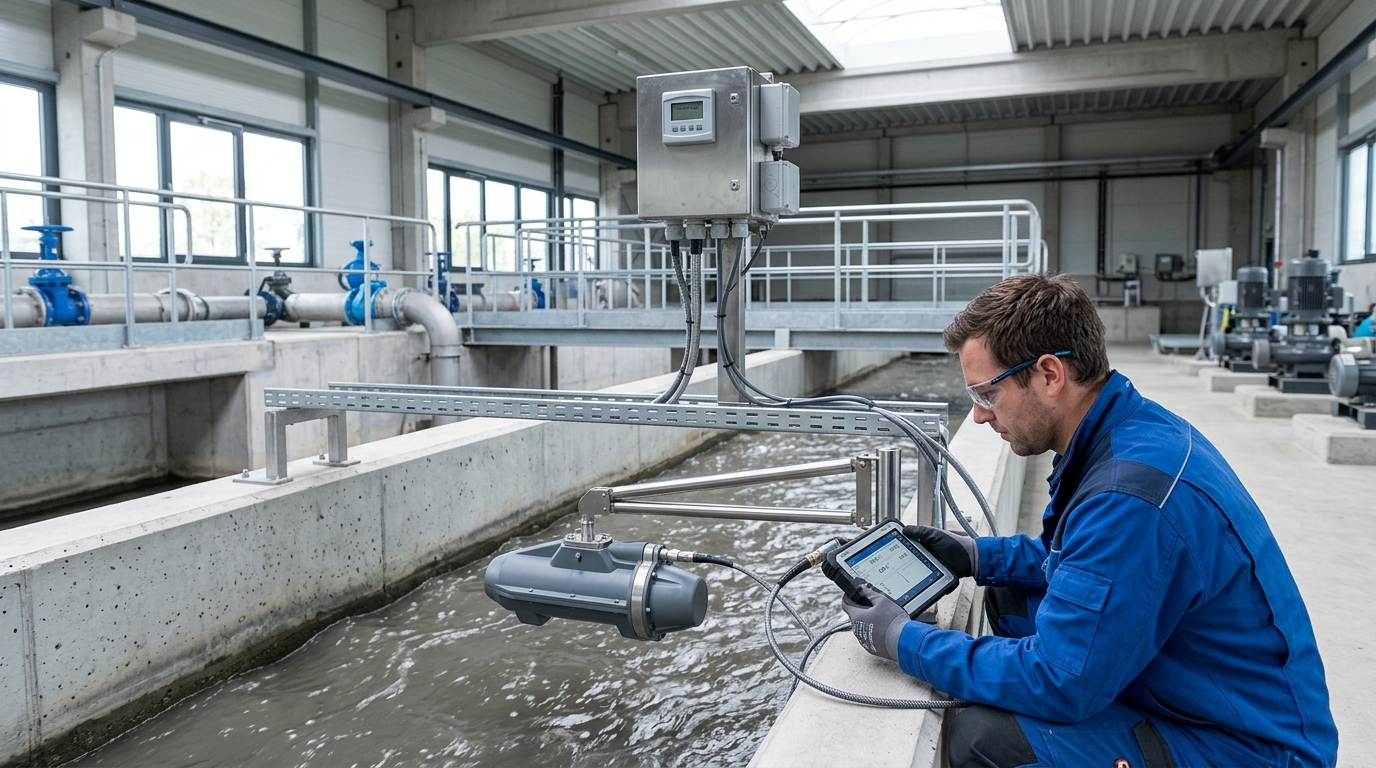
- Doppler probe + Radar level gauge
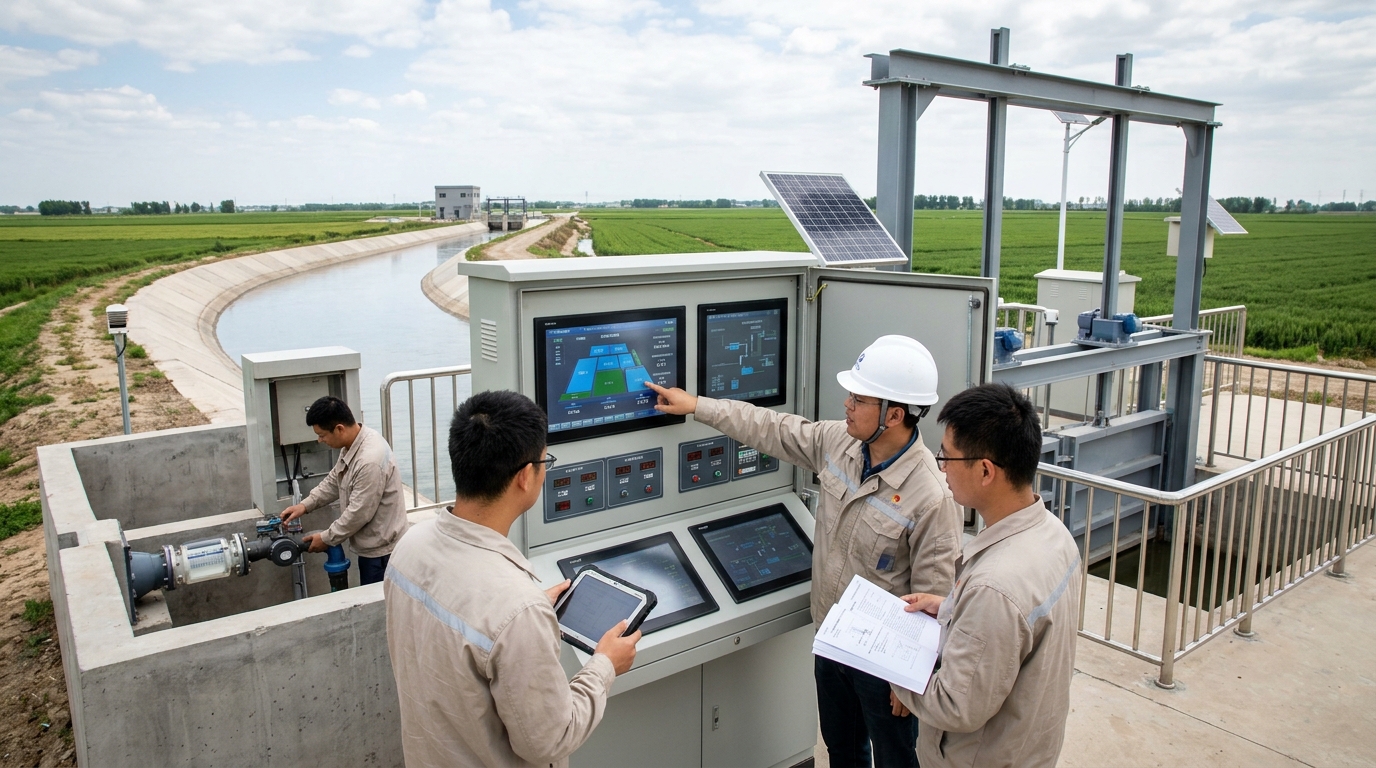
- Solar power & 4G/NB-IoT comms
- Remote configuration support
- Ideal for urban drainage & WWTPs
Integrated Camera System
RMB 80k – 250k
- Multi-sensor fusion
- Edge recognition algorithms
- Video evidence storage
- For key discharge outlets & rivers
Price differences in high-end solutions stem from camera protection ratings, lens quality, edge computing capabilities, storage capacity, and system integration complexity. Adding high-precision pressure backup or cloud reporting can push standard solutions into the RMB 60,000–100,000 range.
III. Technical Pathways: Accuracy Factors
The core principle relies on ultrasonic frequency differences caused by scattering from particles or bubbles. Practical accuracy is affected by sediment concentration, bubbles, algae, temperature stratification, and installation position.
| Metric | Typical Accuracy | Key Influencing Factors |
|---|---|---|
| Doppler Velocity | ±2% to ±5% FS | Sediment load, bubble density, transducer frequency (2MHz vs 3MHz) |
| Pressure Level | ±1 mm to ±3 mm | Temperature compensation, zero drift, static pressure head |
| Radar Level | ±3 mm to ±10 mm | Surface calmness, foam interference, reflection strength |
Instantaneous flow is calculated from velocity, level, and cross-section geometry. Errors often arise not just from the sensor, but from level drift, cross-section siltation, and local turbulence. Non-contact radar reduces contamination issues, while ultrasonic may struggle with wind, fog, or heavy foam.
IV. Selection Recommendations: Match Conditions First
Define Monitoring Object
Clarify channel width, max depth, velocity range, suspended solids, and oil content. Small channels (0.3–1.5m wide) suit basic bottom-mounted solutions; wider channels (>2m) with siltation require elevatable brackets or side-mounted probes.
Assess Installation Conditions
Doppler probes need a stable acoustic path. Bottom siltation or aquatic weeds covering the probe cause signal loss. Installation angle and scour protection are critical. For intermittent flows, ensure the probe isn't exposed at low levels.
Power & Communication
Urban nodes use mains/fiber for real-time alarms. Remote sites rely on solar; battery capacity must cover consecutive rainy days. High-frequency sampling increases data costs; align sampling intervals (1min–15min) with actual accounting needs.
Tip: Prioritize based on “Data Credibility Requirement → On-site Maintainability → Budget.” Do not add integrated cameras unless evidential value (e.g., regulatory disputes) outweighs the increased power and storage costs.
V. Maintenance Cost Analysis
Equipment purchase is only the initial investment. Annual maintenance typically accounts for 8% to 15% of the purchase price for regular sites, rising to 15% to 25% for high-pollution or remote locations.
Calibration Fees
Recommended annually. Costs range from RMB 1,000 – 3,000 depending on site access and standard device usage. Trade settlement sites may require semi-annual calibration.
Cleaning & Labor
Monthly cleaning for dirty sites costs RMB 150 – 500 per visit. Elevatable brackets and camera warnings reduce blind inspections, shifting maintenance to event-triggered actions.
Data Services
Basic platform fees: RMB 1,000 – 3,000/year. Advanced features (video, edge AI) raise this to RMB 3,000 – 8,000/year.
Storage Costs
Continuous 1080P recording generates ~18–27 GB/day. Use event-triggered recording to save clips only during anomalies, significantly reducing storage hardware and cloud costs.
VI. Typical Case Studies
Case 1: Urban Drainage Trunk Line
Setup: Manhole (1.2m wide), bottom-mounted Doppler + Radar Level + Solar/4G.
Challenge: Initial ±12% error due to siltation and floating objects.
Solution: Added elevatable bracket and monthly auto-snapshots.
Result: Inspection frequency reduced from weekly to bi-monthly. Annual maintenance ~RMB 3,600. Data completeness improved from 82% to >96%.
Case 2: Agricultural Irrigation Branch
Setup: Trapezoidal channel (2.5m wide), 2MHz transducer + Radar Level.
Challenge: High sediment concentration during irrigation.
Solution: Non-contact radar avoided contact-gauge contamination. 15-min sampling, hourly upload.
Result: Flow error within ±5%. Labor hours saved by ~60% via remote viewing. Annual maintenance ~RMB 4,200.
Case 3: River Ecological Flow Monitoring
Setup: Natural cross-section (18m wide), Doppler + Radar + Integrated Camera.
Challenge: Complex stage-area curve; need for evidence of illegal dumping/intrusion.
Solution: Cameras synchronized images with flow data. Total investment ~RMB 120,000.
Result: Annual maintenance ~RMB 12,000 (lens cleaning, rust removal). Images helped validate low-flow data during dry seasons.
VII. Integrated Cameras: Explaining Anomalies
The value of integrated cameras lies in evidence and explanation, not just observation. When flow changes abruptly, cameras help distinguish between real hydraulic changes and sensor errors (probe obstruction, foam, drift). This is crucial for regulatory compliance and dispute resolution.
- Recognition Capabilities: Floating objects, extensive algae, siltation, personnel intrusion, gate status.
- Technical Requirements: Wide-angle lenses, IR/white-light illumination, waterproof housing, edge AI modules.
- Maintenance Boundaries: Lens contamination, anti-fog strategies, corrosion resistance, and privacy compliance.
- Storage Strategy: Retain raw video short-term; retain event clips long-term. Separate flow data from image recognition results.
VIII. Outlook: Market Differentiation
The future market will split into two poles:
Low-Cost & Simple
Basic products will focus on lower prices, simpler installation, and ultra-low power consumption for large-scale, low-frequency meter reading needs.
High-Value & Regulated
Solutions for trade settlement and smart water will evolve toward multi-sensor fusion, edge computing, video evidence, and standardized data interfaces.
Non-contact measurement will become widespread but will not completely replace contact Doppler velocity measurement, as velocity sensing still requires a stable acoustic path. Integrated cameras will remain an optional module for high-value scenarios rather than a universal standard. Success depends on prioritizing cross-section conditions, data purpose, and on-site maintenance capability over feature count.