1. Background: Metered Abstraction Is Now Mandatory
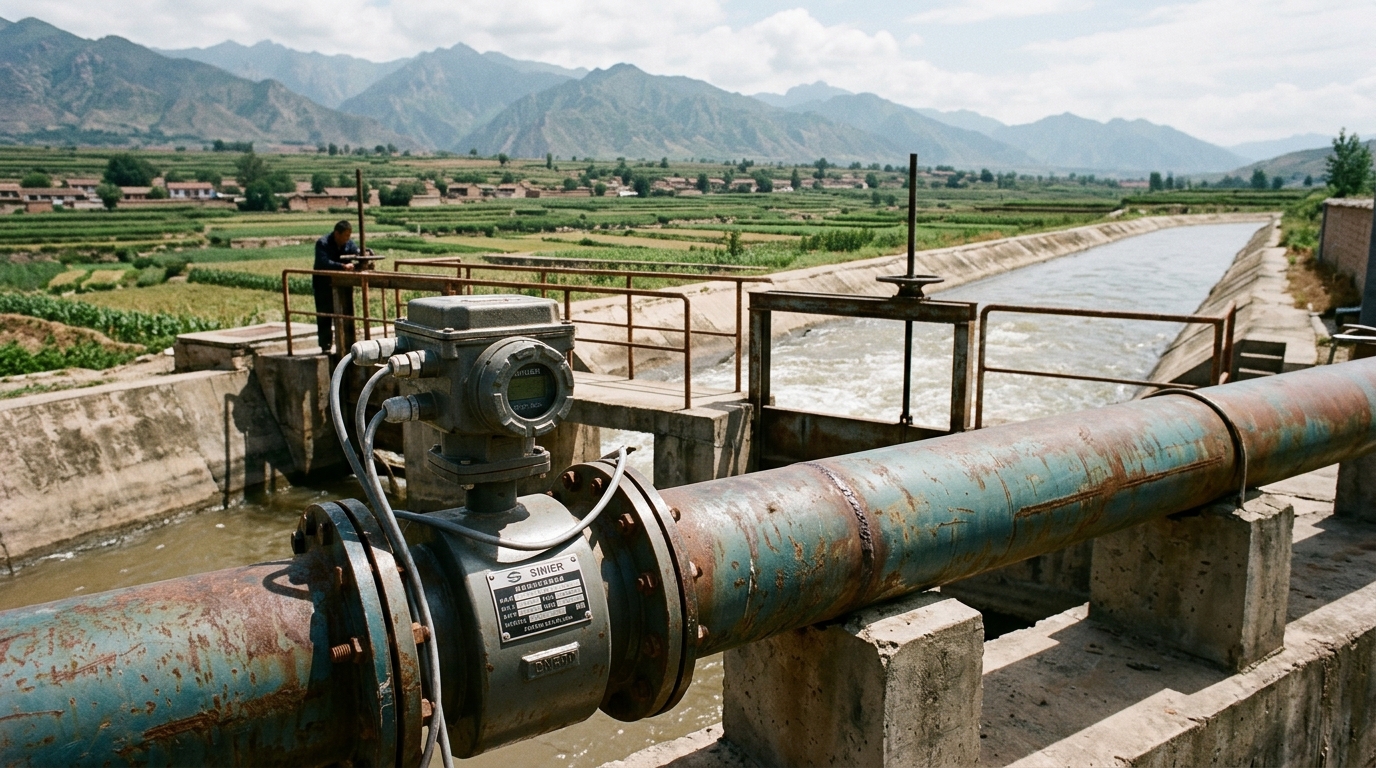
Volumetric pricing reforms in agriculture have turned flow measurement at canal headworks, pumping stations and pressurised irrigation networks from an optional feature into an acceptance criterion. Unlike industrial custody transfer under OIML R49, irrigation metering must tolerate raw canal water carrying 5-30 kg/m³ of suspended sediment, wide seasonal flow swings, and unattended solar-powered sites. Electromagnetic flow meters remain the preferred technology for full-bore pipe metering in this duty because they present no obstruction, no moving parts, and an output independent of fluid density, temperature and - within limits - conductivity.
2. Technical Analysis: Three Duty-Specific Challenges
Abrasion in sediment-laden water. Standard soft rubber linings erode quickly in silty flows. Proven practice specifies PTFE or abrasion-resistant rubber liners with Hastelloy or titanium electrodes; for DN300 and above, ceramic-lined designs offer the best erosion life. Velocity should also be capped near 3 m/s at maximum flow to reduce liner wear rate, which scales roughly with the square of velocity.
Low-flow stability. Night-time and late-season flows can drop to 0.1-0.3 m/s, where induced voltages fall into the microvolt range and stray currents from pump drives or poor grounding dominate the signal. Specify a turndown of at least 30:1 (better 100:1), an adjustable low-flow cutoff (typically 0.5-2% of span) and low-frequency rectangular-wave excitation, which suppresses electrochemical polarisation noise at electrodes.
Sizing for seasonal turndown. Sizing on maximum flow leaves the meter in its dead band most of the year. Size on the duty point (60-70% of maximum) and verify that minimum irrigation flow still exceeds about 0.5 m/s; if the required range exceeds 50:1, a dual-line arrangement with switchover valves is more economical than oversizing a single meter.
3. Field Engineering: Power, Telemetry and Installation
- Power: Sites are rarely grid-connected. A 30-60 W panel with lithium storage is standard; battery-optimised electromagnetic meters using intermittent excitation cut average consumption to roughly 0.5 W, extending autonomy through monsoon weeks.
- Telemetry: 4G Cat.1 with an IoT RTU providing store-and-forward buffering is the mainstream link; LoRaWAN backhaul suits canal systems without cellular coverage. Report at 15-minute intervals during irrigation season and relax to 2-4 hours off-season.
- Installation: Full-bore conditions are non-negotiable. Provide at least 5D upstream and 3D downstream of straight run, and avoid locations downstream of canal drops or aerated siphon crests. For remote-mount converters use dedicated shielded signal cable routed away from power cabling.
- Grounding: Bond the meter to the metallic pipeline with equipotential grounding rings; on PVC or GRP lines, grounding rings or earthing electrodes are mandatory to complete the measuring circuit.
4. Technology Comparison and Conclusion
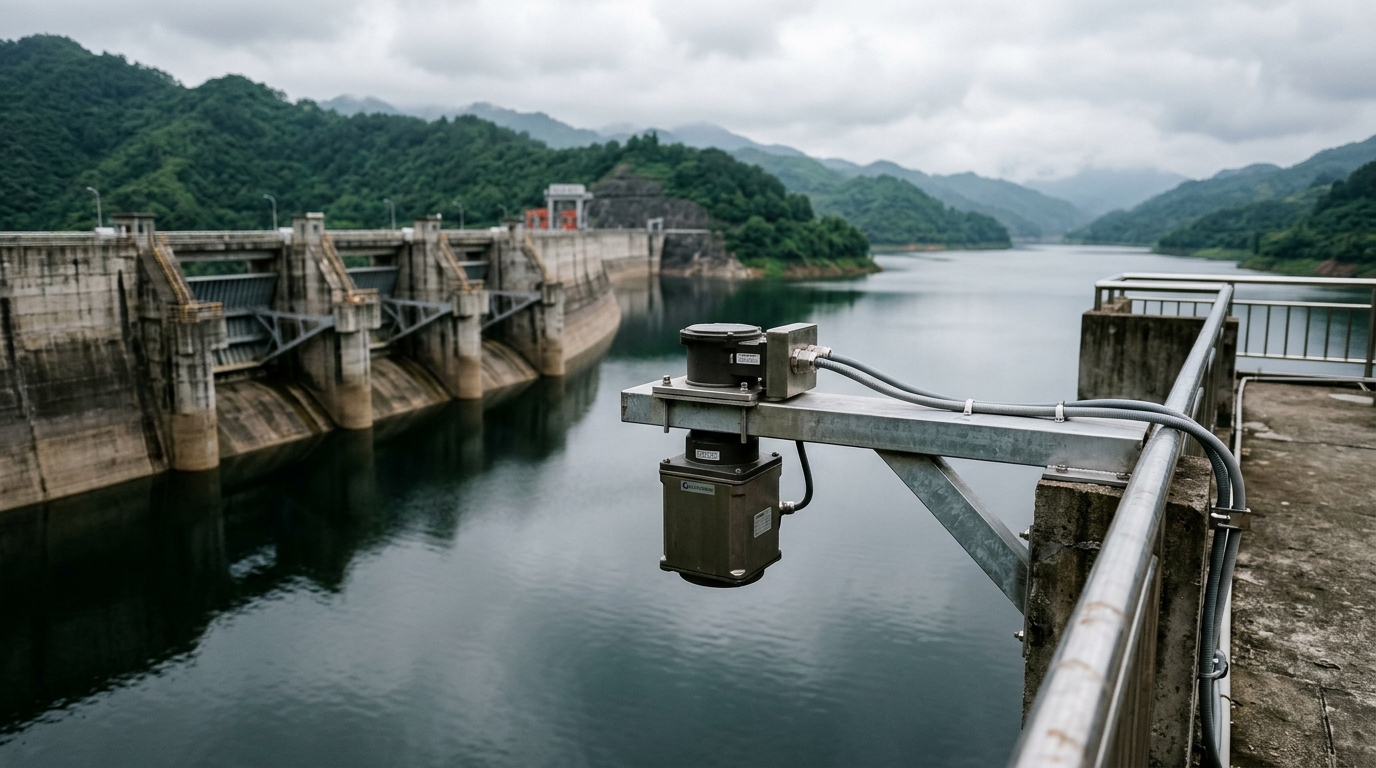
For free-surface canals, electromagnetic meters do not apply - use radar level gauging with a rating curve or Doppler velocity-area methods. For very large low-pressure pipes, clamp-on ultrasonic units are cheaper but sensitive to pipe material and coupling quality. In full-bore, sediment-carrying pipe service, the electromagnetic flow meter at ±0.5% accuracy with minimal maintenance remains the engineering optimum. Commission with a current-meter or tracer comparison test, and feed the data into the irrigation management platform to close the meter-allocate-bill loop; only then does the metering investment convert into measurable water savings.