How a Water Utility Group Achieves Cost Reduction and Efficiency Gains Using Electromagnetic Flow Meters
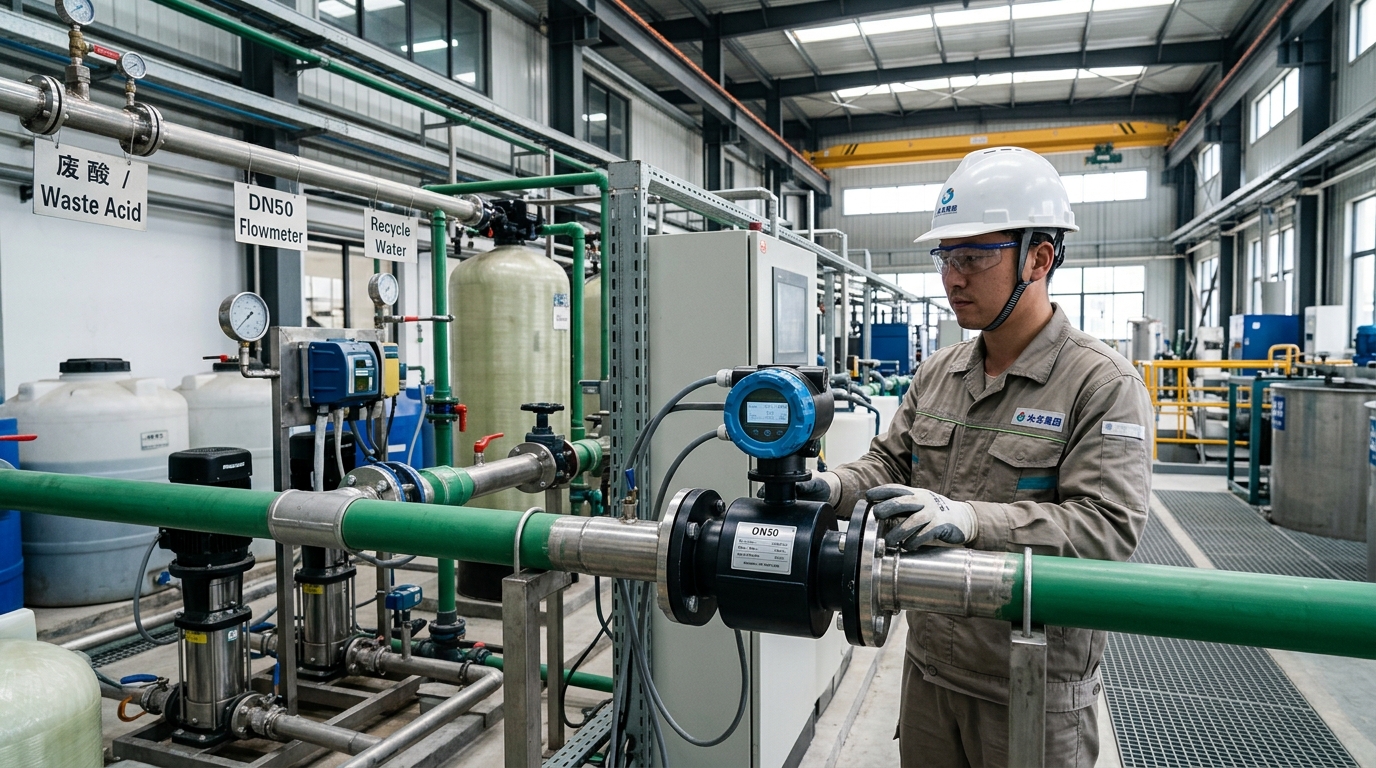
Engineering Practice of DN50 Electromagnetic Flowmeters in Metering Strongly Corrosive Media
Electromagnetic flowmeters are critical for material balance and process control in chemical engineering, electroplating, and wastewater reuse. This case study details the retrofit of a DN50 electromagnetic flowmeter at an acid-alkali waste liquid recovery unit in East China. By replacing metal-housing meters with LGF-PA66 injection-molded one-piece corrosion-resistant flowmeters, the project resolved leakage, zero drift, and frequent maintenance issues without stopping production for more than 24 hours.

Project Background: Fine Chemical Waste Acid Recovery Unit
The project involved a fine chemical plant with an annual output of ~200,000 tons. The medium was a mixed waste liquid containing sulfuric acid, nitric acid, organic acids, and alkaline cleaning solution. Key operating parameters included:
- pH Range: 1.2 to 13.1 (Highly Corrosive)
- Temperature: 35°C to 75°C
- Conductivity: 60 to 380 µS/cm
- Chloride Concentration: 2 to 6 g/L
Originally, 12 DN50 loops used aluminum alloy housings with PTFE linings. After 14 months, issues emerged: housing pitting, flange leaks, insulation failure, and zero drift up to 1.8% FS. Maintenance records showed 2.3 leakage events per month, causing ~96 hours of annual downtime.
Technical Difficulties
1. Medium Corrosion
Acids, alkalis, and chloride ions attack metal housings and bolts. High humidity (>85%) and corrosive gases require IP68 protection and explosion-proof compliance.
2. Small Bore Sensitivity
DN50 meters are sensitive to velocity distribution and conductivity fluctuations. Low velocities (0.43–1.71 m/s) amplify zero drift, requiring precise grounding and damping optimization.
3. Insulation Stability
Millivolt-level signals are vulnerable to lining damage or conductive corrosion products. Maintaining high insulation resistance under humid heat is critical for accuracy.
Solution: LGF-PA66 Injection-Molded One-Piece Structure
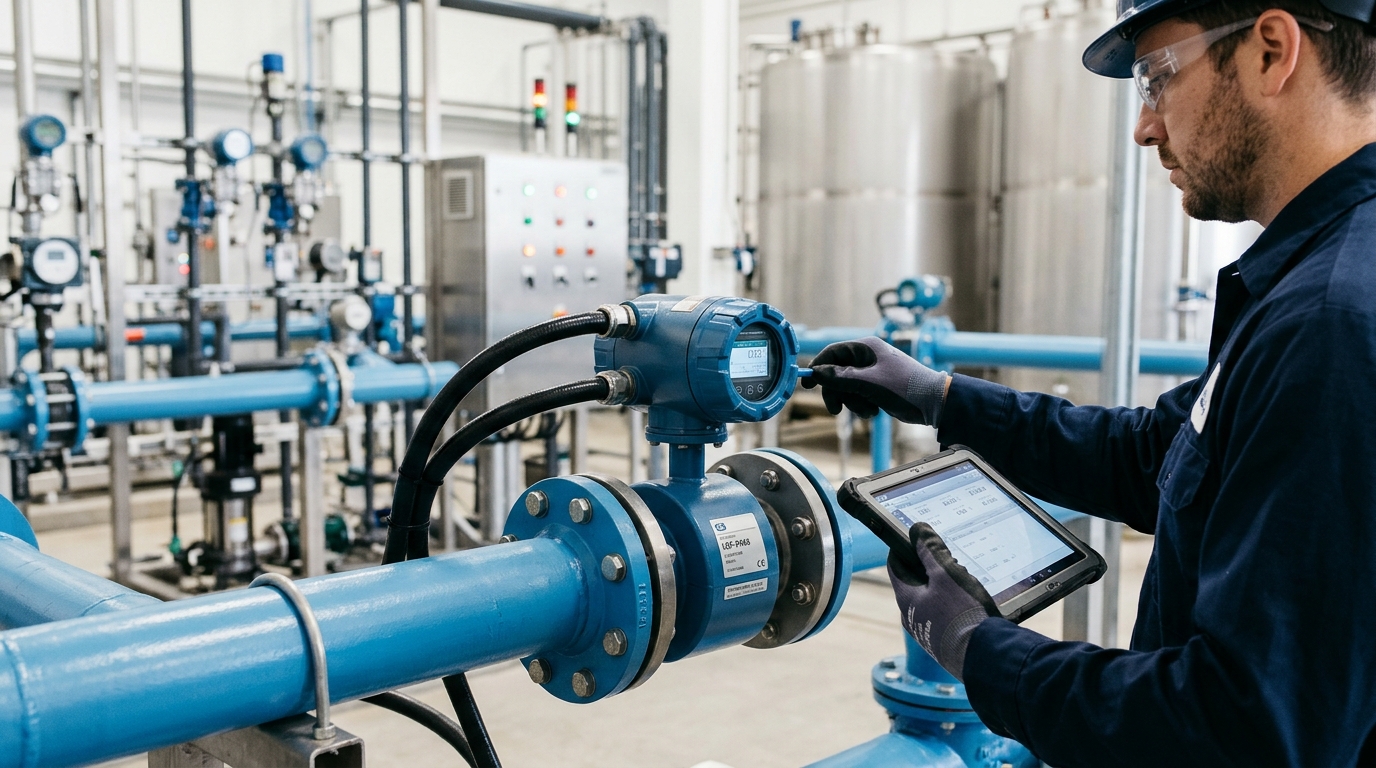
The retrofit utilized DN50 electromagnetic flowmeters with specific material upgrades to address corrosion and structural integrity:
"The LGF-PA66 housing integrates the flange seat and terminal box support, reducing potential leakage points from seven to two."
- Housing Material: 30% Long Glass-Fiber Reinforced Polyamide 66 (LGF-PA66). Tensile strength ~160 MPa; Heat deflection temp ~220°C.
- Lining: 4 mm FEP (Fluorinated Ethylene Propylene) for superior chemical resistance.
- Electrodes: Hastelloy C-276 for corrosion resistance against chlorides and acids.
- Protection: IP68 rating, Ex ia IIC T4 explosion-proof marking.
- Compatibility: EN 1092-1 PN16 standard flanges (150 mm face-to-face distance), allowing direct replacement of existing piping.

Implementation & Commissioning
Installation was executed shift-by-shift to minimize downtime (~4 hours per loop, total ~6 hours for all 12 devices). Key steps included:
- Survey: Confirmed pipe dimensions and added flow-straightening short pipes to mitigate elbow disturbances.
- QC Check: Verified FEP lining thickness (4.0 ± 0.2 mm) and electrode resistance (0.35–0.62 Ω).
- Calibration: Water calibration at 10%, 50%, and 100% flow showed errors within ±0.25%.
- Tuning: Adjusted excitation frequency to 1/8 Hz and damping time to 3 seconds to stabilize readings during conductivity fluctuations.
Field verification using the gravimetric method showed an average deviation of 0.35% across three runs. A 72-hour continuous operation test confirmed no empty-pipe false alarms.
Final Results: Cost Reduction & Efficiency Gains
Performance Metrics
- Metering Deviation: ↓ From 1.8% to 0.41%
- Material Balance Deviation: ↓ From 1.6% to 0.37%
- Leakage Events/Month: ↓ From 2.3 to 0
- Annual Downtime: ↓ From 96 hrs to <6 hrs
- Maintenance Interval: ↑ Extended to 18 months
Economic Impact
Improved accuracy reduced neutralizing chemical usage by ~2.4 tons/month. Reduced downtime minimized capacity losses.
ROI Estimate: Retrofit costs recovered within ~14 months via lower maintenance expenses and improved material balance efficiency.
Outlook
This case demonstrates that reliability in small-bore, strong-corrosion metering depends on the synergy of materials, structure, and commissioning. The LGF-PA66 one-piece design effectively eliminates external corrosion risks associated with metal housings. Future applications should continue to focus on long-term thermal aging resistance and consistent flange sealing to maintain these efficiency gains.