How a Water Utility Group Achieves Cost Reduction and Efficiency Improvement Using Electromagnetic Flow Meters
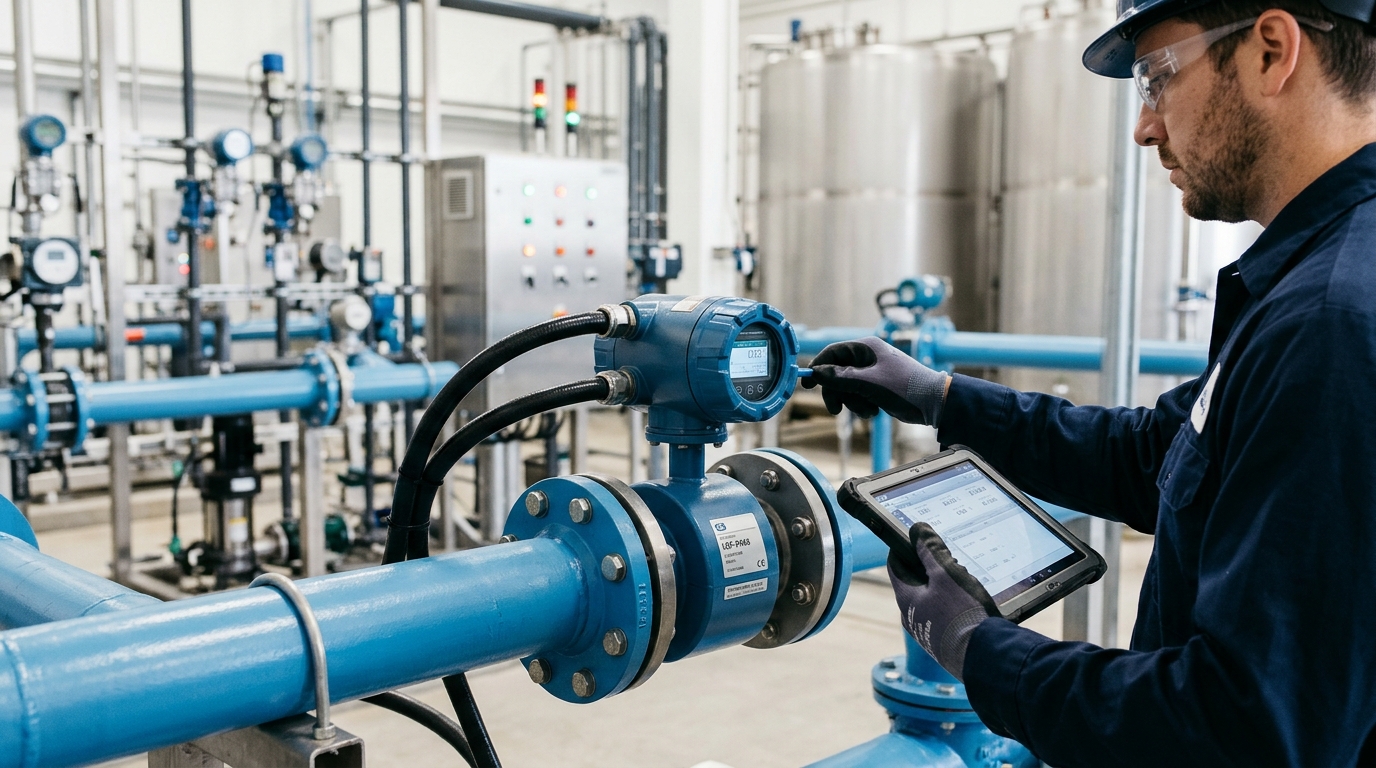
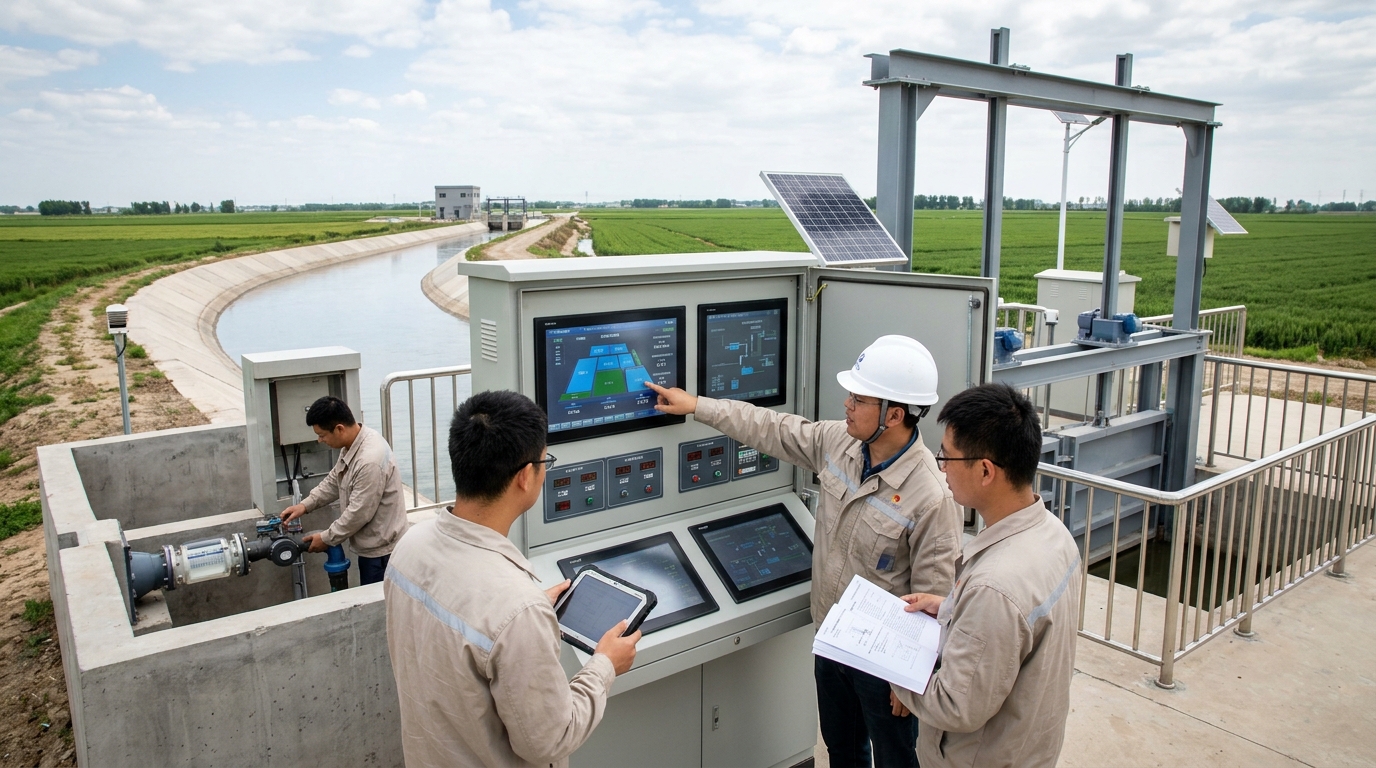
In small and medium process branches of fine chemical industrial parks, DN50 pipe diameters are often overlooked, yet they frequently undertake critical metering tasks for material balance, utility allocation, and abnormal operating condition determination. In the second half of 2024, a fine chemical industrial park in East China carried out a retrofit of its circulating cooling water reuse, chlorinated waste liquid recovery, and process bypass metering systems. The project selected an electromagnetic flowmeter-based metering solution combined with an LGF-PA66 injection-molded integrated insulating anti-corrosion structure to resolve long-standing issues of reading drift, corrosion leakage, and frequent maintenance.
This case demonstrates that small-bore complex-medium metering retrofits are not simply instrument replacement; they require a closed loop among medium analysis, material compatibility, grounding design, installation practices, and operating data validation.
Project Background: Small and Medium Branch Metering Systems Enter a Retrofit Window
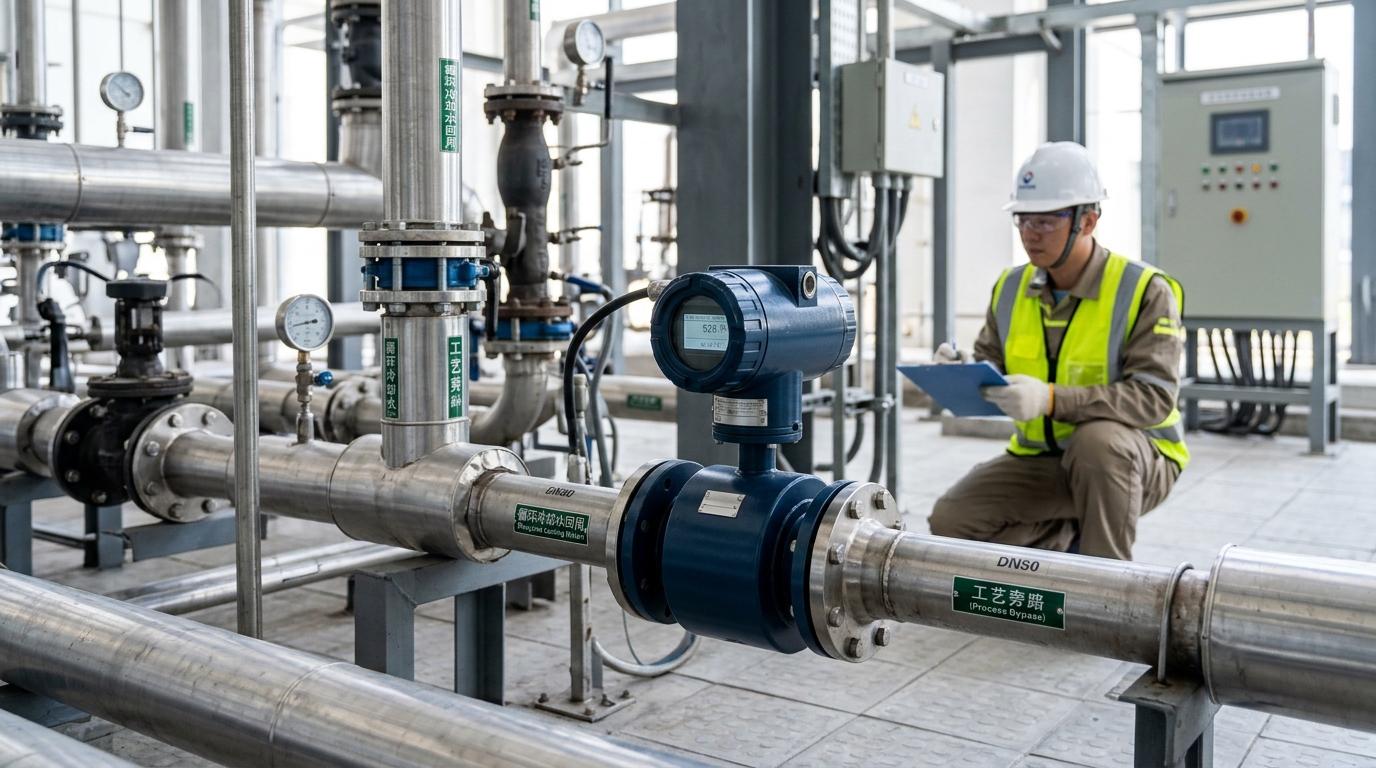
The project is located in a fine chemical industrial park in East China, involving three adjacent production units for pesticide intermediates, electronic chemical auxiliaries, and environmental waste liquid recovery. Since 2016, the park has progressively built utility metering systems, with circulating cooling water branches, waste liquid reuse branches, and process bypasses mostly using DN50 pipe diameters.
Before the retrofit, a total of 12 key metering branches were identified on site. The original instruments included mechanical water meters, vortex flowmeters, and some older electromagnetic flowmeters. Due to changes in medium composition, increased chloride ion concentration, and larger temperature fluctuations, these instruments produced a cumulative 37 abnormal alarms from 2023 to the first half of 2024. Most deviations were caused by impeller sticking, electrode corrosion, poor grounding, and zero drift.
Medium Category 1: Circulating Cooling Water
- pH: 6.5 – 8.5
- Conductivity: 350 – 700 μS/cm
- Temperature: 30 – 45 °C
- Flow Velocity: 0.8 – 2.6 m/s
- Additives: Corrosion inhibitors, scale inhibitors
Medium Category 2: Chlorinated Waste Liquid
- pH: 2 – 4
- Chloride Ion: 5000 – 9000 mg/L
- Temperature: 55 – 75 °C
- Conductivity: 80 – 150 μS/cm
- Particles: Fibrous (<0.5mm), trace air bubbles
Both systems are conveyed through carbon steel pipelines. The original DN50 pipe sections had a wall thickness of about 3.5 mm, with some locations showing outer wall corrosion and flange leakage points. The park planned to complete the retrofit during one annual maintenance shutdown window, aiming to control metering error within ±0.5% under minimal-production-stop conditions. The final scope included adding 12 DN50 electromagnetic flowmeters (8 for cooling water, 4 for waste liquid) along with comprehensive grounding and DCS communication upgrades.
Technical Difficulties: Low Conductivity, Strong Corrosion, and Complex Conditions
1. Low Conductivity and Flow Velocity Range
Electromagnetic flowmeters generally require higher input impedance and stable excitation for low-conductivity media. The conductivity of chlorinated waste liquid reuse water is only about 80 to 150 μS/cm, close to the boundary of low-conductivity applications. With flow velocities fluctuating between 0.7 and 2.8 m/s, improper excitation frequency or high grounding resistance can lead to zero noise and instantaneous flow jumps in the low-flow range.
2. Corrosive Environment
Chlorinated waste liquid poses obvious corrosion risks to stainless steel electrodes and metal structural components due to low pH, high chloride concentration, and temperatures reaching 55–75°C. Earlier sampling found that under conditions exceeding 6000 mg/L chloride and 60°C, 316L electrodes showed pitting traces at the roots, with depths reaching 0.1–0.2 mm. Continued use of ordinary stainless steel could result in electrode failure or liner seal leakage within six months to a year.
3. Installation Space and Grounding Conditions
The park's pipe rack is dense, with some DN50 branches in narrow pump house spaces lacking sufficient upstream/downstream straight pipe lengths. Original carbon steel pipelines lacked dedicated grounding rings, resulting in measured grounding resistance values between 10 and 30 Ω—failing to meet stable measurement requirements. On-site vibration from centrifugal pumps further exacerbated risks of liner seal failure if bolt torque was uneven.
Solution: Building a Stable Measurement Chain
The project team selected DN50 electromagnetic flowmeters as the core retrofit component. Compared with vortex flowmeters, they offer better adaptability to low flow velocity, particle-containing, and bubble-containing media. Compared with mechanical meters, they have no moving parts, reducing wear and sticking.
Key Instrument Specifications
- Full-scale flow rate: 12.5 m³/h
- Accuracy: ±0.3% FS
- Repeatability: ≤0.15%
- Response time: 2 seconds
- Output: 4–20 mA, HART, RS485 Modbus RTU
- Electrodes: Hastelloy C276 (Waste Liquid), 316L/Titanium (Cooling Water)
- Liner: PTFE
For low-conductivity media, excitation frequencies were set to dual modes: 25 Hz for normal response and 16 Hz for low-flow stability. Functions such as empty-pipe detection, reverse flow alarm, grounding fault prompt, and automatic zero tracking were enabled to reduce manual inspection burdens.
Grounding System Redesign
Each flowmeter was equipped with a grounding ring upstream or downstream to form a low-resistance path with the medium. The target grounding resistance was controlled within 5 Ω, achieving an average on-site measurement of 3.6 Ω. Independent copper wires led to the on-site grounding grid, avoiding uncontrolled loops through flange bolts. For chlorinated waste liquid branches, Hastelloy C276 grounding rings were used to prevent corrosion of the grounding component itself.
Materials and Structure: LGF-PA66 Injection-Molded Integrated Support
A key structural innovation was the adoption of an LGF-PA66 (Long-Glass-Fiber-Reinforced Polyamide 66) injection-molded integrated insulating anti-corrosion support assembly. This material was used for housing supports, flange insulating seats, junction box seals, and measuring tube bushings.
Structural Advantages
The injection-molded integrated structure reduces assembly gaps compared to traditional separately assembled gaskets. This lowers the probability of medium penetration, improves dimensional consistency, and controls assembly deviation—critical for DN50 small-bore instruments where internal space is limited.
Anti-Corrosion & Aging Resistance
After 1000 hours of accelerated aging tests in acidic environments (75°C, pH 2-4), tensile strength retention was ~86%, and water absorption remained below 1.2%. The IP68-rated junction box ensures reliability in humid pump house environments.
Manufacturing quality control included insulation resistance testing (>100 MΩ), hydrostatic pressure testing (1.6 MPa for 15 mins), and precise dimensional verification of sealing grooves (±0.05 mm tolerance). These measures strengthened the weak points of DN50 flowmeters in anti-corrosion and sealing.
Implementation Process: 18-Day Rapid Deployment
- Days 1–3: Survey & Planning. Technicians inspected pipeline routing and grounding. Four branches had insufficient straight pipe length (<5D). Installation locations were adjusted post-pump outlet, and flow-conditioning structures were added for two difficult spots.
- Days 4–9: Preparation. Confirmation of electrode materials, liners, and LGF-PA66 component batches based on medium classification.
- Days 10–12: Installation. During the shutdown window, DN50 carbon steel pipes were cut. Dedicated flanges ensured coaxiality error ≤0.5 mm. Bolt torque was strictly controlled at 18–22 N·m to prevent liner deformation. All 12 instruments achieved grounding resistance <5 Ω.
- Days 13–15: Commissioning. Empty-pipe alarms and full-pipe zero calibration were performed. Zero drift per instrument was controlled within 0.1 mV.
- Days 16–18: Trial Run. DCS signals were compared with portable ultrasonic flowmeters. Cooling water branch deviation was ~±0.8%; waste liquid branch noise decreased by ~42% compared to pre-retrofit levels.
Final Effect: Stability, Life, and Cost Improvements
(vs ±4.2% previously)
(Previously avg. 3/year)
After three months of continuous tracking, third-party verification showed significant improvements in metering consistency. Low-flow stability improved notably, with standard deviation of instantaneous flow dropping from 0.41 m³/h to 0.18 m³/h for waste liquid branches. No flange leaks, liner bulging, or electrode corrosion alarms occurred.
Economically, stable metering data allowed optimization of cooling water allocation and waste liquid reuse ratios. Pump group electricity consumption decreased by ~3.6%, saving approximately 184,000 kWh annually (~132,000 CNY). Maintenance costs dropped from ~198,000 CNY to ~72,000 CNY annually. Combined savings resulted in a payback period of about 14 months, demonstrating strong economies of scale for multi-branch retrofits.
Experience Review & Industry Outlook
This case highlights that DN50 electromagnetic flowmeter retrofits cannot focus solely on bore size and price. Small-bore instruments are highly sensitive to installation coaxiality, grounding quality, and structural dimensional consistency. Under complex conditions like chlorinated waste liquid, electrode, grounding, and liner materials must simultaneously meet corrosion resistance requirements.
Another key lesson is that low-conductivity media require refined commissioning strategies. Simply replacing instruments is insufficient when straight pipe lengths are inadequate; a comprehensive assessment combining pipe location, valve type, and pump pulsation is essential. System matching proves more important than optimizing any single parameter.
Looking ahead, DN50 electromagnetic flowmeters will continue to expand in segmented process industries such as fine chemicals, pharmaceuticals, and new energy materials. As enterprises advance energy management and carbon accounting, the value of these small-bore meters shifts from simple "metering instruments" to "data credibility infrastructure." Future retrofits will move toward "measurement chain design," integrating material anti-corrosion, intelligent excitation, and online diagnostics.