Smart Water Management Digital Transformation: Data Silos and IoT Platforms
From "Engineering-Based Water Management" to "Data-Driven Water Management," smart water management enters the phase of large-scale implementation.
Introduction: The Shift to Data-Driven Management
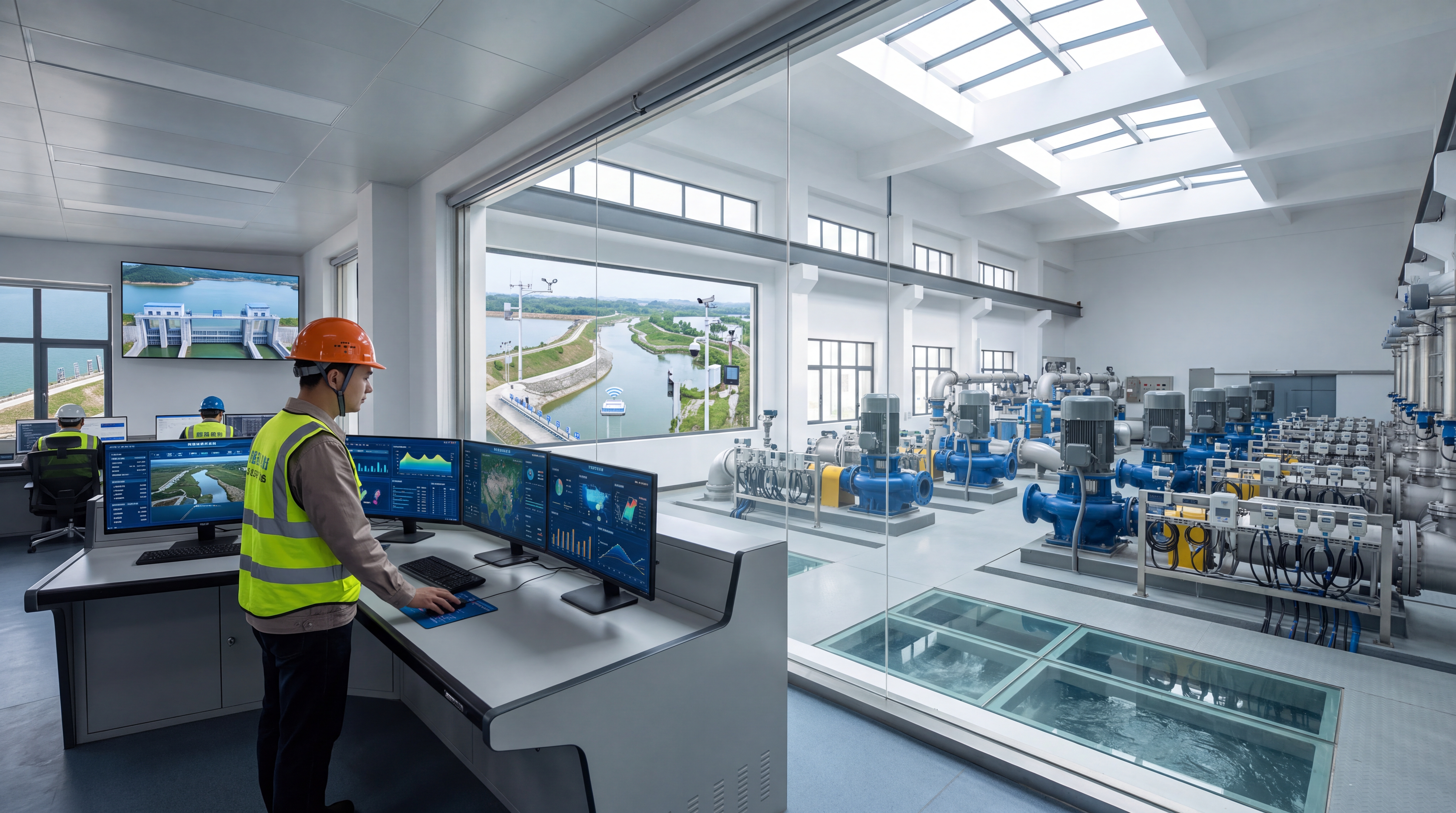
Against the backdrop of frequent extreme weather, tightening water resource constraints, and the continuous advancement of new-type urbanization, China's water conservancy industry is shifting from the traditional engineering construction-oriented model to a smart water management system characterized by data perception, intelligent scheduling, and refined operations. Industry observations by Yicai Technology note that smart water management is no longer just an informatization project of "installing sensors, building large screens, and developing platforms," but a systematic reconstruction covering water sources, water transmission and distribution networks, irrigation district canal systems, pump stations and sluice gates, drainage and waterlogging prevention, and end-user water consumption.
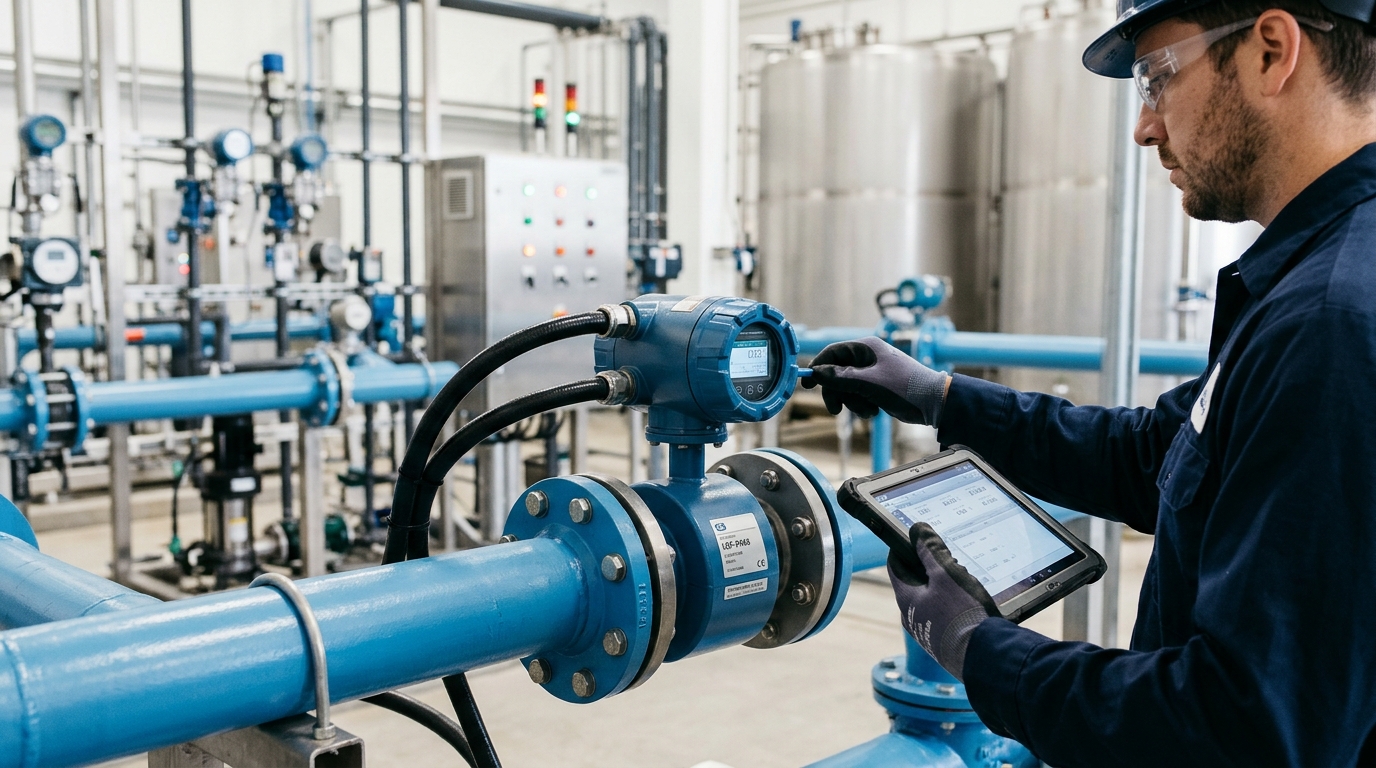
In this process, sensing and control nodes with small and medium calibers such as DN50 are becoming the focus of industry attention. Compared to large pump stations and reservoir hubs, DN50 nodes are widely distributed in urban and rural water supply branch pipes, residential water connections, commercial and industrial water usage, terminal canal systems of irrigation districts, and industrial circulating water systems. They are numerous, widely dispersed, and difficult to maintain. Focusing on the long-term anti-corrosion, stable measurement, low-power communication, and structural reliability of these nodes, keywords such as materials and processes like LGF-PA66 and integrated injection molding have begun to frequently enter discussions on smart water supply chains and product design.
Market Trends: From Point Informatization to Closed Loop
1. Closed-Loop System Construction
The first major change is the shift in demand from single-point equipment procurement to closed-loop system construction. Owners are increasingly inclined to build a complete chain of "perception-transmission-analysis-decision-execution-O&M." Multiple industry research institutions predict that from 2024 to 2028, China's smart water-related sensing equipment, communication terminals, software platforms, and O&M services will continue to maintain rapid growth, with the compound annual growth rate in some segmented areas expected to reach 15%–25%.
2. Pipeline Network Leakage Control
With the expansion of urban water supply scale and the accelerated renewal of aging pipeline networks, district metering, pressure regulation, and night minimum flow analysis have become important tools for water supply enterprises to reduce costs and increase efficiency. Public policy guidelines propose that by 2025, the leakage rate of urban public water supply networks should be controlled within 9%. Around this goal, water supply enterprises across the country have begun to intensify the deployment of DN50–DN300 electromagnetic flow meters, ultrasonic flow meters, and pressure sensors. A prefecture-level city in East China completed the construction of about 1,200 DMA district metering points between 2022 and 2024, adding over 8,000 flow and pressure sensing devices with a caliber of DN50 and above. The leakage rate of the water supply network dropped from 14.8% to 9.6%, reducing the annual water loss by approximately 6 million cubic meters.
3. Modernization of Irrigation Districts
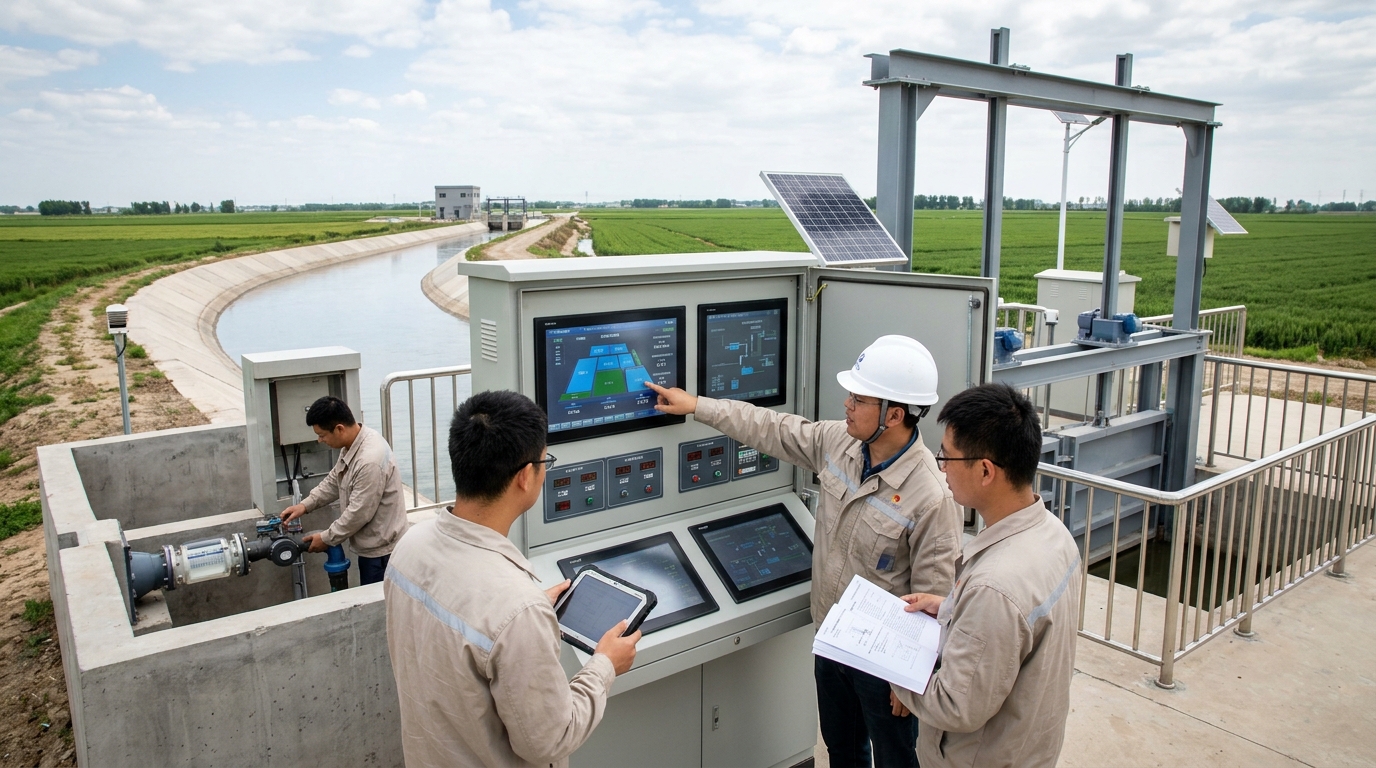
The renovation of large irrigation districts no longer focuses solely on canal lining but simultaneously constructs water measurement facilities, remote-controlled sluice gates, solar-powered terminals, and water consumption metering systems. Small and medium-caliber nodes such as DN50 and DN80 appear extensively in terminal canal systems, branch canal diversion outlets, and field pipeline networks. What the industry generally focuses on is not the one-time construction cost, but whether the equipment can operate stably for 5–10 years under conditions of moisture, sediment, ultraviolet radiation, pesticide corrosion, and low-frequency maintenance. This also makes material anti-corrosion, structural sealing, and integrated molding capabilities new variables in market competition.
Policy Impacts: Reshaping Demand Through Top-Level Design
Policy is the core driving force for the expansion of smart water management. The "National Water Network Construction Planning Outline (2023–2035)" proposes that by 2035, the overall pattern of the national water network will be basically formed, emphasizing the promotion of digital transformation of water conservancy infrastructure. In recent years, the Ministry of Water Resources has continuously promoted the construction of digital twin river basins, digital twin water networks, and digital twin engineering projects. It proposes to build a batch of digital twin platforms with functions of forecast, early warning, rehearsal, and contingency plans by 2025, and to basically construct the digital twin water conservancy system by 2030. The policy focus has shifted from "whether there is an informatization system" to "whether it can support scheduling and form a business closed loop."
Water conservation and water use efficiency indicators are also strengthening project implementation. Public planning documents propose that during the "14th Five-Year Plan" period, the target for reducing water consumption per 10,000 RMB of GDP is about 16%, and the effective utilization coefficient of farmland irrigation water will be increased to about 0.58 by 2025. For local water conservancy departments and water supply enterprises, these indicators are no longer just statistical reports but will be transformed into specific requirements for metering coverage rate, automatic control rate, leakage control rate, and water use assessment. The resulting change is that projects that previously focused on "visual display" are shifting towards performance-oriented construction centered on data accuracy, equipment online rate, scheduling response speed, and O&M costs.
In addition, data security, equipment standards, and localization adaptation have also begun to affect procurement logic. Smart water management involves critical data such as hydrology, water supply, drainage, and flood control. Owners have higher requirements for communication security, platform permissions, interface specifications, and long-term maintainability. For terminal equipment, bidding parameters increasingly include protection ratings, corrosion-resistant lifespan, battery life, metering accuracy, remote upgrade capabilities, and material environmental protection requirements. For example, in some integrated urban and rural water supply projects, owners explicitly require water-contacting components to have anti-corrosion, anti-scaling, and anti-electrochemical corrosion capabilities, and prioritize structural solutions with integrated molding to reduce leakage risks.
Multi-Source Perception & Edge Intelligence
Smart water management is forming a superimposed architecture of "multi-source perception, edge computing, model simulation, and collaborative scheduling." For terminal nodes at the DN50 level, the industry generally focuses on low-power design: under battery power, equipment usually needs to meet a 6–10 year battery life, while maintaining an IP68 protection rating.
Edge intelligence is reducing platform dependence and false alarm rates. New-generation intelligent terminals incorporate built-in functions such as pressure fluctuation identification and night minimum flow analysis. Practical results show that after edge filtering, invalid alarms can be reduced by more than 30%.
Digital Twins & Business Models
Digital twins bring perceived data into business models. Water conservancy digital twins integrate hydrological models, pipeline network hydraulic models, irrigation district water distribution models, and scheduling rule engines.
Future competitive platforms will answer complex questions such as: "If upstream rainfall increases by 50 mm, which nodes will be over-pressurized?" or "If the pressure of a certain DN50 branch pipe continues to drop, is it leakage or abnormal user water consumption?" This means the technical threshold is shifting from software development to comprehensive water conservancy business understanding.
Materials and Processes: Key to Terminal Equipment Competitiveness
The "last mile" of smart water management is often composed of a large number of small and medium-caliber nodes. DN50 refers to the nominal diameter of 50 mm for pipes or interface specifications, commonly found in residential branch pipes, commercial and industrial user metering, terminal water diversion in irrigation districts, industrial circulating water branch lines, and fire water branch lines. Compared to large-diameter main pipes above DN200, DN50 nodes have a lower unit value but are huge in quantity and installed in complex environments, posing higher requirements for material corrosion resistance, dimensional stability, sealing reliability, and batch consistency.
LGF-PA66: Enhancing Strength and Durability
LGF-PA66, or Long Glass Fiber reinforced Polyamide 66, is becoming an important material choice for the structural parts of some smart water management terminals. Compared to ordinary short glass fiber reinforced nylon, long glass fibers form a reinforcement network with a higher aspect ratio in the matrix, which helps improve strength, rigidity, and fatigue resistance. The industry commonly uses LGF-PA66 materials with a glass fiber content of 30%–50%. The tensile strength can usually reach 160–250 MPa, and the flexural modulus is about 9–16 GPa. With reasonable formulation and mold design, the molding shrinkage rate can be controlled at a low level, contributing to the dimensional consistency of DN50 interfaces, threads, sealing grooves, and sensor mounting positions.
Integrated Injection Molding: Reducing Leakage Risks
The value of the integrated injection molding process lies in reducing assembly steps and potential leakage points. Smart water management terminals usually include valve bodies, meter housings, sensor cavities, battery compartments, communication module compartments, cable interfaces, and sealing structures. If multiple parts are spliced together with metal inserts, secondary welding, or a large number of fasteners, assembly consistency is easily affected by manual labor, sealing component aging, and on-site construction. Integrated injection molding can integrate multiple structural functions into a single molded part, reducing welds, seams, and assembly errors. Combined with ultrasonic welding, laser welding, and sealing ring structural design, it helps improve the overall protection rating.
Anti-corrosion is not as simple as "replacing steel with plastic." LGF-PA66 has certain advantages in scenarios involving raw water, chlorine disinfection residual, soil moisture, fertilizer and pesticide residues, industrial circulating water chemicals, and salt spray environments, but it also needs to ensure long-term reliability through modified formulations, surface protection, sealing material matching, and structural drainage design.
Application Cases: Value Verification of DN50 Nodes
Integrated Urban and Rural Water Supply
In a county in Southwest China that launched a digital transformation of urban and rural water supply in 2023, about 4,200 DN50 smart remote-reading water meters and pressure monitoring terminals were added. After one year of operation, the remote reading success rate remained above 99.5%, manual reading workload decreased by about 30%, and over 120 hidden leak points were located through night minimum flow analysis. The regional water supply leakage rate dropped from 13.2% to 10.1%. In this project, some terminals adopted an anti-corrosion integrated structure, reducing the problems of housing rust and interface water seepage in the moist well environment.
Irrigation District Modernization
An irrigation district in North China constructed informatized water measurement facilities between 2022 and 2024, deploying about 2,600 sets of DN50–DN200 electromagnetic flow meters, ultrasonic water level gauges, and solar-powered remote control valves. The project required the metering error to be controlled within ±2%, and the equipment to operate stably under open-air, sediment, and seasonal freeze-thaw conditions. After the renovation, the effective utilization coefficient of irrigation water in the district increased from 0.565 to 0.590, the response time for water scheduling in main and branch canals was shortened from hours to minutes, and the water fee collection rate also improved with the increased transparency of metering.
Industrial Parks and Municipal Drainage
An industrial park in the Yangtze River Delta monitored and renovated its circulating water, cooling water, and rainwater discharge systems, where some water quality exhibited pH fluctuations, high chloride ion content, and chemical residues. The project used DN50 anti-corrosion smart valve control terminals and pressure sensors, requiring the housing and wetted parts to be stable in weak acid/alkali environments for a long time. After three years of operation, on-site sampling showed that the number of equipment housing rust, cracking, and sealing failures was significantly lower than that of early metal solutions, and the number of maintenance work orders decreased by about 40%.
Industrial Chain Changes: From Equipment to Lifecycle Competition
The smart water management industrial chain is shifting from a linear relationship of "equipment supplier-integrator-owner" to a networked ecosystem involving the joint participation of materials, molds, sensors, communication modules, platform software, algorithm models, and O&M services. In the past, industry competition focused on project bidding prices and platform function displays; in the future, competition will be more reflected in the long-term online rate of terminal equipment, metering stability, material durability, communication reliability, and spare parts interchangeability.
Modularization is an important path to reducing life cycle costs. If smart water management terminals standardize and split the battery module, communication module, sensing module, and valve control module, maintenance and upgrades can be performed without replacing the main body, reducing on-site water shutdown time and construction costs. At the same time, the introduction of LGF-PA66, integrated injection molding, and anti-corrosion structural parts also poses higher requirements for mold accuracy, molding processes, and quality inspection.
Procurement logic is also changing. As water conservancy departments increase their requirements for water conservation indicators, leakage indicators, and scheduling efficiency, life cycle costs are beginning to enter the bid evaluation system. Owners will comprehensively compare equipment lifespan, battery life, maintenance frequency, spare part prices, platform openness, and data security capabilities. For the smart water management industry, this means that the space for simply selling hardware or software will narrow. Enterprises that can provide reliable terminals, standardized data, continuous O&M, and business closed-loop capabilities will be more competitive in the long term.
Outlook: Trusted Data, Reliable Equipment, and Trusted Operations (2026–2030)
Looking ahead to 2026–2030, smart water management will present three trends. First, data value will shift from "visible" to "decision-supportable." Digital twin platforms will be more deeply embedded in flood control scheduling, water resource allocation, irrigation district water distribution, and water supply leakage control, with model accuracy and data quality becoming the core. Second, equipment competition will shift from "function stacking" to "reliability competition." Terminal nodes such as DN50 will develop towards low power consumption, anti-corrosion, anti-blockage, maintenance-free, and long lifespan. Processes such as LGF-PA66 and integrated injection molding will be applied in more smart water meters, valve control terminals, and sensor housings. Third, the operation model will shift from "project construction" to "continuous service." Water conservancy and water supply enterprises will pay more attention to data operations, equipment health management, energy saving and consumption reduction, and performance assessment.
Overall, smart water management is not a short-term hotspot but a long-term direction for the modernization of water resource management and the digitalization of infrastructure. The future industry watershed does not lie in who owns more concepts, but in who can provide accurate data, stable equipment, and sustainable O&M in real water conservancy scenarios. For materials, processes, sensors, communication, and platform enterprises, the real opportunity comes from a deep understanding of water conservancy business and the long-term polishing of subtle nodes such as DN50. Only by making every sensing node reliable can the "brain" of smart water management truly exert its scheduling value.