Development Opportunities for Smart Water Management in 2026 in the Context of the Dual Carbon Goals
Insights on Market Trends, Technological Evolution, and Hardware Reliability
Smart water management is transitioning from isolated informatization to full-chain digital governance. As the industry shifts focus towards "refined operations," the competition is moving from software platforms to underlying hardware reliability, specifically focusing on closed-loop capabilities that are perceptible, analyzable, predictable, and controllable.
Over the past decade, the water conservancy industry focused heavily on engineering investment and facility construction. However, with national water conservancy construction investment approaching 1.2 trillion yuan in 2023, the focus is shifting. The pressures of supply-demand balance, pipeline leakage control, and urban flood prevention are driving smart water management into a stage of normalized construction.
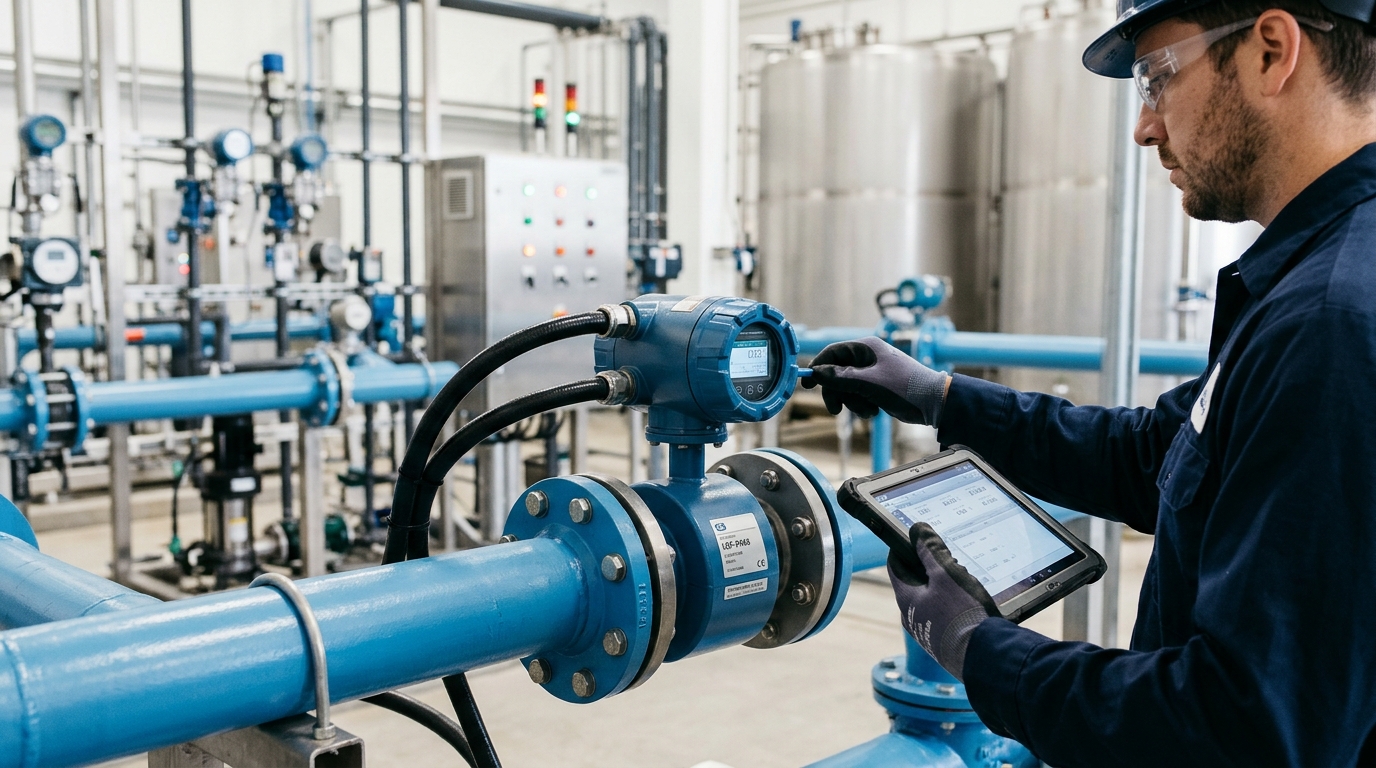
In this process, the industry is no longer solely focused on large-screen displays but places greater emphasis on the reliability and cost-effectiveness of terminal sensing devices. Small and medium diameter terminals, such as DN50, are becoming high-frequency application scenarios. Their limited installation space and humid environments impose higher requirements on anti-corrosion performance and low-power capabilities, bringing materials like LGF-PA66 and integrated injection molding into the spotlight.
I. Market Trends: From Demonstration Pilots to Normalized Deployment
The market is shifting from "demonstration zones" to "problem-driven" approaches. Specific demands are emerging across different sectors:
- Urban Water Supply: Focus on leakage control and non-revenue water. Equipment like DN50 smart valves and pressure transmitters are deployed at community entrances to identify abnormal flows.
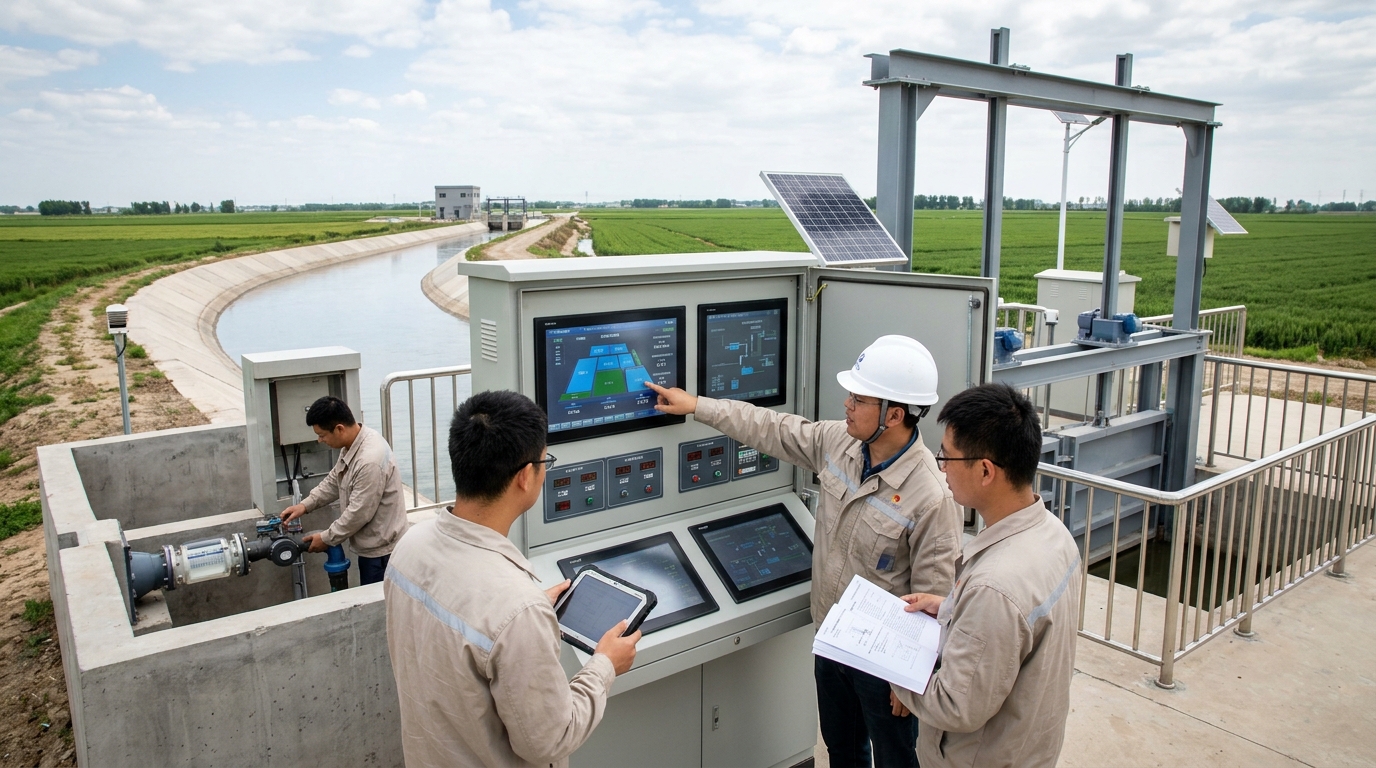
- Agricultural Irrigation: Modernization requires "accurate measurement, reliable transmission, effective control." Demand for small-scale equipment (DN50-DN100) is increasing for lateral canals and farm ditches.
- Rural Water Supply: With penetration rates exceeding 90%, the focus is now on stability and O&M. Low-power battery supply and IP68 protection are rigid demands for dispersed rural stations.
Procurement is evolving from single device sales to system solutions. Owners now evaluate based on total lifecycle costs and operational outcomes—such as reduced inspection frequency and improved irrigation coefficients—rather than just initial price tags.
II. Technological Evolution: Synergy of Sensing, Communication, and Edge Control
The technological foundation is upgrading from simple "collection-transmission-display" to a closed loop of "sensing-judgment-control-feedback."
Sensing & Accuracy
Pressure monitoring accuracy typically requires ±0.5% FS. Liquid level monitoring needs centimeter-level precision. Single sensors can no longer meet complex working conditions without multi-parameter compensation.
Edge Computing
Edge terminals perform local threshold judgment and trend identification. For example, automatically closing a valve upon detecting an abnormal pressure drop prevents accidents before they expand, forming a "local rapid response" structure.
Actuators are often the underestimated link. Valve sticking, moisture ingress, and seal aging directly affect system availability. For critical nodes, equipment must meet IP68 ratings and adapt to varying pressures (0.2–0.6 MPa). Meanwhile, Digital Twins are moving beyond 3D modeling to require high-quality real-time data for forecasting and early warning.
III. Materials and Processes: The Key to Terminal Reliability
Smart water equipment operates in harsh environments involving moisture, salt spray, and chemical media. Material selection is shifting from "usable" to "long-term reliable."
LGF-PA66 Material
Long glass fiber reinforced polyamide 66 offers superior tensile strength, impact resistance, and creep resistance compared to standard nylon, making it ideal for valve bodies and enclosures.
Integrated Injection Molding
Reduces assembly nodes and potential leakage paths. By forming complex flow channels and seal grooves in one go, it minimizes welds and screws, significantly lowering the risk of water ingress.
Anti-corrosion is a systems engineering challenge. It involves not just the main material but also isolation structures for metal inserts, compatible sealing materials, and enclosure designs that consider drainage and UV resistance. LGF-PA66 combined with integrated injection molding provides fewer splices and less exposed metal, enhancing overall durability.
IV. Policy Impact & Typical Scenarios
Policies such as the "Outline for the Construction of the National Water Network" and urban leakage control targets (e.g., controlling leakage rates within 9%) provide clear investment directions. These policies drive the demand for standardized, reliable equipment.
"A county-level water supply project in East China... achieved precise positioning of high-leakage areas. After operation, the leakage rate dropped from 16.8% to 11.2%, and night flow decreased by over 20%."
Typical Parameters for DN50 Terminals:
- Nominal Diameter: 50mm (suitable for branch pipes)
- Working Pressure: 0.2 MPa – 0.6 MPa
- Protection Rating: IP68
- Battery Life: 5–8 years (target)
- Accuracy: Pressure ±0.5% FS; Flow ±5%
V. Supply Chain & Future Outlook
The supply chain is shifting from linear procurement to network collaboration involving materials, molds, electronics, and O&M. Standardization is key to reducing costs and improving efficiency, while O&M capability has become the watershed for project success.
Looking ahead to 2026 and beyond, smart water management will enter a reliability competition stage. The value proposition shifts from "visualizable" to "predictable." AI models will rely on high-quality data from stable terminals, and the industry will prioritize "data validity rate" over mere device quantity. Enterprises that integrate materials science, precision manufacturing, and sustainable O&M services will lead the market.
Only by implementing "reliable sensing, credible data, available control, and sustainable O&M" can smart water management genuinely move from concept to large-scale value realization.