Smart Water Management Trend Outlook: LGF-PA66 Reshaping Smart Water Management
Written by the Industry Research Center of Ecolor Technology
Against the macro backdrop of intensifying global climate change and the increasingly prominent contradiction between water supply and demand, traditional water conservancy infrastructure is facing unprecedented pressure and challenges. From extensive water resource allocation to refined pipe network management, the digital transformation of the water conservancy industry is no longer an optional choice, but a core strategy concerning national water security, stable urban operations, and sustainable agricultural development. Smart Water Conservancy, as an interdisciplinary field integrating the Internet of Things (IoT), big data, artificial intelligence, and cutting-edge materials science, is ushering in a period of explosive growth. As a keen observer deeply engaged in industry technological dynamics, Ecolor Technology presents a comprehensive overview of the development and future trends of the smart water conservancy industry through in-depth analysis of recent market data, policy orientations, and underlying hardware technological innovations.
I. Macro-Policy Drivers and Market Scale: The Digital Foundation of National Water Network Construction
The development of smart water conservancy benefits primarily from the strong promotion of top-level design. In recent years, major global economies have increased their investments in the modernization of water conservancy infrastructure. In China, the official release of the "National Water Network Construction Planning Outline" marks the comprehensive acceleration of the construction of the main framework and major arteries of the national-level water network. The outline explicitly proposes to advance the digital, networked, and intelligent construction of the water network and to build a digital twin water network. This provides solid policy support and broad market space for the smart water conservancy industry.
From the perspective of investment scale, data released by the Ministry of Water Resources shows that the national investment in water conservancy construction exceeded 1.19 trillion RMB in 2023, reaching a record high. Among them, the proportion of investment in water conservancy informatization and smart transformation is significantly increasing year by year. According to authoritative industry market research institutions, by 2025, the market size of China's smart water management and smart water conservancy is expected to break through the 500 billion RMB mark, with a Compound Annual Growth Rate (CAGR) maintaining a high range of 15% to 20%. This massive market encompasses not only cloud-based computing platforms and software algorithms but also a vast array of edge-side sensing devices, smart valves, smart water meters, and other underlying hardware.
The policy orientation is undergoing profound changes: shifting from the past focus on "emphasizing construction, neglecting management and maintenance" to "equal emphasis on construction and management, empowered by data." Local water affairs groups and water conservancy management departments are required to establish full-process monitoring systems covering water sources, water transmission networks, water plants, and user terminals. This full-life-cycle management requirement has directly spawned an explosive demand for high-performance, highly reliable, and long-lifespan underlying water conservancy hardware facilities. The upgrading and iteration of hardware equipment constitute the most solid physical foundation for the "digital base" of smart water conservancy.
II. Pain Points of Traditional Water Conservancy Infrastructure: The Dual Challenges of Physical Aging and Data Silos
Before embracing digitalization, the water conservancy industry must confront the heavy historical burden left by traditional infrastructure. Currently, the underground pipe networks and agricultural irrigation systems in many cities worldwide were built decades ago, and their core pain points are mainly concentrated in two dimensions: material aging at the physical level and data silos at the information level.
At the physical level, traditional water conservancy pipe networks and control components (such as valves, water meter casings, and pump bodies) are largely manufactured using cast iron, brass, or ordinary carbon steel. Under the combined effects of complex underground soil environments, internal water chemicals, and stray currents, these metal materials are highly susceptible to severe electrochemical corrosion and oxidation. Corrosion not only leads to thinning of pipe walls and decreased pressure-bearing capacity—subsequently triggering pipe bursts and severe water leakage accidents (currently, the pipe network leakage rate in some old urban areas in China is still over 15%)—but also produces precipitates like rust, causing secondary water quality pollution, known as the "red water" phenomenon. Furthermore, metal components are heavy, resulting in high transportation and installation costs, and mechanical fatigue failures frequently occur after long-term water hammer impacts.
At the information level, the vast majority of traditional water conservancy facilities are "dumb devices." They lack sensing capabilities and cannot provide real-time feedback on their operating status (such as pressure, flow rate, temperature, valve opening, etc.). Water management departments often have to rely on regular manual inspections or respond passively only after an accident occurs (e.g., water surfacing on the road). This "post-event maintenance" model not only incurs extremely high maintenance costs but also severely wastes water resources, potentially even triggering secondary disasters like urban waterlogging. Even if some pipe networks are retrofitted with external sensors, the lack of unified interfaces and complex communication protocols often leads to "data silos," making it impossible to form coordinated control from a global perspective. Therefore, the industry urgently needs a novel hardware solution capable of simultaneously addressing physical anti-corrosion durability and digital integrated sensing.
III. Breakthrough in Materials Science: The Disruptive Application of LGF-PA66 in Core Water Conservancy Components
Addressing the inherent defects of traditional metal materials, advancements in polymer materials science have provided a revolutionary path for upgrading smart water conservancy hardware. Among numerous engineering plastics, Long Glass Fiber reinforced Polyamide 66 (LGF-PA66) is becoming the star material to replace traditional brass and cast iron, thanks to its outstanding comprehensive performance.
The core of LGF-PA66 technology lies in its microstructure. Unlike traditional short glass fiber (typically under 1mm in length) reinforced plastics, long glass fiber reinforcement technology can retain a glass fiber skeleton of 2-3mm or even longer inside the molded part after injection molding. This three-dimensionally interwoven fiber network endows the PA66 matrix with extremely robust mechanical properties. In terms of specific parameters, the tensile strength of high-quality LGF-PA66 composite materials can easily exceed 220 MPa, with a flexural modulus reaching over 15,000 MPa. Its impact resistance and creep resistance (i.e., deformation control under long-term constant stress) far surpass those of ordinary engineering plastics, and on certain metrics, it is even comparable to die-cast aluminum or zinc alloys.
In terms of anti-corrosion performance, which is of paramount concern in smart water conservancy, LGF-PA66 demonstrates innate advantages unmatched by metal materials. The macromolecular structure of polyamide possesses extremely strong chemical inertness to free chlorine in water (residual from tap water disinfection), acid-base substances in soil, and fertilizer and pesticide solutions in agricultural irrigation. It fundamentally eliminates the possibility of electrochemical corrosion and rusting, which not only significantly extends the service life of the equipment (design life can typically reach 20-50 years) but also ensures the long-term smoothness of the water passage, reduces head loss, and avoids the precipitation of heavy metal ions, fully complying with the world's strictest drinking water sanitation standards such as NSF/ANSI 61 and WRAS.
Furthermore, the density of LGF-PA66 is only one-sixth that of brass and one-fifth that of cast iron. This significant lightweight characteristic not only greatly reduces logistics and transportation costs but also makes on-site installation effortless, reducing the labor intensity and safety risks for construction personnel. In extreme temperature environments (such as outdoor working conditions from -30℃ to 80℃), LGF-PA66 can still maintain excellent dimensional stability and mechanical strength, unlike some ordinary plastics that become brittle at low temperatures or soften at high temperatures.
IV. Dimensional Upgrade of Manufacturing Processes: Integrated Injection Molding Technology Reshapes the Pipe Network Hardware Ecosystem
Excellent materials require matching advanced manufacturing processes to maximize their value. In the manufacturing of smart water conservancy terminal equipment, Integrated Injection Molding technology is profoundly reshaping product structural design and production workflows. The manufacturing of traditional metal valves and water meters typically involves cumbersome processes such as casting, multi-pass Computer Numerical Control (CNC) precision machining, surface anti-corrosion coating, and complex assembly with bolts and sealing gaskets. This is not only highly energy-consuming and time-intensive, but every assembled joint and sealing ring is also a potential hidden danger point for water leakage.
By utilizing LGF-PA66 material combined with integrated injection molding technology, complex cavities (such as valve bodies, water meter casings, and sensor bases) that originally required the splicing of multiple metal components can be molded in one go within the mold. This process completely eliminates the physical seams between components, achieving a truly seamless structure and greatly enhancing the overall pressure-bearing capacity and sealing reliability of the system. Through advanced Moldflow analysis technology, engineers can precisely control the temperature, pressure, and glass fiber orientation during the injection molding process, ensuring the formation of the most reinforced microstructure at stress-concentrated flange interfaces and valve seat areas, thereby avoiding strength weakening caused by weld lines.
Take the DN50 (Nominal Diameter 50mm) smart valve, which is widely applied in smart water pipe networks, as an example. DN50 is a critical node size connecting urban trunk pipe networks with residential secondary water supply systems, as well as high-standard agricultural irrigation main pipelines. A traditional DN50 copper valve weighs several kilograms, and when subjected to high water pressure of 1.6 MPa (PN16) or 2.5 MPa (PN25), the valve stem seal is highly prone to leakage after long-term operation. In contrast, a DN50 smart valve body manufactured using LGF-PA66 through integrated injection molding weighs less than 1 kilogram. Internally, it not only features a one-time molded streamlined water passage (effectively reducing water resistance and water hammer effects) but also reserves high-precision sensor mounting holes and actuator slots. In destructive water pressure tests in the laboratory, this integrated injection-molded DN50 valve body can withstand an instantaneous burst pressure of over 4.0 MPa without rupturing, fully proving the reliability of this process in ensuring the safety of high-pressure water conservancy pipe networks.
In addition, the integrated injection molding process endows products with extremely high design freedom. Designers can directly mold reinforcing ribs, mounting brackets, and brand logos on the casing. They can even use a two-color injection molding process to directly bond soft sealing materials (such as EPDM rubber) with the LGF-PA66 hard plastic skeleton, achieving a true "zero-assembly" seal, significantly reducing subsequent manual assembly costs and defect rates.
V. Integration of Edge Computing and IoT: From "Passive Sensing" to "Proactive Intelligence"
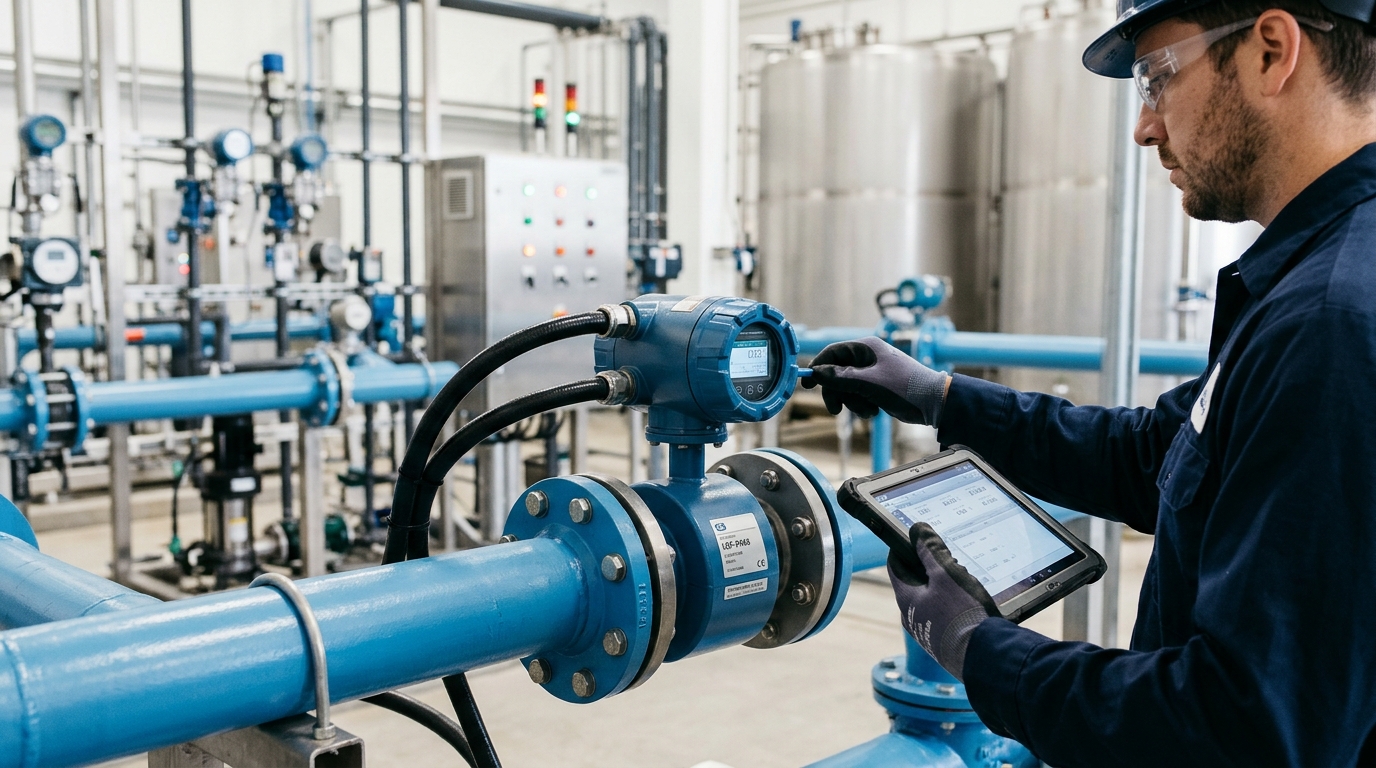
The "smartness" of smart water conservancy is reflected not only in the durable and reliable physical shell but also in its built-in "digital soul." The widespread application of non-metallic materials like LGF-PA66 has brought unexpected dividends for the integration of Internet of Things (IoT) communication technologies. Traditional metal casings produce a strong "Faraday cage" shielding effect on wireless electromagnetic waves, resulting in extremely poor signals for smart water meters or valves with built-in antennas, often requiring long external antennas that are both unsightly and easily damaged. However, LGF-PA66 material possesses excellent wave-transmitting properties, allowing wireless communication modules such as NB-IoT, LoRaWAN, and 4G/5G, along with their antennas, to be completely encapsulated inside the equipment. This achieves a high degree of integration and an upgrade in protection level (easily reaching IP68, capable of long-term submerged operation).
Building on unimpeded communication, smart water conservancy terminal equipment is experiencing a leap from "data pass-through" to "edge computing." Modern smart valves and water meters integrate microprocessors and various sensors (such as ultrasonic flow meters, high-frequency pressure sensors, and multi-parameter water quality probes). These devices are no longer mere "megaphones" that send data to the cloud on schedule; they have become "smart nodes" equipped with local data processing and real-time decision-making capabilities.
For example, when a DN50 smart control valve deployed at the end of the pipe network detects a precipitous drop in water pressure within seconds via its built-in high-frequency pressure sensor, accompanied by an abnormal surge in flow rate, the edge computing algorithm will immediately determine that a pipe burst has occurred in the downstream network. At this point, the valve does not need to wait for command latency from the cloud server; it can trigger a local protection mechanism in milliseconds, automatically executing the valve-closing action to cut off the water source. Subsequently, the device reports the alarm information and fault data to the digital twin platform. This "cloud-edge collaboration" architecture greatly improves the response speed of water conservancy pipe networks to emergencies, minimizing leakage losses and secondary disasters.
VI. Analysis of Typical Application Scenarios: From High-Standard Farmland to Urban Smart Water Management
The integration of new materials and digital technologies is taking root in various specific smart water conservancy scenarios, generating significant economic and social benefits.
Scenario 1: High-Standard Farmland and Smart Irrigation Systems
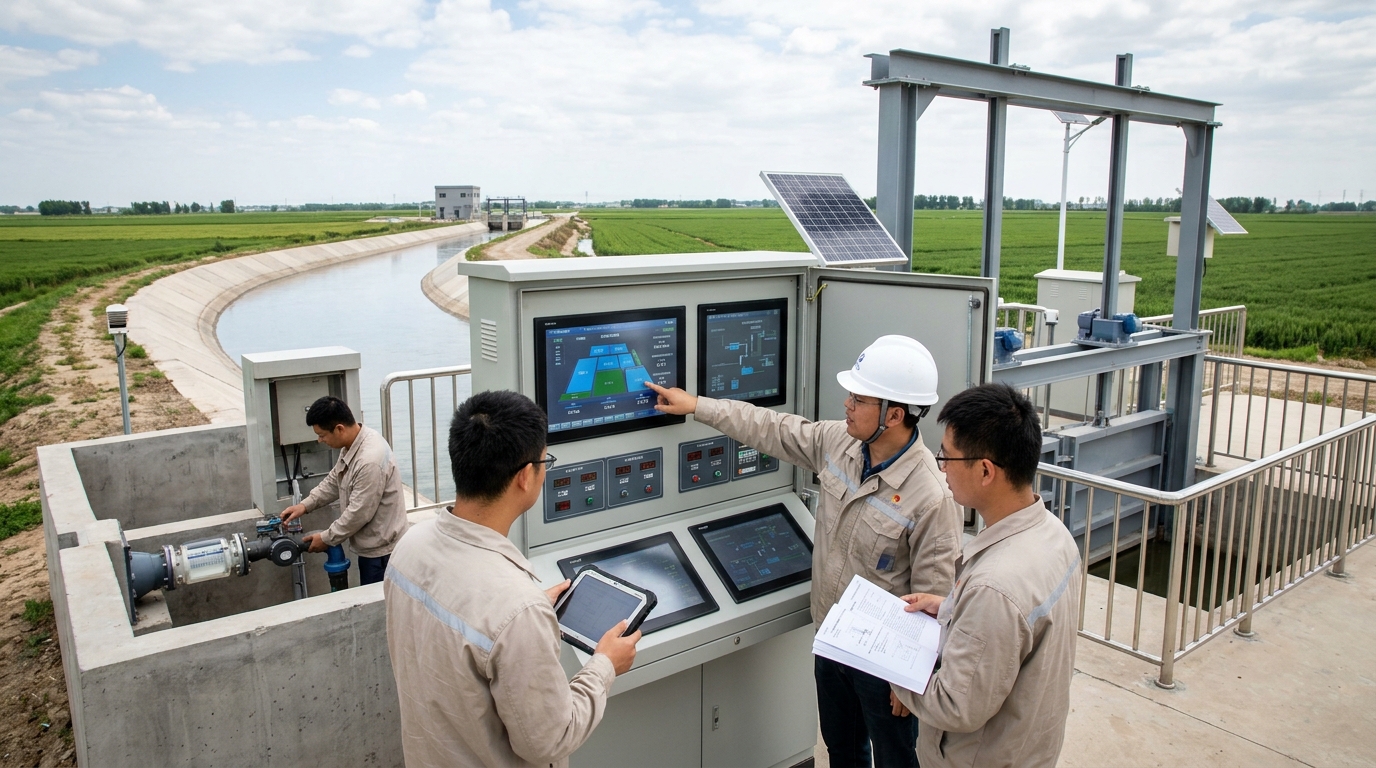
Agriculture is a major water consumer, and traditional flood irrigation methods have extremely low water resource utilization rates. In modern high-standard farmland construction, integrated water and fertilizer systems and precision drip/sprinkler irrigation systems have become the mainstream. The farmland environment is extremely harsh, with equipment needing to be exposed to intense ultraviolet radiation year-round and endure chemical corrosion from fertilizers and pesticides. Field control valves (such as DN50 solenoid valves or ball valves) manufactured using LGF-PA66 integrated injection molding perfectly adapt to such severe working conditions, relying on their outstanding anti-corrosion and anti-aging properties. Combined with soil moisture sensors and meteorological data, the smart irrigation system can achieve "on-demand water supply and precise fertilization," significantly improving crop yield and quality while saving 30%-50% of water.
Scenario 2: Urban Secondary Water Supply and Leakage Control
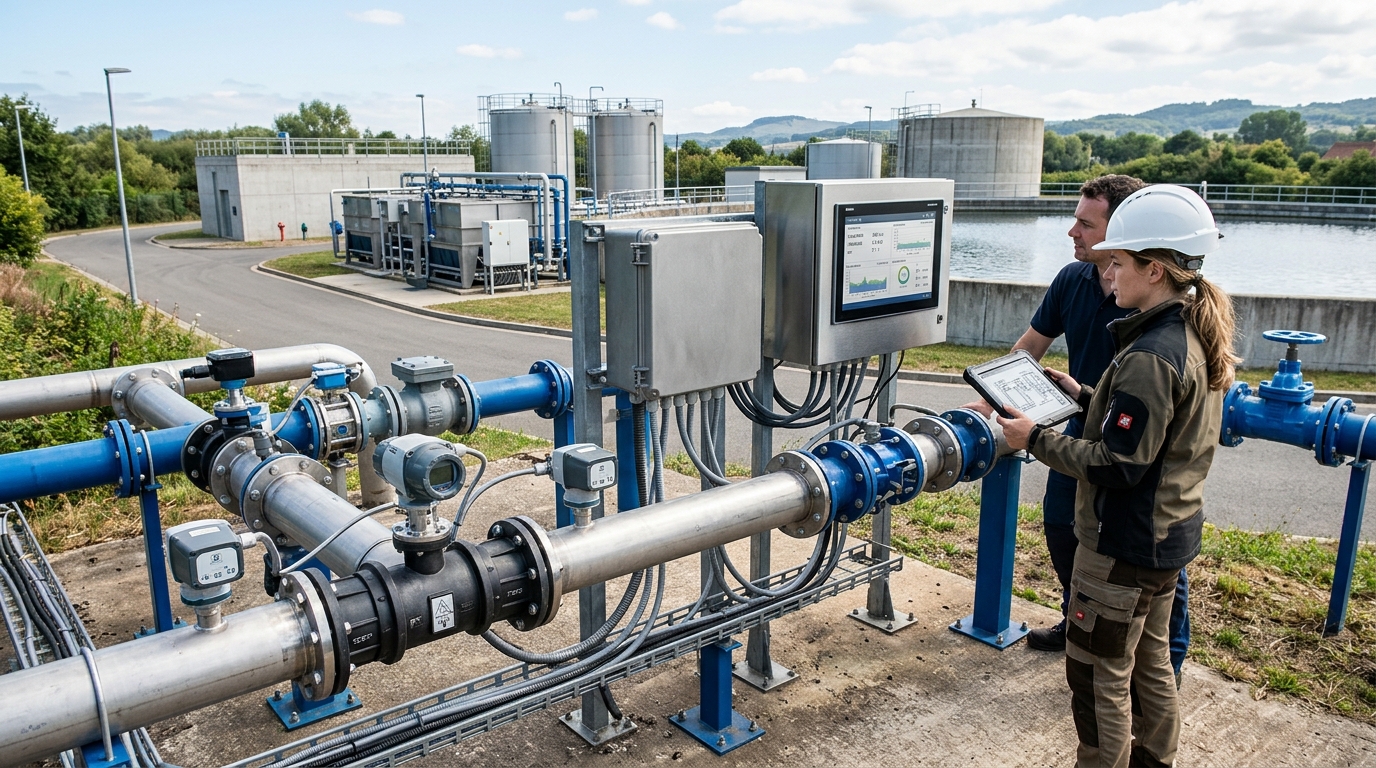
With the increase in urban high-rise buildings, secondary water supply pump rooms have become the "last mile" to ensure the safety of residents' water usage. Traditional pump rooms are noisy, prone to rust, and have a high risk of secondary water quality pollution. The application of pump casings, valves, and pipe fittings manufactured from polymer composite materials not only completely solves the rusting problem but also effectively absorbs the vibration during pump operation due to the material's inherent damping characteristics, drastically reducing pump room noise. Meanwhile, by extensively deploying new water meters and control valves with smart sensing functions at key nodes of the pipe network (such as DMA zoning measurement points), water companies can map the "pressure contour map" and "flow balance map" of the pipe network in real-time, precisely locating minute leaks and controlling the urban pipe network leakage rate at an extremely low level.
Scenario 3: Industrial Wastewater Treatment and Seawater Desalination
In these extreme application scenarios, the media are often highly corrosive (such as high-concentration acid-base waste liquids and high-salinity seawater). Traditional stainless steel or even duplex steel materials can suffer from pitting or stress corrosion cracking when facing certain specific ions (like chloride ions). Specially modified LGF-PA66 materials can maintain long-term chemical stability in these extreme media, providing a more cost-effective and secure hardware choice for industrial water treatment and seawater desalination equipment, substantially reducing the factory's equipment replacement frequency and downtime maintenance costs.
VII. Green, Low-Carbon, and Sustainable Development: ESG Considerations in Smart Water Conservancy
Against the global backdrop of advocating for "peak carbon emissions and carbon neutrality," the development of the smart water conservancy industry must align with the concepts of Environmental, Social, and Governance (ESG). From the perspective of Life Cycle Assessment (LCA), material substitution and process upgrades have profound significance for energy conservation and emission reduction.
First, in the raw material preparation and production stages, the melt processing temperature of engineering plastics like LGF-PA66 is typically around 280℃-300℃, far lower than the smelting and casting temperatures of brass (melting point approx. 900℃) and cast iron (melting point above 1200℃). This means that using the integrated injection molding process to produce water conservancy components of the same volume results in direct energy consumption and greenhouse gas emissions that are only a fraction of those from traditional metal processes. Second, the carbon emissions of lightweight products during logistics and transportation are also significantly reduced.
More importantly, the core value of smart water conservancy systems lies in "throttling" (saving). Through precise leakage control, optimized pump station scheduling algorithms, and intelligent irrigation strategies, massive amounts of water resources can be saved for society every year. Treating and transporting these water resources inherently consumes vast amounts of electricity. Therefore, saving water is saving energy, and saving water is reducing carbon. Furthermore, the modern polymer materials industry is actively advancing material recycling technologies. Scrap LGF-PA66 components can achieve downcycled recycling through crushing and re-pelletizing, further reducing the extraction of natural resources and building a green closed-loop ecosystem for water conservancy hardware.
VIII. Industry Outlook: The Future Path of Cross-Boundary Integration and Standardization
Looking ahead, the development of the smart water conservancy industry will show an increasingly obvious trend of cross-boundary integration. Frontier disciplines such as materials science, fluid mechanics, microelectronics technology, and large-scale artificial intelligence models will achieve deeper convergence on the carrier of water conservancy infrastructure. Future water conservancy pipe networks will no longer be cold physical pipelines but a "city water neural network" with capabilities for self-sensing, self-diagnosis, and self-repair.
However, the Ecolor Technology Industry Research Center also observes that the rapid development of the industry still faces some urgent challenges. The primary one is the lag in the standard system. Currently, regarding the application of polymer composite materials like LGF-PA66 in high-pressure water conservancy pipe networks and large-diameter valves (such as DN100 and DN200 specifications exceeding DN50), relevant national standards and industry norms remain insufficiently perfected. This limits the popularization speed of new materials to a certain extent. Therefore, calling upon industry associations, leading enterprises, research institutes, and water management departments to collaborate in accelerating the formulation of unified standards covering material physical property testing, injection molding process specifications, product reliability verification, and smart communication interfaces is an urgent priority to promote the healthy and orderly development of the industry.
In summary, the application of new materials represented by LGF-PA66, advanced manufacturing processes represented by integrated injection molding, and digital technologies centered on edge computing are collectively reconstructing the underlying logic of smart water conservancy. This industrial upgrade from "heavy metals" to "lightweight" and from "passive response" to "proactive intelligence" will not only breed a blue ocean market worth hundreds of billions but will also provide the ultimate solution for humanity to manage water resources more efficiently, safely, and sustainably. Ecolor Technology will continue to focus on the transformations in this field and explore the bright future of smart water conservancy together with industry peers.
Related Product: Integrated Mag Flowmeter — Ecolor Integrated Electromagnetic Flowmeter — compact LGF design for water supply metering and process flow monitoring.