Development Opportunities for Smart Water Management in 2026 Under the Dual Carbon Goals
Introduction: Smart water management moves from “connected monitoring” to “holistic sensing and closed-loop governance.”
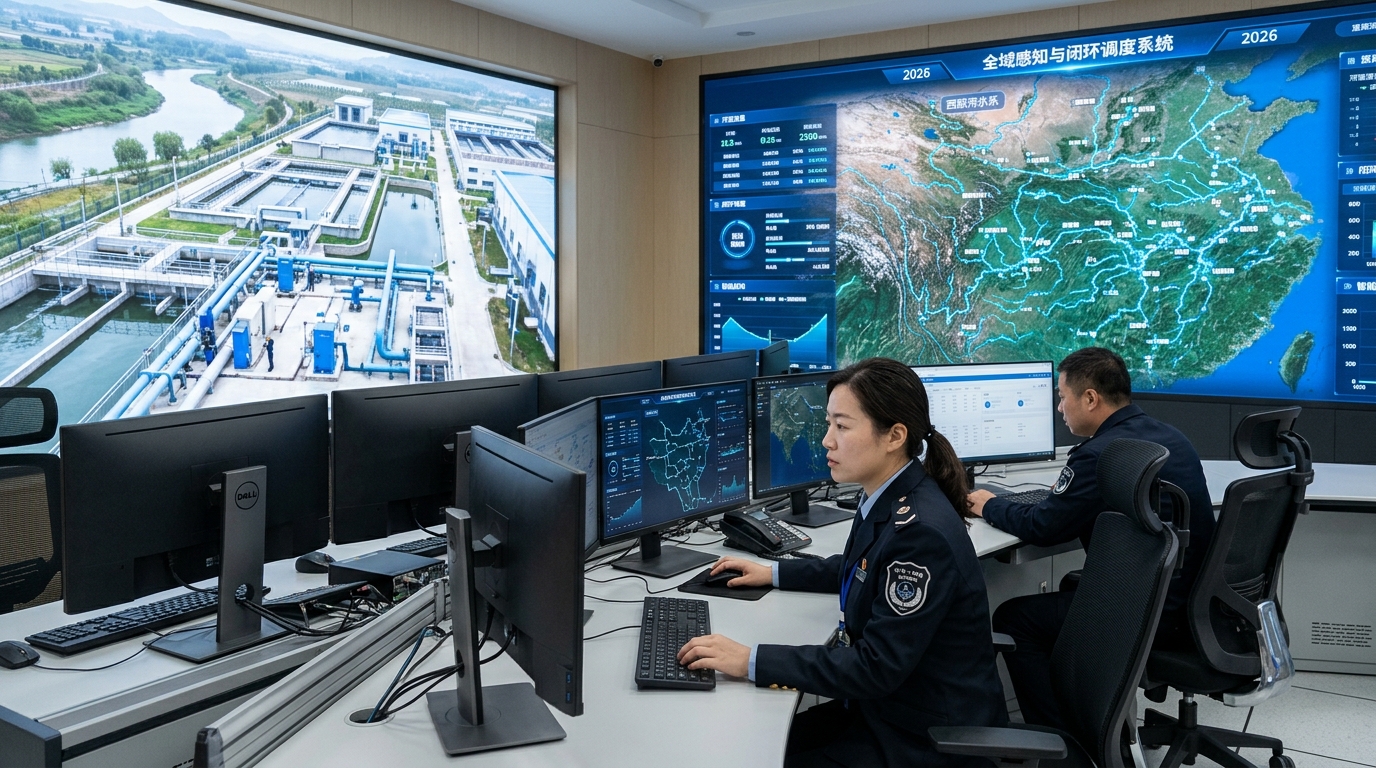
In recent years, China's smart water management construction has undergone a clear shift in logic: informatization previously aimed at “sending data back to platforms” is moving toward building governance closed loops centered on “letting data drive decisions and letting decisions change water flow scheduling.” Behind this change are policy drivers such as the national water network, digital twin basins, and integrated urban-rural water supply, as well as technological support from the co-evolution of sensors, edge computing, communication modules, low-power terminals, and materials engineering. For the industry, smart water management is no longer merely a software platform or large-screen visualization project, but a complex infrastructure system jointly composed of the sensing layer—transmission layer—platform layer—model layer—execution layer.
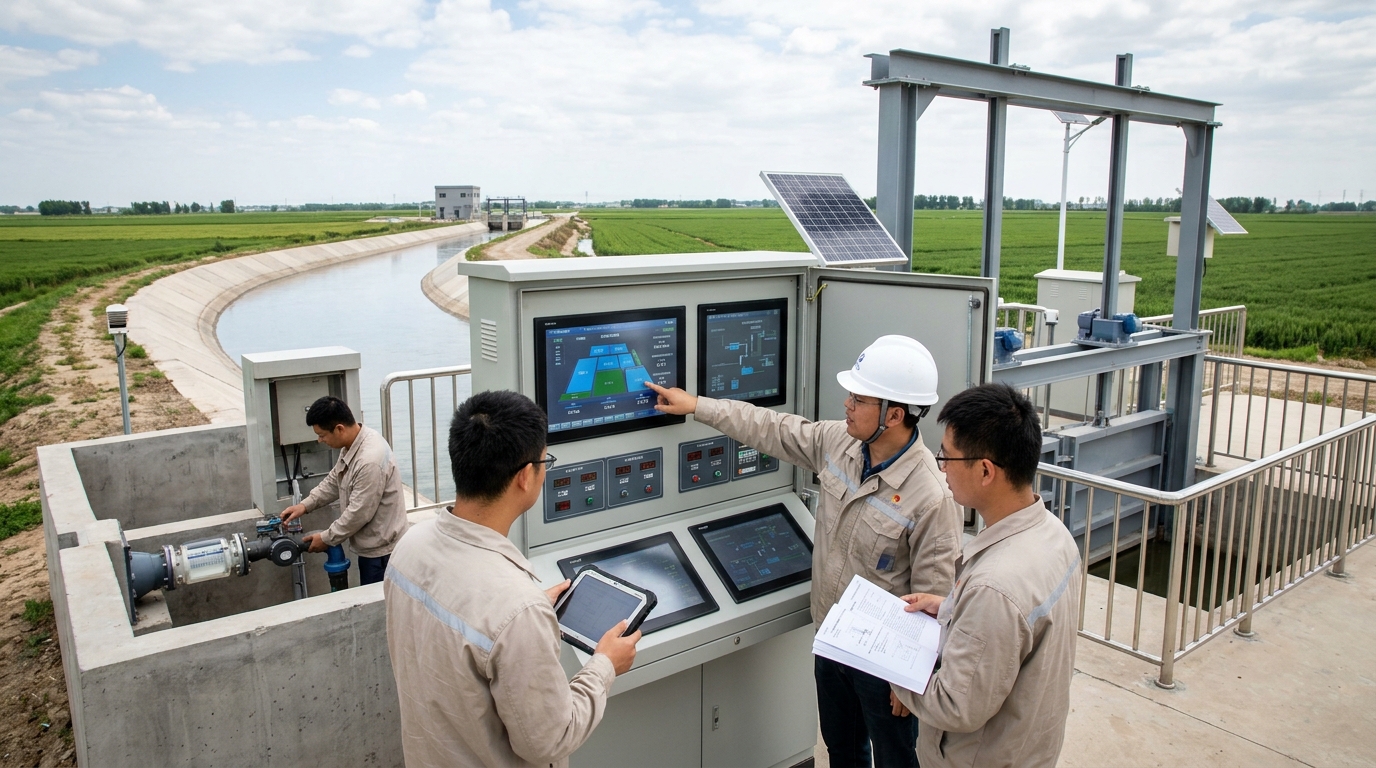
In this system, the reliability of field node devices is becoming a key variable determining project success or failure. Whether in irrigation canal systems, reservoir dams, urban waterlogging monitoring points, small and medium rivers, drainage pumping stations, or groundwater monitoring wells, what is truly exposed for long periods to outdoor, humid, dust-containing, salt-spray, sewage, and even microbial environments are often monitoring and control nodes that are not large in volume but critical in function.
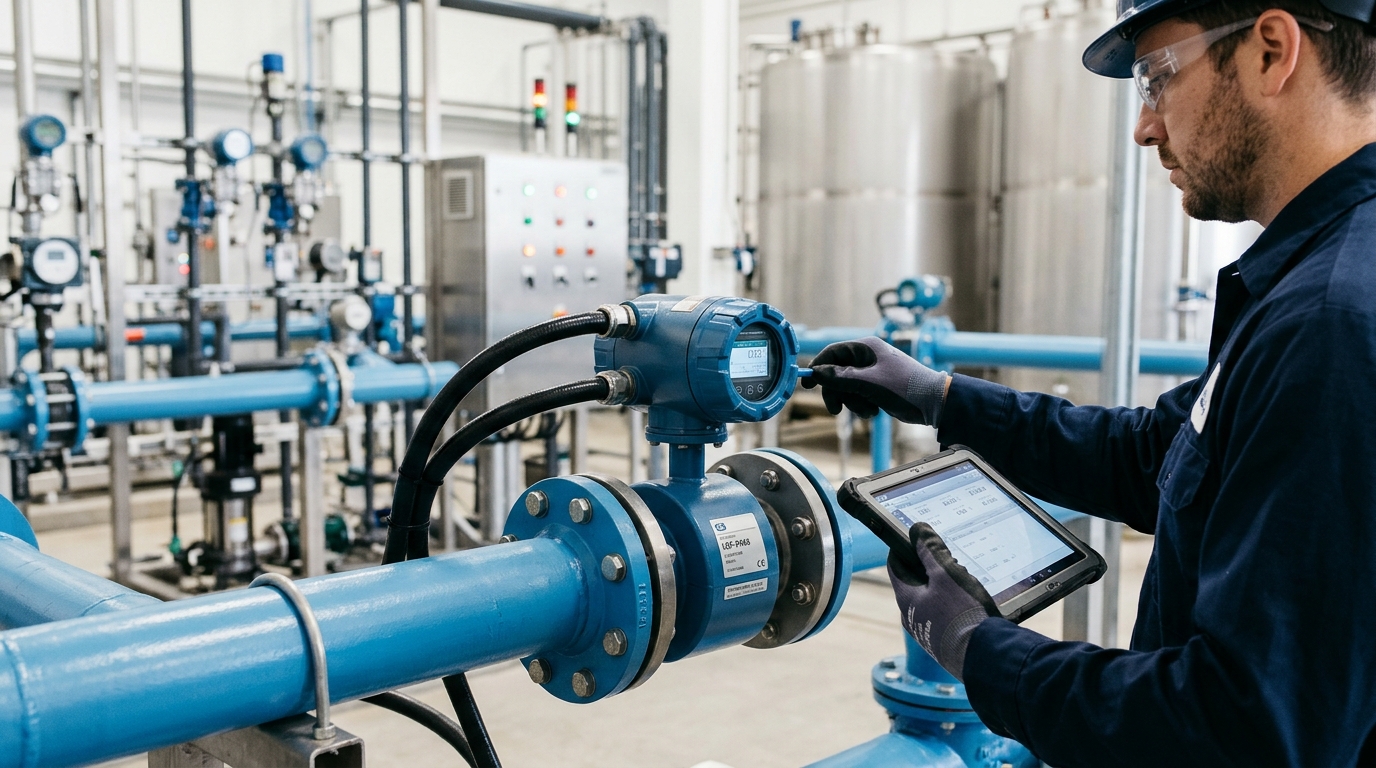
Taking DN50-bore flow meters, valve-control nodes, and pressure/liquid-level monitoring units as examples, their housings, interfaces, sealing structures, and material systems directly affect whether equipment can operate stably in complex water-management field sites. Keywords such as LGF-PA66, integrated injection molding, and anti-corrosion may appear to belong to materials and structural engineering, but they are in fact becoming important underlying capabilities for smart water management to move from “demonstrable” to “maintainable, replicable, and scalable.”
Policy Drivers: National Water Network and Digital Twin Reshape Logic
From a policy perspective, the development of smart water management is not an isolated technology trend, but has been incorporated into a higher-level water-security assurance system. According to public policies and planning deployments, China is focusing on key directions such as national water network construction, digital twin basins, digital twin water networks, and digital twin projects, driving the water sector to transition from traditional engineering governance to parallel “engineering governance + digital governance.” The Ministry of Water Resources continues to advance smart water management construction, explicitly proposing to focus on digital twin basins to build forecasting, early-warning, simulation, and contingency-plan capabilities supported by “data foundation, model platform, and knowledge platform,” and gradually extend to scenarios such as large and medium irrigation districts, important rivers and lakes, reservoir dams, and urban flood prevention and drainage.
Policy requirements are pushing the industry from “whether data exists” to “whether data can be used, whether models can compute, and whether results can be executed.”
From an investment trend perspective, investment in water infrastructure remains at a high intensity. Public data show that completed investment in nationwide water construction in 2023 was about CNY 1.2238 trillion, a marked increase over previous years, reflecting that water projects are progressing from “filling weak spots” to “strengthening systems.” At the same time, investment related to smart water management is showing new characteristics: early projects placed more emphasis on basic sensing such as video surveillance, water-level and rainfall acquisition, and communication networking; current projects place greater emphasis on data standardization, model coupling, business closed loops, and long-term O&M. This also means that future competition in smart water management is not only about algorithms and platforms, but also comprehensive competition in field equipment, material lifespan, data quality, and O&M costs.
Market Trends: Shift from Hardware to Data Assets and O&M Services
The smart water management market is transitioning from “project-based construction” to “asset-based operation.” In the past, many local water informatization projects took acceptance as the endpoint: platform launch, data connection, and large-screen display were considered completion. However, as the 14th Five-Year Plan enters its mid-to-late period, more and more owner units are focusing on three more practical issues: whether front-end devices can remain stably online for long periods, whether data can meet model computation requirements, and whether systems can continue to function in scenarios such as flood seasons, dry seasons, sudden pollution, and extreme rainfall. The market budget structure has changed accordingly: hardware procurement is no longer the sole focus, while software services, data governance, algorithm subscriptions, O&M support, equipment renewal, and spare-parts management are becoming long-term cost centers.
Future Market Growth Directions
- National Water Network: Requires higher-precision monitoring of flow, pressure, water quality, and gate status, with emphasis on scheduling closed loops.
- Irrigation District Modernization: Metering to canals, control to outlets, and data to fields, with large device quantities, dispersed distribution, and complex environments.
- Urban Waterlogging & Smart Affairs: Real-time linkage of multi-source data such as liquid level, rainfall, pump station operation, pipe network pressure, and video images.
- Small Rivers & Groundwater: Higher requirements on low-cost, low-power, easy-to-deploy, and long-life monitoring nodes for flash floods, dam safety, and over-extraction management.
Multiple industry institutions predict that China's smart water management-related market will maintain a relatively high growth rate over the next 5 to 10 years, and the compound annual growth rate of some sub-segments may reach 15% to 20%, but the quality of growth will depend on the degree of standardization, O&M capabilities, and real business value.
Technical Direction: Integrated Sensing, Edge Computing, and Materials Collaboration
In terms of technology evolution, smart water management is forming a basic paradigm of “space-air-ground-water integrated sensing.” In space, satellite remote sensing, InSAR deformation monitoring, meteorological satellites, and high-resolution imagery can be used to identify basin-scale changes. In the air, drones can undertake river channel patrols, reservoir area inspections, rapid disaster assessment, and 3D modeling. On the ground, nodes for rainfall, water level, flow, water quality, gates, pump stations, and video surveillance form a continuous monitoring network. Underwater, acoustic flow measurement, multibeam surveying, and underwater robots are beginning to be used for river cross-section, dam upstream face, and complex underwater structure inspection. In the future, a single data source will hardly support precise decision-making, and industry competition will be reflected more in multi-source fusion capabilities.
Communication and edge computing are also moving downward in parallel. Traditional water sites relied on 4G, fiber optics, BeiDou short messaging, and other links, but in the face of requirements such as high density, low power, weak coverage, and data retransmission after network disconnection, solutions such as NB-IoT, LoRa, 5G RedCap, and satellite IoT are entering more scenarios. Edge computing shifts some data processing from the cloud to field devices, for example completing threshold judgment at rainfall stations, outlier filtering at flow-meter terminals, water-level staff gauge or floating object recognition at video terminals, and interlock protection at pump station controllers. Such changes not only reduce bandwidth pressure but also improve response speed. However, the prerequisite for edge intelligence is device reliability itself. If sensor housings are flooded, interfaces corrode, materials age, or installation deviations are too large, even advanced algorithms cannot compensate for poor field data quality. Therefore, materials engineering is becoming an implicit core of the smart water management technology system.
Materials and Structures: Value of LGF-PA66 and DN50 Nodes
At smart water management sites, equipment failure is often not because algorithms are insufficiently advanced, but because structures, materials, and protection designs are not well matched to real operating conditions. Common challenges for water nodes include long-term immersion, condensation, salt-spray corrosion, UV aging, temperature differential changes, sediment scouring, microbial fouling, vibration and impact, and damage from manual operation. Taking DN50-bore nodes as examples, they can correspond to electromagnetic flow meters, ultrasonic water meters, electric valve bodies, pressure transmitter mounting seats, liquid-level monitoring protective tubes, water-quality sensor housings, and other forms. As a common bore size, DN50 has high adaptability in irrigation district branch canals, urban drainage monitoring, industrial water intake and discharge, and small regulation and storage facilities. However, if its interface sealing, housing strength, and anti-corrosion performance are insufficiently designed, it can easily become a system weak point.
LGF-PA66 Material Advantages
Long glass-fiber reinforced polyamide 66 improves mechanical strength and dimensional stability.
- Tensile strength: 160–190 MPa (at ~30% GF)
- Flexural modulus: 8–10 GPa
- HDT: 230–260°C
- Good chemical resistance & toughness
Integrated Injection Molding
Reduces assembly interfaces and potential leakage paths.
- Incorporates ribs, snaps, sealing grooves
- Achieves IP68 or near-IP68 capability
- Reduces secondary assembly errors
- Minimizes exposed metal parts & galvanic corrosion
PA66 itself has good chemical resistance and mechanical toughness, and modification can further improve hydrolysis resistance, UV resistance, flame retardancy, and dimensional stability. In water management scenarios, this material can cope with humid, weak acid-alkaline, salt-spray, and some sewage environments, reducing the risk of metal housings failing seals due to rust. For coastal reservoirs, urban sewage, groundwater monitoring wells, saline irrigation areas, and other scenarios, material-level corrosion resistance is more stable over the long term than simple surface coatings.
Case Observations: Lightweight Deployment Paths
From implementation cases, smart water management is shifting from “heavy engineering” to “light nodes, strong networks, and deep models.” In a modernization and transformation project for a medium-sized irrigation district, the owner needed to achieve flow metering, gate status monitoring, and remote scheduling at hundreds of canal-system nodes. Traditional solutions often used stainless-steel housings, on-site flange connections, manual wiring, and complex waterproofing treatment; construction cycles for individual stations were long, and later maintenance was significantly affected by rust, leakage, and misoperation.
Irrigation District Case Results
- On-site installation time shortened from 12–15 days to 5–7 days.
- First-year device online rate remained stable above 98%.
- Failure rate caused by seal failure/corrosion decreased by 30–40%.
- Annual maintenance costs decreased by approximately 20%.
In urban waterlogging management scenarios, underpasses, drainage pumping stations, prone-to-ponding road sections, and regulation/storage pools require high-density liquid-level and pressure monitoring. A city drainage and flood-prevention project deployed dozens of DN50 monitoring nodes to collect waterlogging depth, pipe network pressure, and pump station operating status. Because the field environment is long-term humid and subject to rainwater, sewage, garbage, and vehicle-traffic impacts, equipment anti-corrosion and mechanical damage resistance became key. After using integrated injection-molded housings and LGF-PA66 materials, nodes maintained continuous transmission during heavy rainstorms, recovered data through local caching in network-disconnection scenarios, and flood-season early-warning response time was shortened by about 30 to 60 minutes compared with traditional manual inspection modes.
In reservoir dam safety monitoring, piezometers, piezometric tubes, displacement monitoring points, and automatic acquisition units often require long-term embedding or semi-embedding. In a reservoir risk-removal and reinforcement project, some monitoring wells and piezometric tube protective structures used non-metallic anti-corrosion solutions, reducing the impact of metal rust on data continuity. DN50-bore protective tubes and sensor mounting seats maintained water exchange or pressure transmission while reducing the risk of intrusion by external sediment, microorganisms, and chemicals. Although per-point investment appeared higher, considering replacement cycles, losses from monitoring downtime, and manual inspection costs, lightweight, anti-corrosion, standardized nodes are more economical over the full life cycle. Cases show that the competitiveness of future smart water management projects is shifting from “whether platforms can display” to “whether nodes can provide data reliably over the long term.”
Risks and Standards: Data Quality and Full Life-Cycle Cost
Although the outlook is clear, smart water management still faces multiple risks. First is non-uniform standards. Sensors, communication protocols, data interfaces, device models, and business fields from different vendors often differ, leading to high platform integration costs and difficult data governance. For the water sector, data quality not only affects visualization effects, but directly affects model computation and scheduling decisions. If water level, flow, rainfall, water quality, and other data have gaps, drift, noise, or delays, digital twin models may produce biases, further affecting early-warning and simulation results. Therefore, the industry in the future needs to place greater emphasis on underlying device standards, communication protocols, data dictionaries, and interface specifications, moving from “single-point connection” to an “interoperable system.”
Second is procurement logic risk. Some projects still tend to award bids at the lowest price, but the true cost of water field equipment is not only procurement price, but also full life-cycle costs such as installation and commissioning, online rate, spare-parts replacement, anti-corrosion maintenance, false-alarm handling, and data repair. If a low-cost housing suffers water ingress, cracking, rust, or seal failure within two years, it may interrupt the entire monitoring chain, with a cost far exceeding the initial savings. Therefore, the industry should gradually establish an evaluation system centered on reliability, protection rating, material weatherability, installation efficiency, energy consumption, and O&M convenience. Discussions of technical keywords such as LGF-PA66, integrated injection molding, anti-corrosion, and DN50 are essentially also driving equipment procurement from “datasheet competition” to “engineering-capability competition.”
In addition, cybersecurity and O&M talent are also practical constraints. Once a smart water management system is connected to control loops, it may involve critical operations such as gate opening and closing, pump station operation, and water-supply scheduling; security requirements are significantly higher than ordinary data acquisition systems. Device local caching, retransmission after network disconnection, role-based access control, log auditing, firmware upgrades, and anomaly detection capabilities should all become standard. At the same time, grassroots water units often lack dedicated digital O&M personnel; if systems are overly complex, they may cause the problem of “can be built but cannot be used well.” More popular solutions in the future are often systems that are easy to install, have visible faults, low-cost maintenance, standardized spare parts, and explainable data.
Forward Outlook: Collaborative Competition of Materials, Equipment, and Models
Looking ahead 3 to 5 years, smart water management will enter a more pragmatic stage. The industry will no longer be satisfied with demonstration-oriented platforms, but will compete around real business closed loops: whether manual patrols can be reduced, scheduling precision improved, leakage losses lowered, flood-prevention response speed enhanced, equipment lifespan extended, and O&M expenditures reduced. Around these goals, technology roadmaps will show three clear trends. First, sensing nodes will become smaller, lower power, more standardized, and lower cost, and commonly used bore-size nodes such as DN50 will become the “nerve endings” of water systems. Second, equipment materials and structural engineering will become a focus of competition, and designs involving LGF-PA66, integrated injection molding, anti-corrosion, UV resistance, hydrolysis resistance, flame retardancy, and high protection ratings will move from behind the scenes to the front of procurement evaluation. Third, models and data governance will rely more on high-quality field inputs: only reliable devices can support reliable algorithms, and only reliable algorithms can form executable decisions.
From the industry landscape perspective, future leaders in smart water management may not be only software companies or system integrators, but more likely comprehensive participants capable of connecting materials science, precision manufacturing, sensing technology, communication modules, edge computing, hydraulic models, and O&M services. For water owner units, when selecting technology routes they should also shift from “looking at platforms” to “looking at the full chain”: whether field nodes can operate stably for long periods in complex environments, whether data is computable, whether devices are easy to replace and maintain, and whether systems support future expansion. The ultimate value of smart water management lies not in how many cameras or large screens are owned, but in whether every stretch of water flow, every pump station, every gate, and every canal can be sensed, understood, and optimally scheduled. The continuous evolution of underlying capabilities centered on LGF-PA66, integrated injection molding, anti-corrosion, and DN50 is turning this goal from concept into engineering reality, and will also become an important fulcrum for the scalable replication of future water digital infrastructure.